
The idea of a public library is a modern concept convinced in the mid-1800’s. It took years before free libraries were established across the country. One of the early proponents of public libraries in America was Melvil Dewey, who became the State Librarian of New York in 1888.
Today Dewey is best remembered as the originator of the book classification system that carries his name, as well as a founder of the American Library Association. What is not well remembered is the social agenda that powered his belief in public libraries. In a recent article on “The Establishment” web site called Banishing The Ghost Of Melvil Dewey: How Public Libraries Are Outgrowing Their Classist Roots, author Anna Gooding-Call shares this view of Dewey:
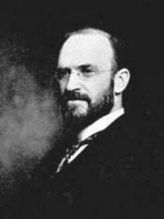 “He was a zealous librarian celebrity, famously arrogant, and completely committed to the idea that the public could only improve themselves if they understood and embodied Christian morality. Dewey could provide this education with books, which would “elevate” them through a system of ideologically coordinated public libraries. When shown the foundation of Western literature—ran the logic—readers would understand how society functioned as well as their place within it. The result would be literate but passive components of a capitalist machine. Public libraries would be its oil.”
Read the rest of this fascinating article that examines how libraries today are adjusting to a present much different from what Dewey ever imagined.
 Why do I use the word “efficient” to describe this path of librarianship? In my article,
  Last week, my article on
  The other day I received the following email from
  The
The  Are you traveling to Philadelphia this month for the
 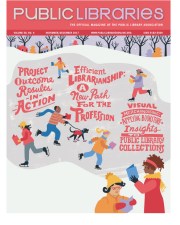 An Efficient Librarian creates clean edges to her work. It all starts with an organized desk and a clearly defined physical inbox to identify new input. One habit-changing practice is to empty the inbox regularly and use it only to place new items that have yet to be processed. An Efficient Librarian pays attention to how time is spent and looks for ways to declutter surroundings and simplify systems. For me, mastering workflow and creating systems that were tight, clean, and quick was a key to my transition. I believe that the application of these principles saves me weeks of time every year to focus on creative and exciting work that takes me along new innovative paths. This unleashing of energy is needed to revitalize our profession in the face of changing times.
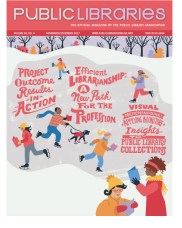 I am proud to announce that my second article for Public Libraries magazine was published in the Nov/Dec 2017 issue. Efficient Librarianship: A New Path for the Profession is an article that explores and expands on the ideas discussed in this blog. Below is a key except from the article:
