Can a Second Brain be Built in a Day?

basbWe all know that Rome was not built in a day, but can a second brain be built in a seven hour workshop?
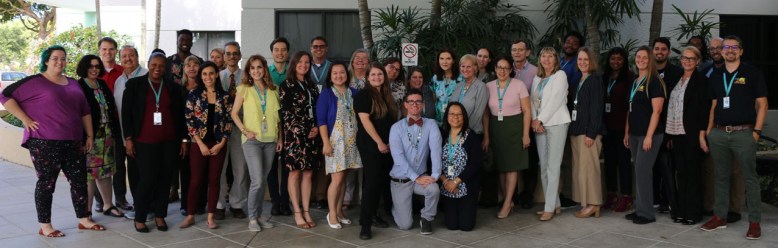
On Tuesday May 21, Tiago and Lauren from Forte Labs came to the Palm Beach County Library System to lead their signature course Building a Second Brain (BASB) for thirty five library staff.  Participants were recruited from across the library system, with many members coming from the Productivity Committee and the User Experience (UX) Committee.  All of them were excited about the benefits an electronic second brain had to offer.  Prior to the workshop, participants had a homework assignment to identify their “12 Favorite Problems” and to start capturing electronic items, such as articles, photos, news clips, etc.,  in Microsoft OneNote.  They also had access to an online version of BASB specially designed for the library staff.

At the start, the BASB workshop laid out the core tenants of the second brain philosophy: Capture, Connect, Create.  The morning was spent with a review of capture and then moved on to PARA which clarified the difference between projects, areas, resources, and archives.  Following lunch, the seminar moved to the theory and practice of Progressive Summarization.  Students then explored the concept of project packets that lead to the “Just In Time” project delivery system.  Finally, Tiago shared his view of the future of knowledge work in relation to personal knowledge management.

Library staff left the workshop energized and excited about the possibilities from mastering personal knowledge management.  So in the end, we learned that building a second brain is not a one time exercise, but an ongoing approach to curate the streams of information that flow around us.

Thank you Tiago and Lauren from all of us at PBCLS!

basb-class-small.jpg

An Award and the PKM Experts

I am proud to share two news items.

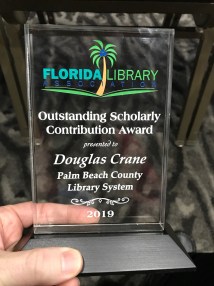
First, this past week at the Florida Library Association conference, my article “Efficient Librarianship: A New Path for the Profession” received the award for Outstanding Scholarly Contribution.  I am humbled that the Association choose to recognize it with these words:flaaward

“Douglas Crane’s article, “Efficient Librarianship:  A New Path for the Profession” (Public Libraries Magazine, Nov/Dec 2017) explores the intersection between personal productivity and knowledge management practices within the field of librarianship.  The article examines how librarians are uniquely suited to be excellent knowledge workers through the combination of librarian skill sets with best productivity and efficiency practices.  It further argues that through these skills and practices, the “Efficient Librarian” becomes a powerful consultant and decision maker.  In addition to this article, Doug Crane blogs on his “Efficient Librarian” website and conducts related training.”

Second, this week the Palm Beach County Library System is proud to host Tiago and Lauren from Forte Labs who will be sharing their expertise on Personal Knowledge Management (PKM).  This is the first time that Forte Labs has presented their signature workshop on Building a Second Brain to a room full of library staff.  It should be awesome!

I’ll blog more on the training later this week.

National Library Week

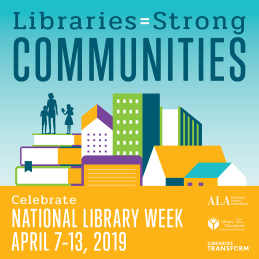
Please join me and the Palm Beach County Library System in celebrating National Library Week (April 7-13, 2019)!  According to the American Library Association (ALA), the week is a special time to celebrate libraries.

“National Library Week is an annual celebration highlighting the valuable role libraries, librarians, and library workers play in transforming lives and strengthening our communities.

“This year’s theme, Libraries = Strong Communities, illustrates how today’s libraries are at the heart of our cities, towns, schools and campuses, providing critical resources, programs and expertise. They also provide a public space where all community members, regardless of age, culture or income level, can come together to connect and learn.”

I am happy to see that many media outlets are promoting National Library Week.  This year, CNN has a special story on “9 facts about librarians you probably didn’t know.”  For example, did you know that 1.3 billion people visit public libraries every year, more than the 1.24 billion movie theater admissions in 2017.  So why not celebrate the week by stopping into your local library and picking up a DVD or book.  They are free to borrow with your card!

nlw19-social-media-5-instagram-share

The Important Emotional Labor of Librarians

The stereotypical librarian is often depicted as a quiet enforcer of silence presiding over dusty bookshelves.  The truth is that public librarians do more than master the art and science of knowledge management.  They must also act as de facto social workers to help the people who walk in their doors every day.

brown and black wooden docor

I just read a touching article on the web site Medium titled The Important Emotional Labor of Librarians Most People Never Think AboutThe article highlights the misunderstood role of library workers in caring for our community.  Author Oleg Kagan shares his own personal story while highlighting the challenge of the profession:

“Most people intuitively understand the emotional load taken on by professions like social workers, nurses, 911 operators, and teachers. Rarely, however, do people consider the emotional labor of librarians. Spend a day at the service desk of a busy library and you’ll see people on their best and, too often, their worst days. Spend a few months and you’ll begin to follow the lives of your repeat visitors — you’ll be privy to, and sometimes help them solve, life’s hardest problems.”

Read the rest of this article at Medium.com.

Social Infrastructure

You may be familiar with the term “social capital”— the concept commonly used to measure people’s relationships and networks.  It has been used for many years as a way to emphasize the importance of people in an organization or community.  While this concept is important, what has often been overlooked is the public space that people need for this interaction to take place, known as the Social Infrastructure.

Social Infrastructure is featured in a recent Atlantic article titled, Worry Less About Crumbling Roads, More About Crumbling LibrariesAs author Eliot Klinenberg writes:

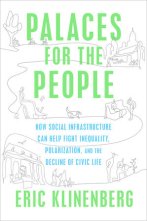
palaces“Public institutions, such as libraries, schools, playgrounds, and athletic fields, are vital parts of the social infrastructure. So too are community gardens and other green spaces that invite people into the public realm. Nonprofit organizations, including churches and civic associations, act as social infrastructure when they have an established physical space where people can assemble, as do regularly scheduled markets for food, clothing, and other consumer goods.”

Read the rest of this fascinating article on the Atlantic’s website.  If you enjoy it, look for Klinenberg’s book, Palaces of the People: how social infrastructure can help fight inequality, polarization, and the decline of civic life at your local library.

Banishing The Ghost Of Melvil Dewey

The idea of a public library is a modern concept convinced in the mid-1800’s.  It took years before free libraries were established across the country.  One of the early proponents of public libraries in America was Melvil Dewey, who became the State Librarian of New York in 1888.

Today Dewey is best remembered as the originator of the book classification system that carries his name, as well as a founder of the American Library Association.  What is not well remembered is the social agenda that powered his belief in public libraries.  In a recent article on “The Establishment” web site called Banishing The Ghost Of Melvil Dewey: How Public Libraries Are Outgrowing Their Classist Roots, author Anna Gooding-Call shares this view of Dewey:

220px-Melvil_Dewey“He was a zealous librarian celebrity, famously arrogant, and completely committed to the idea that the public could only improve themselves if they understood and embodied Christian morality. Dewey could provide this education with books, which would “elevate” them through a system of ideologically coordinated public libraries. When shown the foundation of Western literature—ran the logic—readers would understand how society functioned as well as their place within it. The result would be literate but passive components of a capitalist machine. Public libraries would be its oil.”

Read the rest of this fascinating article that examines how libraries today are adjusting to a present much different from what Dewey ever imagined.

Invoking the Power of “Next Action” Thinking

cleandeskWhy do I use the word “efficient” to describe this path of librarianship?  In my article, Efficient Librarianship – A New Path for the Profession the word efficient is defined as: 1. Being or involving the immediate agent in producing an effect; 2. Productive of desired effects; especially: productive without waste.

While the second part of the definition is straightforward, the first part resonates with this work.  From the article:

“Identifying and implementing improvements to personal and organizational workflows produce powerful results. However, the best systems in the world are only useful if they free up energy for productive next actions. An Efficient Librarian understands the implications of the first part of the definition of the word “efficient” given at the start of this article which is to be the agent that produces an effect. An agent by definition is one who acts. Therefore, an Efficient Librarian is very mindful of his or her actions.

“Most people decide their next action at work by reacting to their surroundings. Crisis and stress tend to focus the mind on the most urgent needs. People may subconsciously allow crisis to enter their lives to narrow their action choices. To illustrate, think about what would happen if you discover that the building is on fire. Your next action would be very simple—get out! No need to think about that one. While it does help to simplify decision making, crisis is an unhealthy way to live from day to day due to the accumulated stress. Therefore, an Efficient Librarian purposefully moves past crisis to make meaningful action decisions when things first show up, rather than when they start to blow up.”

Read the rest of the article on the Public Libraries web site.

And the Winner Is …

PL-NOV-DEC-2017-cover-artRRRLast week, my article on Efficient Librarianship was competing in a poll for the Public Library Magazine’s Reader’s Choice Award.  This year, congratulations go out to Kyra Hahn for her article about Public Service Loan Forgiveness, which was the winner. Thank you to everyone who voted in the poll.  I look forward to competing again for this honor in the future.

In the meantime, check out this recording of a Florida Library Webinar on the best items from this year’s PLA Conference.  My Spark Talk presentation on Five Minutes to Inbox Zero was mentioned a couple of times.  Whether you were at the conference or not, the webinar is a great opportunity to catch up on the exciting events and information from this seminal event.

Readers Choice Feature Article Contest

PL-NOV-DEC-2017-cover-artRRRThe other day I received the following email from Public Libraries Magazine regarding my article, Efficient Librarianship, a New Path for the Profession:

I’m writing to let you know that a feature article you contributed to “Public Libraries” in 2017 has been chosen to participate in the annual ‘readers choice’ feature article award. Five articles have been chosen and readers will vote for the article they feel should receive the award. The prize is $300 which is presented during the PLA member breakfast at the ALA Annual Conference.

You can see more here https://www.facebook.com/publiclibrariesonline/posts/1018007221695001. Please feel free to share and encourage voting among your friends and colleagues.  Thanks so much for sharing this great work with our readers!

Best,

Kathleen M. Hughes
Editor, Public Libraries
Manager, Publications

PLA, division of ALA

I encourage everyone to participate in the online poll, irregardless of whom you vote for.  If my article is selected, I plan to donate the prize money to our library partners, The Friends of the Palm Beach County Library System.

The deadline to cast your vote is this Friday, June 1.