Libraries are an “investment that’s well worth it”

Those who work and frequent public libraries are well aware of the value they provide to their local communities. However, one challenge public libraries face is getting awareness of their value out beyond their core customers. So it is always great to see a national publication or program talk about the positive role that public libraries play in their community.

On a recent episode of NPR’s Marketplace, host David Brancaccio interviewed reporter Chris Farrell about the return on investment that libraries provide to their local residents.

Photo by Pixabay on Pexels.com

Brancaccio: Well, do we know that? It’s a decent return on investment?

Farrell: Well, there’s this recent study — this one grabbed my attention — [by] three economists [from] Montana State University, Federal Reserve Bank of Chicago and Miami University. And they calculate by some measures a healthy return on investment. So among their findings, library capital investment increases children’s attendance at library events by 18%, children’s checkout of items by 21% and total library visits by 21%. Now, OK, that’s interesting, but increases in library use translate into improved children’s test scores in nearby school districts.

Read or listen to the rest of the interview online at the Marketplace web site.

Leadership Perspectives – Organizational Health

Who is responsible for the health of the organization you work for? Most people assume it is the top leader and there is lots of truth to that belief. However in reality everyone in the organization has a role to play in building a strong culture.

The ALA Learning Exchange newsletter recently published a short article I wrote about this topic. It starts out with this question.

So how does one determine organizational health? Many people think it is through the measurable outputs and outcomes laid out in the strategic plan. These can be such factors as visitor counts, circulation numbers, program attendance and more. Other factors such as employee turnover may point to job satisfaction. However, all these pieces are just a part of the equation. After all, you can have an organization that achieves its goals yet is stressed out and hostile. In the end, an organization’s health is determined by the strength of its culture. Strong cultures thrive no matter what the situation, while weak cultures disintegrate at the slightest sign of stress.

To learn more about how culture directly affects an organization, please read the rest of the article which has been posted here for your review.

Think Like a Scientist

The world is full of disagreement. Throughout our lives we encounter people who have different views from us on a wide range of topics. In some cases, these views may be held very intensely, leading to arguments, conflict, and at worst violence. If you have ever tried to change people’s minds, it can appear to be a futile process. Why is that so?

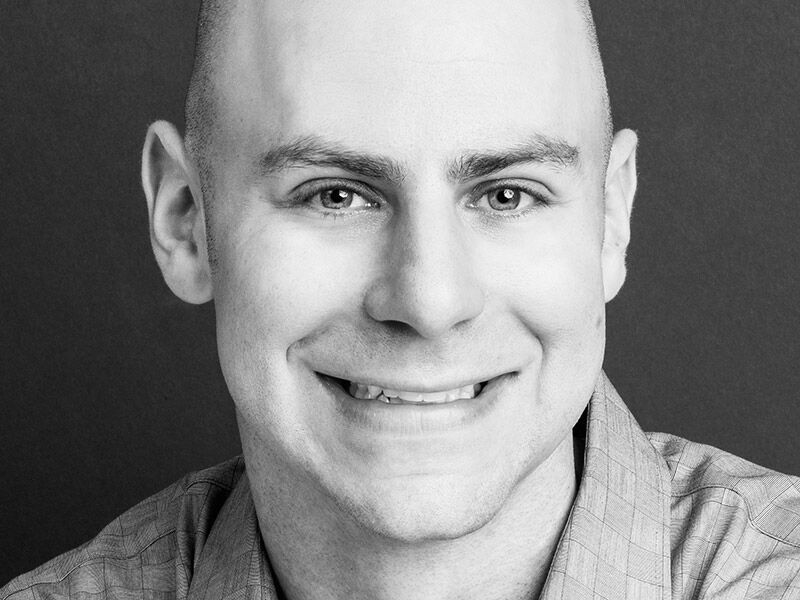
According to Adam Grant, part of the reason that disagreements are rarely resolved is because people don’t know how to engage in thoughtful debate. He argues in his new book, Think Again, that most people fall to one of three default modes of persuasion. In a recent article in Inc. magazine, contributor Jessica Stillman describes these modes this way:

Adam Grant

Preacher: “When we’re in preacher mode, we’re convinced we’re right,” explained Grant. From the salesman to the clergyman, this is the style you use when you’re trying to persuade others to your way of thinking.

Prosecutor: “When we’re in prosecutor mode, we’re trying to prove someone else wrong,” he continued.

Politician: It’s no shock that “when we’re in politician mode, we’re trying to win the approval of our audience.”

The problem with all three of these modes is that they rarely succeed in changing other person’s mind. In fact, they often create more resistance. Instead, Grant identifies a different approach to resolving disagreements.

Scientist: When you think like a scientist, “you favor humility over pride and curiosity over conviction,” Grant explained. “You look for reasons why you might be wrong; not just reasons why you must be right.”

This mode is challenging because it requires the maturity to accept that their position could be wrong. This vulnerability can become a bridge to connect people in a way that allows for understanding. To learn more, I invite you read Stillman’s article. If you want to dive deeper, please read Grant’s book, Think Again.

Think Like a Chef!

Have you ever had a day when new information, emails, and calls were flying at you in record speed? The nature of knowledge work is that we move between times of quiet and reflection to periods of rapid action. It is in those hectic times that we can easily fall behind and get flustered. So to master those busy periods it is helpful to consider another profession that works on rapid deadlines and continuous input: Chefs!

In a recent blog post, Tiago Forte examined the work environment that chefs create in their kitchens to handle the daily dinner orders. It is called mise-en-place. Tiago describes it this way.

Mise-en-place is about bringing together all the tools a chef needs in close proximity, prepped for immediate use, so that they can just execute – quickly, consistently, and sustainably.

Observing the way that chefs work to handle the flow of orders, Tiago highlights six principles that he believes can be applied to knowledge work. The first is sequence. As Tiago describes:

In a kitchen, sequence is everything.

The biochemical realities of food demand it: the meat can’t go onto the chopping block if it’s frozen; the pasta won’t absorb the sauce unless it’s been cooked; the garlic can’t be added until it’s been chopped.

In knowledge work, the importance of sequence isn’t always so clear. Does it really matter whether you send that email or write up that report first? It often feels like we should be doing everything immediately and all at once.

But consider that we can never do more than one thing at a time. The flow of time is linear, which means at some point, even our most complex thinking and planning has to get distilled down to a simple, linear to-do list: what comes first, what comes next, and what comes after that.

Once we realize the importance of sequence, it becomes apparent that not all moments are created equal: the first tasks matter much more than the later ones. In a kitchen, the few seconds it takes to start heating up a pan or start defrosting the chicken will have the biggest impact on the overall timeline, because these steps can’t be accelerated. They take as much time as they take.

Discover the other five principles by reading Tiago’s post.

Are We Reaching the End of Library DVD Collections?

DVDs have been a mainstay of library collections for the past twenty years. These little plastic discs are often the most borrowed items every year. However, as with all technology, times change to potentially render them obsolete. In this case the rise of online streaming services threatens to push DVD collections to the trash bin alongside the VHS cassette and music CD.

Last month I surveyed members of the Urban Library Council to gain insight into the future of DVD collections. The results of my findings were posted in a new article on the Public Libraries Online web site, a publication of PLA. Below is an except from the article.

An informal survey of over a dozen Urban Library Council member libraries conducted for this article shows a more complicated picture. Based on checkouts, demand for DVDs across North American libraries has dropped. For example Migell Acosta, Director of San Diego County Library (CA) reported that they “Have seen a gradual decline in DVD/Blu-Ray circulation over the past 5 years or so, but not as steep as physical music and audiobooks.” 

This drop in borrowing has local variation. In Pima County Public Library (AZ), Director Amber Mathewson noted that demand remains strong. “In one of our more affluent neighborhoods the children’s DVDs were overflowing …. Our hypothesis was that neighborhood has switched to Disney+, but other locations in our county are still circing DVDs pretty heavily.”

The situation is different in Johnson County Public Library (IN). Kelley Gilbert, Collection Services Manager reported they may need more DVDs. “DVD circulation has been really steady throughout the pandemic, and our patrons are always requesting titles that we’ve managed to miss.”

To find out more, including the perceived diversity benefits of maintaining DVD collections, please read the rest of the article.

Critical Thinking – The Smart Thing to Do

Have you ever known someone who was very intelligent, yet made dumb mistakes? Take the story of Jonah Lehrer. He was an up and coming New York Times journalist whose career collapsed after a plagiarism scandal. Then it was discovered he fabricated quotes he attributed to Bob Dylan then lied about the source. All around the world smart people fall for scams, conspiracies, and tricks. It seems that having a PhD, membership in Mensa, or honored credentials from prestigious organizations does not prevent foolishness.

Scientific American journalist Heather A. Butler explored the intersection of intelligence and decision making in an article titled Why Do Smart People Do Foolish Things? In it, she points out that intelligence is not about being wise.

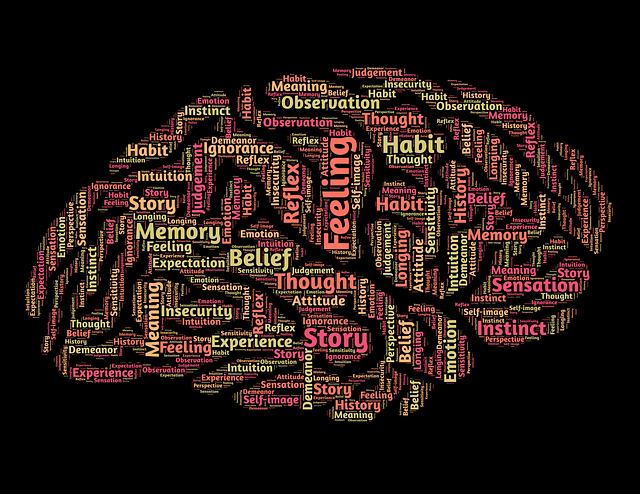
The most widely known measure of intelligence is the intelligence quotient, more commonly known as the IQ test, which includes visuospatial puzzles, math problems, pattern recognition, vocabulary questions and visual searches.

Image from Pixabay.com

Butler contrasts it to the skill of critical thinking.

Though often confused with intelligence, critical thinking is not intelligence. Critical thinking is a collection of cognitive skills that allow us to think rationally in a goal-orientated fashion and a disposition to use those skills when appropriate. Critical thinkers are amiable skeptics. They are flexible thinkers who require evidence to support their beliefs and recognize fallacious attempts to persuade them. Critical thinking means overcoming all kinds of cognitive biases (for instance, hindsight bias or confirmation bias).

Butler goes on to share why it is important to understand the difference since it is hard to increase intelligence, but one can train to improve critical thinking skills. Read her article to learn more.

Should We Keep Working From Home?

Over the past year did you get an opportunity to work from home? In my case I did it for a couple of days, but otherwise worked in my library office. My case was different from many people who shifted to a part time or fully virtual work situation. To reduce COVID spread, companies across many industries offered their employees the flexibility to work from anywhere. However, the big question yet to be answered is whether this change has enabled greater productivity and satisfaction or if it has become an impediment to creative teamwork. The initial answer to this question is a big maybe!

I recently came across two good explorations of this topic. The first was an article from The Guardian titled The empty office: what we lose when we work from home. Reporter Gillian Tett explored the this idea: For decades, anthropologists have been telling us that it’s often the informal, unplanned interactions and rituals that matter most in any work environment. So how much are we missing by giving them up?

Of particular interest is a look at the Internet Engineering Task Force (IETF), a group that designs the underlying architecture of the Internet. Over the years the IETF developed a fascinating way to poll the collective body on decisions. In a conference room, the group will ask members to hum to show support or opposition to an idea. It is a type of decision making process that can only work effectively in a real world environment. As Tett notes:

When the IETF members use humming, they are reflecting and reinforcing a distinctive worldview – their desperate hope that the internet should remain egalitarian and inclusive. That is their creation myth. But they are also signalling that human contact and context matter deeply, even in a world of computing. Humming enables them to collectively demonstrate the power of that idea. It also helps them navigate the currents of shifting opinion in their tribe and make decisions by reading a range of signals.

Photo by Vlada Karpovich on Pexels.com

Other view of the effects of work from home can be found in a recent Freakonomics podcast titled Will Work from Home Work Forever? In the middle of the podcast host Steven Dubner interviews economist Steven Davis about his studies on working from home prior to the pandemic and then a year afterward. Davis’ findings are illuminating.

The real benefit to being at the office is face-to-face interaction — which might be painful if it’s your boss reprimanding you, but this concept of a knowledge spillover — all of that causes, we think, productivity to be higher at the office than at home. But we also think working at home is not as unproductive as it used to be. Because we have all of these tools at our disposal.  

Later on in the podcast, Dubner interviews Raj Choudhury of the the Harvard Business School. His multiple year study of remote work done by U.S. Patent Office employees demonstrated measurable benefits from working at home. He found the examiners were 4.4% more productive at home than in the office. However, he also discovered another factor at play, increased loyalty.

And the story that came was one of loyalty. That “I was really helped by this policy because now I could move to Philly and my daughter needs some medical treatment, which is only available in Philly. No other organization will let me work in Philly and do the kind of work I’m doing. So I have to give something back.”

The factors that will determine the long term success of working from home are still being figured out. To learn more about the direction of work from home, I highly recommend both these Guardian and Freaknomics pieces. They are well worth the read and listen.


Will Libraries Get Credit for their COVID-19 Response?

As vaccines are now widely available and many people have had their first shot or both, life across the United States is returning to something like pre-COVID days. This includes libraries. In Florida, library service has been amongst the most available in the country, such as The Palm Beach County Library System which has been open for over a year! Other libraries across the nation have only recently opened their doors. However, that did not mean they were on the sidelines. Throughout the crisis, library staff were constantly working to help our public in this time of need.

In a recent article on CNN, public libraries across the country were profiled for the great work they did to assist their communities during the pandemic. One example was the work of Ramses Escobedo of the San Fransisco Public Library.

For more than a year, however, Escobedo hasn’t been lending out books. Instead, he’s worked with a Covid-19 contact tracer team for San Francisco’s Department of Public Health.

Covid has affected American schools, hospitals and businesses. But libraries — which often serve people who have nowhere else to turn — have responded in unprecedented ways. Like many of us, they’ve had to pivot, going from providing extensive in-person services and programming onsite in branches to quickly establishing virtual lectures and classes, and contact-less material pickup, as well as services that were strictly Covid-related like Escobedo’s assignment.

As a city worker, Escobedo’s contract states he can be activated in an emergency. After his library closed in March of 2020, Escobedo was reassigned to a disaster service detail.

As well as special duties, libraries also took advantage of their position in the community to help people.

In Hartford, Connecticut, some public libraries became Covid-19 vaccine administration sites. Librarians there also cleared obstacles to allow patrons to use outside electrical outlets to charge cell phones. In Leominster, Massachusetts, about 50 miles west of Boston, librarians installed mobile hot spots at the city’s senior and veterans’ centers, both of which have large parking lots, enabling many more people to log onto the Internet.”Anyone can go to the parking lot and connect to the WiFi for free,” Nicole Piermarini, the library’s assistant director told CNN.

Read the rest of the article on CNN to learn other ways that libraries made a difference.

Is Productivity just is a Phase?

When did you decide to seek out personal productivity practices?

Many people do so when they feel overwhelmed by their work. Perhaps they have been given more and bigger projects or received a promotion with lots of responsibility. Others might have changes in their home life, such as a new child, that prevent them from putting in overtime. For these reasons and more they must become more efficient. Either way, personal productivity practices often make a huge impact on our work, but are they an end in themselves or a means to another end?

According to Tiago Forte of Forte Labs, learning personal productivity practices is only one step on a person’s journey. In fact it is an early stage. In a recent post on his web site he states:

I’ve begun to realize that the concept of “personal productivity” is just a season in people’s lives. It is a temporary phase that we each pass through on our way to other things.

Productivity as we know it is largely an entry-level concept. It caters to people just beginning their careers, starting their first professional jobs, or moving to new roles that demand a higher level of personal output.

Why is it attractive to people in an early stage of their professional life? Tiago believes it is due to leverage.

The reason productivity is just a phase is that it is relatively low leverage. “Leverage” refers to the ability to do more with less, such as using a lever to lift a boulder that you’d never be able to lift on your own strength.

You do need to reach a certain level of proficiency in your personal productivity. But once you do, you can go beyond it to greater sources of leverage. And you must, if you want to accomplish more while working less.

What are those other sources of leverage? There are many options.

Learn about these other sources of leverage by reading the rest of his posting.