
Next time you watch a basketball game, pay attention to what happens after a team scores. The players on that team high five the teammate who shot the basket. It doesn’t matter if it is early in the first quarter or late in the fourth quarter, teams are constantly celebrating success.

With that in mind, do you ever have days at work where it feels like nothing was accomplished? You worked hard but it seems your major goals stay out of reach. It can make our jobs very frustrating, but it doesn’t need to be that way. Perhaps all you need to do is focus on the value of small wins.
The game of knowledge work requires us to set the success conditions. Too often we define our projects in large terms, such as updating the strategic plan, launching the new service, or completing the budget process. In truth, those larger projects contain numerous small projects, each one of which is a crucial step forward. In turn, the smaller projects also contain sub-projects of their own.
In basketball, each team may hit 40 or more baskets. While a basket itself is worth very little, teams celebrate as they know that point helps achieve a larger victory. In knowledge work our scores are calculated different, but they are still as meaningful. So why not celebrate each one of your small wins along the way? That’s why I enjoy clearing my inbox, delegating a task, completing a next action, or finishing a two-minute item. Small wins every hour of every day add up to the big win later on.
Therefore, celebrate your small wins trusting in the fact that each step is moving you towards your big goals.
 “You spend a quarter of your life at work, so shouldn’t you enjoy it? Organizational psychologist Adam Grant takes you inside some of the world’s most unusual workplaces to discover the keys to better work. Whether you’re learning how to love criticism or trust a co-worker you can’t stand, one thing’s for sure: You’ll never see your job the same way again.”
 Physical actions are visible to other people such as calling someone on the phone, typing an email, drafting a memo, or talking to a colleague. A common trap is to believe that “thinking” about an item is a next action. Thinking could be part of a next action if that process is accompanied by a physical movement to capture the ideas, such as drawing a mind map.
 book that provides an answer to this dilemma. In
  Sometimes when we think about the effort it will take to get organized a negative reaction will arise. Is it really worth all the time and energy necessary to put things in their right spot? How about the constant practice of getting things out of your head – sounds like a pain! Can’t we just relax and have fun?
 Why do I use the word “efficient” to describe this path of librarianship? In my article,
  n his recent book,
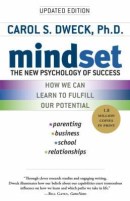 Imagine a room of students who are working on a very tough math problem. Some of them give up quickly and say it can’t be solved while others preserve and work at it until they final succeed. What is different about these students? Believe it or not, IQ is not a factor. According to research, it is mindset.
