If it only takes 2 minutes …

two_minute_timerWant a great time saver for your work and personal life?  Try a solution promoted in the GTD methodology: the two minute rule.

When processing your inbox any action associated with an item that will take two minutes or less to do should be done immediately.  This is because it would take more time to organize the item in your system then to resolve it straight away.

The two minute rule has some flexibility.  For example, if you have lots of time available for processing, extend it to three minutes or more per item.  If you have limited time, reduce it to a minute or ninety seconds per item.

In the end, some actions are best done when they first show up.  That is why completion of two minute items leads to less stress and more success in your work and life.

The Elephant and the Rider

There is a general assumption that we are in control of our own decisions.  It is often assumed that our conscious mind makes informed choices based on rational thought which then guides our life.  Unfortunately, this is far from the truth as our emotional mind is often far more powerful than we care to admit.

switchChip and Dan Heath discuss this dilemma in their book, Switch: How to Change Things When Change is Hard.  They use an image from the work of psychologist Jonathon Haidt of the “Elephant and the Rider.”  The Elephant is our emotional mind, which is big, strong, and reactive.  The Rider is the logical side which is purposeful, rational, and factual.  As the Heath’s explain on pg.7:

“Anytime the six ton Elephant and the Rider disagree about which direction to go, the rider is going to lose.  He’s completely over matched.”

The Heath brothers then present a three stage model to empower the Rider to move the Elephant in the right direction in order to make a switch.  The model is useful for changing habits, planning for the future, and making calm choices in the face of emotionally charged issues.

Check out Switch today.  You can also get resources from the Heath brothers web site following a free registration process.

David Allen Interviewed in Inc. Magazine

A short interview with David Allen recently appeared in the pages of Inc. Magazine.  While not a long article, it offers insight into the mind of the Getting Things Done author and his own personal challenges.  He also provides valuable advice for being productive.  From the article:

davidallenWhy aren’t people able to be productive and manage their time well?

The first mistake is people keep stuff in their head. Your head is a crappy office! Building the external brain is a whole lot of what GTD is about. Your brain was not designed to remember and remind. That’s not its function and most people are still using it for that, and it doesn’t work.

Read the rest of the article at the Inc.com web site.

Meaning of Discipline

The word discipline conjures up many emotions.  For some, it is a negative word denoting punishment or strictness.  For others it seems stark and foreboding, like being stuck in a hard, joyless routine.  However, discipline is also a positive force and something that everyone needs to succeed.

brianknightIn his blog, Brian Knight of the company Focus 3, breaks down the origins of the word:

“The word “disciple” comes from the Latin word discipulus meaning “student”. Most people believe a disciple is a follower, probably because of the religious context, but in reality it means student. A disciple is (and I’ll make up a word here) a *studier*.

The word “discipline” is from the Latin word disciplina meaning “instruction and training”. It’s derived from the root word discere — “to learn.”

So what is discipline? Discipline is to study, learn, train, and apply a system of standards.”

For Brian, having discipline means having more choice, control, and better options in your life.  To learn more, read his blog entry on the Focus 3 web site.

Getting Back on the Wagon

wagonIt would be nice if productivity and efficiency practices were instant install, point, click, and forget applications; the type of thing you only have to do once to set on autopilot forever.  Unfortunately, the art of knowledge work requires ongoing diligent application of core concepts in order to keep the system functioning smoothly.  Alas, it is very easy to fall off the wagon and resume old habits.

A recent blog post on the GTD web site explores this problem and how to resolve it.

“The good news is that a few simple steps can help you start to make the behavior changes necessary to get back on the Path of GTD Mastery. Furthermore, you don’t have to reinvent the wheel or take drastic measures to get going. Here are five steps I have seen work time and again.”

Curious about the five steps?  Read about them by clicking here.

The Terrifying Cost of “Free” Websites

adamruinsfacebookHave you ever wondered how Facebook can provide you with free services just by signing up?  Or how Google can afford to run the world’s largest search engine without you ever directly paying them a dime?  In a hilarious yet scary video homage to the Matrix movies, comedian Adam Conover dispels widespread misconceptions about the real cost of “free” online services in his popular series “Adam Ruins Everything.”

If that video scared you, I am proud to share that the public library is one of the few institutions that works hard to protect your privacy.  You may not know that Florida State Statute 257.261 protects your borrowing record from prying eyes.  Librarians as a profession protect our member’s confidentiality so that you can borrow any item you wish without anyone else knowing.

Of course, if you want to post photos of books you are reading to Instagram, we won’t stop you …

A Manifesto of Human-Centered Work

forteIn the past I have pointed to the work of Tiago Forte who is a serious thinker around cutting edge ideas of productivity in the workplace and life.  While his web site this past year went largely behind a subscription pay wall, he recently freely posted his Manifesto for Human-Centered Work, which is well worth the read.  Below is one of his beliefs:
I believe productivity is an excellent sandbox for life.

Anything worth doing, and especially anything we have to do, is worth doing well. Productivity makes an excellent sandbox because it operates according to the same principles found in any other area of life.

And it leaks — success in productivity is easily translated to success elsewhere. If we want to free up time and energy to pursue what matters to us, it’s a good idea to start by streamlining the boring but necessary activities we have to do to get by.

Read the full Manifesto at: https://praxis.fortelabs.co/a-manifesto-of-human-centered-work-76060e51d0c8

Speed Up – Slow Down

davidallenAs we pursue greater efficiency in our work lives, some paradoxes may appear that seem to define common sense.  For many years I taught and practiced yoga, which emphasized the need for relaxation or effort as a tool to go deeper.  In a recent blog post, David Allen highlights the art of speeding up by slowing down.

“One of the greatest lessons I have learned and continually must practice is that in order to really be in control, I must surrender. In the martial arts things must be held lightly. Grabbing too tight, whether it’s my muscles, my ego, my trowel, or my lists of projects and actions, can be dangerous and ultimately ineffective. I must at a moment’s notice be ready to let go, walk away from it all, and do nothing. Nothing at all.”

Read the full blog entry at: http://gettingthingsdone.com/2017/06/speeding-up-by-slowing-down

Searching vs. Sorting

Question – where should reference emails be stored?  Many people follow a strategy derived from paper filing by creating a large number of subject based folders into which they sort their messages.  Another strategy is to have only one reference folder for everything and power search it.  Is either approach better than the other?

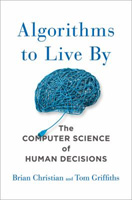
algorithmsAccording to the book, Algorithms to Live By: The Computer Science of Human Decisions, there is an answer to this question.  On page 72 of the paperback copy, they explain the dynamic at work:

“And one of the most central tradeoffs is between sorting and searching.  The basic principle is this: the effort expanded on sorting materials is just a preemptive strike against the effort it’ll take to search through them later.”

On page 73 they state:

“Filing messages by hand into folders takes the same amount of time as filing physical papers in the real world, but emails can be searched much more efficiently than their physical counterparts.  As the cost of searching drops, sorting becomes less valuable.”

Therefore, the advice is to get by with as few email reference folders as possible.  Save the time you would have spent sorting emails for something more useful, like watching adorable kitten videos on YouTube …