
Let’s face it – your mind is lousy at remembering things. Some days it seems that we can only remember one thing at a time. Try to juggle two items in your head and both fall out! Thankfully, technology has created a wide range of tools to offload the responsibility of remembering things.
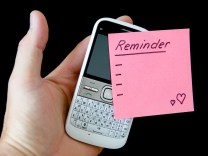 At the low tech end is the humble sticky note. Once something crosses your mind, immediately write it down on the note. This has to be done quickly, as the next shiny object that passes in front of your eyes can cause this thought to be forgotten. The catch with this system is in the management of the physical notes. Lose the sticky note and the thought it captured is gone. For this system to work, the note must go straight into your inbox at the first opportunity for later processing.
At the other end of the scale are the apps on your smart phone. I regularly use the iPhone’s reminder app to capture thoughts and commitments in real time. A wonderful feature of the reminder app is the ability to set an alarm for a time or place in order to resurface the note. For example, when I need to remember to bring in a document from home for work, I’ll place a reminder in the app and set an alarm to trigger that evening. Without fail I’ll notice the pop-up reminder, prompting me to place the document in my bag to bring in to work the following day.
So do yourself a favor and stop trying to remember things. Set up a simple reminder system and let the technology work for you.
 I am proud to announce that my second article for Public Libraries magazine was published in the Nov/Dec 2017 issue. Efficient Librarianship: A New Path for the Profession is an article that explores and expands on the ideas discussed in this blog. Below is a key except from the article:
 What is the value in setting a goal for yourself or your organization? Many cynics discount goals as artificial creations that don’t translate into actual results. They argue that we are going to do the work anyway, so why set up a fake expectation?
 Welcome to 2018! Let me ask you a question. Did you make a New Year’s Resolution before the ball dropped in Times Square? According to a
  This past year I have been studying the work of
  Reading David Allen’s book
  When did you last do a complete weekly review? Work life moves fast, so it is important to take time to reflect on what has happened and what is coming soon. The weekly review is a valuable opportunity to tidy up loose ends, assess progress, and prepare for the upcoming week and months ahead. It allows for a refocusing of attention onto the things that matter instead of the latest and loudest.
 It has long been proposed that one of the secrets to a happy life is finding a work/life balance. This is a magical equation where the right mix of meaningful work offset by an exact amount of normal life activity equals contentment. However, is this really as true as it seems?
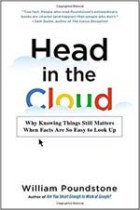 In this book, Head in the Cloud, author William Poundstone explores the question of whether all this online information is only serving to make us less informed. Online information is easier to skim, but hard to dive into deeply. Poundstone specifically highlights a phenomenon known as the Dunning-Kruger effect which can lead people to overestimate their own level of knowledge in a subject area.
 Efficient Librarian