South Central Library System

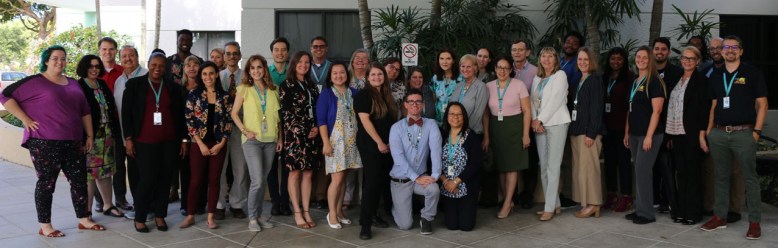
A big thank you goes out to the South Central Library System in Wisconsin for hosting two Efficient Librarian webinars.  Jean Anderson and her team were great to work with.  We had excellent attendance and the participants asked very thoughtful questions.

SCLS has posted the presentations to their continuing education web site.  If you want to view a recording of the two webinars, both one hour in length, here are the links:

sclslogo
Thank you again to Jean the SCLS team.  I hope to work with you again in the future.

The Power of Completion

DA-SmallDo you know how many projects lie unfinished in your world?  As we move through life there is a natural force in us that creates new things as they spark our interest.  Unfortunately, I have found this creation often results in lots of projects that quickly lose focus and instead become a source of stress.  It seems that the catch to managing all the stuff we create is finding a way to bring closure to them.


In his latest blog post, David Allen delves into the entwined powers of completing and creating and how their dance affects our lives.

“Seems that we’re here on the planet to learn about and do two things—complete and create. We are responsible for what we have put into motion on all levels, and we must manage the process of what we are putting into motion every moment. 

“Though both aspects are primary, I think a lot of people could use a good bit more emphasis on the complete part. Our cultural personality seems bent on limitless expansion and not necessarily cleaning up after itself.”

Read the rest of the post at the Getting Things Done web site.


Do You Know the Purpose?

We all got them.  Sometimes they are fun and other times they are a struggle.  Truth be told, they are a fundamental fact of work life that will never go away.  What are they?  Projects!

I was reminded at the NEFLIN workshop this past week that many people tend to think of a project as something big and complicated.  However, most of our projects are actually very small.  David Allen defines a project as anything that requires more than one action to complete.  By that count we have dozens and dozens of projects underway!  Unfortunately, it is far too easy for projects to stall and grow stagnant.  Is there a way to move them along?

flat lay photography of macbook pro beside paper

One approach is to follow the Natural Planning Model from Getting Things Done.  (In the latest edition of the book, it can be found on pages 60-63.)  Every project starts for a reason.  When that reason becomes obscured or forgotten, the energy behind a project can fade.  That is why the first part of the Natural Planning Model is all about purpose.   If you and your team do not clearly understand why the project even exists there will be little energy to see it through.  Another way to think about purpose is to ask the question, “What problem am I trying to solve?”

So what projects are on your plate that have lost focus and energy?  It might be time to take a good long look at the purpose of those projects to see if a little clarity might be the spark to move them forward.

Thank You LLAMA and NEFLIN

A big thank you goes out to ALA’s LLAMA Division and Florida’s own NEFLIN for hosting Efficient Librarian seminars in the last two weeks.

The LLAMA webinar was held on Feb. 27 and featured participation from across the United States.  Special thanks goes out to LLAMA’s Fred Reuland for organizing and managing the webinar.

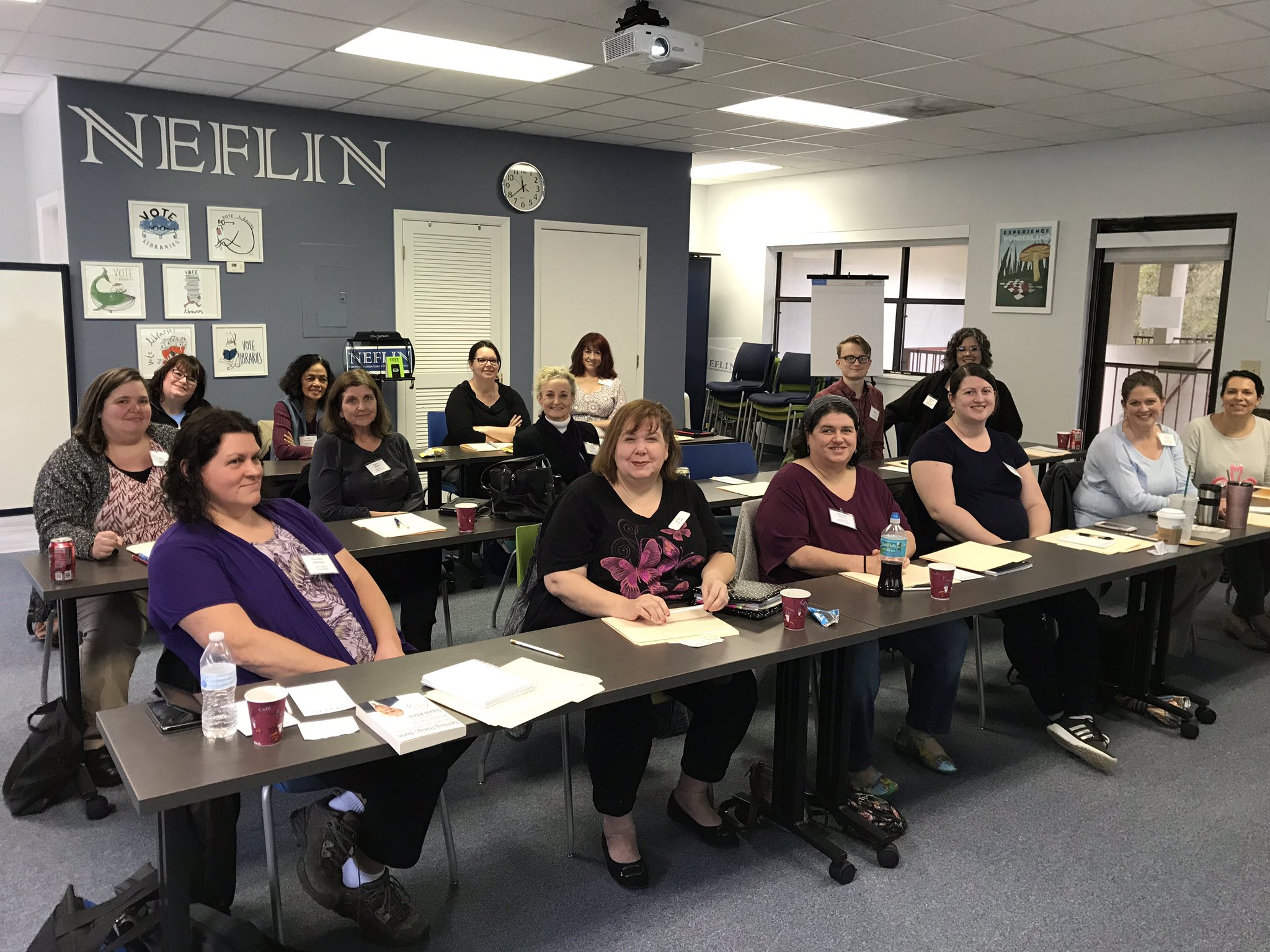
This week’s in person seminar at NEFLIN HQ in Orange Park had 15 eager participants from across northeast Florida participating in the full day experience.  Thank you to the entire NEFLIN staff, Brad, Jenny, Raymond, and Jeannie, for making it a special day for all participants.

If you missed out, don’t worry.  I will be presenting four webinars in March.  Please visit the Workshops and Webinars page to learn dates and times.


Wanted: A Second Brain

forteHave you ever thought it would be nice to have a personal assistant?  How about one that works quietly behind the scenes all day long for free?  This personal assistant would store all your great ideas, important information, and project components so that you can recall them at a moment’s notice.  Such an assistant would relieve stress and expand your creativity.  But could this assistant actually exist?

Tiago Forte has designed a course with the intention to create this amazing personal assistant.  In his signature course, Building a Second Brain, Tiago pulls together cutting edge ideas from the realms of productivity and efficiency into a systematic structure that can work for anyone.  He describes the premise of the course as follows:

“Building A Second Brain is a methodology for saving and systematically reminding us of the ideas, inspirations, insights, and connections we’ve gained through our experience. It expands our memory and our intellect using the modern tools of technology and networks.

“This methodology is not only for preserving those ideas, but turning them into reality. It provides a clear, actionable path to creating a “second brain” – an external, centralized, digital repository for the things you learn and the resources from which they come.”

Intrigued by the idea?  Read the full-length post at Forte Labs to learn the basics of Building a Second Brain.

LLAMA – Efficient Librarian Webinar

I am proud to announce the upcoming Efficient Librarian webinar, presented in partnership with the Library Leadership and Management Association (LLAMA) of ALA.  My intention is to make this a fun, interactive, and highly practical webinar that will provide techniques that can be applied immediately.  The webinar will take place on:

Wednesday, 2/27/2019
  • 2:30 PM-4:00 PM (Eastern)
  • 1:30 PM-3:00 PM (Central)
  • 12:30 PM-2:00 PM (Mountain)
  • 11:30 AM-1:00 PM (Pacific)

LLAMA does require a paid registration for their webinars.  For more information or to register, please visit: http://www.ala.org/llama/efficient-librarian-productivity-strategies-workplace-success

llama

Can’t I Just Ignore It?

Want to guess how many unread emails sit in the average person’s inbox?

10? 20? 40? MORE?

According to a 2017 study, the actual answer is 199!

AdamGrant_2016-headshot_previewAs someone who teaches classes on email productivity, I was dismayed but not surprised by this alarming fact.  The truth is that email comes so fast and furious that it is easy for the unprepared knowledge worker to be overwhelmed.  Yet, is it alright to ignore all those messages and never respond to senders? After all, aren’t they only trying to delegate work onto your already full plate anyway?

In an article for the New York Times, Adam Grant, author of Originals, argues that failing to keep up with your inbox is not only unproductive, but unprofessional as well.  He writes:

“Volume isn’t an excuse for not replying. Ignoring email is an act of incivility.  ‘I’m too busy to answer your email’ really means ‘Your email is not a priority for me right now.’  That’s a popular justification for neglecting your inbox: It’s full of other people’s priorities. But there’s a growing body of evidence that if you care about being good at your job, your inbox should be a priority.”

Read the rest of the article at the New York Times web site.

A Few Thoughts on Procrastination

It has taken me a while, but I have finally come back to the topic of procrastination.  In the surveys for my latest Efficient Librarian workshop, several participants cite procrastination as a big productivity barrier.   After presenting the workshop, a few thoughts on the topic came to mind.

white and tan english bulldog lying on black rug

In Chapter One of Getting Things Done, David Allen wrote about “Why Things are on Your Mind.”   In that section, he lists three reasons.  Any of these three in my opinion can become sources of procrastination.  Let’s look at them.

Lack of Clarity on the Intended Outcome – If we don’t have a clear outcome in mind, there will be little energy to do the work and thus procrastination will set in.

Haven’t Decided on the Next Physical Action Step – Often we don’t have the time to think clearly about our next actions.  Without pre-planned simple physical actions, it is easy to put off progress and procrastinate.

Don’t Have a Trusted System to Store Reminders – It is easy to procrastinate when you have forgotten the goals and actions previously decided.  With life moving quickly, the lack of a trusted system leads us to procrastinate on important items as we chase the latest and loudest.

One final thought on procrastination.  Even if we have clarity on the outcome, the next physical action decided and placed in our trusted system, we still may not do anything if one more detail is lacking: passion.  Quite simply, if we are no longer fired up by the purpose of the project then procrastination becomes the easy default.  Sometimes a project that inspired us in the past is only hanging on because of an internal sense of obligation to it.  Feel free to let those projects go.

Ultimately, the good news is that once we have resolved the three reasons listed above, procrastination quickly dissolves to be replaced by purposeful action and energy.  So, what are you procrastinating about today?  Best not to put it off until tomorrow.

GTD + BASB = Better Person

Personal productivity and knowledge management are related skill sets required for most of us to perform our best at work.  While they are both mostly thought of as functional efficiency tools, did you know their practice can also build virtue?

forteTiago Forte of Forte Labs recently shared his thoughts on how productivity and knowledge management skills can increase our own potential to do good in the world.  By committing to Getting Things Done (GTD) and his own Build a Second Brain (BASB) course, Tiago believes that we will become not only more efficient, but also a better person as a result.  He explains how we start the journey this way:

“Often, when we embark on this journey – learning digital fluency, task management (GTD), personal knowledge management (BASB) and beyond – our motivation is primarily one of utility. We want to stop procrastinating, to get more things done, to excel at our work, and have a vibrant, flourishing career. GTD and BASB will absolutely help you meet those goals.

While on this journey, however, we start to realize that GTD and BASB can serve another purpose: sheer pleasure.”

Learn how this eventually leads to mastering higher virtues by reading the rest of the article at Forte Labs.