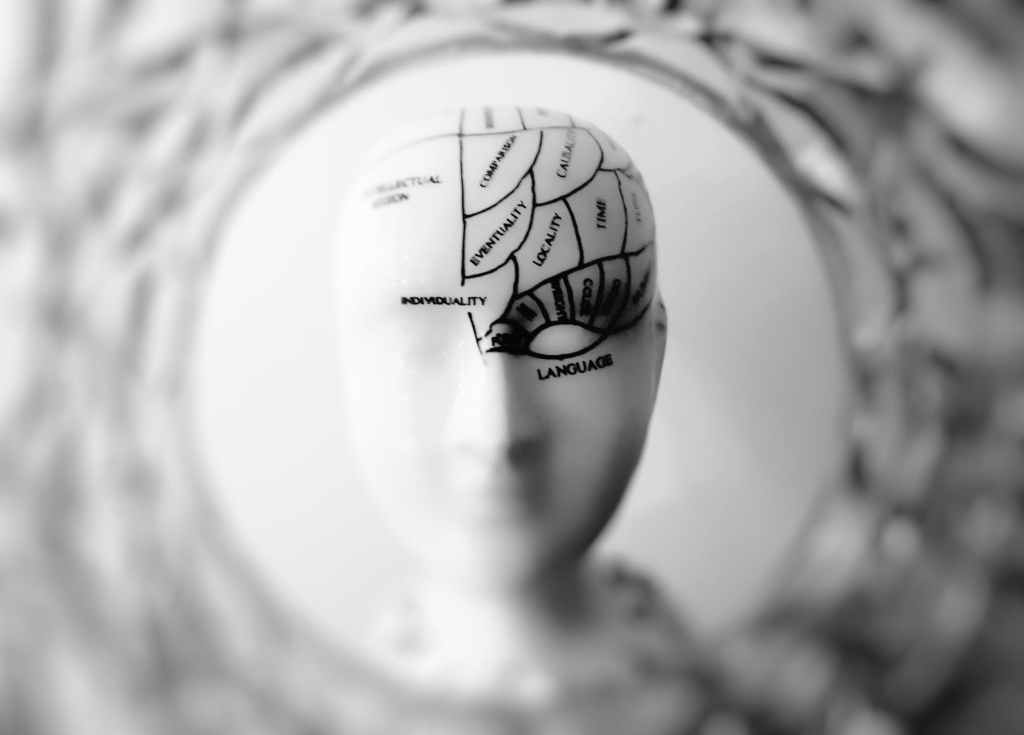
The human brain remains one of the deepest mysteries in biology. It is the most important part of our body, but even with all the advances in neuroscience we still don’t fully understand how it works. In productivity circles it is often assumed that better knowledge of brain function might improve efficiency and creativity.
The brain’s most important job is not thinking or seeing or feeling or doing any of the things that we think of as being important for being human. Its main job is running a budget for your body—to keep you alive, to keep you healthy. So every thought you have, every emotion you feel, every action you take is ultimately in the service of regulating your body. We don’t experience mental life this way, but this is what is happening under the hood.
Meetings are vital to a successful workplace, but at the same time they can be a bane to all involved. When a meeting has no clear objective, is run poorly, or has become a weekly routine it ceases to add value. Yet we also know that meetings can be important to ensure unity on projects, clear the air of misunderstandings, or keep people connected. So what are the secrets to holding good meetings?
“A Clarizen/Harris Poll survey reveals that the average American worker spends 4.5 hours in general status meetings each week, and workers spend even longer (4.6 hours) just preparing for those meetings. Almost half of the survey respondents stated that they would rather perform some type of unpleasant activity—including visits to the dentist or nightmarishly-long commutes—than attend a status meeting. “
So how do we hold good meetings to ensure everyone’s time is well spent? The first step is to understand the purpose of the meeting before even scheduling it. Williams identifies five types of meetings:
Problem Solving
Decision-Making
Planning
Status Reporting/Information Sharing
Feedback
In her article she highlights the best practices for each type of meeting. However, in all cases meeting improve substantially when there is an agenda in place with clear objectives, participants don’t get sidetracked to non-essential items, and the meeting starts on time.
Of course if you don’t want to go through all the trouble to prepare for meetings, or are stuck in one that is going no where, it is not a total loss. You can still do your best to look smart at these meetings by using the techniques of comedian Sarah Cooper. One of her most famous satirical pieces is the 10 Tricks to Appear Smart in Meetings. For a good laugh click over and see if any of them are familiar. I have personally done this one:
#7 – Pace Around the Room “Whenever someone get up from the table and walks around, don’t you immediately respect them? I know I do. Walk around. Go tot he corner and lean against the wall. Take a deep contemplative sigh. Everyone will be freaking out wondering what you’re thinking.”
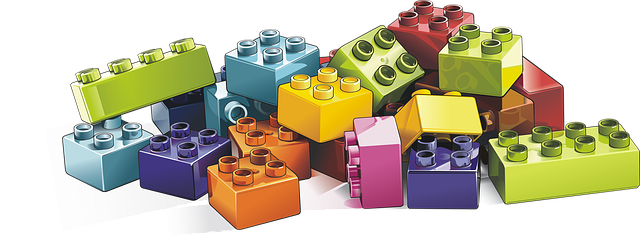
I love to build LEGO sets with my daughter. One of my favorites was the TARDIS control room from Doctor Who and right now the Razor Crest from the Mandalorian. The reason why LEGOs are such a successful toy is that any piece has the ability to connect to any other piece. This means that the combinations are endless, limited only by the imagination.
Recently Tiago Forte of Forte Labs wrote a post on his web site that showed why notes, especially digital ones, are the basic building blocks of knowledge work. He proposed a new definition of a digital note:
A digital note is a “knowledge building block” – a discrete unit of information interpreted through your unique perspective and stored outside your head.
In his post, Tiago illustrates a different perspective on how to view digital notes. They are the LEGOs of knowledge work.
Like a LEGO block, a knowledge building block stands on its own and has intrinsic value. Yet each block can also be combined with others into greater works – a report, an essay, a website, or a video for example.
And just like LEGOs, these building blocks are reusable. You only need to put in the effort to create a note once, and then it can be mixed and matched with other notes again and again for any kind of project you work on, now or in the future.
One of the most fundamental moves in productivity is identifying your next physical action.
You may have heard this statement before especially if have studied Getting Things Done (GTD). In fact the question is at the center of the David Allen’s famous workflow diagram. Why is it so important to identify your next action in a very specific way? Because vagueness is the antithesis of productivity.
The reason is simple to understand. When our actions are undefined the mind has nothing to focus on. Sure it may have a sense of what our completed projects will look like in the end, but to get there involves a series of steps. Most of the time our next actions are self evident and require little thought. However when a project becomes stuck it creates stress and avoidance. That is when defining the next physical action is vital to forward progress. Getting specific forces the mind to focus through visualizing success. Often it only takes a minute to figure out an appropriate next action.
In the book Getting Things Done David Allen provides a classic example of what it means to think this way. Imagine you are overdue to take your car in for an oil change. The next action for almost everyone is not “change the oil” unless you are a DYI car mechanic ready for grease. The next physical action might be any of the following:
Call to schedule an appointment at your favorite garage
Talk to your colleague down the hall who recommended a shop
Search the Internet for local oil change deals
Check your calendar for an open day/time on your vehicle in
What is your next action?
Not having clarity on the next action could mean that oil change will not happen for a long time. Deciding on the next physical action creates greater clarity and makes it far more likely for the project to be completed.
Your challenge is to identify all the stuck projects in your life and decide on a next action for all of them. Taking these steps will boost the odds of completing them while reducing your stress level at the same time. Sounds like a win-win!
In an article by Kenneth A. Kiewra called A Seven-Step Guide to Taking Better Notes, the author starts out by focusing on why it is important to take notes in the first place, especially in an academic setting.
Students who take notes during a lesson achieve more than those who listen to the lesson without note taking. This is because the act of note taking staves off boredom and focuses attention on lesson ideas more than listening without taking notes.
The primary value of note taking, though, is more in the product than the process, more in the reviewing than the recording. Students who record and then review notes almost always achieve more than students who record but do not review notes.
Read the rest of the article on the Quartz web site. If you haven’t done so already, learn the best techniques for digital note taking over at Forte Labs and their signature course, Building a Second Brain.
Recently Forte Labs launched their first ever Second Brain Week. Bringing in experts in digital note taking from around the world, founder Tiago Forte lead a free week of training on how to up your electronic productivity game. Their promise was simple:
Come join us to learn about digital note-taking, organizing, productivity, knowledge management, and online education, and how creating a system of knowledge management for yourself can help you do all of them far more effectively.
While the live sessions are over, everything was recorded and available for free on the Forte Labs web site. So if you want to take your productivity up to the next level, take advantage of the free Second Brain Week sessions available now on demand.
How easily can you decide on what to do next at work? The answer to that question goes a long way towards determining your daily success.
The basic building blocks of knowledge work are next actions and projects. The two are deeply connected. Projects themselves are essentially the outcomes we want, such as finishing a report, losing weight, buying a home, or hiring a new assistant. The next actions are the physical things we do to move projects forward, such as call Joe, read the article, draft an essay, or schedule the next gym class.
In a recent piece piece on the GTD web site, the connection between projects and next actions was explored. It discussed why sorting actions by context rather than project is more helpful than first apparent.
Sorting next actions by context, not by project, can initially seem awkward. Some people are used to having multiple files, piles, notepads, documents, and spreadsheets related to a project, with next actions for the project buried amongst all of that information. Next Actions lists don’t replace project plans—we would just call that data “project support.” In our experience, it rarely works to have current next actions stored with project support for day-to-day action management.
Step One in Foroux’s method was to pick the book wisely. I choose Joy at Work. It is a follow-up to Marie Kondo’s best selling The Life Changing Magic of Tidying Up which focused on the home. My family had fun applying the Konmari principles to our house last summer, so I was curious to see how the philosophy could be transferred to the workplace. Given that I am a firm believer in GTD, I was also interested in learning how her techniques complimented and contrasted David Allen’s classic approach to getting things done.
Let’s be honest, if you search for productivity books in Amazon, the majority of titles shown in the results are written by men. Why is this so? It can’t be that men are the only ones worried about getting things done quickly and efficient. Also, what does this mean for our understanding of productivity itself? Is there something missing if only men are writing about it?
In a recent article at Forte Labs, Lauren Valdez explores this question. She believes one reason for this result is that books written by women are placed into the “organization” category. For example a search for decluttering books in Amazon produces almost the exact opposite result with women being the predominant authors. However, Lauren believes the truth runs deeper than just a matter of odd cataloging.
Productivity is not about optimizing every aspect of your life or being well-versed on the latest and most flashy new app. The point of productivity is to do what brings you pleasure and to have more freedom. We aren’t machines. We are humans.
To be productive, we all need to balance the logical, technical side with the emotional, intuitive side. These can be understood as masculine and feminine energies. I define masculine-energy as associated with logic, order, and the technical, whereas feminine energy is associated with intuition, self-awareness, and creativity.
Another way we can think about this is using the left-side and right-side of thebrain. Most productivity advice lies on the masculine side, but you need the yin and yang balance between both these energies. No matter where on the gender spectrum you fall, we all can tap into our masculine and feminine energies.