Personal Productivity Stacks

We rely on a wide range of technology to get things done. However, if we don’t apply the right tool in the right way, we can end up undermining our efforts. To avoid this problem we need to spend time understanding the structure of knowledge work. This will guide us to use the right tool the right way for better results.

Tiago Forte has thought deeply about how to be more productive and creative at the same time. In a recent posting on his web site called How to Build Your Personal Productivity Stack, he discusses how technological change can both make our work easier and more frustrating.

Each wave of technology does legitimately solve a new problem from the previous wave, and – if harnessed correctly – can move us closer to our goals: the experiences and feelings that we want more of. 

But if you’re like most people, you’re probably using email for multiple purposes far beyond what it was designed for:

  • You use email to send messages
  • You use email as a to-do list
  • You use email to keep track of notes and ideas
  • You use email to manage complex projects and areas of your life

These are extremely different use cases, and using one platform for all of them ensures it fails at all of them.

To be more effective, Tiago breaks down the four key components of knowledge work.

To perform each of them effectively, you have to break apart each of the four essential activities of modern work – Email, Task Management, Notetaking, and Project Management – and use the right tool for each of those jobs.

I call these four functions a “Productivity Stack,” since each one is layered on top of and builds on the one before.

To learn more, read the rest of his post on the Forte Labs web site.

Time Hack: Choice

The old saying goes that everyone gets the same 24 hours a day. What we do within that time shapes our life. While large parts of our day are spent sleeping and working, there are hours where we get to pick our actions. In a recent article on MIT Press, author Michelle Drouin notes that the average amount of available leisure time has increased. However, there is one activity that dominates this free time.

The average American spends 22 minutes a day participating in sports, exercise, and recreation; 32 minutes per day socializing or communicating; and 26 minutes per day relaxing or thinking. In contrast, they spend 211 minutes per day watching TV. That’s 2.6 times more time watching TV than exercising, relaxing, and socializing combined.

Photo by Burak Kebapci on Pexels.com

This huge devotion to screen time limits our productivity and also makes us unhappy. In order to get out of this rut, we need a new tool.

But research also shows that by taking steps to make sure our social compromises are our own choices — not based on the way technology makes us feel — we can employ the best time hack of all. It’s called social economizing, and it means we make active decisions about how we spend our time, and we then save and invest our time where we want.

To learn more about how this hack works, I encourage you to read the rest of the article.

As well, check out Michelle Drouin’s book Out of Touch: How to Survive an Intimacy Famine.

Konmari Approach to Gift Giving

It’s the holiday season and between thoughts of mistletoe and colored lights, most of us are shopping for gifts. However, gift giving can be very stressful. Will it fit them? Will it work in their home? Will they even like it? How do we make better choices when it comes to selecting gifts?

Marie Kondo has ideas on how to choose gifts that will spark joy. For starters, she suggests thinking about the recipient’s lifestyle.

Now, before I search for a gift, I imagine what would spark joy based on the recipient’s lifestyle. I recall specific details about their daily routines, living quarters, and interests: How much space do they have? What activities do they like to do? What objects do they treasure?

Once I’ve considered the details of their day-to-day lives, I can search in earnest.

She also provides an important perspective on not getting attached to the ultimate fate of the gift.

The true purpose of a gift is to be received – whether or not it’s used and loved for years to come is besides the point.

Learn more about how Marie picks gifts on her web site.

Plus, if you want to learn more about Marie’s approach to receiving gifts, please reread my blog post on the topic from 2018.

Benefits of Relaxation

This past two years have been a stressful time. We see it in our politics, our workplaces, and even in our private lives. Chronic stress is well known to be a health hazard which is very problematic with COVID-19 still circulating in the population. With Thanksgiving a few days away, right now is a good time to dedicate yourself to purposeful relaxation.

The benefits of relaxation have been widely studied. They impact us physically, mentally, and energetically. On their website, Advent Health provides a list of ten benefits of relaxation. Here is the first one, improved concentration:

If stress begins to overpower your ability to focus, it may be difficult to accomplish even simple tasks. Relaxation techniques can help give you something else to focus on, allowing your mind a chance to clear. 

Photo by Artem Beliaikin on Pexels.com

Another important reason relaxation is very important is that it lowers blood pressure.

As your body reaches a state of relaxation, your breathing becomes slower and causes your body to slow down other functions. As your heart rate slows, your overall blood pressure lowers.

Read other eight at the Advent Health web site.

If you need some tips on how to relax, Healthline provides six simple ideas such as breathing it out and writing down your thoughts.

Finally, I wish everyone a very Happy Thanksgiving.

Can you have purpose without passion?

There is a long standing idea that if you are not excited about doing something, then it is not for you. Passion for our work is said to drive us to do it better and stick with it when we are in rough times. How true is this idea?

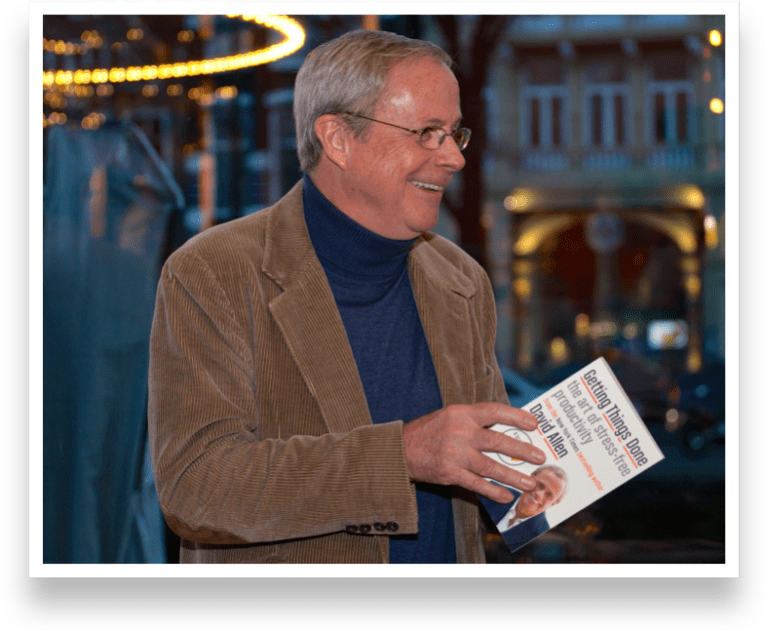
According to David Allen, passion and purpose may be misunderstood. In a recent blog post titled, Go beyond passion to peaceful purposefulness, he shares thoughts about the connection between the two. To begin, he points out his resistance to passion.

I have been attempting to understand why it bugs me to hear professional motivators talk about the necessity for “passion” to be successful. Perhaps I’m just getting too old and lazy to be interested in jacking up my emotions about anything. (Getting passionate about something usually seems to me like hard work.) Or perhaps it’s the fact that jacked-up emotional states are not something you need or even want, to be successful.

Instead of passion, Allen shifts the mindset to the concept of identification.

I think I know what the motivators are referring to. There is a quality of intensity of commitment that resides with successful people. But rather than “passion” I would suggest the word “identification.” When you really identify with something, whether it is some intended outcome or some internal standard about your reality, it creates a true motivational energy to make it happen. But that does not at all mean a hyperemotional state.

Read his full post on the Getting Things Done web site.

Should We Keep Working From Home?

Over the past year did you get an opportunity to work from home? In my case I did it for a couple of days, but otherwise worked in my library office. My case was different from many people who shifted to a part time or fully virtual work situation. To reduce COVID spread, companies across many industries offered their employees the flexibility to work from anywhere. However, the big question yet to be answered is whether this change has enabled greater productivity and satisfaction or if it has become an impediment to creative teamwork. The initial answer to this question is a big maybe!

I recently came across two good explorations of this topic. The first was an article from The Guardian titled The empty office: what we lose when we work from home. Reporter Gillian Tett explored the this idea: For decades, anthropologists have been telling us that it’s often the informal, unplanned interactions and rituals that matter most in any work environment. So how much are we missing by giving them up?

Of particular interest is a look at the Internet Engineering Task Force (IETF), a group that designs the underlying architecture of the Internet. Over the years the IETF developed a fascinating way to poll the collective body on decisions. In a conference room, the group will ask members to hum to show support or opposition to an idea. It is a type of decision making process that can only work effectively in a real world environment. As Tett notes:

When the IETF members use humming, they are reflecting and reinforcing a distinctive worldview – their desperate hope that the internet should remain egalitarian and inclusive. That is their creation myth. But they are also signalling that human contact and context matter deeply, even in a world of computing. Humming enables them to collectively demonstrate the power of that idea. It also helps them navigate the currents of shifting opinion in their tribe and make decisions by reading a range of signals.

Photo by Vlada Karpovich on Pexels.com

Other view of the effects of work from home can be found in a recent Freakonomics podcast titled Will Work from Home Work Forever? In the middle of the podcast host Steven Dubner interviews economist Steven Davis about his studies on working from home prior to the pandemic and then a year afterward. Davis’ findings are illuminating.

The real benefit to being at the office is face-to-face interaction — which might be painful if it’s your boss reprimanding you, but this concept of a knowledge spillover — all of that causes, we think, productivity to be higher at the office than at home. But we also think working at home is not as unproductive as it used to be. Because we have all of these tools at our disposal.  

Later on in the podcast, Dubner interviews Raj Choudhury of the the Harvard Business School. His multiple year study of remote work done by U.S. Patent Office employees demonstrated measurable benefits from working at home. He found the examiners were 4.4% more productive at home than in the office. However, he also discovered another factor at play, increased loyalty.

And the story that came was one of loyalty. That “I was really helped by this policy because now I could move to Philly and my daughter needs some medical treatment, which is only available in Philly. No other organization will let me work in Philly and do the kind of work I’m doing. So I have to give something back.”

The factors that will determine the long term success of working from home are still being figured out. To learn more about the direction of work from home, I highly recommend both these Guardian and Freaknomics pieces. They are well worth the read and listen.

Second Brain Myths

Forte Labs signature course, Building a Second Brain is one of the best ways to get your digital life under control. Through a combination of simple practices it is possible to create a great online resource for all your notes that will enhance your creativity and improve your productivity.

However, there are many misconceptions on what it means to Build a Second Brain. In a recent post on his web site, Tiago Forte explores nine of them. For example, one of the issues he lists is a concern that doing this work will require a major overhaul of a person’s digital life.

Tiago explains:

This couldn’t be farther from the truth. A Second Brain is adaptive, like a living organism – messy, organic, and highly adaptable. Just like your first brain, a Second Brain has natural “plasticity,” with many ways of accomplishing any given task. When one part of your system is missing, another part can adapt and evolve to make up for it.

In the 4 steps of my CODE framework – Capture, Organize, Distill, Express – any incremental improvement immediately makes a difference, whether or not the other parts of the system are already in place. You don’t have to wait for each of the pieces to work in perfect harmony to start producing value.

To learn more about the power of Building a Second Brain and to clear up other misconceptions, please read the rest of the article.

Tips for Virtual Speaking

It used to be that many people were afraid to stand up in front of a room to give a presentation. With COVID sidelining most public gatherings, the fears have moved to the virtual realm. On the surface it should seem easier to speak on Zoom. Many virtual participants leave their camera’s off or the presenter can choose to minimize them away. However, this makes for an even more challenging problem: audience disengagement. Virtual speakers have to up their game in order to hold the attention of the audience. In turn, presentations require even more preparation and practice to make them engaging.

To help improve virtual presentations, Ljana Vimont managing director of Stinson Design wrote an article for the web site Presentation Guru. In it she provides ten tips to create and present great virtual presentations. For example, number 5 is:

Involve Your Audience

When you give a live presentation, you probably ask the audience questions, tell them to raise their hands or involve them in some other way to help keep them engaged. The same is true when giving a virtual presentation.

Get comfortable with the presentation software and learn how to ask people to raise their virtual hands and let them know at the beginning of the presentation that you will be calling some of them out and asking them questions. Create a plan for how you will incorporate audience interaction.

Photo by Julia M Cameron on Pexels.com

Take a look at the other nine tips on the Presentation Guru web site.

Reflections on How to Read Self-Help

Throughout my life I have been a regular reader of self-help books. Whether they spoke about yoga, leadership, productivity, habits, or grit, I often found fascinating tips and tricks to apply. However, there are times when I feel burned out by self-help material. Sometimes it can feel trite or repetitive to the point of annoyance. In down times it makes me wonder whether one can really change at all.

Recently, I was pointed to a fresh understanding of the value of self-help books in an article on Tom Cleveland’s blog called How to Read Self-Help. In the article, Tom reflects on the paradox of people’s feelings towards these books.

We’re embarrassed by self-help, but we’re also attracted to it. We like reading it, but we’re skeptical that it works. We suspect self-help isn’t useful, but every serious list of business books turns out to be comprised entirely of self-help books.

Photo by Zen Chung on Pexels.com

As he explores it further, Tom comes to the realization that that subject of self-help is more complex than it first appears.

I’m going to argue that it’s both. Some self-help is terrible, individualistic hucksterism that the US has exported around the world. But good self-help also exists, and it provides a high-leverage way to lead a better, more fulfilling life.

He then formulates a theory about the way that self-help works. To find out what it is, read the full article.