The Second Brain Manifesto

Over the years I have highlighted the work of Tiago Forte whose signature course, Building a Second Brain, will be a major book release. In anticipation of this event, Tiago has posted The Second Brain Manifesto. This document expresses the core reasons why we should all improve our digital note taking skills.

At the core of the manifesto is the notion that ideas are the new currency. The manifesto starts with the following:

We believe that ideas represent one of the most powerful forces in the world today

Ideas are not mere playthings. They are the building blocks of the modern world. Ideas inform our thinking and behavior every day. We depend on new ideas to improve our health, productivity, and relationships. To understand culture, politics, science, and history. New ideas breathe fresh life into how we view the world.

View the rest of The Second Brain Manifesto on the Forte Labs web site.

What Your Brain Really Does

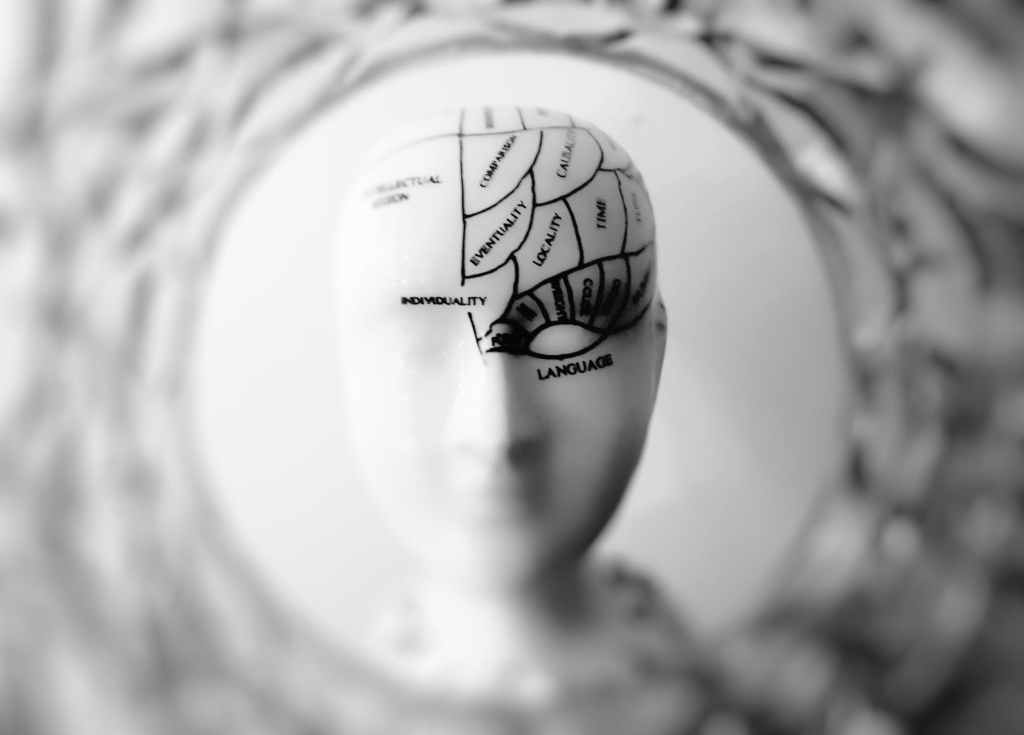
The human brain remains one of the deepest mysteries in biology. It is the most important part of our body, but even with all the advances in neuroscience we still don’t fully understand how it works. In productivity circles it is often assumed that better knowledge of brain function might improve efficiency and creativity.

Photo by meo on Pexels.com

In a recent interview in GQ magazine, neuroscientist Lisa Feldman Barrett reveals surprising facts about how our brains really work. For starters she reveals what the brain’s most important role is:

The brain’s most important job is not thinking or seeing or feeling or doing any of the things that we think of as being important for being human. Its main job is running a budget for your body—to keep you alive, to keep you healthy. So every thought you have, every emotion you feel, every action you take is ultimately in the service of regulating your body. We don’t experience mental life this way, but this is what is happening under the hood.

Read the rest of the article on the GQ web site or pick up her new book: Seven and a Half Lessons about the Brain.

How to Run Smarter Meetings (or just Appear to be Smarter at Them)

Meetings are vital to a successful workplace, but at the same time they can be a bane to all involved. When a meeting has no clear objective, is run poorly, or has become a weekly routine it ceases to add value. Yet we also know that meetings can be important to ensure unity on projects, clear the air of misunderstandings, or keep people connected. So what are the secrets to holding good meetings?

One point of view comes from Terri Williams at the Economist magazine. In an article titled, “How to stop wasting your time—and everyone else’s—in meetings” she shares this startling fact:

“A Clarizen/Harris Poll survey reveals that the average American worker spends 4.5 hours in general status meetings each week, and workers spend even longer (4.6 hours) just preparing for those meetings. Almost half of the survey respondents stated that they would rather perform some type of unpleasant activity—including visits to the dentist or nightmarishly-long commutes—than attend a status meeting. “

So how do we hold good meetings to ensure everyone’s time is well spent? The first step is to understand the purpose of the meeting before even scheduling it. Williams identifies five types of meetings:

  1. Problem Solving
  2. Decision-Making
  3. Planning
  4. Status Reporting/Information Sharing
  5. Feedback

In her article she highlights the best practices for each type of meeting. However, in all cases meeting improve substantially when there is an agenda in place with clear objectives, participants don’t get sidetracked to non-essential items, and the meeting starts on time.

Of course if you don’t want to go through all the trouble to prepare for meetings, or are stuck in one that is going no where, it is not a total loss. You can still do your best to look smart at these meetings by using the techniques of comedian Sarah Cooper. One of her most famous satirical pieces is the 10 Tricks to Appear Smart in Meetings. For a good laugh click over and see if any of them are familiar. I have personally done this one:

#7 – Pace Around the Room
“Whenever someone get up from the table and walks around, don’t you immediately respect them? I know I do. Walk around. Go tot he corner and lean against the wall. Take a deep contemplative sigh. Everyone will be freaking out wondering what you’re thinking.”

Have fun with the other nine!

Notes = LEGOs

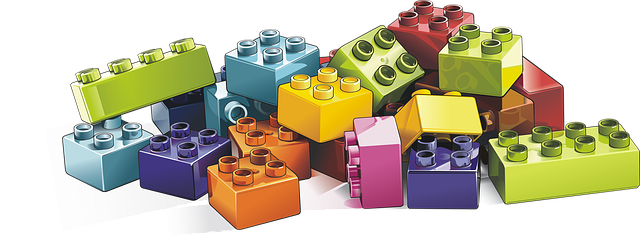
I love to build LEGO sets with my daughter. One of my favorites was the TARDIS control room from Doctor Who and right now the Razor Crest from the Mandalorian. The reason why LEGOs are such a successful toy is that any piece has the ability to connect to any other piece. This means that the combinations are endless, limited only by the imagination.

Recently Tiago Forte of Forte Labs wrote a post on his web site that showed why notes, especially digital ones, are the basic building blocks of knowledge work. He proposed a new definition of a digital note:

A digital note is a “knowledge building block” – a discrete unit of information interpreted through your unique perspective and stored outside your head. 

This is similar to a definition of a note that I made in my article on Efficient Librarianship in Public Libraries magazine. In that article I stated that a note was “an information artifact of perceived value.”

In his post, Tiago illustrates a different perspective on how to view digital notes. They are the LEGOs of knowledge work.

Like a LEGO block, a knowledge building block stands on its own and has intrinsic value. Yet each block can also be combined with others into greater works – a report, an essay, a website, or a video for example.

And just like LEGOs, these building blocks are reusable. You only need to put in the effort to create a note once, and then it can be mixed and matched with other notes again and again for any kind of project you work on, now or in the future.

Read the whole article for free on the Forte Labs web site.

Second Brain Crash Course

Recently Forte Labs launched their first ever Second Brain Week. Bringing in experts in digital note taking from around the world, founder Tiago Forte lead a free week of training on how to up your electronic productivity game. Their promise was simple:

Come join us to learn about digital note-taking, organizing, productivity, knowledge management, and online education, and how creating a system of knowledge management for yourself can help you do all of them far more effectively.

While the live sessions are over, everything was recorded and available for free on the Forte Labs web site. So if you want to take your productivity up to the next level, take advantage of the free Second Brain Week sessions available now on demand.

Brutal Truths About Productivity

The feeling of being productive is awesome. There is a deep satisfaction in checking stuff off our to-do lists. However, there is a difference between being productive with simple tasks versus complicated projects. In the book Joy at Work, which I summarized last week, Marie Kondo makes a distinction between the urgent and the important. Urgent things are usually the small tasks that are easy to do but ultimately make little difference to our lives. The important tasks are hard to do, but make the most impact towards our larger goals and objectives. True productivity comes down to focusing on the latter and not the former. But how do we do this?

In an article in the Pocket web site, Thomas Oppong share 6 Brutal Truths about Productivity that can help people focus on what is truly important. For example, one of the six truths has to do with power of getting started.

The biggest hurdle for many of us is simply getting started. Making that important decision to take a step. You can be as big and successful as you can possibly imagine if you build that mindset you need to push yourself to make that all important decision to just start.

You have everything you need to make an impact in the world if you can get past the many reasons why should postpone that task. Don’t think too far into the future.

Use what you have right now at where you are and witness the magic of getting things done.

Read the other five truths on the Pocket web site.

Is this what Productivity is Missing?

Let’s be honest, if you search for productivity books in Amazon, the majority of titles shown in the results are written by men. Why is this so? It can’t be that men are the only ones worried about getting things done quickly and efficient. Also, what does this mean for our understanding of productivity itself? Is there something missing if only men are writing about it?

In a recent article at Forte Labs, Lauren Valdez explores this question. She believes one reason for this result is that books written by women are placed into the “organization” category. For example a search for decluttering books in Amazon produces almost the exact opposite result with women being the predominant authors. However, Lauren believes the truth runs deeper than just a matter of odd cataloging.

Productivity is not about optimizing every aspect of your life or being well-versed on the latest and most flashy new app. The point of productivity is to do what brings you pleasure and to have more freedom. We aren’t machines. We are humans.

To be productive, we all need to balance the logical, technical side with the emotional, intuitive side. These can be understood as masculine and feminine energies. I define masculine-energy as associated with logic, order, and the technical, whereas feminine energy is associated with intuition, self-awareness, and creativity.

Another way we can think about this is using the left-side and right-side of the brain. Most productivity advice lies on the masculine side, but you need the yin and yang balance between both these energies. No matter where on the gender spectrum you fall, we all can tap into our masculine and feminine energies.

Read the rest of the article on the Forte Labs web site.

How to Stay Positive in Stressful Times

With the daily onslaught of tough news in the midst of the pandemic, is it possible to stay positive in these down times?

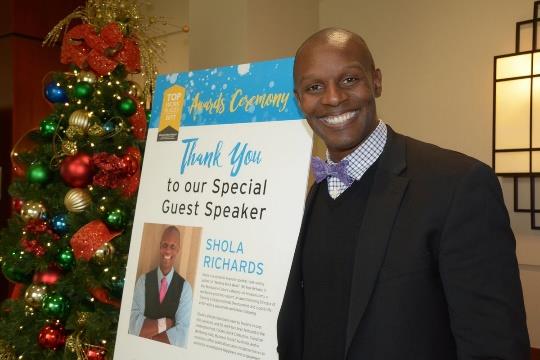
Last month our regional library cooperative SEFLIN offered an answer with the help of Positivity expert Shola Richards. I had the good fortune of meeting Shola in person at the Florida Library Director’s meeting in Tallahassee. His energy and enthusiasm for making our workplaces better is refreshing and inspiring. In his webinar, Shola laid out the keys to staying positive in the face of adverse conditions. Below is my understanding of two important keys to achieve peace in this crazy world.

Shola Richards

Focus on What You Can Control

Shola suggested we let go of the things outside of our control and recognize all the things we can control. Whether it is helping others, being kind, cleaning, talking a walk, or starting a new hobby, we can always shift ourselves with the right intention. Specifically, he identified three things we have power over:

  • Our Actions – What can I do to make a difference?
  • Our Effort – Am I doing my best?
  • Our Attitude – Is what I am doing filling me up or draining me?

Practice Self Compassion

Shola encouraged participants to recognize that life is hard right now. So it is okay to lower your expectations and celebrate small wins. We simply cannot do all the things we use to do. Slowing down provides us time to be kind to ourselves and others. We can enjoy small indulgences, like that extra piece of chocolate or another episode of your favorite show, knowing that it is helping us get through another day. Self-compassion not only helps you, but also everyone you are living with as it creates a less stressful environment.

To learn more about Shola and the Positivity Solution, I encourage you to visit his web site and sign up for his weekly newsletter. While there, you can also view his TEDx Talk.

Where to Find Good Ideas

When was the last time you had a good idea?

Think about that question for a moment. Does something strike you as odd? Most obvious is the problem of how can we judge if the idea was “good.” What seems awesome in the moment can turn out to be faulty later. Conversely, what was dismissed as so-so now could have great merit when applied.

Most striking for me, the question implies that each person is solely responsible for creating their own ideas. But the funny thing is that ideas are not commonly born straight out of divine inspiration. Even if it seems that the idea come from nowhere, it likely has mundane origins. The truth is that ideas require other ideas to give them form and to evolve.

After all, fires don’t start just by thinking about them. They originate from the combustion of different elements, be it two sticks rubbed together or a match and lighter fluid. It is the same with originality. New ideas do not appear on its own, but show up when different ideas are combined together to produce something new.

Photo by Vlad Bagacian on Pexels.com

This means the fastest way to create “good” ideas is to expose yourself to as many ideas as possible. Whether they come from books, articles, conversations, or observations, having an abundance of ideas to work with greatly increases the chance of finding one that is transformational. Like puzzle pieces, pick up as many as possible and place them together in different combinations. Play long enough and you soon end up with a beautiful picture.

Photo by Pixabay on Pexels.com

So when was the last time you had a good idea?

Don’t worry about answering that question. Instead ask, “Where will I find the next great idea?”

Then expose yourself to as many ideas from as many different fields as possible to see what sticks. Don’t wait, this post has ended, so start looking now!