We’re Stronger Together: A Conversation with ALA President Emily Drabinski

I recently had the opportunity to interview the new ALA President Emily Drabinski on behalf of Public Libraries Online. As she begins her year in the role, I asked her how she became involved with ALA at a national level.

I’ve been an academic librarian in New York City for 22 years. I joined ALA in 2002 when I had just finished library school, because it took this bold position against the Patriot Act. I was excited to be part of a profession that takes difficult stances in difficult political moments. And we definitely are in one of those right now. So I was interested in using some of my skills as a connector of people to work inside the association that I think can be valuable in this moment. My involvement at ALA was primarily in my division home, ACRL, which is common for most people. I was on a number of its committees and have been editing the book reviews for our journal for the last three years. I served one term as ALA Council and that was a really interesting experience. I saw how the sausage gets made a little bit, in terms of what kind of a national presence ALA has, which I think is really important.

Later on in the interview, I asked her to share her priorities for the Presidential year. Her first priority is to advance sustainability in libraries.

Past Presidents say you plan and then the year happens. My plan is to focus on bringing to completion projects that Past Presidents Lessa Kanani’opua Pelayo-Lozada and Patty Wong worked on. For a long time, ALA has had sustainability as a priority. We have a round table, we have a council committee, and we have sustainability now as a core value. So will be focused on tying up those loose ends so that we can have national climate strategy for libraries coming from ALA to guide people in managing through environmental crises. Also it will include ways that we as institutions can contribute to reversing some of those climate change trends.

Read the entire interview at the Public Libraries Online website.

Obama’s Letter to Librarians

This past week former President Barak Obama surprised librarians across the country by releasing a letter of support. In it he spoke openly about the free expression of ideas and the importance of libraries.

Below is the opening of the letter:

To the dedicated and hardworking librarians of America: 

In any democracy, the free exchange of ideas is an important part of making sure that citizens are informed, engaged and feel like their perspectives matter.  

It’s so important, in fact, that here in America, the First Amendment of our Constitution states that freedom begins with our capacity to share and access ideas – even, and maybe especially, the ones we disagree with.  

More often than not, someone decides to write those ideas down in a book.  

Later in the letter he expresses deep appreciation for librarians and their work.

Nobody understands that more than you, our nation’s librarians. In a very real sense, you’re on the front lines – fighting every day to make the widest possible range of viewpoints, opinions, and ideas available to everyone. Your dedication and professional expertise allow us to freely read and consider information and ideas, and decide for ourselves which ones we agree with.  

That’s why I want to take a moment to thank all of you for the work you do every day — work that is helping us understand each other and embrace our shared humanity.  

Read the rest of the letter on the Penguin Random House website.

Good News for Library Funding In Florida

Is your community long overdue for a new public library? After many years of effort, it is welcome news to see a major funding increase for public libraries in the 2023-24 Florida Budget. This is due to a dramatic increase in the amount of money allocated for public library construction grants.

The Public Library Construction Grants program has been largely overlooked for most of its existence. However, this year the Florida Legislature allocated over $9 million dollars to the fund. This appropriation triples the past largest amount for construction grants and will allow 19 projects across the state to receive between $300,000 to $500,000 each towards construction costs.

Photo by Rene Asmussen on Pexels.com

Appreciation for this increase goes to the Legislative leadership in the Florida House and Florida Senate, along with the appropriation chairs on both sides. Further appreciation goes to the Governor for approving this significant increase, along with support from the Florida Secretary of State.

As well, this effort would not have happened without the determined lobbying of the Florida Library Association and their contracted lobbying team at GrayRobinson.

Building more public libraries will enhance our communities, support local education, enhance access to voting, and demonstrate without a doubt that Florida Libraries are Fundamental to Freedom.

Florida Libraries are Fundamental to Freedom

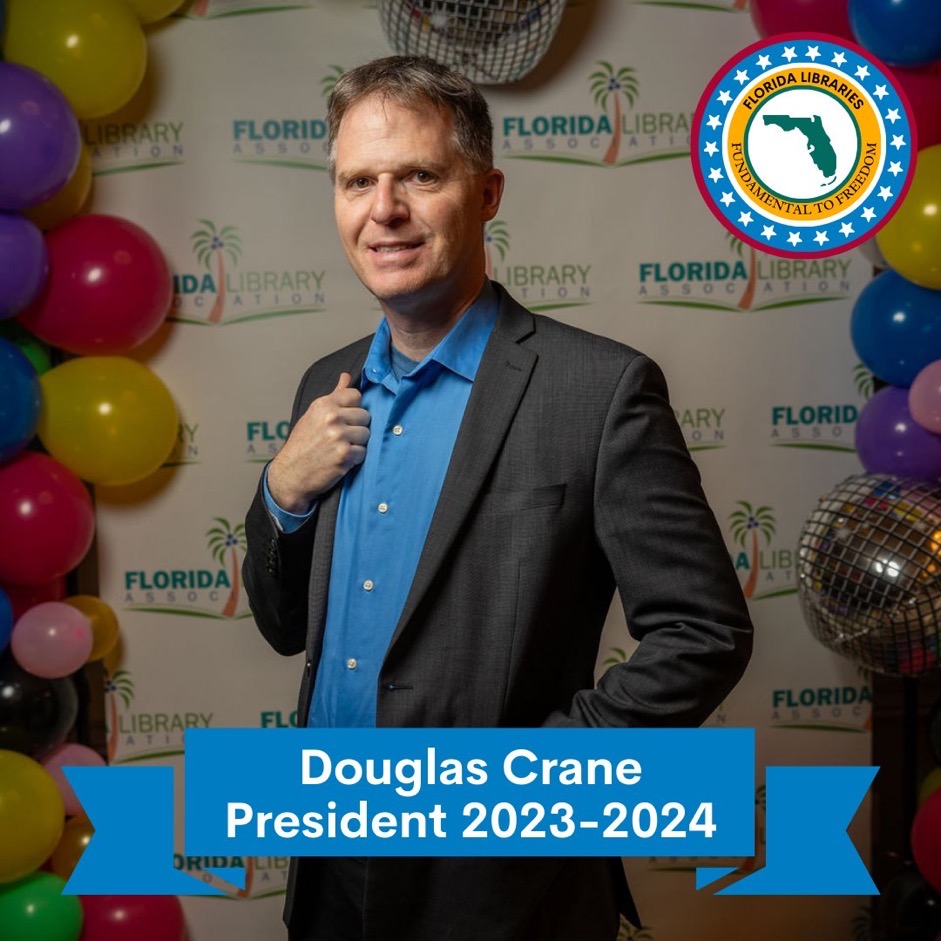
On May 19, 2023, I became President of the Florida Library Association. At the conference in Dayton Beach, I unveiled the Presidential theme: Florida Libraries are Fundamental to Freedom. Below is the opening portion of the speech explaining the theme and how it is important to the work that libraries are doing today.

Florida libraries are fundamental to freedom.

The drafters of the Declaration of Independence believed in the essential rights to life, liberty, and the pursuit of happiness. Since 1776, our nation has struggled to apply these principles equally across all its residents in order to create that elusive more perfect union. At its core, the freedoms that Americans seek are the same freedoms supported by our libraries. Of these aspects of liberty, three specific freedoms stand out for me.

Florida libraries support the freedom to participate. In an increasingly fractious society, our buildings remain the one space where everyone is welcome. Through our libraries, residents can find all the tools and resources needed to live their lives. Whether it is using public computers to apply for benefits, meeting neighbors at a children’s story hour, or to register to vote and actually vote, libraries remain central to our communities. Eric Klinenberg in his book, Palaces for the People, states that a founding principle of libraries is, “that all people deserve free, open access to our shared culture and heritage, which they can use to any end they see fit.”

Read the full speech found on the Efficient Librarian website.

Right to Read Day

It is a sad but true fact that some people consider reading to be a dangerous activity. Of course, history is full of examples where repressive regimes have sought to prevent their citizens from reading certain books, even going as far as burning them! (The books usually, but sometimes the reader as well.) When this takes place, it is essential that all who value learning and literature fight for the freedom to read.

The American Library Association has been America’s leading champion in the fight against censorship. This year for National Library Week, they have declared today to be the Right to Read Day. As they explain on their website:

The Monday of National Library Week – April 24, 2023 – will mark one year since the launch of the Unite Against Book Bans campaign. To honor the occasion, we’re calling on readers, advocates, and library lovers to fight back against censorship in a national day of action to defend, protect, and celebrate your right to read freely. We’re calling it Right to Read Day.

On the same day, the American Library Association will release its list of the Top 10 Most Challenged Books of 2022. The list follows ALA’s recent unveiling of data showing record-shattering attempts to remove books from school and public libraries, and it shows us what types of books are being challenged the most and why.

It’s also a call to action.

Join us on #RightToReadDay and beyond by participating in the actions below to support your library and defend the freedom to read in your community.

Do you want to help protect the freedom to read as an essential human right? Learn the five steps that you can do today or any day to fight for the right to read.

How to Talk About Book Bans

It seems that every day the news reports another school district or public library being inundated with demands to ban books. Looking back in history these moral panic waves hit every couple of decades, but their effects if successful last for a long time. Often it is a vocal minority that powers these attacks on the freedom to read. Yet, when it comes down to the facts, do a majority of people support ban books. The truth is clearly they do not.

According to United Against Book Bans, 71% of voters oppose banning books in public libraries and a similar 67% oppose it in schools. The problem is that most people don’t realize the underlying negative impacts that book bans have on minorities and other targeted groups. How do we reach out to the silent majority who oppose book bans to educate and activate them on this important issue?

Photo by Element5 Digital on Pexels.com

Kelly Jensen writing for Book Riot recently authored an article titled: How to Talk about Book Bans with Friends, Library Patrons, and More. In the piece she provided helpful tips to encourage supports to speak out against book bans. For friends she suggests a few things including:

Share data, statistics, and research as much as you do the terrible and/or click-y stories about the absurdity of certain challenges. It IS ridiculous that books about sports heroes were banned in a Florida school district. But what is also absurd and far more actionable is noting that book bans are extremely unpopular with the public (research) and that when given the choice to opt their kids out of school library materials, it is the smallest minority of parents who do (research).

When talking to library patrons, she suggests many approaches, including sharing widely when a book challenge takes place:

If your library is dealing with a book challenge, make sure your power users know that they need to attend the board meeting and/or submit a letter in support of the book. As noted in the previous section, use the data, research, and statistics to back up the need for the library to include materials for all.

Read the rest of the article on the Book Riot website.

Efficient Librarian In-Person Workshops and Webinars Announced for Early 2023

This year I will be back on the road doing in-person classes in New Orleans and across Florida, along with several virtual offerings.

Most of the trainings listed below are sponsored by a Florida Library Cooperative and are free of charge to Florida library staff. Non-Florida library staff may register for a reasonable fee. The January 29th session is part of the LibLearnX Conference and is free of charge to registered attendees.

If you are interested in having a workshop in your area, please reach out to me at efficientlibrarian@gmail.com. I look forward to seeing you at an upcoming workshop.

From Inbox to Completion: The Secrets to Successful Workflow
January 25, 2023, 2-3 pm (EST)
Webinar
Sponsored by SWFLN

Finding Your Leadership Pathway
January 29, 2023, 1 pm – 4 pm (CST)
Ernest N. Morial Convention Center
LibLearnX Conference – New Orleans, LA

The Efficient Librarian
February 3, 2023, 9 am – 12:30 pm (EST)
Palm Beach County Library System – Hagen Ranch Road Branch
Sponsored by SEFLIN

Finding Your Leadership Pathway
March 3, 2023, 9 am – 12:30 pm (EST)
Palm Beach County Library System – West Boca Branch
Sponsored by SEFLIN

Managing Employee Performance: A Simple Formula for Talking with Staff
March 6, 2023, 2-3 pm (EST)
Webinar
Sponsored by SWFLN

Finding Your Leadership Pathway
March 7, 2023, 1 pm – 4:00 pm (EST)
NEFLIN HQ – Orange Park, FL
Sponsored by NEFLIN

The Efficient Librarian
March 9, 2023, 9 am – 12:30 pm (EST)
Leroy Collins, Leon County Library – Tallahassee
Sponsored by PLAN

Overcoming the Email Avalanche: Three Steps to an Empty Inbox
May 9, 2023, 2-3 pm (EST)
Webinar
Sponsored by SWFLN 

Public Libraries Fill Early Childhood Infrastructure

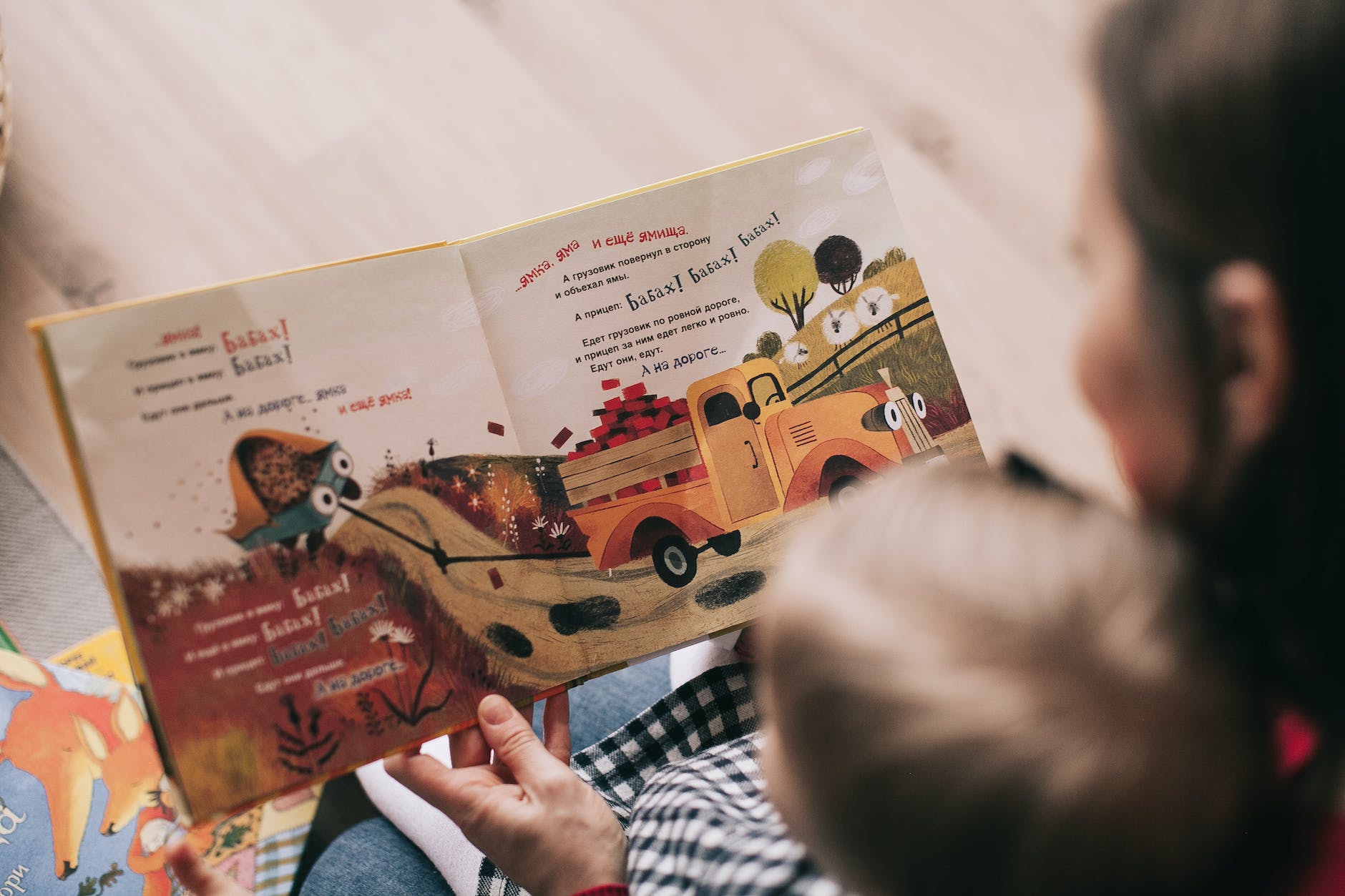
As a professional who started my career as a children’s librarian, I have often said that children’s services are the heart and soul of public libraries. The faces of joyful children picking books off the shelves then sitting on a cushion to read them is a beautiful thing. However, this is more than simply a feel-good image. Public libraries are essential for early childhood.

In a recent article on the Bloomberg web site, City Lab reporter Kendra Hurley shares the unique way public libraries serve this unnoticed demographic. In her article called The US Has No Early Childhood Infrastructure. Libraries Are Picking Up the Slack she shares the following:

In the United States — the only rich country without paid parental leave — babies, toddlers and their caretakers are routinely neglected by both policy and city planning. It’s rare to find even a step stool in a public restroom, said Kristy Spreng, a child-care program director and former librarian who co-created a baby play area with a workstation for Ohio’s Loudonville Public Library. “Those basic simple things just get overlooked,” said Spreng. “It’s crazy, because there are always babies. We reproduce. The need isn’t going away.”

Photo by Lina Kivaka on Pexels.com

To fill this gap, children’s librarians are developing new approaches to service.

For librarians, the big takeaway was that literacy starts at birth and the early years set the stage for future learning. “Children become readers on the laps of their grown-ups,” Payne recalled the philosophy of the time. Children’s librarians began regarding themselves as coaches for parents with small kids, and “laptime” story hours where librarians model how to read, sing and play with babies and toddlers cropped up at libraries everywhere.

Learn more about how public libraries are serving very young children by reading the rest of the article.

Read a Banned Book

Ever since the first books were written, someone has been trying to ban them. It is a centuries old struggle to preserve the freedom to read against forces that try to stifle the spread of knowledge. This is why the third full week of September is annually celebrated as “Banned Books Week.” A USA Today article summarized the history of the week.

Banned Book Week started 40 years ago as a celebration of the freedom to read but the librarian-led movement is shifting into the world of grassroots organizing as an unprecedented number of book-ban efforts have emerged around the country.

This past year marked one of the busiest years for book challenges in recent memory. Deborah Caldwell-Stone, director of American Library Association’s Office for Intellectual Freedom summarized the current situation in the article.

The number of challenged books hit an all-time high last year. with 729 challenges, affecting a total of 1597 books – nearly triple the number of challenged books in 2019, according to the American Library Association, which has tracked the annual number of challenges through media and voluntary reports since 1990.

“We’re now seeing efforts to remove books en masse. In the past it might be one parent challenging a particular book in a library and now we’re seeing organized groups take lists of books to boards demanding their removal,” Caldwell-Stone said. “Demanding that elected officials censor these works because they find them offensive, which is the very antithesis of democratic freedom to read, a real attack on liberty.”  

Since most book challenges are local, it is important to support our local librarians by letting our elected officials know that the freedom to read is essential to democracy. Learn more about the topic through the USA Today article.