GTD Milan Keynote

gtdcoverHow would you like to hear a succinct, yet detailed overview of the whole Getting Things Done methodology as told by the man himself, David Allen?

In a recent two part podcast on the Getting Things Done web site you can listen to David give a keynote address.  As the podcast advertises:

“David Allen shares an in-depth, sweeping overview of GTD® to an audience in Milan, Italy.  Learn best practices, as well as what you can expect to have happen in your life once you start applying them.”

Part one is available here: http://gettingthingsdone.com/2017/05/episode-29-david-allen-gtd-keynote-in-milan-part-one/

Part two is available here: http://gettingthingsdone.com/2017/05/episode-30-david-allen-gtd-keynote-in-milan-part-two/
Making SMART Goals

Why are professional sports so popular?  Aside from the enjoyment of watching top athletes perform, people enjoy watching a sporting event to see who wins.  Every competitive sport has a scoreboard to clearly show which team or person has won the game.  It makes for a clean and clear finish.

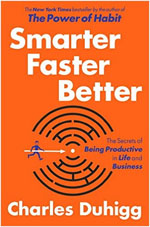
smarter-faster-betterUnfortunately, our regular jobs rarely come with scoreboards.  Lacking that immediate feedback, it can be challenging to know if you daily work is making a difference.  Wouldn’t it be nice to have a scoreboard of your own to measure progress?  There is a way to create one – write down SMART Goals.

SMART Goals are a tool that helps people get real with their work.  SMART is an acronym for: Specific, Measurable, Achievable, Realistic, and Timeline (or Timely).  In his book, Smarter Faster Better, Charles Duhigg shares the story about how GE adopted SMART goals to dynamically grow the company.  They succeeded so well because they gave solid guidance and measures to employees that allowed them to move forward confidently with their daily work.

A good web site to learn how to create your own SMART Goals can be found at MindTools.com.

Managing Work on a Vacation

beachwithchairsGiven how much time we spend at work every week, it is natural to dream about our next vacation.  However, vacations can quickly turn into a work week experienced outside the office if not careful.  On the Getting Things Done blog, a person recently submitted the following question:

QUESTION: While on vacation, how do you juggle work and play? How much time should you allot each day of your vacation to reading business email, checking up on projects, etc.? What’s the best balance of work and play? When is the best time of the day to spend on work? What organizational tools should you always bring along on your vacation?

Read David Allen’s answer at: http://gettingthingsdone.com/2017/05/managing-work-on-a-vacation/

Efficient Library Card Management

pbclslogoDid you know that the most efficient way to manage your Palm Beach County Library System card is through our web site: www.pbclibrary.org.  With our online management tools, you can do the following:

  • Switch to email notification for library account reminders. We recommend this as the best way to be notified. We’ll notify you about hold requests, send due date reminders, and let you know when it’s time to renew your library card!
  • Switch to Text Notification and receive text alerts about items you have on hold and fines you may be accumulating.
  • Have a new phone number? Update your library account online and be sure there is no interruption in service.
  • If you change your email address, please be sure to update your library account so that we can contact you about items you have placed on hold and overdue material.
  • If you forgot your PIN we will email it to you. To use this service you must know your library card number and have a valid email address linked to your library account.
  • Change the PIN used to access your library account. You may change your PIN to any 4 to 10 digit numbers you like.
  • Use your credit card to pay fines and fees online 24/7. Use our secure fine payment portal.

Explore all these options at: http://mylibrary.pbclibrary.org/gogreen/

10 Tips for Success

gtd-logoAre you new to productivity and efficiency work and need help getting started?  Or perhaps you have worked at this process in the past, but need new inspiration to keep going?  The Getting Things Done blog recently posted ten great tips for success with their methodology.

1. Start Small

There is a lot that makes up the Getting Things Done methodology. But that doesn’t mean you need to learn or master it all, all at once. Start with the master moves, like:

  • Write down everything that grabs your attention when it shows up (supporting the idea that your mind is better used to have ideas, not hold them).
  • Try the Two-Minute Rule, which would mean handling things that take less than two minutes to finish when they show up.
  • Make sure you really understand the 5 steps to mastering workflow—those are the keys to how everything gets done in your life and are the backbone to GTD.

Read the other nine at: http://gettingthingsdone.com/2017/04/10-tips-for-success-with-gtd/

Interrupting Interruptions

Think back to the last time you were hard at work on a project that required your full attention.  What happened when someone unexpectedly showed up at the door or called on the phone to interrupt your concentration?  How did you react?

I am sometimes asked how to handle interruptions.  This is not a trivial question.  According to a New York Times article, “Gloria Mark of the University of California, Irvine, found that a typical office worker gets only 11 minutes between each interruption, while it takes an average of 25 minutes to return to the original task after an interruption.”  Interruptions are a fact of life, so what is the best way to handle them effectively?  I see the solution as a series of executive decisions.

The first decision is to identify if the interruption is an emergency.  If so, handle it.

The next decision is whether the interruption will take less than two minutes to resolve (2 minute rule).  If so, clear it out of the way.

The third decision is the trickiest.  Does the interruption carry more value to your work world than the item you are engaged in right now?  If so, follow the interruption.  If not, ask the interrupter to schedule a time to meet later in the day or week to address the issue.  You can sooth any sore feelings by stating that scheduling a time to speak will allow you to give their item your full attention.

Interruptions are a fact of life.  How we handle them is the art of work.

Making Use of Weird Windows of Time

wierdwindowsMany time management systems instruct people to set up priorities.  The catch is that our top priorities may take longer than the small spaces of time that open up to us during the day.  In his most recent blog post, David Allen discusses how to most effectively use the weird windows of opportunity we have every day to get things done.
“Most everyone I come across in my clients’ organizations are up to their eyeballs in work, and feel overwhelmed. Strategy and triage are indeed required to address that, but at least as important is the requirement for people to set up their lives to get a lot more efficient about getting a lot more done in a day.

To steal from a Motorola strategy from many years ago, we need to “mine the bandwidth.” They developed technology utilizing the more discreet areas “between the lines” in the radio frequencies already in place. Similarly we need to be ready for, and take advantage of, the weird uneven time and energy spaces we find ourselves in.”

Read the rest of David Allen’s post on the Getting Things Done web site.

Optimal Stopping

San Francisco is a hot rental market.  Most apartments are snatched up within a few days of being listed.  Imagine you are moving to San Francisco and want to find the ideal apartment.  You only have one opportunity to view each apartment and must decide on the spot if you want it.  If you reject it the apartment will be taken by the next renter.  How long should you spend on the apartment search in order to feel confident that you have found the ideal spot?  This is an example of the optimal stopping problem.

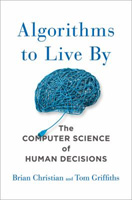
algorithmsAccording to the book Algorithms to Live By, “the crucial dilemma is not which option to pick, but how many options to even consider.”  The San Francisco situation is an example from the book which demonstrates that a person must gather enough information to become familiar with the market before selecting.  Pick too early and you risk taking a lousy apartment when the next one would have been superior.  Pick too late and you will regret all the great apartments you passed on. Is there an ideal solution to this dilemma?

Yes! According to the authors it is 37%!  This means you should spend 37% of your allotted time or the first 37% of the potential selections just looking.  This will calibrate you to the market.  After that point, take the first option which exceeds everything else you have looked at so far.  For example, if you have only one month to find an apartment, spend the first eleven days just looking.  On day twelve be ready to commit to the next apartment that is better than all the other ones you viewed up to that point.  This is claimed to be a mathematically provable optimum solution.

To learn more about optimal stopping, pick up a copy of Algorithms to Live By: The Computer Science of Human Decisions by Brian Christian and Tom Griffiths.

Work as a Martial Art

In his seminars, David Allen often uses his experience with the martial arts as an analogy for GTD.  In his latest blog post, David develops on this theme to show how important it is to stay loose at work.

gtdcoverA tense muscle is a slow one. This is a physiological and demonstrable fact in the martial arts. Could this be true in other aspects of our lives?

In karate, the power that can be generated by a punch is primarily due to speed, not muscle. It is the snap at the end of the whip. That is why petite people can learn to break boards and bricks with their hands—it’s not really about callouses, it’s more about the ability to generate that pop at the end of the thrust.

But a tense muscle is a slow one. So the high levels of training in the martial arts are about relaxation and balance, because that allows the flexibility and response-ability required to mobilize maximum resources at maximum speed for maximum results.”

Read the rest of his blog post at the Getting Things Done web site.