The Power of Appreciation

“Why should I thank them?  It’s their job.”

Many years ago I heard a supervisor say those words about her staff and to this day it still makes me cringe.  This person assumed that merely paying people for their work was thanks enough.  After all, to her mind it was not as if they rescued someone from a burning building or something else extraordinary!

I hope that you agree with me that people deserve to be appreciated beyond financial compensation.  Gratitude is not only reserved for big things that happen, but the little daily actions that contribute to workplace success.  In fact, this is an argument that appreciation for small actions has an out-sized effect.  According to the O.C. Tanner Global Culture Report, an employee’s satisfaction with their job is directly related to the amount of positive micro-experiences they have.

What are micro-experiences?  They are the tiny things that happen every day that together shape our overall impression of a workplace.  For example, do your colleagues say good morning every day; is the work evenly shared; is there laughter and fun in the workplace;  and does the team stick up for its members in a crisis.  Positive micro-experiences connect to a sense of purpose, success, and well-being, while negative ones do the opposite.
To my mind the most powerful micro-experiences come from genuine appreciation.  The most basic form of which is the simple, “thank you.”  Those two words have done more to improve employee morale and team connection than any other reward system or program.  I’ll ask you this question: How often do you thank your colleagues for helping out, completing tasks, or simply listening to your concerns? 

On my Library Management Team we started a practice to open every meeting with a round of appreciation.  Each team member offers gratitude to another team member for something specific they have done.  They can even offer appreciation to staff from that person’s division.  Opening the meeting this way creates a subtle but significant impact on the quality of the meeting.  It gets everyone into a team mode and demonstrates how simple appreciation quickly lifts the mood.

To that end, I challenge you all to make appreciation for your colleagues a more deliberate part of your day.  One habit is to thank at least five people every day for something specific they did at work.  Write kudos to them for an extra surprise.  Then watch how the power of appreciation creates an amazing work experience.  Thank you all for reading these thoughts!  It is appreciated.

Second Brain Crash Course

Recently Forte Labs launched their first ever Second Brain Week. Bringing in experts in digital note taking from around the world, founder Tiago Forte lead a free week of training on how to up your electronic productivity game. Their promise was simple:

Come join us to learn about digital note-taking, organizing, productivity, knowledge management, and online education, and how creating a system of knowledge management for yourself can help you do all of them far more effectively.

While the live sessions are over, everything was recorded and available for free on the Forte Labs web site. So if you want to take your productivity up to the next level, take advantage of the free Second Brain Week sessions available now on demand.

The Missing Link?

How easily can you decide on what to do next at work? The answer to that question goes a long way towards determining your daily success.

The basic building blocks of knowledge work are next actions and projects. The two are deeply connected. Projects themselves are essentially the outcomes we want, such as finishing a report, losing weight, buying a home, or hiring a new assistant. The next actions are the physical things we do to move projects forward, such as call Joe, read the article, draft an essay, or schedule the next gym class.

In a recent piece piece on the GTD web site, the connection between projects and next actions was explored. It discussed why sorting actions by context rather than project is more helpful than first apparent.

Sorting next actions by context, not by project, can initially seem awkward. Some people are used to having multiple files, piles, notepads, documents, and spreadsheets related to a project, with next actions for the project buried amongst all of that information. Next Actions lists don’t replace project plans—we would just call that data “project support.” In our experience, it rarely works to have current next actions stored with project support for day-to-day action management.

Read the rest on the Getting Things Done web site.

Brutal Truths About Productivity

The feeling of being productive is awesome. There is a deep satisfaction in checking stuff off our to-do lists. However, there is a difference between being productive with simple tasks versus complicated projects. In the book Joy at Work, which I summarized last week, Marie Kondo makes a distinction between the urgent and the important. Urgent things are usually the small tasks that are easy to do but ultimately make little difference to our lives. The important tasks are hard to do, but make the most impact towards our larger goals and objectives. True productivity comes down to focusing on the latter and not the former. But how do we do this?

In an article in the Pocket web site, Thomas Oppong share 6 Brutal Truths about Productivity that can help people focus on what is truly important. For example, one of the six truths has to do with power of getting started.

The biggest hurdle for many of us is simply getting started. Making that important decision to take a step. You can be as big and successful as you can possibly imagine if you build that mindset you need to push yourself to make that all important decision to just start.

You have everything you need to make an impact in the world if you can get past the many reasons why should postpone that task. Don’t think too far into the future.

Use what you have right now at where you are and witness the magic of getting things done.

Read the other five truths on the Pocket web site.

The Ninety Minute Self Help Book Challenge

Below is the opening of a new article that can be found on the Efficient Librarian web site.

Last month I highlighted a strategy by Darius Foroux. He claimed a reader could get just about everything useful out of a self help book in only ninety minutes.  To explore his technique I tested it out on Joy at Work by Marie Kondo & Scott Sonenshein.  Here’s what I found.

Step One in Foroux’s method was to pick the book wisely.  I choose Joy at Work. It is a follow-up to Marie Kondo’s best selling The Life Changing Magic of Tidying Up which focused on the home. My family had fun applying the Konmari principles to our house last summer, so I was curious to see how the philosophy could be transferred to the workplace. Given that I am a firm believer in GTD, I was also interested in learning how her techniques complimented and contrasted David Allen’s classic approach to getting things done. 

Learn what happened in Steps Two, Three and Four by reading the rest of the article at the Efficient Librarian web site.

COVID on Library Materials – Part II

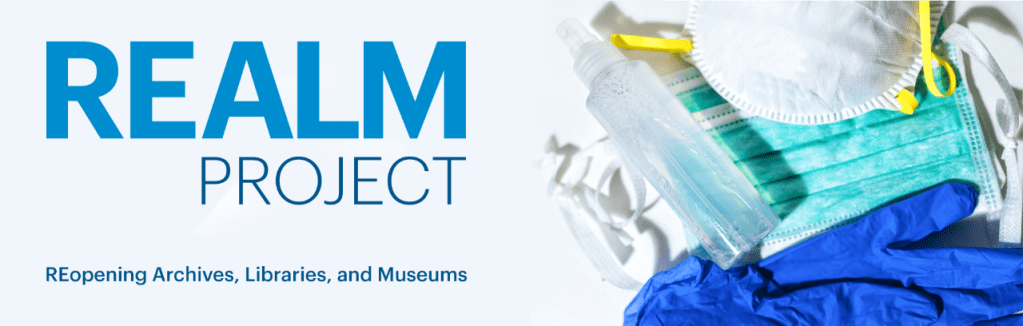
A few weeks back I reported on the first phase of an important study. The REALM Project is a partnership between the Columbus Metropolitan Library, OCLC, and the Battelle research labs. In the first round of testing five types of library items were studied to determine how long the virus lasts on these surfaces. According to the result of the first phase of the study: “Results show that the SARS-CoV-2 virus was not detectable on the materials after three days of quarantine.”

Last week the REALM Project released phase two of the study, this time looking at five more library items including:

*Braille paper pages
*Glossy paper pages from a coffee table book
*Magazine pages
*Children’s board book
*Archival folders

The findings were similar to the phase one results.

Results show that after two days of quarantine in a stacked configuration, the SARS-CoV-2 virus was not detectable on the archival folders.

After four days of quarantine in their stacked configuration, the virus was not detectable on the braille pages, glossy book pages, and board book.

The magazine pages showed a trace amount of virus at four days. Day four was the final time point tested.

These results continue to support the practice of quarantining library materials for at least three days. Download the full phase two report to learn more about the study and its findings.

Is this what Productivity is Missing?

Let’s be honest, if you search for productivity books in Amazon, the majority of titles shown in the results are written by men. Why is this so? It can’t be that men are the only ones worried about getting things done quickly and efficient. Also, what does this mean for our understanding of productivity itself? Is there something missing if only men are writing about it?

In a recent article at Forte Labs, Lauren Valdez explores this question. She believes one reason for this result is that books written by women are placed into the “organization” category. For example a search for decluttering books in Amazon produces almost the exact opposite result with women being the predominant authors. However, Lauren believes the truth runs deeper than just a matter of odd cataloging.

Productivity is not about optimizing every aspect of your life or being well-versed on the latest and most flashy new app. The point of productivity is to do what brings you pleasure and to have more freedom. We aren’t machines. We are humans.

To be productive, we all need to balance the logical, technical side with the emotional, intuitive side. These can be understood as masculine and feminine energies. I define masculine-energy as associated with logic, order, and the technical, whereas feminine energy is associated with intuition, self-awareness, and creativity.

Another way we can think about this is using the left-side and right-side of the brain. Most productivity advice lies on the masculine side, but you need the yin and yang balance between both these energies. No matter where on the gender spectrum you fall, we all can tap into our masculine and feminine energies.

Read the rest of the article on the Forte Labs web site.

What is Killing Your Focus?

Have you ever been distracted?

We are often our own worst enemy, as it is very easy to be enthralled by the next shiny bauble. However, sometimes it is other who distract us. The ability to focus is key to getting anything done well. There are many possible reasons for our inability to focus. In his recent article The Two Things Killing Your Ability to Focus published in the Harvard Business Review, writer William Treseder narrows down the culprits to two specific causes, our electronic devices and meetings.

First, we increasingly are overwhelmed with distractions flying at us from various connected devices. Smartphone and tablet use is spiking, and we now use digital media for an average of over 12 hours per day. This hyper-connected state does not allow us to process, recharge, and refocus.

Second, we rely excessively on meetings as the default form of interaction with other people at work. Studies indicate that we spend anywhere from 35–55 percent of our time, and sometimes much more, in meetings. If we want to stay focused on truly meaningful activity, something has to change.

Photo by Prateek Katyal on Pexels.com

How do we get around these obstacles in order to better focus? Treseder suggests several approaches. For example, to make meetings more useful he suggests we shrink the number of people in attendance.

Countless studies, starting with this 2015 HBR research, have shown the benefits of smaller teams. Focus and responsibility are more challenging with too many people — which is how you end up with folks staring down silently at their laptops for an entire meeting. To stay focused, keep your team focused. Limit the number of people in any meeting to eight or fewer unless it is a meeting that is purely informational.

Read the full article to learn the other suggestions that will

Speed Reading Self Help Books

Even though I am a librarian, it has been a struggle lately to read books cover to cover. Perhaps it is due to age, or the pandemic stress, or simply competing demands on my time, but sitting down with a book is not simple anymore. Yet there are still many titles I want to read for self development. What can I do?

The answer might be to follow the advice in the article How To Read A Self-Help Book In 90 Minutes by Darius Foroux. He outlines a simple four step plan to quickly identify and deploy the most useful pieces of advice from any book. For example the first step is to choose wisely:

Why do you read a book? Is it because someone recommends it? Or because it’s an NYT bestseller? Those are lousy reasons to pick up a book and invest your time in reading it.I have only 1 question that helps me to decide reading a book: Is this book currently relevant to me? In other words: Will this book help me now? If the answer is no, I don’t read it. … You can’t expect to retain the information you read forever. That’s why you want to read books that are relevant to you.

Darius Foroux

I am going to use his approach to tackle Joy at Work by Marie Kondo and Scott Sonenshein. In a future article I’ll share my summary of the key points and my experience using Foroux’s system.