Deal or No Deal Mr Hall!

I have always enjoyed game shows. Although I have never been on one it is fun to think about different strategies to win.

Recently I was listening to a episode of a great podcast series called Choiceology. It is about how we make choices especially focusing on the factors that lead us astray in those decisions. The specific episode dealt with how framing decisions in terms of potential loss leads us to different decisions than framing them in terms of potential gain. In the episode they interviewed a contestant from the show Deal or No Deal.
I finished the episode not only pondering how we frame problems, but realizing that the contestant made a huge mathematical error that skewed his thinking even as much as the framing. In fact, it is a problem that is encountered on other game shows including one called Let’s Make a Deal.

To explain why a poor grasp of probability not only hurts our ability to win game shows but also to make other important life decisions, I wrote an article to explore the topic. The core of the piece discusses a classic puzzle known as the Monty Hall Problem.

Here is the puzzle. You are a contest on Let’s Make a Deal. Your game is to pick one of three doors. Behind one is a new car and behind the other two are goats. (For purposes of play assume you want the car.) Monty Hall invites you to pick a door, so let’s say you choose Door #1. Monty, who knows what is behind each door, opens Door #3 to reveal a goat. Then he gives you the opportunity to switch your choice to Door #2. The question: Are your chances of winning the car better, worse, or no different if you switch doors?

Read the entire article to learn the correct answer to this problem and how the Deal or No Deal contestant should have behaved.


Building a Second Brain – The Podcast!

Just a quick post to share news about a new podcast from a thinker who has been featured on the Efficient Librarian. Tiago Forte has created a podcast series based on his signature work, Building a Second Brain. In the podcast, Tiago summarizes and explains important aspects of his work. Even better, the episodes are purposefully kept short for easy listening.

Here’s the official description:

Overwhelmed by consumption? The Building a Second Brain Podcast gives you the tools to thrive in the Information Age. Tiago Forte teaches you how to turn your notes, bookmarks and unread articles into completed creative works. Learn how to build your own “Second Brain” – a trusted place outside your head where you can collect your most important ideas and insights, and use them to do your best work. You’ll discover why many myths about the creative process hold us back, and how replacing them with a modern approach can unlock our true creative potential. You’ll be amazed at what you can create with the right frame of mind.

Listen to the Building a Second Brain podcast by downloading it on your favorite device.

Productivity Guilt

I have come to realize that this is a pandemic is a strange time to evaluate productivity. Our society is in a weird space were many people are over worked due to the essential nature of their jobs. Conversely, many people are now under worked due to being laid off or furloughed. It is the very few whose work continues unaffected by the disaster.

No matter where your work lies on this continuum, the changes in the world around us have an impact on our mental state. With so much of the future unknown a new definition of productive is needed. With this in mind I came across an article by Scott Young titled, “What is Productivity Guilt? (And How Can You Prevent It?)” In the piece he provides advice on how to be easier on yourself to avoid productivity guilt. For example:

Accept that you’ll always be imperfect. That’s okay. Everyone is. Nobody, including me, does everything perfectly all the time. … I go through phases where my habits evolve. Old ideas I wrote about get replaced with new ones. Not always because the new is better than the old, but because I’m always changing (as will you). If you see, instead, that everything I’ve written about is a static and permanent part of who I am, when you sum it all up, you’ll get to something that’s probably unmanageable as a whole.

Photo by Andrea Piacquadio on Pexels.com

Young goes on to provide the following advice when facing the specter of productivity guilt:

The real source of the guilt, however, isn’t because the standards imposed are too unrealistic or even undesirable, but because there’s always a gap between how we see ourselves and how we would like to be. The right move to make is always one that pushes you a little, but takes where you are as a starting point. That also includes your psychological strengths and weaknesses.

The rest of the article is available here.

Where to Start with GTD

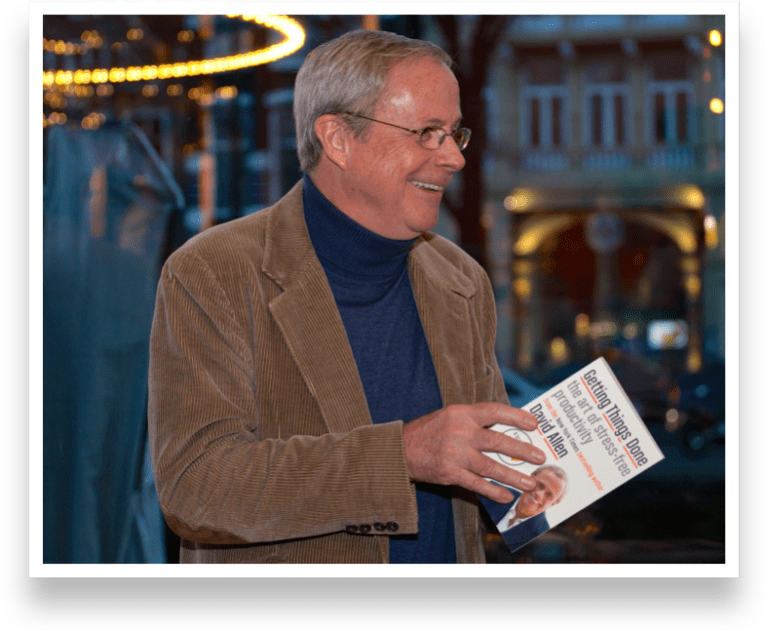
For people who are staying or working from home, this strange time presents an opportunity to start a new habit or finally read a productivity book like Getting Things Done. However, like any new project it can seem overwhelming at first. This can in turn lead to inertia and the old habits remaining in play.

Yet, it may not be as hard to change as it first seems. In a recent blog post, David Allen answered one of the most popular questions he receives about GTD: “Where do I start?”

I have a very strict and specific procedure that must be followed, without exception. If followed, it’s a guarantee of success. If not, well…good luck. Where, exactly, should you start? (Hang on, this is going to be tough…)

Anywhere.

Yes, anywhere. Any portion or component of the GTD approach, applied, will bring at least a bit more clarity, focus, and control for you—without exception. And very likely when any one thing is executed, it will create a reverberation effect and spread to other parts. It’s a holistic model—i.e., any piece can be worked, and it will add to the whole gestalt.

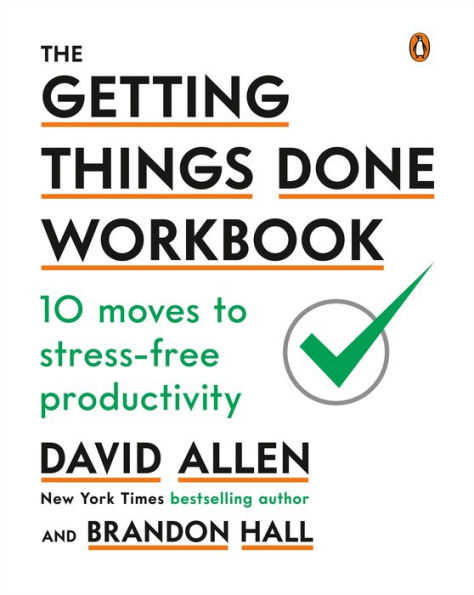
Read the rest of his advice on the Getting Things Done blog. As well, I recommend purchasing the new Getting Things Done workbook for a practical guide to implementing the GTD practice.

How to Stay Positive in Stressful Times

With the daily onslaught of tough news in the midst of the pandemic, is it possible to stay positive in these down times?

Last month our regional library cooperative SEFLIN offered an answer with the help of Positivity expert Shola Richards. I had the good fortune of meeting Shola in person at the Florida Library Director’s meeting in Tallahassee. His energy and enthusiasm for making our workplaces better is refreshing and inspiring. In his webinar, Shola laid out the keys to staying positive in the face of adverse conditions. Below is my understanding of two important keys to achieve peace in this crazy world.

Shola Richards

Focus on What You Can Control

Shola suggested we let go of the things outside of our control and recognize all the things we can control. Whether it is helping others, being kind, cleaning, talking a walk, or starting a new hobby, we can always shift ourselves with the right intention. Specifically, he identified three things we have power over:

  • Our Actions – What can I do to make a difference?
  • Our Effort – Am I doing my best?
  • Our Attitude – Is what I am doing filling me up or draining me?

Practice Self Compassion

Shola encouraged participants to recognize that life is hard right now. So it is okay to lower your expectations and celebrate small wins. We simply cannot do all the things we use to do. Slowing down provides us time to be kind to ourselves and others. We can enjoy small indulgences, like that extra piece of chocolate or another episode of your favorite show, knowing that it is helping us get through another day. Self-compassion not only helps you, but also everyone you are living with as it creates a less stressful environment.

To learn more about Shola and the Positivity Solution, I encourage you to visit his web site and sign up for his weekly newsletter. While there, you can also view his TEDx Talk.

Macmillan Ends the Embargo

Lost in the midst of this global health crisis was a major step back by Macmillan Publishers. Last year, the publisher introduced a controversial eBook embargo policy that limited public libraries to only one copy of a title for the first eight weeks after publication, no matter how large the library system. This policy provoked anger throughout the nation, resulting in some library system’s boycotting Macmillan eBooks entirely.

On March 17, Macmillan surprised everyone by suddenly reversing the policy. In a statement, CEO John Sargent spoke to the library community.

There are times in life when differences should be put aside. Effective on Friday (or whenever thereafter our wholesalers can effect the change), Macmillan will return to the library e-book pricing model that was in effect on October 31st, 2019. In addition, we will be lowering some e-book prices on a short term basis to help expand libraries collections in these difficult times. Stay safe.”

Library organizations across the nation were happy with the news.

“This is extraordinarily welcome news in an unprecedented time,” said ALA Senior Director for Public Policy & Government Relations ALA Inouye. “Equitable access to digital content is more important than ever as libraries continue to serve their communities amid rapidly changing circumstances. Macmillan’s return to its original lending terms signals a new starting point for all publishers to consider how they can work with libraries to ensure—and expand—access for all readers. ALA looks forward to working with publishers to make that happen.”

Read more at the Publisher’s Weekly website.

Living Through Strange Times

On my list of all-time favorite films and books is the Lord of the Rings trilogy by J.R.R. Tolkien. The core of the story is about a Hobbit named Frodo Baggins who is tasked with destroying the dangerous One Ring to prevent it from falling into the hands of the dark lord Sauron. During the first book/movie, The Fellowship of the Ring, while traveling through the dark and dismal Mines of Moria, Frodo confides his despair to the wizard Gandalf. (Watch the clip.)

Frodo: “I wish the Ring had never come to me. I wish none of this had happened.”

Gandalf: “So do all who live to see such times, but that is not for them to decide. All we have to decide is what to do with the time that is given to us.”

I find myself revisiting Gandalf’s advice as we move deeper into these strange times. Often I find it easy to be like Frodo and wish this invisible enemy would go away so that we can resume life as normal. But Gandalf’s words remind us that while we all must endure bad times, the best way to get through them is to decide how we will respond to them.

Recall the formula, E+R=O from our friends at Focus 3. It stands for: Event plus Response equals Outcome. It acknowledges that we are always impacted by external events beyond our control. However, we can mindfully take control of our response to those events in order to get a better outcome. This is essentially what Gandalf is sharing in that moment and it is a wisdom that has profound implications.

Across the world we see normal people stepping up to make a difference in seemingly small but amazingly meaningful ways. Whether it is shopping for those who are home bound, sewing masks for first responders, or giving free food to those out of work, the ways to contribute are endless. For me, an amazing example came out of Spain where a fitness instructor lead quarantined residents of the neighboring apartment buildings through an exercise routine from their balconies. Everyone has the capacity to impact lives. As with Frodo, the small Hobbit in a big and dangerous world, it is ultimately through his perseverance and his friendships that he succeeds. As we walk this path together (in a socially distanced way of course) we can commit to make small differences that will have profound positive impacts on all of us.

So I invite you to consider what you will do with the time that is given you to make the world a better place.

Tips to Relax

Staying productive and calm are challenging in normal times. This past week the country saw a health care crisis kick into a higher gear, deepening our sense of stress. There is no doubt it is very important to take the situation seriously. However, since we do not know for certain how long the COVID-19 threat will affect us, it serves no purpose to burn out early.

Therefore, this week, I bring to you a couple of simple relaxation tips from our friends at WebMD.

1. Meditate

A few minutes of practice per day can help ease anxiety. “Research suggests that daily meditation may alter the brain’s neural pathways, making you more resilient to stress,” says psychologist Robbie Maller Hartman, PhD, a Chicago health and wellness coach.

It’s simple. Sit up straight with both feet on the floor. Close your eyes. Focus your attention on reciting — out loud or silently — a positive mantra such as “I feel at peace” or “I love myself.” Place one hand on your belly to sync the mantra with your breaths. Let any distracting thoughts float by like clouds.

Photo by Elly Fairytale on Pexels.com

2. Breathe Deeply

Take a 5-minute break and focus on your breathing. Sit up straight, eyes closed, with a hand on your belly. Slowly inhale through your nose, feeling the breath start in your abdomen and work its way to the top of your head. Reverse the process as you exhale through your mouth.

“Deep breathing counters the effects of stress by slowing the heart rate and lowering blood pressure,” psychologist Judith Tutin, PhD, says. She’s a certified life coach in Rome, GA.

WebMD offers eight more easy tips to reduce stress. I invite you to review the rest of them.

Above all, I wish you all safety and good health in these trying times.

Is Leadership Right for You?

“Leadership has long-since subscribed to the belief that the best way to reward and keep the keepers is to give them other people to keep watch over. It’s just the way the weird world of work works.”
– Jodi Wellman, Forbes Article, What If You Don’t Want To Be A Leader

This past week I presented the first in a three webinar series on Leadership in libraries for the Panhandle Library Access Network. The opening webinar was titled: Leadership – Challenges and Rewards. In the early part of the webinar, I took aim at the idea that everyone can or should be a leader. In fact, leadership has some serious downsides for anyone aspiring it and I listed five downsides of leadership. Here is one for example:

1/ Leaders are Exposed

A leader assumes responsibility for the team’s actions and accomplishments, but there are many factors they have no control over.  Often, leaders have to make decisions in the face of limited information.  Whether it is bad luck, environmental conditions, mistakes by team members, or just simply running into more talented and eager competition, the leader often gets more of the blame for their decisions than is warranted by the actual circumstances.  A leader’s mistakes are often out there for the whole organization to see.

Although it is challenging, leadership does have many upsides. So the webinar also presented six simple steps for those at the start of their leadership journey.

The text for the webinar is available right here at the Efficient Librarian. The recording of the webinar is available on the PLAN web site.

Join myself and Adam Davis, PBCLS Director of System Services, for the second webinar, Leading Diverse Groups and People this Wednesday March 11, 3 pm EST, 2 pm CST. The webinar is free, so go ahead and register today.