Making Successful Resolutions

With 2021 a reality, many people around the world made New Year’s Resolutions. Unfortunately, most of those resolutions fail to make an impact. According to U.S. News, 80% of people give up on them within six weeks. Does this mean resolutions are useless to make? Not necessarily.

In an article from Forbes Magazine, journalist Jennifer Cohen shares reasons why people fail to achieve their resolutions. In those reasons are embedded ways to make them successful. For example:

We Fail To Pick Realistic Goals

According to Statista, the most common New Year’s resolutions are to lose weight, exercise and eat more healthfully. These are achievable goals, yet so many of us can’t follow through. It’s because we don’t take an approach that’s rooted in reality.

Ask yourself the following question—which goal is more achievable? Losing 100 pounds or cutting refined sugars from your diet? The answer is obvious. If you cut sugar from your diet, you’re more likely to lose weight. 

You should also keep in mind that choosing realistic goals or resolutions and achieving them improves our mindset. Even a small victory is still a victory (like 30 days without sugar) and you end up preparing yourself for a much larger one.

Photo by Breakingpic on Pexels.com

Not sure what resolution to make? Then you might benefit on a period of structured reflection. The good folks at Getting Things Done created a simple document to guide a review of the past year and to look ahead at the new one. The PDF handout can be found here.

Wishing you all a Happy New Year!

The Benefits of Gratitude

As 2020 comes to a close I think we all agree that this was a tough year. The stress of the pandemic, the summer of protests, and the Presidential election were unavoidable. However, after enduring these challenges the end of the year offers a time to reflect on our journey. Specifically, it is a good opportunity to take stock of what we are grateful for in our lives.

Gratitude offers a surprising amount of benefits. In an article from Time Magazine published several years ago that still has great merit today, journalist Jamie Ducharme highlighted seven specific benefits of living with gratitude. One of the seven she highlights is that gratitude can ease depression.

Photo by Giftpundits.com on Pexels.com

(Susan Peirce) Thompson, the cognitive scientist, says experiments have shown that people whole partake in the “three good things” exercise — which, as the name suggests, prompts people to think of three good moments or things that happened that day — see considerable improvements in depression and overall happiness, sometimes in as little as a couple weeks. “If there were a drug that did that, whoever patented that drug would be rich,” Thompson says. “Gratitude is very powerful.”

Read the other six benefits on the Time Magazine web site.

With this last post of the year, I want to say thank you for following these weekly musings on productivity, leadership, and libraries. I wish everyone a Happy New Year full of good health, success, and lots of love.

When Will Amazon eBooks Come to the Library?

Libraries and publishers have had a long complicated history over access to eBooks. Libraries routinely pay multiple times more per copy for each title than the regular public, face limited availability for the number they can order, and have their copies expire after a fixed number of uses or a set time frame. However, did you know that one of the biggest eBook publishers in the world still refuses to sell their eBooks to libraries? That publisher is someone everyone knows very well: Amazon.com.

Recent developments indicate that pressure is building to change this situation. An article in The Hill found that many organizations and even elected officials are working to convince Amazon to change their practice. It might be having some positive effect.

An Amazon spokesperson said the company is in “active discussions” with the Digital Public Library of America (DPLA) to make its e-books available for library distribution.

The company expects “to be testing a number of different models” early next year, the spokesperson added.

“We believe libraries serve a critical purpose in communities across the country, and our priority is to make Amazon Publishing eBooks available in a way that ensures a viable model for authors, as well as library patrons,” the spokesperson said.

Amazon declined to provide details regarding pricing or the lengths of licensing deals it plans to test in 2021.

Photo by freestocks.org on Pexels.com

If Amazon does not create a viable model on its own, it may face legislative pressure to do so.

Two states have proposed legislation that would seek to regulate Amazon’s ban on selling e-books to libraries. State senators in Rhode Island and New York proposed bills this year that would require publishers to offer licenses for electronic books to libraries under reasonable terms.

A spokesperson for state Sen. Rachel May (D), sponsor of the New York bill, said the senator will pursue the legislation in the next legislative session.

“New York’s public libraries are one of the state’s greatest assets. In order to fulfill their democratic function, librarians must be able to access the materials their clients need on fair and equitable terms,” May said in a statement.

Read more about the current status of the Amazon eBook situation.

The Second Brain Manifesto

Over the years I have highlighted the work of Tiago Forte whose signature course, Building a Second Brain, will be a major book release. In anticipation of this event, Tiago has posted The Second Brain Manifesto. This document expresses the core reasons why we should all improve our digital note taking skills.

At the core of the manifesto is the notion that ideas are the new currency. The manifesto starts with the following:

We believe that ideas represent one of the most powerful forces in the world today

Ideas are not mere playthings. They are the building blocks of the modern world. Ideas inform our thinking and behavior every day. We depend on new ideas to improve our health, productivity, and relationships. To understand culture, politics, science, and history. New ideas breathe fresh life into how we view the world.

View the rest of The Second Brain Manifesto on the Forte Labs web site.

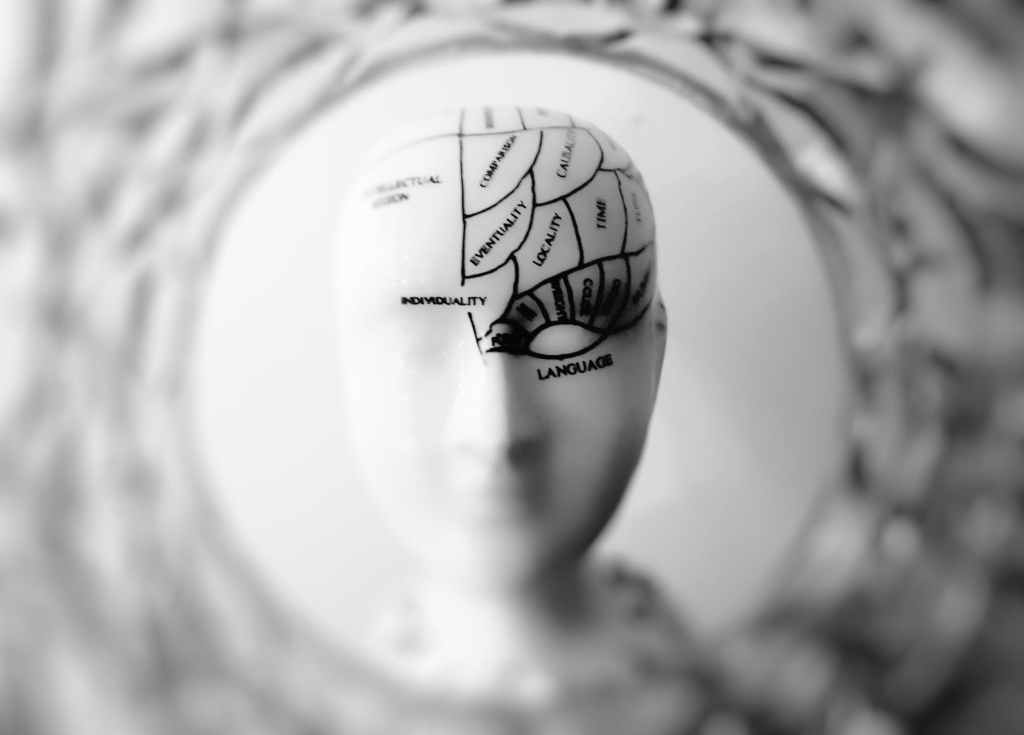
What Your Brain Really Does

The human brain remains one of the deepest mysteries in biology. It is the most important part of our body, but even with all the advances in neuroscience we still don’t fully understand how it works. In productivity circles it is often assumed that better knowledge of brain function might improve efficiency and creativity.

Photo by meo on Pexels.com

In a recent interview in GQ magazine, neuroscientist Lisa Feldman Barrett reveals surprising facts about how our brains really work. For starters she reveals what the brain’s most important role is:

The brain’s most important job is not thinking or seeing or feeling or doing any of the things that we think of as being important for being human. Its main job is running a budget for your body—to keep you alive, to keep you healthy. So every thought you have, every emotion you feel, every action you take is ultimately in the service of regulating your body. We don’t experience mental life this way, but this is what is happening under the hood.

Read the rest of the article on the GQ web site or pick up her new book: Seven and a Half Lessons about the Brain.

How to Run Smarter Meetings (or just Appear to be Smarter at Them)

Meetings are vital to a successful workplace, but at the same time they can be a bane to all involved. When a meeting has no clear objective, is run poorly, or has become a weekly routine it ceases to add value. Yet we also know that meetings can be important to ensure unity on projects, clear the air of misunderstandings, or keep people connected. So what are the secrets to holding good meetings?

One point of view comes from Terri Williams at the Economist magazine. In an article titled, “How to stop wasting your time—and everyone else’s—in meetings” she shares this startling fact:

“A Clarizen/Harris Poll survey reveals that the average American worker spends 4.5 hours in general status meetings each week, and workers spend even longer (4.6 hours) just preparing for those meetings. Almost half of the survey respondents stated that they would rather perform some type of unpleasant activity—including visits to the dentist or nightmarishly-long commutes—than attend a status meeting. “

So how do we hold good meetings to ensure everyone’s time is well spent? The first step is to understand the purpose of the meeting before even scheduling it. Williams identifies five types of meetings:

  1. Problem Solving
  2. Decision-Making
  3. Planning
  4. Status Reporting/Information Sharing
  5. Feedback

In her article she highlights the best practices for each type of meeting. However, in all cases meeting improve substantially when there is an agenda in place with clear objectives, participants don’t get sidetracked to non-essential items, and the meeting starts on time.

Of course if you don’t want to go through all the trouble to prepare for meetings, or are stuck in one that is going no where, it is not a total loss. You can still do your best to look smart at these meetings by using the techniques of comedian Sarah Cooper. One of her most famous satirical pieces is the 10 Tricks to Appear Smart in Meetings. For a good laugh click over and see if any of them are familiar. I have personally done this one:

#7 – Pace Around the Room
“Whenever someone get up from the table and walks around, don’t you immediately respect them? I know I do. Walk around. Go tot he corner and lean against the wall. Take a deep contemplative sigh. Everyone will be freaking out wondering what you’re thinking.”

Have fun with the other nine!

Top Ten Challenges Facing Public Libraries

Public libraries have survived many ups and downs over the past century. Throughout it all they are remained core institutions in communities large and small. However, their survival going forward is not guaranteed. Right now COVID-19 is the biggest challenge facing libraries today, but even after a vaccine is widely distributed other problems await.

In an article from last year, Mark Smith of the Texas State Library wrote about the top ten challenges facing libraries going forward. The very first one listed has been on prominent display the past few years: a growing distrust in government.

As a unit of government, typically at the municipal or county level, it should be of concern to public libraries that the percentage of Americans who mistrust government is rising sharply. In 1958, 73 percent of Americans said they trusted the federal government to “do what is right” just about always or most of the time. In 2015, that figure was 19 percent (Pew Research Center 2015 “Beyond Distrust”). This appears to be a trend across demographic and ideological lines even as it shifts along partisan lines depending on who is in power in Washington (Pew Research Center 2017). … Currently, the public library is the rare public institution that bucks this trend. … As managers and workers of public-sector organizations, this trend should strike us as deeply alarming.

Photo by Pixabay on Pexels.com

Read about the other nine challenges facing public libraries in the article.

Make a habit about not worrying about your habits

Developing great habits is one way to succeed at life. Whether it is being productive, healthy, or financially free, our habits drive our daily behavior towards the longer term goals that inspire us. However, there are many days, especially this year, where sticking to good habits is a struggle. Whether it is the temptation to watch TV instead of work, eat a big bowl of ice cream, or splurge on a fancy new toy, it is easy to slip out of our desired habits. When they happen should we feel guilty about these indulgences?

In a recent blog post, Darius Foroux argues that we should stop worrying about missed habits. Being too strict around them is actually counter productive. He writes:

We humans have this tendency to take everything to the extreme. And when it comes to habits, I found that majority of my friends, family, readers, and students have an all or nothing mentality.

You either work out every day or you do nothing. You either write every day or you do nothing. Why so serious? The reason for this is negative self-talk. We assume that we messed up if we miss our habits for a few days.

Darius Foroux

Foroux advises that we not worry about missing one day of a habit.

If you practice true mindfulness, there are no streaks. There’s only now. You shouldn’t care about what you did yesterday. Only care about what you’re doing today. And always try to make the best of it.

Every day is a new day that has nothing to do with yesterday.

Read the full post on his web site.

The Cost of Perpetual Crisis

I was speaking with a colleague recently who confessed that he was lacking ambition. This is a man recently promoted to a challenging position and very active in his profession. Yet now he was wondering if it was time get a new job. As we talked it occurred to me that his true problem had nothing to do with ambition, it was all about being stuck in perpetual crisis.

The COVID-19 pandemic presented leaders across the country with a new type of challenge. Normally when we face a crisis there is a limited time frame in which it happens. For example when a hurricane threatens there are stages of events from tracking the storm, boarding up, hunkering down as it passes, then cleaning up afterwards. Due to the short term duration of most crisis we often move on shortly afterward with our longer term goals secure.

Photo by Andrea Piacquadio on Pexels.com

However, when a crisis persists we face a different struggle. COVID-19 is a long term problem that has placed many aspects of our lives on hold indefinitely. Vacations, conferences, social events, and more have been replaced by virtual meetings which provide limited appeal. Long term disruptions force us to place our ambitions off to the side while we handle the slow day to day grind of survival. When we lose focus on long term goals, the short term needs become a path to burnout and dissatisfaction.

Is there a secret to staying ambitious in the face of a long term crisis? For me, I realized that it is okay to let long term goals lie fallow for a while. In fact, it is a good test to see they were really wanted in the first place. The crisis can serve as a reflection point to see if the direction you are heading is still one worth traveling. Our goals may still be desirable, but we have to practice flexibility to keep them alive. For example, as a seminar presenter I no longer have the option of in person training. However, virtual presentations allow me to keep my toes in the water. In fact it provides valuable experience so that down the road when in person events resume I will be able to offer more training options than before.

2020 has been a very long year. It is okay if your ambitions and goals have been set aside. With 2021 closing you may want to be kind to yourself and allow your goals to lie fallow for the rest of the year. Even COVID-19 will pass, allowing for a restitution of normal to take hold and a long term perspective to return. Crisis leads us to reevaluate our lives. Allow yourself the freedom to explore new opportunities with the lessons learned from this year. That will help make 2021 the best year yet!