Five Meeting Rules from Ray Dalio

Bad meetings are inevitable. Good meetings are fortunate. Great meetings are designed.

Meetings are a core component of knowledge work. However, very few people are trained on how to run them effectively. A focused, structured meeting benefits all the participants and moves everyone closer to their goals. Therefore, it is important to understand how to run a successful meeting.

Ray Dalio, founder of Bridgewater Associates, has thought very deeply about the workplace. In addition to the unique methods that comprise the Bridgewater culture, Dalio has set out specific rules for productive meetings. A recent article in INC magazine focused on five of them. The first is very simple yet often overlooked: clarify the meeting’s purpose.

Dalio says that you should emphasize a meeting’s purpose well before it begins. That way, everyone can walk into the meeting prepared and the group can be intentional with their time. He also adds that “Meetings without someone clearly responsible run a high risk of being directionless and unproductive.”

Another rule of successful meetings is to avoid “topic slip”:

Topic slip, as defined by Dalio, is the “random drifting from topic to topic without achieving completion on any of them.” If you’ve ever left a meeting feeling more confused than when you walked in, topic slip is a likely culprit.

To dive deeper into these two rules and then learn the other three, visit the article on the Inc website.

Public Libraries Fill Early Childhood Infrastructure

As a professional who started my career as a children’s librarian, I have often said that children’s services are the heart and soul of public libraries. The faces of joyful children picking books off the shelves then sitting on a cushion to read them is a beautiful thing. However, this is more than simply a feel-good image. Public libraries are essential for early childhood.

In a recent article on the Bloomberg web site, City Lab reporter Kendra Hurley shares the unique way public libraries serve this unnoticed demographic. In her article called The US Has No Early Childhood Infrastructure. Libraries Are Picking Up the Slack she shares the following:

In the United States — the only rich country without paid parental leave — babies, toddlers and their caretakers are routinely neglected by both policy and city planning. It’s rare to find even a step stool in a public restroom, said Kristy Spreng, a child-care program director and former librarian who co-created a baby play area with a workstation for Ohio’s Loudonville Public Library. “Those basic simple things just get overlooked,” said Spreng. “It’s crazy, because there are always babies. We reproduce. The need isn’t going away.”

Photo by Lina Kivaka on Pexels.com

To fill this gap, children’s librarians are developing new approaches to service.

For librarians, the big takeaway was that literacy starts at birth and the early years set the stage for future learning. “Children become readers on the laps of their grown-ups,” Payne recalled the philosophy of the time. Children’s librarians began regarding themselves as coaches for parents with small kids, and “laptime” story hours where librarians model how to read, sing and play with babies and toddlers cropped up at libraries everywhere.

Learn more about how public libraries are serving very young children by reading the rest of the article.

From Hope to Trust

How confident are you that all your priorities have been captured outside your head?

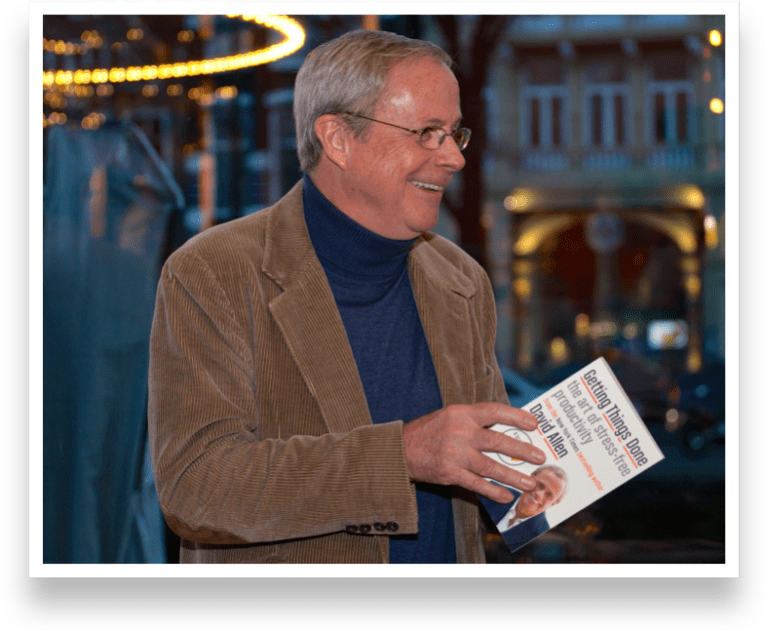
For most people, their regular practice is to keep their responsibilities and duties saved only in brain cells. Storing these things in our fallible minds makes it hard to be confident about our next actions. Once people discover this problem, they often try to create elaborate systems to remember. However, this may prove just as problematic. GTD founder David Allen explored this problem in a recent blog post:

It’s natural to want to create a system for priority coding (like “A, B, C” or the flagging feature in many apps) to tell you the most important things to do. But it’s a short-term insurance policy that won’t give you the trust you need when the time comes to take action.

If these complex approaches don’t work, is there a better way? David certainly believes so as he adds:

People would often love to be able to give up the non-stop accountability for their intuitive judgment calls about the moment-to-moment allocation of their resources. That’s why the ABC-priority and daily-to-do-list structures have often seemed so attractive as a way to “get a grip.” But reality has a way of requiring us to be more on our toes than that.

So how can we really know for sure what action to take? Prepare for the worst, imagine the best, and shoot down the middle.

Dive deeper into this philosophy by reading the rest of the post.

Projects vs Areas

Do you have something that is lingering on your to-do list? If so, it could because you have confused a project with an area.

David Allen has often said that the major challenge for knowledge workers is defining their work. Unlike task workers whose duties are given to them by others, the knowledge worker must figure out how to complete their assignments. In many cases they have to determine the specific tasks that needs to be done.

One stumble that knowledge workers encounter is mixing up projects and areas. Failure to differentiate between these two can lead to frustration. In a recent blog post, Tiago Forte clearly identifies the difference between the two.

project is any endeavor that has 1) a desired outcome that will enable you to mark it “complete,” and 2) a deadline or timeframe by which you’d like it done.

An area of responsibility has 1) a standard to be maintained that 2) is continuous over time.

In short, projects end, while areas continue indefinitely.

Understanding this can help clear up a lot of confusion. To explain further, Tiago provides examples:

  • Running a marathon is a project, whereas Health is an area
  • Publishing a book is a project, whereas Writing is an area
  • Saving 3 months’ worth of expenses is a project, whereas Finances is an area
  • A vacation to Thailand is a project, whereas Travel is an area
  • Planning an anniversary dinner is a project, whereas Spouse is an area

Learn more about how to approach projects and areas by reading through Tiago’s post.

Should You Trust Your Gut?

Have you ever faced a tough decision and been given the advice to trust your gut? We tend to assume there is an unconscious but highly aware part of ourselves that intuitively knows the right answer. All we have to do is trust it. However, is that true?

According to a new book by Seth Stephens-Davidowitz, called Don’t Trust Your Gut, the answer is no, especially if we want to be happy. In a recent interview article on Vox, journalist Sean Illing shares that “it’s wrong because our intuitions are often influenced by false impressions or dubious conventional wisdom.”

In a conversation with Stephens-Davidowitz, Illing asked him about which conditions are conducive to trusting your gut:

There have been these studies that show if you do something in a controlled environment, many times, then your intuition is able to sense things that it would be impossible to otherwise sense, such as a firefighter who can sense that there’s a fire even before it reaches conscious awareness or is visible.

So I think there are times where our gut can be useful. But I think our gut is massively overrated.

Photo by Liza Summer on Pexels.com

Later on in the interview, the discussion turns to the connection between our gut reactions and happiness. Stephens-Davidowitz says about recent studies on the topic:

And they found all these things like, socializing, being with friends: really, really important. Being with your romantic partner: really, really important. Many of us think that we’re gonna have a good time if we just lie on our couch and browse the internet, or go on social media or play an iPhone game. And the data, when you actually ask people doing that, they tend to say they’re not particularly happy doing that.

Read the rest of the article on Vox.

Read a Banned Book

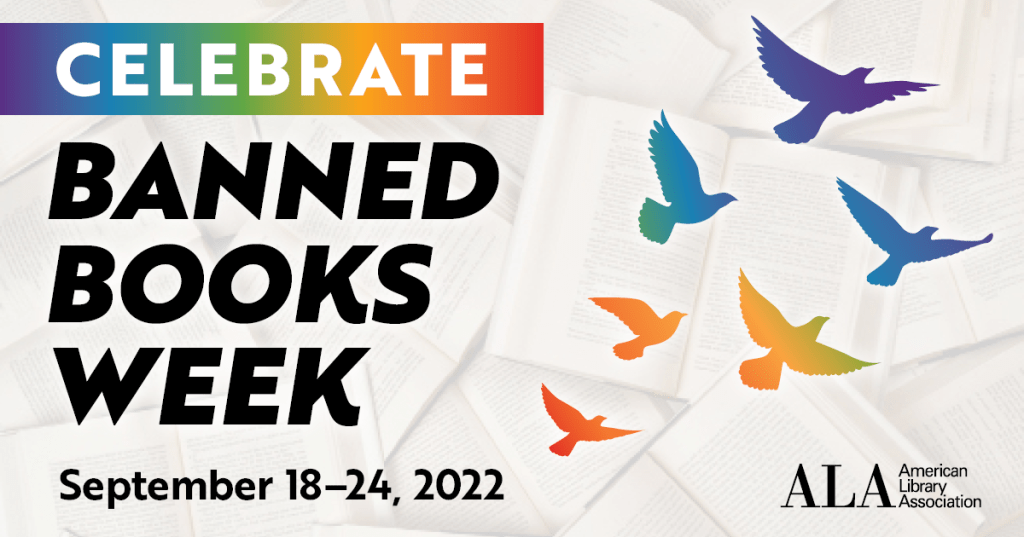
Ever since the first books were written, someone has been trying to ban them. It is a centuries old struggle to preserve the freedom to read against forces that try to stifle the spread of knowledge. This is why the third full week of September is annually celebrated as “Banned Books Week.” A USA Today article summarized the history of the week.

Banned Book Week started 40 years ago as a celebration of the freedom to read but the librarian-led movement is shifting into the world of grassroots organizing as an unprecedented number of book-ban efforts have emerged around the country.

This past year marked one of the busiest years for book challenges in recent memory. Deborah Caldwell-Stone, director of American Library Association’s Office for Intellectual Freedom summarized the current situation in the article.

The number of challenged books hit an all-time high last year. with 729 challenges, affecting a total of 1597 books – nearly triple the number of challenged books in 2019, according to the American Library Association, which has tracked the annual number of challenges through media and voluntary reports since 1990.

“We’re now seeing efforts to remove books en masse. In the past it might be one parent challenging a particular book in a library and now we’re seeing organized groups take lists of books to boards demanding their removal,” Caldwell-Stone said. “Demanding that elected officials censor these works because they find them offensive, which is the very antithesis of democratic freedom to read, a real attack on liberty.”  

Since most book challenges are local, it is important to support our local librarians by letting our elected officials know that the freedom to read is essential to democracy. Learn more about the topic through the USA Today article.

The High Cost of Delaying Decisions

Have you ever had a tough time making a decision? If so, were you tempted to delay making that choice? If so, did it make the situation better or worse?

Most of the time we think that delaying making a decision will give us more useful time to deliberate which should ultimately lead to a better decision. However, is that true?

In an article by Hollie Richardson called, Decision-Making: Research Shows What Happens When We Wait for “Something Better”, it becomes clear that there is a cost to delaying decisions. As she points out:

Christiane Baumann, a doctoral candidate in the Department of Psychology, explained the way people think as being like: “The price that I am prepared to pay increases every day by the same amount. That is, the further along I am in the process, the higher the price I will accept.”

This principle can be applied not only to purchases, but also situations such as choice of an employer or a romantic partner: “At the beginning perhaps my standards are high. But over time they may lower so that in the end I may settle for someone I would have rejected in the beginning.”

Basically, the longer we leave it to make a decision, the more we’re prepared to gamble, and our standards can drop.

With this in mind, what decision are you putting off making? What if you made that decision right now?

Read the rest of the article to learn more.

What are your Core Values?

Everything we do is driven by are core values. The type of job we take, the person we choose to be in relationship with, and the friends we make are products of our inner values. However, many people have never taken the time to contemplate exactly what their values are, much less write them down.

Recently I discovered a simple exercise to bringing core values to light. It comes from the website of Scott Jeffrey, “the founder of CEOsage, a transformational leadership agency and resource for self-actualizing individuals.” Why is Jeffrey so interested in helping people identify their values? On his web site he offers the following explanation:

As a business coach, I appreciate the power of values.

I’ve noticed that individuals experience greater fulfillment when they live by their values.

And when we don’t honor our values, our mental, emotional, and physical state suffers. I’ve seen this to be true in my life too.

Scott Jeffrey

Jeffrey presents a seven-step method to articulate any person’s values. An early part of the process is to list possible values. However, this is not done so that one can pick or choose favorites. As Jeffrey explains:

Values aren’t selected; we discover and reveal them. If you start with a list, your conscious mind will test which values appear “better” than others.

That said, if you’re not familiar with working with values, you can scan a list of values to get a sense of your range of options.

Learn the entire process by visiting Scott Jeffrey’s web site.

Get It Out of Your Head

Even though I have taught productivity practices for over ten years, I still find myself being human and slipping back into old ways. Recently I forgot where I placed something important. It happened weeks ago and I have no clear memory in my head about where it could be. It is very frustrating!

Has that ever happened to you?

This incident reminded me of a central tenet of GTD that should be written on my brain. It is the simple practice of getting stuff out your head and into a trusted system.

David Allen, creator of GTD, has often said that our mind is a crappy office space. It is designed for having ideas, not holding them. Despite our remarkable ability to remember lots of things, the mundane details of life can easily escape our memory at any point. This doesn’t take long to happen. For example, have you ever misplaced the keys that were in your hand five minutes ago? How about the promise you made to your boss about meeting a deadline that sailed out of your head the moment you left her office? And how do we ever forget those big events that one should always remember, like a family birthday or anniversary?

Thankfully, the solution to all this is very simple. Keep lists of important items in a trusted place. For me I use the reminder app and calendar on the iPhone for personal items and my Outlook calendar and its reminder functions for work items. The trick is to overcome the inherent human laziness to put off work to another day. The best practice is to put these reminders into your system immediately to ensure they are captured.

When a system like this is set up, it becomes automatic to complete anything. One example from my life is an end of day list that pops up at 8 pm. This includes items such as ensuring the cars are locked up for the night, that the dog gets her pill, and that my daughter has her school laptop on the charger. It is all simple stuff, but easy to forget when tired brain takes over at the end of a busy day.

Therefore, I invite you to recommit to the practice of getting stuff out of your head and into a trusted system. It is the best way to go to bed with a clear head.