
 Why do I use the word “efficient” to describe this path of librarianship? In my article, Efficient Librarianship – A New Path for the Profession the word efficient is defined as: 1. Being or involving the immediate agent in producing an effect; 2. Productive of desired effects; especially: productive without waste.
While the second part of the definition is straightforward, the first part resonates with this work. From the article:
“Identifying and implementing improvements to personal and organizational workflows produce powerful results. However, the best systems in the world are only useful if they free up energy for productive next actions. An Efficient Librarian understands the implications of the first part of the definition of the word “efficient” given at the start of this article which is to be the agent that produces an effect. An agent by definition is one who acts. Therefore, an Efficient Librarian is very mindful of his or her actions.
“Most people decide their next action at work by reacting to their surroundings. Crisis and stress tend to focus the mind on the most urgent needs. People may subconsciously allow crisis to enter their lives to narrow their action choices. To illustrate, think about what would happen if you discover that the building is on fire. Your next action would be very simple—get out! No need to think about that one. While it does help to simplify decision making, crisis is an unhealthy way to live from day to day due to the accumulated stress. Therefore, an Efficient Librarian purposefully moves past crisis to make meaningful action decisions when things first show up, rather than when they start to blow up.”
Read the rest of the article on the Public Libraries web site.
 n his recent book,
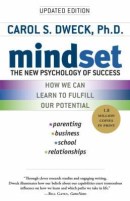 Imagine a room of students who are working on a very tough math problem. Some of them give up quickly and say it can’t be solved while others preserve and work at it until they final succeed. What is different about these students? Believe it or not, IQ is not a factor. According to research, it is mindset.
 David Allen is fond of saying that “Your mind is for having ideas, not holding them.” As a knowledge worker, your ability to generate and implement ideas is crucial to your success. The challenge is that we can never know for certain what will turn out to be a good idea and what will end up as a discarded thought. However, it is guaranteed that a forgotten idea will never be implemented. Therefore, it is important to have a method to capture ideas as they appear.
 I realized that the two things I did that caused me to procrastinate were:
 What is the value in setting a goal for yourself or your organization? Many cynics discount goals as artificial creations that don’t translate into actual results. They argue that we are going to do the work anyway, so why set up a fake expectation?
 Welcome to 2018! Let me ask you a question. Did you make a New Year’s Resolution before the ball dropped in Times Square? According to a
  It has long been proposed that one of the secrets to a happy life is finding a work/life balance. This is a magical equation where the right mix of meaningful work offset by an exact amount of normal life activity equals contentment. However, is this really as true as it seems?
 Efficient Librarian