The PARA Method – Projects and Areas

Before you read further, please take a few moments to either grab, or write out, your current list of projects. Don’t worry, I’ll wait …

Very good – now look down the list. Do you see broad subjects like Hiring, Strategic Plan, Scheduling, or Direct Reports? If so, you don’t have a project list, you have an area list. Don’t understand the difference? In a recent post on his blog, Tiago Forte shares his PARA method of organization, in which he spends time discussing the difference between and area and a project.

You have projects you’re actively working on – short-term efforts (in your work or personal life) that you take on with a certain goal in mind.

You have areas of responsibility – important parts of your work and life that require ongoing attention. 

In short, projects are finite, with a beginning, middle, and end. Areas are ongoing. So long as you are responsible for them, they never end.

This means when we organize our work, especially in a digital environment, Tiago recommends using the PARA Method. We just learned what the first two letters in the acronym mean. Here are the explanations for the remaining two letters.

Then you have resources on a range of topics you’re interested in and learning about.

Finally, you have archives, which include anything from the previous three categories that is no longer active, but you might want to save for future reference.

This simple formatting system allows people to organize their work landscape. In fact, the order of the letters in PARA are an indication of how Tiago views the primary driver of work – our projects.

Instead of organizing information according to broad subjects like in school, I advise you to organize it according to the projects and goals you are committed to right now. This is what it means to “organize by actionability,” a mantra I will return to again and again.

Read more about the PARA Method, with detailed examples, on his blog at Forte Labs.

Decluttering Made Easy

Is your home or workplace cluttered? For most people the answer is an affirmative yes!

For those getting an early jump on spring cleaning, I recently came across advice on the NPR web site about how to get it done effectively. Reporter Andree Tagle interviewed organizing expert Star Hansen who shared ways to organize without the stress. However, before you start clearing away belongings, she believes it is important to understand your clutter.

Hansen says everyone’s clutter tells a personal story. “What becomes clutter and where your clutter accumulates can say a lot about what’s going on with you.”

If you have unwanted piles of stuff accumulating around your house, ask yourself: “What’s making this hard to get rid of?” she says. “A lot of times, the trip-up is from holding on to the past or wanting a different reality than the one we’re living in.”

That blazer that hasn’t fit for years? Maybe it reveals a yearning for your former profession. Those 20 pairs of chopsticks in your kitchen drawer? Maybe they’re speaking to your guilt around waste and sustainability.

When you understand the reasons behind your clutter, says Hansen, it’s a lot easier to know what to keep and what to get rid of.

Hansen also cautions against being too eager to clear it all out in one day. The process takes time.

When it comes to organizing, don’t bite off more than you can chew, says Hansen. If you start off with too big a goal, you might get discouraged if the job takes too long.

So don’t try to revamp your entire garage in one afternoon. Instead, start with something less challenging, like your purse or one single bathroom drawer. Save more complicated items, like tax paperwork, or sentimental items, like family photos and memorabilia, for last. These kinds of organizational projects often take the most time and emotional energy, says Hansen, so you’ll want to build up your decluttering muscle first.

Read three more tips for expert decluttering on the NPR website.

Organizing as Self Care

Did you make a New Year’s resolution last week? If so, I hope you are still living it! One of the most popular resolutions is to get better organized. Whether it is at the home or office, a clear and clean environment helps to focus the mind and ease the spirit.

Maria Kondo’s work focuses on helping people find the peace that comes from an organized space. This week on her website she shared a post titled, Organization is Self-Care. In it, she starts by sharing her insight that getting organized is about more than simply getting things in order.

The words “tidying” and “organizing” often summon images of a well-kept home with a spotless kitchen and neatly curated bookshelves. But committing to getting more organized isn’t just about tidying physical spaces — it can bring you a sense of wellbeing in every aspect of your life. Organization not only supports self-care, it is self-care. 

Later, Kondo shares the benefits that increase your personal energy when living in an organized space.

Each of us has an inner energy source that supports us as we work toward living our ideal lifestyle. It also helps us handle the unexpected with grace and ease. Like all energy, though, we need to keep it charged. Some self-care, such as a restful weekend after a busy social week, helps us recover from difficult periods. Organization as self-care, however, is both proactive and preventative. It keeps us grounded through all of life’s surprises, and it empowers us to live that life fully.

Read the rest of the post on her the KonMari web site.

When Was Your Last Weekly Review?

Life comes at us quickly. As we deal with all the input and projects throughout the week, it is important to dedicate time to regaining a lay of the land. The best way to do so is the Weekly Review.

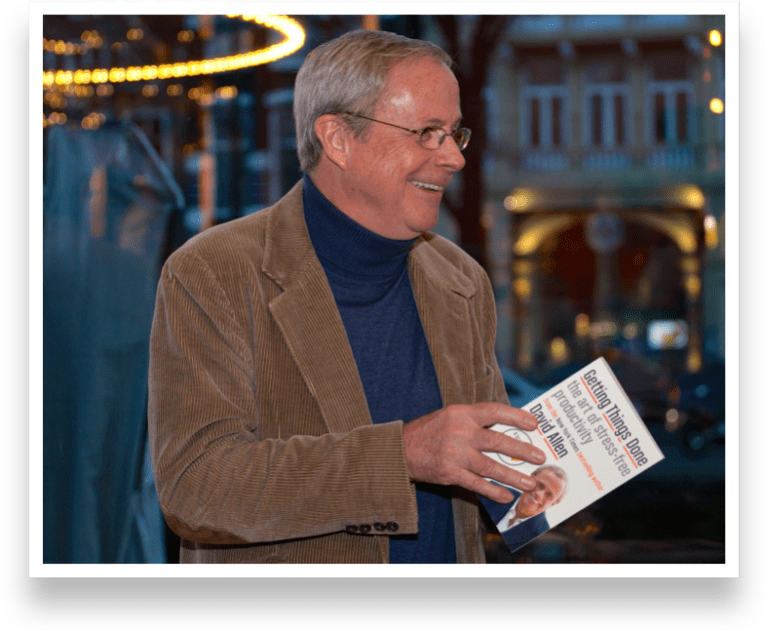
The Weekly Review is a GTD staple. In fact, David Allen has repeatedly stressed that the review is one of the most important things a knowledge worker can do to stay current and focused. To help practitioners, he had created a guided Weekly Review on his website. The video comes with the following note:

Experience what David Allen calls the “critical success factor” with GTD, by going through a complete GTD Weekly Review. You’ll get a taste of all 11 steps of the process, with helpful advice along the way. Please note that this recording has not been edited to remove the several minutes of silence for you to do each of the 11 parts of the review.

David has repeatedly stressed that the Weekly Review is a “critical success factor” to engrain a GTD practice. What does it involve? The first step is to Get Current:

GET CLEAR
COLLECT LOOSE PAPERS AND MATERIALS
Gather all accumulated business cards, receipts, and miscellaneous paper-based materials into your in-tray.
GET “IN” TO ZERO
Process completely all outstanding paper materials, journal and meeting notes, voicemails, dictation, and emails.
EMPTY YOUR HEAD
Put in writing and process any uncaptured new projects, action items, waiting fors, someday/maybes, etc.

Read the rest of the article to learn about the other two steps.

If you haven’t done a Weekly Review recently, I encourage you to do so at your earliest opportunity. The clarity that comes from a thorough examination of all your open loops and commitments is time well spent. The result will be more items accomplished with less stress. Now who wouldn’t want that?

Five Meeting Rules from Ray Dalio

Bad meetings are inevitable. Good meetings are fortunate. Great meetings are designed.

Meetings are a core component of knowledge work. However, very few people are trained on how to run them effectively. A focused, structured meeting benefits all the participants and moves everyone closer to their goals. Therefore, it is important to understand how to run a successful meeting.

Ray Dalio, founder of Bridgewater Associates, has thought very deeply about the workplace. In addition to the unique methods that comprise the Bridgewater culture, Dalio has set out specific rules for productive meetings. A recent article in INC magazine focused on five of them. The first is very simple yet often overlooked: clarify the meeting’s purpose.

Dalio says that you should emphasize a meeting’s purpose well before it begins. That way, everyone can walk into the meeting prepared and the group can be intentional with their time. He also adds that “Meetings without someone clearly responsible run a high risk of being directionless and unproductive.”

Another rule of successful meetings is to avoid “topic slip”:

Topic slip, as defined by Dalio, is the “random drifting from topic to topic without achieving completion on any of them.” If you’ve ever left a meeting feeling more confused than when you walked in, topic slip is a likely culprit.

To dive deeper into these two rules and then learn the other three, visit the article on the Inc website.

Projects vs Areas

Do you have something that is lingering on your to-do list? If so, it could because you have confused a project with an area.

David Allen has often said that the major challenge for knowledge workers is defining their work. Unlike task workers whose duties are given to them by others, the knowledge worker must figure out how to complete their assignments. In many cases they have to determine the specific tasks that needs to be done.

One stumble that knowledge workers encounter is mixing up projects and areas. Failure to differentiate between these two can lead to frustration. In a recent blog post, Tiago Forte clearly identifies the difference between the two.

project is any endeavor that has 1) a desired outcome that will enable you to mark it “complete,” and 2) a deadline or timeframe by which you’d like it done.

An area of responsibility has 1) a standard to be maintained that 2) is continuous over time.

In short, projects end, while areas continue indefinitely.

Understanding this can help clear up a lot of confusion. To explain further, Tiago provides examples:

  • Running a marathon is a project, whereas Health is an area
  • Publishing a book is a project, whereas Writing is an area
  • Saving 3 months’ worth of expenses is a project, whereas Finances is an area
  • A vacation to Thailand is a project, whereas Travel is an area
  • Planning an anniversary dinner is a project, whereas Spouse is an area

Learn more about how to approach projects and areas by reading through Tiago’s post.

The Theory of Constraints

Tiago Forte recently opened up the members only posts on his web site to all readers. Now his hidden gems can be explored by productivity enthusiasts across the world. In honor of this event, I want to highlight an early set of postings that really drew me into his work. It is an eleven-part series breaking down the key points in The Theory of Constraints. Each part in the series is a short read for quick understanding.

What is the Theory of Constraints? I’ll let Tiago describe it:

The Theory of Constraints is deceptively simple. It starts out proposing a series of “obvious” statements. Common sense really. And then before you know it, you find yourself questioning the fundamental tenets of modern business and society.

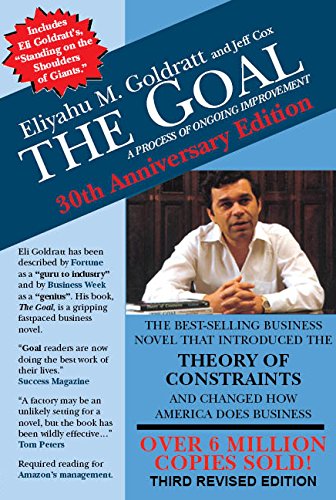
Eliyahu Goldratt laid out the theory in his 1984 best-selling book The Goal. It was an unusual book for its time — a “business novel” — telling the story of a factory manager in the post-industrial Midwest struggling with his plant. The problems this manager faces are universal, of course, and not only for manufacturing. For 30 years now, readers have recognized their own situation in this fictional story. This flash of recognition is the hook drawing you deeper into the TOC world.

In the first posting Tiago introduces the central concepts of the Theory that are truly paradigm changing.

The first statement that TOC makes is that every system has one bottleneck tighter than all the others, in the same way a chain has only one weakest link.

This is followed by another key statement.

The second statement is that the performance of the system as a whole is limited by the output of the tightest bottleneck or most limiting constraint.

Read the first posting to learn more about this celebrated system improvement process. The entire series is posted here.

Leading Your Team to Productivity

Back at this year’s Florida Library Association annual conference, the FLA Professional Development Committee released a video highlighting productivity practices, tips and tricks from three leaders in the library field. I was included along with Dr. Leo Lo, Dean and Professor of the College of University Libraries and Learning Services and Dr. Vanessa Reyes, Assistant Professor for the School of Information at the University of South Florida.

I was interviewed by Amy Harris, Instruction & Assessment Librarian at Saint Leo University. During my portion of the presentation, I discussed the basic principle of GTD and how to apply them in the workplace.

The full video can be found on YouTube.

Recording of Tiago Forte Interview

Last week I had the honor of interviewing Tiago Forte about his new book, Building a Second Brain. In a sixty-minute Zoom interview with audience Q&A, we touched on a wide range of aspects around digital note taking and how it compliments a GTD practice. A link to the recording can be found on the Palm Beach County Library System web site.

Below is a selection of the questions I asked Tiago:

  • Briefly share how you became interested in the power of digital notes?
  • Explain the concept of CODE and how it applies to digital note taking.
  • What are the four principles of PARA and do they contribute to designing a Second Brain?
  • What are the best practices around processing digital notes for discoverability?
  • The book highlights how notes can be applied over many different projects. To that end, please explain what is meant by an intermediate packet.
  • What are the biggest mistakes people make when taking digital notes and how can they be avoided?
  • What prompted you to share your publishing journey through your blog?
  • Share a book recommendation (fiction or non-fiction) other than your own.

Stay tuned to the end of the interview where I subject Tiago to a fun game based on the podcast, Wait, Wait, Don’t Tell Me.