Never Start a Meeting Without One of These!

Have you ever attended a meeting that lacked focus and direction?

No doubt you thought that was a rhetorical question. More often than not, meetings drift onto strange paths or seemingly hit a dead end. While there are many reasons why this happens, one way to prevent it is straightforward. Never start a meeting without drafting a clear, written agenda.

A vital factor to holding an effective meeting is a pre-planned agenda. In fact, 67% of
respondents in a Flowtrace survey
said that having a clear agenda is important to a successful
meeting. It is the responsibility of the person calling the meeting, or the standing committee secretary, to prepare an agenda, ideally for distribution at least a day before the meeting.

Photo by Christina Morillo on Pexels.com

Simple agendas have at the top of the document the committee’s name or subject of the meeting, date
and time, and a bullet point list of items to be discussed. If it is a recurring meeting, the date/time/place of the next meeting should be listed at the bottom. The first item of business is for everyone in attendance to agree on the agenda, with an opportunity to add items as needed. Only after this is done should discussion commence on the items listed.

Agendas may contain specific sections, such as approval of prior minutes, depending on
the official status of the meeting. For example, Governing Boards follow local or state rules in
their operations. This means having roll calls, obeying rules of order, and publishing their
agendas in advance to the public. This ensures proper notice for anyone who wishes to attend.

Therefore, the next time you call a meeting, draft an agenda in advance. No doubt you will find the meeting more productive and quicker to complete, resulting in greater satisfaction and success.

Organizing is Not Decluttering

What’s the best way to declutter a space?

The first solution most people jump to is organization. They find storage boxes into which to stash their horde of items. The boxes are then placed out of the way in a closet, attic, or basement for months or years to come. Problem solved right?

According to the Minimalists, this approach is the worst way to approach decluttering. Why?

Because all you are doing is moving items from one place to another. The clutter is put out of sight but not removed entirely. In a recent video on their Instagram channel, the Minimalists argue that storage boxes are actually “clutter coffins where all your stuff goes to die.”

Worst still, many people use up valuable space in their homes or even rent space in a storage locker to keep these completely unneeded belongings in their lives.

What is the best way handle clutter?

The Minimalists believe that completely letting go of our unnecessary items is the path to declutter. Reducing our belongings clears up space, both physically and psychologically. That way we can use our physical spaces to store only the things we currently value. As well, we keep our minds clear by removing items that no longer match who we are and what we aspire to do.

Therefore, resist the urge to buy that shiny new container. Instead, as Marie Kondo would tell you, discard anything that doesn’t spark joy. Once done, enjoy the results.

Three Reasons to Call a Meeting

You may have heard the not so old saying: “That was another meeting that could have been an email.”

People detest meetings when they feel unproductive. This is especially true when the reason for calling the meeting is unclear. Based on my experience, there are three major reasons to call a meeting that will keep participants engaged and come to productive conclusions.

1/ Sharing Important Information

Sharing information is a base-line function of all meetings. However, face-to-face is very useful for these types of situations:

  • Sharing Important/Timely News – Sometimes breaking news must be shared with everyone together at the same time. For example, when an organization is set to issue a controversial press release a quick all hands-on deck meeting may be the fastest way to inform the team in advance and at the same time.
  • Immediate Q&A – Instead of letting confusion linger, questions about an important or complicated topic can be quickly addressed in a face-to-face meeting. Answers are heard by the entire team at the same time, avoiding repetition.
  • The “Look Them in the Eyes” Factor – Whenever there is bad or sad news to share or an apology
    to be issued, doing so in person conveys respect for the team.

2/ Making a Presentation

While presentation can be sent by email, something might be lost without a presenter to emphasize or clarify items. Presenting in person can improve comprehension and increase engagement in the material. Types of presentations best suited for face-to-face meetings include:

  • Complicated Items – Presentations can break down complex subjects for easier understanding. In a live situation, the presenter can adjust on the fly to match audience’s perceived understanding and level of engagement.
  • Clear up Misunderstandings – Presenters can address questions as they come up, allowing the whole group to benefit while the topic is fresh in their minds.
  • Swaying Opinion – If people need to be convinced on a course of action, face-to-face “sales” type
    presentations are preferred. In this format, a presenter is able to access a wide range of public speaking tools to make their case for a course of action.

3/ Facilitating Discussion

Bringing people together creates an opportunity to dive deeply into a topic that non-
synchronized formats cannot duplicate. Talking together in the same room can be very stimulating and help build up a team. Examples of meetings designed for discussion include:

  • Problem Solving – Coming together in person is often the fastest way to solve a problem. Teammates share different viewpoints and build on each other’s ideas. This can develop innovative ways to resolve issues that could not be thought of individually.
  • Strategic Visioning – Bringing together people from different parts of the organization for long-
    range planning meeting is a beneficial exercise. Small-scale, in-person discussions can surface facts or concerns from across the organization.
  • Finding Consensus – When a critical decision must be made, face-to-face discussions can be
    the fastest way to get the team into agreement. An open discussion allows all parties to share
    their concerns and increase the potential to come to a meaningful decision.

If you are considering calling a meeting think about whether it falls into one of these three reasons. Otherwise, start drafting that email.

What Does “Organized” Mean?

Have you ever said to yourself that you need to get organized?

It is common for people after looking at the mess covering their desks to want better organization in their spaces. However, very few stop to ask an important question: what does it mean to be organized?

Does it require fancy software? Do you need high priced planners and office supplies? Does it mean throwing everything out and keeping almost nothing? Or none of the above?

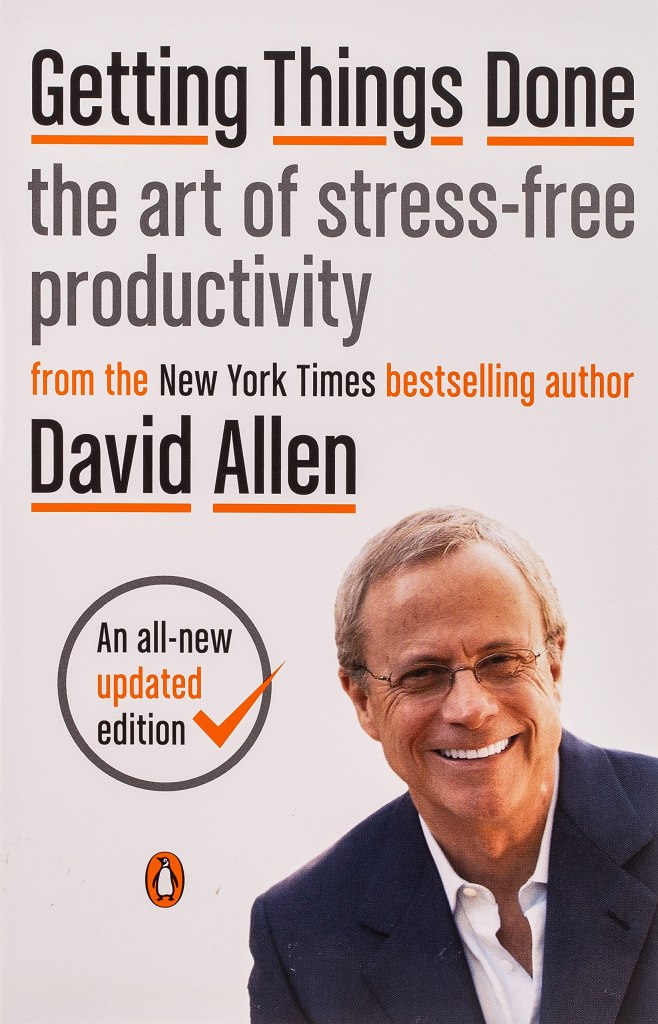
Not surprisingly, David Allen of Getting Things Done fame has thought deeply about what it means to be organized. He even has a simple definition which he shared in a recent article on the GTD website.

You are disorganized if you need something somewhere that you don’t have or have something somewhere that you don’t need. 

David then shares a fun challenge that he does with audiences.

An exercise I’ve done in my seminars is to have everyone reach into their purses or wallets and get something that doesn’t belong there permanently, and which has been there longer than a few hours (besides money). Almost all have at least one thing in that category—a receipt, a business card, a scrap of paper with scribbled notes, an old parking ticket. These are things whose location does not map to their meaning to the person who has them. If the item has no further usefulness, it is trash, but it’s not in the trash. Often it is something they need to store somewhere else—it is reference, but it’s not appropriately accessible as such. Sometimes it’s something that they need to do something about, but it is not in a place to remind them to do it. There is lack of coherence between what the thing is and where it is.

So how does one decide what items should go where? David created a cheat list to decide what to do with any item. Here are a few examples.

  • I don’t need or want it = trash
  • I still need to decide what this means to me = in-tray item
  • I might need to know this information = reference
  • I use it = equipment and supplies

To see the rest of the list, please read the entire article on the Getting Things Done website.

The “Didn’t Know” Rule

Have you ever opened up a drawer and marveled at the discovery of something you didn’t even know you owned?

Given how much stuff we accumulate it is easy to pick up items without consciously remembering it! For me this happens at a conference when vendors hand out bookmarks, pens, and other items like candy at Halloween. While it is easy to acquire stuff, for most of us the challenge is getting rid of things we don’t want anymore.

The Minimalists have a simple approach to clearing out unneeded belongings. It’s called the “Didn’t Know” rule. Basically, it means that if you find something you didn’t know you owned, you can permit yourself to let it go. 

Barbara Bellesi Zito writing for the website Apartment Therapy, experimented with this approach. She tried it out on three boxes and soon discovered a surprise.

Taking up an entire box was a pile of TilePix I had purchased around three years ago when I snagged a sale. These photos from my phone didn’t render well at all, so I had no desire to hang them in our home. They went right into the garbage pile; I have the originals on my phone anyway, and I had completely forgotten I even had these in storage.

After completing the task of organizing the boxes, she wrote down three insights.

  • If you don’t know you have something, you can’t truly be missing it.
  • If it’s sentimental or something you need to hold on to, by all means, keep it.
  • Unless the storage in question holds seasonal clothing or items, check on it every few months or so to make sure you still want what’s in it.

I challenge you to take 10 minutes in the next 24 hours to practice this simple decluttering technique. For me, I’m eyeing that middle desk draw. I know it has long forgotten stuff waiting to be rediscovered …

David Allen – Principles that Make Teams Work

How do highly productive teams come about? Are there underlying ideas that make them successful?

In their new book, Team, David Allen and cowriter Edward Lamont explore how GTD can be used to improve teamwork. They start with looking at the underlying principles, which they consider akin to fundamental laws, that allow for productive work amongst team members. (pg. 66) David and Edward identify five specific principles (pg. 67):

  • Clarity
  • Sufficient Trust
  • Open Communication
  • Learning
  • Diversity

To understand these principles, it is helpful to explore one in more detail. Starting with clarity, David and Edward break down why it this principle is important.

A team needs clarity on purpose and direction. A team is defined by its purpose and most effectively operates using well-defined standards and processes. … without it, there is confusion about who’s responsible for what and who needs to be informed about it, as well as the risk of double work and eating up the attention of people who don’t need to know. Implicit here is clarity of ownership. There always needs to be one person to go to, inside or outside the organization, when clarity is needed on a problem or situation that involves the team. (pg. 68)

David and Edward also believe that clarity is important for the psychological health of the team. For them, clarity provides clear knowledge of the team’s current situation.

One of the big wins in terms of clarity is knowing – and accepting – how much the team is already trying to do, and having some view on whether it is humanly possible to achieve it. (pg. 69)

Pick up a copy of Team to learn more about clarity and the other four principles of teamwork.

The Super Productivity Stack

What are the optimum conditions for worthwhile productivity?

Studies of how people build success in reaching their goals and getting things done have found that a state of “Flow” is often involved. In an article on his website, Darius Foroux shares a brief discussion of the concept.

In my experience, you do your best work when you’re in a good mood and you’re focused. You can also look at it as being a state of “Flow,” which is a term the psychologist Mihaly Csikszentmihalyi coined in a book with the same title. It’s one of the best tools for productivity.

It’s that state of mind where you’re completely immersed in the task at hand and you lose track of time. You simply feel a deep sense of focus and satisfaction at being productive. 

Many people experience “Flow” accidentally when they happen upon a project they enjoy doing. However, it is possible to create conditions to enhance the probability of “Flow” appearing. Foroux mentions several factors that help, the first two are:

  1. Start your day with purpose: Begin each morning by setting a clear intention for what you want to achieve. This clarity will drive your actions and keep you focused.
  2. Simplify your workspace: A clutter-free environment leads to a clutter-free mind. Organize your workspace to foster creativity and productivity.

Foroux recommends partnering a state of “Flow” with a specific strategy known as Pomodoro. It is a way of structuring time by spending 25 minutes on a specific work and then taking a 5 minute break and then repeating throughout the day. He believes this is the key to success.

What makes both Pomodoro and Flowtime work well is the fact that they make you work with full concentration so you can finish your tasks quickly.

The goal is to divide your tasks into periods where you can fully concentrate. So you can do your work faster.

Read the entire article on Foroux’s website and see if this approach works for you.

How to Organize a Shared Workspace

As a fan of GTD, I have been able to organize my personal workspace to match my work style. Having a private office helps me keep control. However, many office workers are stuck in shared workspace situations. While they can control their own immediate spot, the common areas seem to be an unruly land. Is it possible to organize a shared workspace?

Francesca Stracuzzi recently mapped out a way to do so in five steps on the KonMari website. The first step is to take stock of your office’s current state.

“Many desks are overloaded, and both paper and digital archives are not functional, making it difficult to find documents and files,” she says. “A messy and disorganized desk generates stress, anxiety and demotivation, and, in the midst of that chaos, it also reduces our ability to make decisions. I am convinced that space affects our emotions and conditions our performance, so freeing the desk means lightening the mind and working with more serenity and clarity.”

Photo by Marc Mueller on Pexels.com

The next step is to get support from leadership.

“In my work experience, I have seen that the management of space, particularly offices and desks, is left to individual workers,” says Francesca. This may seem logical, but it often leads to a snowball effect, wherein one messy desk turns into many. 

Instead, Francesca recommends encouraging a different perspective within the team, including management, that focuses on how getting organized can benefit the whole team.

By framing the idea of a team organization project to leadership this way, you’ll have an easier time getting them to sign off on the project.  

To learn more about the steps to organizing a shared workspace, including the final three steps, please visit the KonMari website.

The Second-Worst Task List App

How do you keep track of your tasks?

There are many different ways to remember all the items you need to do, whether it be in an electronic format, paper-based, or a hybrid of both. According to John Forrister, associate of David Allen, there is one method that is the worst way of all – your mind! As he wrote in a recent blog post called The Second-Worst Task List App:

If there is a second-worst task list app, there must be a first-worst, right? Yes — it’s your mind. It’s really good at many things, but managing your task list is not one of them. You know that already. You wouldn’t be reading this without already having a calendar and some version of a task list. 

John then postulates on what would be the second worst way to keep track of your tasks. With this question he not referencing a specific app or piece of software. Instead, he is looking at the systematic process that many people use accidentally.

For several reasons, my nomination for the second-worst task list app is an inbox with stuff that’s been there more than 48 hours. I use the email inbox as an example here, but you can probably apply this reasoning to other places where your inputs show up and need to be clarified.

He then proceeds to list reasons why an email inbox is unproductive as a task reminder. Two reasons include:

1. You need to keep rereading at least the subject lines of the first screen of emails, which uses your valuable time inefficiently. If there’s more than one screen, you are likely scrolling into the past fairly often, to scan those older emails.

2. You may be opening, rereading, then closing the emails to remind yourself what they’re about.

How do we keep our inbox from becoming a default bad task manager? Read the rest of the blog post to find out!