
You may be familiar with the term “social capital”— the concept commonly used to measure people’s relationships and networks. It has been used for many years as a way to emphasize the importance of people in an organization or community. While this concept is important, what has often been overlooked is the public space that people need for this interaction to take place, known as the Social Infrastructure.
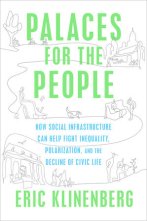
Social Infrastructure is featured in a recent Atlantic article titled, Worry Less About Crumbling Roads, More About Crumbling Libraries. As author Eliot Klinenberg writes:
 “Public institutions, such as libraries, schools, playgrounds, and athletic fields, are vital parts of the social infrastructure. So too are community gardens and other green spaces that invite people into the public realm. Nonprofit organizations, including churches and civic associations, act as social infrastructure when they have an established physical space where people can assemble, as do regularly scheduled markets for food, clothing, and other consumer goods.”
Read the rest of this fascinating article on the Atlantic’s website. If you enjoy it, look for Klinenberg’s book, Palaces of the People: how social infrastructure can help fight inequality, polarization, and the decline of civic life at your local library.


 “Why should I go to all the trouble to empty my email inbox?”
 “I understand the resistance to to-do lists, and the complaints about keeping them. I’ve noticed a couple of reasons for this. The main one is that most to-do lists are incomplete lists of still un-clarified “stuff.” Looking at them creates as much stress as they might have relieved in the first place. Typically, what people have on their lists (if they have them at all) are things like “Mom,” and “bank,” and “marketing VP.” It’s great that they have captured something that has their attention, but there are still critical decisions to make with some critical thinking about that content.”
 For most people cleaning and tidying mean the same thing. Both are about bringing order to a space. However, there is a subtle but important difference between the words that can be transformational. In fact, it is not possible to clean successfully without tidying first!
 “Imagine for a moment the perfect organizational system. One that supported and enhanced the work you do, telling you exactly where to put a piece of information, and exactly where to find it when you needed it. … I believe I’ve developed a system for organizing digital information that meets all these requirements. After several years of introducing it to a wide variety of people, I’m confident that it works. In this post I will attempt to show you how.”
 Efficient Librarian