What Your Brain Really Does

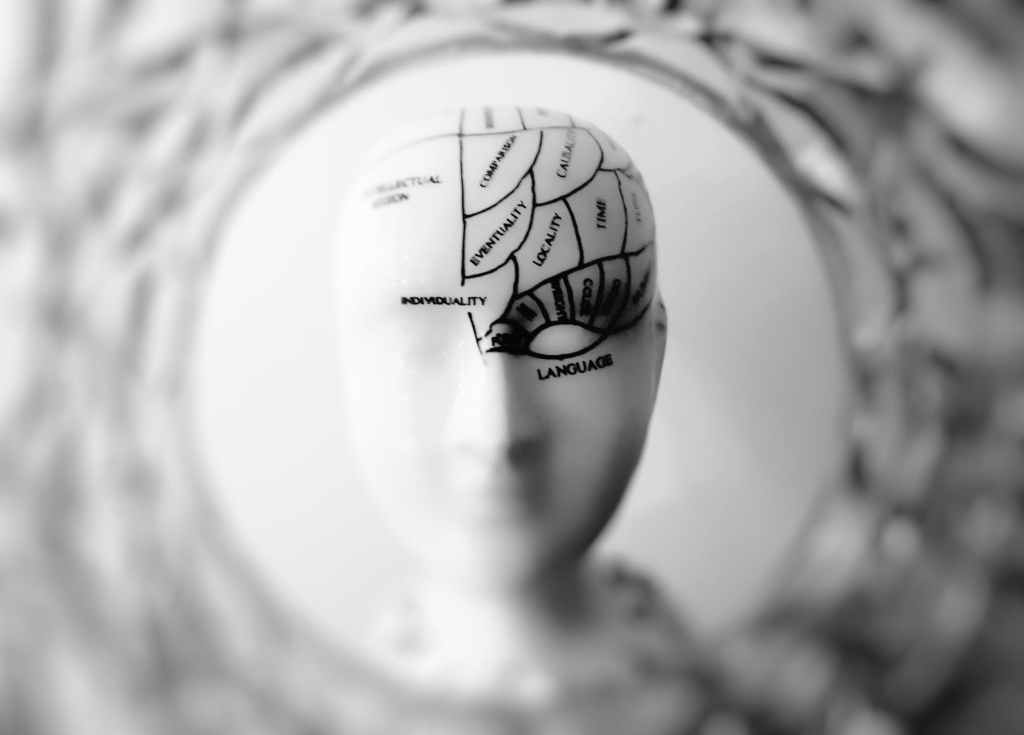
The human brain remains one of the deepest mysteries in biology. It is the most important part of our body, but even with all the advances in neuroscience we still don’t fully understand how it works. In productivity circles it is often assumed that better knowledge of brain function might improve efficiency and creativity.

Photo by meo on Pexels.com

In a recent interview in GQ magazine, neuroscientist Lisa Feldman Barrett reveals surprising facts about how our brains really work. For starters she reveals what the brain’s most important role is:

The brain’s most important job is not thinking or seeing or feeling or doing any of the things that we think of as being important for being human. Its main job is running a budget for your body—to keep you alive, to keep you healthy. So every thought you have, every emotion you feel, every action you take is ultimately in the service of regulating your body. We don’t experience mental life this way, but this is what is happening under the hood.

Read the rest of the article on the GQ web site or pick up her new book: Seven and a Half Lessons about the Brain.

Top Ten Challenges Facing Public Libraries

Public libraries have survived many ups and downs over the past century. Throughout it all they are remained core institutions in communities large and small. However, their survival going forward is not guaranteed. Right now COVID-19 is the biggest challenge facing libraries today, but even after a vaccine is widely distributed other problems await.

In an article from last year, Mark Smith of the Texas State Library wrote about the top ten challenges facing libraries going forward. The very first one listed has been on prominent display the past few years: a growing distrust in government.

As a unit of government, typically at the municipal or county level, it should be of concern to public libraries that the percentage of Americans who mistrust government is rising sharply. In 1958, 73 percent of Americans said they trusted the federal government to “do what is right” just about always or most of the time. In 2015, that figure was 19 percent (Pew Research Center 2015 “Beyond Distrust”). This appears to be a trend across demographic and ideological lines even as it shifts along partisan lines depending on who is in power in Washington (Pew Research Center 2017). … Currently, the public library is the rare public institution that bucks this trend. … As managers and workers of public-sector organizations, this trend should strike us as deeply alarming.

Photo by Pixabay on Pexels.com

Read about the other nine challenges facing public libraries in the article.

The Positive Effects of Growing Up with Books

As a librarian I naturally appreciate the value of a personal library of books at home. While my daughter was growing up we bought many classic and favorite books to supplement the ones I borrowed from the library. This lead her to become a proficient read and excellent student. While my daughter clearly benefited from a robust home library, it raises the question about the impact that access to books at home has on children across the population.

In a Smithsonian Magazine article, reporter Brigit Katz points to a study that “suggests that exposure to large home libraries may have a long-term impact on proficiency in three key areas.”

Photo by Pixabay on Pexels.com

The study, published recently in Social Science Research, assessed data from 160,000 adults from 31 countries, including the United States, Canada, the United Kingdom, Australia, Turkey, Japan and Chile. Participants filled out surveys with the Programme for the International Assessment of Competencies, which measures proficiency in three categories: literacy, numeracy (using mathematical concepts in everyday life) and information communication technology, (using digital technology to communicate with other people, and to gather and analyze information).

Learn more about the results of the study on the impact of home libraries on children’s development by reading the rest of the article.

The Ongoing Library Publisher eBook Saga

The pandemic has impacted public libraries in many ways, most significantly being the number of visitors. With many libraries on reduced operating hours or offering only curbside/walk up service it means access to their physical collections is limited. As well vulnerable populations that make up a significant portion of public library users are still staying at home for their own safety. These factors have combined to generate large increases in eBook borrowing. At the same time it has renewed simmering concerns about publishers and their eBook pricing models.

Photo by freestocks.org on Pexels.com

A recent article in Wired Magazine provides a good overview of the interaction between libraries and publishers in the age of COVID-19.

The rising demand for digital materials has prompted some librarians to shift what they buy, even as they fear shrinking budgets amid the economic downturn. A recent survey of 400 librarians in the US and Canada found that one-third are spending less on physical books, audiobooks, and DVDs, and more on digital versions since the pandemic began. Twenty-nine percent have had their budgets frozen or reduced.

But the publishers’ licensing terms make it “very difficult for libraries to be able to afford ebooks,” says Michelle Jeske, director of the Denver Public Library and president of the Public Library Association. “The pricing models don’t work well for libraries.” Between January and July, the Denver system saw 212,000 more books downloaded than the same period last year, a 17 percent increase.

Read the rest of the article at the Wired Magazine web site.

Macmillan Ends the Embargo

Lost in the midst of this global health crisis was a major step back by Macmillan Publishers. Last year, the publisher introduced a controversial eBook embargo policy that limited public libraries to only one copy of a title for the first eight weeks after publication, no matter how large the library system. This policy provoked anger throughout the nation, resulting in some library system’s boycotting Macmillan eBooks entirely.

On March 17, Macmillan surprised everyone by suddenly reversing the policy. In a statement, CEO John Sargent spoke to the library community.

There are times in life when differences should be put aside. Effective on Friday (or whenever thereafter our wholesalers can effect the change), Macmillan will return to the library e-book pricing model that was in effect on October 31st, 2019. In addition, we will be lowering some e-book prices on a short term basis to help expand libraries collections in these difficult times. Stay safe.”

Library organizations across the nation were happy with the news.

“This is extraordinarily welcome news in an unprecedented time,” said ALA Senior Director for Public Policy & Government Relations ALA Inouye. “Equitable access to digital content is more important than ever as libraries continue to serve their communities amid rapidly changing circumstances. Macmillan’s return to its original lending terms signals a new starting point for all publishers to consider how they can work with libraries to ensure—and expand—access for all readers. ALA looks forward to working with publishers to make that happen.”

Read more at the Publisher’s Weekly website.

How to Get Workflow Under Control – From Inbox to Done

Just a quick note that a short article I wrote was published in the ALA’s Learning Exchange Newsletter – December 2019. It is titled How to Get Workflow Under Control – From Inbox to Done. The core of the article is a brief summary of the GTD Five Stages of Workflow.

Workflow is a concept that simply refers to how we move things from ideas to actions.  One of the simplest workflow systems available is known as GTD, short for Getting Things Done.  David Allen, a former management consultant, devised the system over twenty years ago and it has developed into one of the most heavily used approaches to handling knowledge work.  Implementing the system requires very little set up time and can be done in any office situation.   The system is immortalized in his famous book, Getting Things Done: The Art of Stress-Free Productivity

If you haven’t reviewed the five stages recently, or are new to the concept, take a few minutes to read the article. I posted it on my site for easy reading. It might inspire you to get some things done!

eBook Warfare

(Original Post had a broken link to the article. It has been corrected here.)

For my recent Write of Passage assignment, I was tasked with writing about something that is changing in the world. So I choose a topic that is important to me as a librarian and to all public library members across the country. It has to do with accessibility to eBooks.

Have you ever heard of a business flat out refusing to sell their product to a reliable and well-funded customer? 

Sounds like a crazy way to do business.  However, that is the case right now between some publishers and libraries.  Several major publishing houses have set up a business model to make it difficult and expensive for public libraries to purchase eBooks.   One of the largest publishers in the world completely refuses to sell any eBooks to public libraries.

To learn more about this conflict between libraries and publisher, please read my recent short article on my web site.

Photo by freestocks.org on Pexels.com

Malcolm Gladwell – The Fascinatingly Flawed Intellectual

I’m interested in collecting interesting stories, and … collecting interesting research. What I’m looking for is cases where they overlap.

Malcolm_Gladwell_2014_(cropped)I love reading and listening to the works of Malcolm Gladwell.  Perhaps it is because he is an unabashed intellectual who makes his work accessible to all.  It could be that his flair for storytelling keeps me engaged to the very end.  It could even be that we both grew up in Canada!

For my recent Write of Passage assignment, I decided to provide a condensed look at Malcolm Gladwell’s books and share how his ideas may sometimes be wrong, but are always thought provoking.  For example, here is the start of the quick summary for his book Outliers.

“Why do some people skyrocket to success while most others barely get off the ground?  In this book, Gladwell explores an unseen side of success. While the American Dream narrative relates success to hard work and indomitable spirit, Gladwell spends time highlighting how uncontrollable factors such as the month of your birth, fortuitous family relations, and cultural heritage may be more significant.”

Read the rest of the article here.


Criticize with CRIBS

Have you ever been asked to edit someone’s written work?  For most of us, it is hard to provide constructive feedback to a writer beyond noting spelling errors or grammatical issues.  However, what every writer needs to be successful is honest criticism and sharp editting that can push their writing to the next level.

person holding orange click pen writing on notebook

I am taking an online course called Write of Passage, and in the last class the instructor David Perell, shared a simple approach that anyone can use to provide quick, helpful criticism.  It is titled with the acronym of CRIBS. As an editor moves through a written piece, they use the following five items to provide useful feedback:

  • Confusing – The section reviewed doesn’t make much sense
  • Repeated – The information was shared earlier and nothing much was added this time
  • Insightful – This section provided valuable, engaging information
  • Boring – This section doesn’t hold the reader’s attention
  • Surprising – The information was unexpected and thought provoking

I’m going to use CRIBS myself in the future whenever I am asked to edit someone’s work.  I invite you to try it yourself and let me know what you think.