Interview with Tiago Forte

In less than two weeks I will interview Tiago Forte, the leading expert in how to manage your digital notes and use them for greater recall and creativity. See the details below if you want to join the Zoom interview. Feel free to share with others:

Meet the Author: Tiago Forte
Thursday, Jul 14, 2:00 pm EST

Workplace productivity expert and author Tiago Forte discusses his newest book, “Building a Second Brain: A Proven Method to Organize Your Digital Life and Unlock Your Creative Potential,” in conversation with Library Director Doug Crane. (60 min.) Presented by Community Engagement.

Preregister through this link.

This event is hosted by the Palm Beach County Library System. Hope to see you there.

Unite Against Book Bans

Across the country attacks on the freedom to read have multiplied. While there have always been attempts to remove books from library shelves, this time the movement is more organized and widespread. Most of the targeted items are children’s material covering LQBTQIA+ information and race relations, such as Black Lives Matter.

The American Library Association stands at the forefront to protect the right to read. For years they have tracked book challenges and compiled the top ten list of targeted titles. With the threat rising, they recently started a campaign called Unite Against Book Bans. The site contains the results of a nationwide poll that clearly shows book banners are a minority.

On both sides of the aisle, large majorities of voters and parents oppose book bans. 71% of voters oppose efforts to remove books from public libraries. 67% of voters oppose efforts to remove books from school libraries. And yet, attempts to ban books from libraries are rising at an unprecedented level across the country. The American Library Association reported more than 729 attempted bans of 1,597 individual books in 2021 alone.

Join the campaign to preserve the right to read and fight book bans. It is as simple as signing up through the ALA’s campaign page. The web site also includes an action kit and ways your organization can partner with the movement.

Don’t let a small minority ban books from our library shelves. Join the cause and unite against book bans.

Interview with Lessa Kanani’opua Pelayo-Lozada

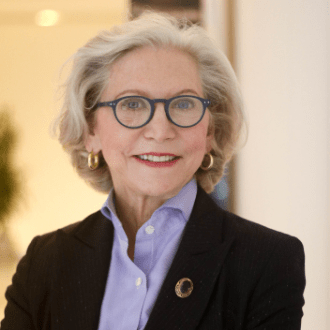
I had the honor of interviewing incoming ALA President Lessa Kanani’opua Pelayo-Lozada. The interview is available to read at Public Libraries Online.

Working out of her home base as the Adult Services Assistant Manager at the Palos Verdes Library District in Southern California, Lessa has been deeply involved with ALA for many years. Given the huge responsibilities and time commitment, I asked what inspired her to run for ALA President.

The idea of becoming President stuck in my mind because when I was in Emerging Leaders, my group said I was going to be ALA president someday although I’m not sure I agreed then. When I was on the Executive Board and started doing work for the Steering Committee on Organizational Effectiveness (SCOE) it was a labor of love, and a lot of work. I saw how much I cared about the Association, but it also showed me how much others cared about it too. I saw the difference that ALA made not only in personal lives, but in libraries and other Associations across the country. When I was finishing my executive board term, and SCOE was coming to an end, it was right when the pandemic hit. Calls for nominations for ALA president were being solicited. I wasn’t finished with this work and wanted to continue to completion to see those changes. I don’t want to just drop it into someone else’s lap. I want to take responsibility and help the management and cultural changes going on in ALA, and as a society as a whole. That’s how I got here today.

Later in our conversation, she shared her list of the most important issues facing libraries today.

I think our biggest issues include ensuring that ALA continues its mission to preserve and strengthen library services through technical assistance, professional development, and direct funding for libraries and library practitioners. What that looks like on a practical level is how we support library workers right now. We’ve gone through a lot of trauma, regardless of the type of library you’ve worked in. As library workers and as people, figuring out what that support and advocacy for library workers looks like is one of the biggest issues. ALA can utilize its 501c6 arm, the ALA-Allied Professional Association, to carry out this mission. As ALA, one of the biggest issues right now is also supporting those who are facing intellectual freedom challenges. We must work against those challenges with a concerted effort. ALA recently launched Unite Against Book Bans, and is rolling out tool kits. We’re seeing support from our Office for Intellectual Freedom helping those on the front lines. Finally, there’s lots of different ways that folks can use their skills, time, and dollars. I think it’s important to remind folks of the value of ALA membership and how it affects libraries across the nation.

Read the rest of the interview to learn about her Presidential plans, the value of an ALA membership, and what she believes are the biggest opportunities for libraries of all types.

Thank you to Public Libraries Online for posting the conversation.

Libraries Can Really Change the Future – Interview with Susan Benton

In February I had the honor of sitting down with Susan Benton, President/CEO of the Urban Libraries Council (ULC). Susan is retiring this summer after thirteen years of service at ULC. Before she left, I wanted to learn more about her tenure at ULC and her thoughts on the challenges facing, and future of, public libraries. The full conversation is posted at Public Libraries Online. Here is an excerpt from that interview.

DC: How has ULC changed under your leadership both internally and also in terms of its relationship with members?

Susan Benton

SB: When I first joined ULC, we had a very small staff and were located in Chicago. We made the move in 2014 to Washington D.C. which was important for us. While some thought ULC moved to Washington to lobby on Capitol Hill, we moved to D.C. so that we could be closer to allied organizations that are important to libraries. The work that ULC is doing to transform the lives of people in our cities and counties requires us to work with organizations here in Washington D.C., such as the National League of Cities, National Association of Counties, the Council of the Great City Schools, the Council of Large Public Housing Authorities and others. They are truly sister organizations with very similar missions to ULC. We now connect with them to extend our work. The move helped us take a stronger position for urban libraries. We are constantly in conversations with colleagues in the public sector and private sector so that we can educate others about the essential contributions of libraries to all aspects of life. 

Read the rest of the article on the Public Libraries Online web site.

Tips for Better Writing

Do you like to write?

Much like public speaking, many people feel uncomfortable writing for public consumption. However, for almost any kind of professional career, being skillful at writing is an asset. Thankfully there are very simple ways to improve your writing ability without enrolling in a course.

In a recent article on his web site, Darious Foroux lists 15 brief tips that anyone can use to improve their writing. The first one is the simplest of all:

Keep It Brief – Short writing forces you to be clear. Because our thoughts are usually abstract and all over the place, our writing tends to be the same. You can avoid that by always aiming to be as brief as possible.  

That tip is especially true for business writing, since most people want to get to the point quickly to complete a task or project. Another tip that can be applied immediately is to: Be Direct.

Say what you want, mean, or feel. Avoid leaving things open to interpretation because that only annoys people. We can often be more direct in our writing than in real life. When I teach these types of writing lessons in my video course, I don’t need to be this direct because I can use my voice, facial expressions, and examples to make my point. But when we write, we only have our words. So make them count. 

Learn about the other writing tips on Foroux’s web site.

Book Bans on the Rise

In the past year, book challenges have been on the rise. It is not unusual for school and public libraries to have people contest items in the collection. In fact every year the American Library Association shares a list of the top ten most challenged books. Librarians have established procedures in place to address complaints along with collection policies to support them.

However, the recent wave of book challenges in schools and public libraries is a new breed of challenge. In a recent article by Valerie Strauss in the Washington Post titled This wave of book bans is different from earlier ones, she points out there is a particular subject matter in contention.

Now we are seeing a new wave of book bans, marked by an unprecedented number of challenges and intense polarization. Its focus: narrowing the universe of information in schools and public libraries that might challenge young people on race and gender — the same issues at the center of the political and cultural wars ripping through the country.

Photo by Pixabay on Pexels.com

What makes this round also different is that there appears to be a greater national coordination on messaging and the books being challenged.

Advocacy groups are working to nationalize book challenges, this time with the help of conservative TV and talk shows, that for the past few decades have been mostly local events. Some state legislators are threatening punitive action against anyone in schools or libraries who spreads material deemed obscene or harmful to minors. And now students, parents, librarians and school boards are fighting back, calling the push censorship.

Read the full article on the Washington Post web site.

Gazing into the Crystal Ball

2021 proved to be a very unpredictable year. Between the pandemic, political uncertainty, and economic challenges we never knew what would happen next. Still, everyone must plan for the future, including Library Directors and CEOs. So, what are these leaders focusing on with the new year?

In a recent survey I conducted of Urban Library Council members, I asked Directors to share their top concerns for 2022. The results were published in an article on the Public Libraries Online web site. The group reported focusing on a broad range of topics, but far and away the largest was COVID and its fallout.

The pandemic upended the library’s relationship with patrons. Between limited hours, uncertain access to buildings and safety concerns about virus spread, patterns of use changed dramatically. Libraries have seen a drop in visitors that has not reverted back to pre-pandemic levels. A Canadian library director listed a number of possible reasons including:

“The continued effects of the pandemic including changing customer behaviors, hesitancy to frequent public spaces, mental health issues, impact on loss of learning due to school closures, and the shift to online.”

Related to the pandemic were concerns about budgets due to a violate economy.

Several directors commented that their infrastructure is in need of repair and upgrading. However, funding for capital projects is running up against tight operating margins. For example, a California library director shared the following about their system.

“This may not be the case for every library system but over half of our branches are too small and well beyond their normal useful life. There is a high amount of deferred maintenance and insufficient funding resulting in increased deterioration of buildings.”

Explore more thoughts from public library leaders on their top concerns for 2022 at the Public Libraries Online web site.

The Six Step Guide to Library Worker Engagement

Over the past four years I have focused on building a strong culture in my library system. Unlike revising a policy or plan, strengthening a culture takes time to achieve. One of the key books I have used is Primed to Perform : how to build the highest performing cultures through the science of total motivation. It included ideas such as creating a Firewatchers committee and measuring your culture based on six key factors.

This year a new book has come out on culture that focuses solely on libraries. Written by Elaina Norlin, it is titled, The Six Step Guide to Library Worker Engagement.

In the book, Norlin demonstrates how library workers can easily become disengaged from their work. To prevent this from happening, she identifies the following areas as key to building a strong culture:

  • Leadership and Management
  • Trust
  • Recognition and Praise
  • Feedback and Performance Evaluation
  • Teamwork and Collaboration
  • Diversity, Equity, and Inclusion

To show best practices, Norlin includes interviews with library directors, managers, and leaders from public, academic, and special libraries. I was honored to be interviewed for the section on Feedback and Performance Evaluation. Here’s a portion of that interview.

If a new library director or manager wanted to know how to get started inspiring a more engaged workforce, what would be your advice?

The first step is always to listen. Often a new leader may come in with great ideas and pet projects to launch. However, if they don not take the time to learn more about their organization and connect with the people who comprise it, they may end up going in the wrong direction very quickly. Typically there is a problem or an old way of doing things which is a pain point for the staff that needs to be resolved. A new leader can show their support by tacking that issue first and only afterward start advancing their own ideas.

Find the book at your local library or from the ALA store.

Three Random Words

How many passwords do you have for all of your online accounts? 10, 100, 1000?

I calculated my own situation and found over 200 passwords on my list. Nowadays it seems that every web site you visit or service you use requires setting up an account with a password. On top of it, many sites have complex protocols, such as requiring numbers, capital letters, or special characters, which make those passwords hard to remember. Is it possible to find a simpler way to create passwords that are easy to remember, but hard to hack?

According to a recent article in The Guardian, science editor Robin McKie pointed to a recent study that claimed the best passwords are phrases composed of three random words. Her article begins:

It is much better to concoct passwords for online accounts that are made up of three random words as opposed to creating complex variations of letters, numbers and symbols, government experts have said.

In a blogpost, the National Cyber Security Centre (NCSC) – which is part of Government Communications Headquarters – said a three-word system creates passwords that are easy to remember. In addition, it creates unusual combinations of letters, which means the system is strong enough to keep online accounts secure from cyber criminals. By contrast, more complex passwords can be ineffective as their makeup can often be guessed by criminals using specialist software.

Photo by Pixabay on Pexels.com

Of course, many sites still have strict character requirements, but if this idea is true, we can all move away from odd rambling passwords composed of letters or numbers that are impossible to remember. Instead you can go with such combinations as: Tree-Car-Garlic; Rose-Titanic-Algae; River-Doughnut-Tornado; or Sewer-Stop-Gloat. (A random number could be added at the end if needed.)

To learn more, read the rest of the article on the Guardian’s web site.