Getting Stuff Out of Your Head

Think for a moment – right now, is there something important that needs to be done for which the only reminder is in your head?

For most people relying on memory is the default way to keep track of all the things they need to do. This includes remembering deadlines, commitments, obligations, or simply keeping track of fun stuff to do someday. The problem is that our minds are a poor tool for this job. In fact, David Allen, founder of GTD, often says that our heads are “crappy office spaces.”

Consider how easy it is to forget something. In the morning you open the refrigerator and discover there are no eggs. After making a mental note to drop by the store on the way home you head off to work. After a busy day on the job, hitting the grocery store is long forgotten. The next morning you are once more reminded of the lack of eggs at breakfast and are forced to make yet another sketchy promise to hit the store on the way home.

According to GTD, the best way to remember something is to place it in a trusted system outside of the head. On a practical level, that means as soon as something comes to mind it is immediately written down on paper or placed into electronic storage. So long as the reminders are kept in a place that you frequently return to, these items will never be lost.

Photo by Engin Akyurt on Pexels.com

What are the best ways to get stuff out of your head quickly? Below are common options:

  • Use your phone’s reminder app
  • Have a note pad on your desk or counter top along with fresh pens
  • Enable a digital voice assistant, like Alexa, to capture voice reminders
  • Use sticky notes to post reminders in prominent places

For electronic reminder systems, consider setting a day/time reminder that pops up at the right time. For example, a reminder set for arrival at the office can be helpful to knock out an item right away. Or a reminder that pops up before leaving work will ensure eggs are picked up on the way home. By offloading memorization, stress levels will drop as efficiency increases.

No matter the method, constantly get stuff out of your head and into a trusted system. You will be glad you did.

Systems vs Flexibility

One of the keys to productivity is to create efficient systems. Whenever you run a process automatically it will be faster and more reliable, especially if a human does not have to be involved. However, are there times when reliance on systems can be to our detriment?

Darious Foroux explored this problem in a piece called Systems vs Flexibility: Why Rigidity is the Enemy of Modern Success. In the post, he first acknowledges the usefulness of systems. Then he points out that it is problematic to rely too much on them.

The problem with systems is that you risk binding yourself to your system. After all, it’s what you control. And if you’re a control freak, you can go nuts about your system. 

You’ll try to optimize every single aspect. So maybe you started off trying to get a raise; created a system and started executing.

But maybe your life changes or the economy changes and you shouldn’t be executing that system. You might need a new goal in your life. Or a new system. Probably both.

Later on, Foroux explores the notion of flexibility and how it can overcome the problems inherent in systems.

The more rigid you are, the more you risk breaking things. That’s true for your career, relationships, body, and mental health.

I’ve always been a flexible thinker. I have zero attachment to ideas and beliefs. That’s because I’m a pragmatist at heart. I wrote about my personal philosophy in my book, Think Straight

This strategy has generally made me flexible. I’m never afraid to make a change.

But I still get stuck inside my systems, whether it’s for work or in my personal life. If you can relate to this, I recommend taking a step back from your existing systems, routines, or habits occasionally. 

See it as a way to improve your flexibility and lower your rigidity.

Read the entire piece on Foroux’s web site.

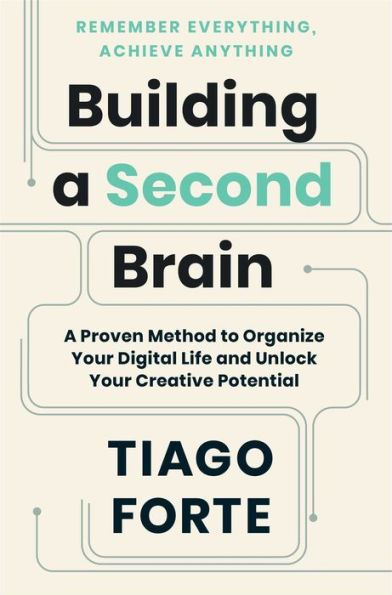
Building a Second Brain: A Conversation with Tiago Forte

Last year I had the honor of interviewing Tiago Forte, creator of Building a Second Brain. We spoke for almost an hour on how he became interested in the power of digital notes, discussed PARA as an organizing tool, and learned best practices for capturing information across mediums.

I’m glad to share that the written transcript of the interview is now posted on Public Libraries Online. Below is opening question and response.

PL: Please define what you mean by a Second Brain?

TF: Think of a diary or notebook. It is a creative, timeless practice to save your thoughts. Now make a few changes. You’re going to journal not just your own thoughts and reflections, but external sources of information. You hear a quote that resonates with you, write that down. You hear an interesting fact, write that down. You discover some research of interest, write that down. Next, make it digital so that it is on your smartphone and sync to the Cloud and all your devices. Now you can access it from anywhere, anytime.

With all the capabilities of technology, you can save, not just text, but images, links, web bookmarks, photographs, drawings, and sketches. Because it’s digital, it can be annotated, organized, and re-sorted. It can change with your needs and goals. Your Second Brain is a trusted place outside of your head where you save all of the ideas, insights reflections and realizations that are most important to you. It contains information that is personally relevant and meaningful. It contains moving and powerful life experiences, memories, and unique ways of seeing the world.

To learn more about other aspects of Building a Second Brain, such as the CORE approach, understanding the difference between projects and areas, and much more, please read the full interview on Public Libraries Online.

Why it is Hard to Get Things Done (and we don’t mean GTD)

Even though we now have far more tools at our disposal to be productive in the office, more and more people are finding it hard to actually get work done. This may seem like a paradox, but there is an important reason why this is so.

The Wall Street Journal recently published an article by Ray Smith titled, Workers Now Spend Two Full Days a Week on Email and in Meetings. In it, Smith points to a survey done my Microsoft that outlines worker’s concerns.

Researchers found that the 25% most active users of its apps—in other words, people who use Microsoft’s business software for much of their online work activity—spent an average of 8.8 hours a week reading and writing emails and 7.5 hours logging meetings.

Those figures don’t include time spent instant messaging, on the phone or in other, impromptu conversations with co-workers. In all, the average employee spent 57% of their time using office software for communication—in meetings, email, chat. The remainder of time, 43%, they used for creating things, such as building spreadsheets or writing presentations.

Photo by Andrea Piacquadio on Pexels.com

Smith shares how this workload affects a worker’s ability to think big.

In a separate Microsoft survey of 31,000 people worldwide, nearly two out of three said they struggled to find time and energy to do their actual job. Those people were more than three times as likely as others polled to say innovation and strategic thinking were a challenge for them.

The study found that despite our assumption that more communication and collaboration lead to a better outcome, it seems this is not the case. Smith points out that one of the biggest hinderances to a productive workplace comes from not setting priorities for meetings and clearly considering who should attend.

Too often, meetings are scheduled without clarity on what they are supposed to achieve, said Rita J. King, executive vice president of workplace-consulting firm Science House. “The key is to not invite someone to a meeting unless you are absolutely certain that they belong there, and you can tell them why,” she said.

Learn more about the concerns expressed in the Microsoft survey and some strategies to solve them by reading the full article.

You Deserve a Break

Are you the type of person to work non-stop throughout the day? In many American offices, and some other countries too, there is a culture the emphasizes continuous work. This means employees don’t stop for breaks, lunch, or even at normal quitting time. This happens due to a belief that this non-stop work ethic makes for a more productive workplace. However, is that true?

According to recent studies, taking breaks not only leads to greater productivity, but also better mental and physical wellbeing. An article in the Harvard Business Review by Zhanna Lyubykh and Duygu Biricik Gulseren titled, How to Take Better Breaks at Work, According to Research, highlights reasons why breaks are important.

Like batteries that need to be recharged, we all have a limited pool of physical and psychological resources. When our batteries run low, we feel depleted, exhausted, and stressed out.

Pushing through work when very little energy is left in the tank puts a strain on well-being and work performance. In extreme cases, nonstop work can lead to a negative spiral: A worker tries to finish tasks despite their depleted state, is unable to do them well and even makes mistakes, resulting in more work and even fewer resources left to tackle those same tasks. This means that the more we work, the less productive and more exhausted we can become. Think about reading the same line for the fifth time, for example, and still not absorbing it.

The good news is that taking breaks can help employees to recharge and short-circuit the negative spiral of exhaustion and decreasing productivity. 

Photo by Andrea Piacquadio on Pexels.com

Since breaks are valuable, what is the best way to take one? The authors provide a few suggestions, starting with break length:

A longer break does not necessarily equate to a better break. Disengaging from work only for a few minutes but on a regular basis (micro-breaks) can be sufficient for preventing exhaustion and boosting performance. For example, workers can take short breaks for snacking, stretching, or simply gazing out of the window. Further, timing of the break matters — shorter breaks are more effective in the morning, while longer breaks are more beneficial in the late afternoon. This is because fatigue worsens over the workday, and we need more break time in the afternoon to recharge.

Read the rest of ways to optimize your break time by reading the rest of the article.

Handling Meeting Distractions

As much as people object to them, meetings are still an important part of the workplace. Meetings have the ability to disseminate information quickly and simultaneously to all participants. They also offer opportunities to discuss and elaborate on policy, process, or changes within an organization. However, meetings can also be derailed very quickly. Addressing these dead ends and distractions is vital to a productive workplace.

Luis Velasquez writing in the Harvard Business Review, recently shared 4 Distractions that Derail Meetings — and How to Handle Them. The first type of distraction are items he terms as “gravity problems.”

These occur when team members get sucked into discussing a challenge or issue that’s fundamentally unsolvable at the team level, much like the force of gravity. Trying to solve a gravity problem diverts time, mental capacity, and motivation away from solvable issues, leading to team frustration. In the previous example, company culture and leadership support are gravity problems that are distracting from the solvable issue: the product launch.

Photo by fauxels on Pexels.com

After listing three more, Valasquez provides strategies to keep meetings on task. The first one is to always determine the primary objective of the meeting.

Is the goal to make a decision, brainstorm, get people aligned, or something else? Keeping your eye on the overarching goal will help you develop a focused and clear agenda. For instance, in a decision-making meeting, the objective is to make a choice among different options. Thus, organizers must clearly understand the options, supporting data, decision-makers, and decision-making processes.

Learn about the other three distractions and more strategies on how to avoid them by reading the full article.

An AI Answers Second Brain Questions

Every day we heard of a new use for AI. Whether it is to assist with travel planning, exercise routines, or writing resumes, the applications seem without end. In prior postings I shared experiments with the most famous AI on the block right now, ChatGPT. However, it is not the only one out there. In fact, people are feeding content into other AIs as a way to help the system learn and grow.

An example I came across recently was from Tiago Forte. He took an AI and feed it the contents of his book, Building a Second Brain. Next, he set up a simple interface to allow users to ask the AI questions about the book.

Here’s what happened when the AI is asked the sample question, What is Building a Second Brain about?

Answer: Building a Second Brain is about how to use technology to revolutionize personal effectiveness. It provides a system for organizing information holistically, for any project or goal, and for easily and generously sharing it with others.

To test it further, I asked it to define PARA.

Answer: PARA is a productivity system developed by Tiago Forte that helps knowledge workers organize their work and resources into four categories: Projects, Areas, Resources, and Archives. It is designed to help users quickly access the information they need and keep their workspace uncluttered.

Finally, I decided to ask it a more challenging question: What is the best way to save video content in a Second Brain?

Answer: The best way to save video content in a Second Brain is to take notes while watching the video, distilling the key points and ideas into concise summaries. This will make it easier to quickly rediscover the information in the future. Additionally, it is important to store the video in an easily accessible format, such as a bookmark or link.

Overall, I found these responses to be on point. However, maybe you can ask it a question about Building a Second Brain that will stump it. To try for yourself by jumping over to the AI website.

Tidying Odd Spaces

This weekend I got into the tidying zone. The target was my home and office work desks. Paperwork and other items had gotten out of control and required dedicated attention to resolve. The cleanup also included the desk drawers, which contained all sorts of strange items.

Marie Kondo has through a lot about how to tidy up odd spaces in the house. On her website, she shares tips on how to get those spaces under control. One of the most important steps to clean a drawer or closet is to take everything out.

Taking everything out of junk drawers and other komono hot spots and laying it out provides a fresh view of all the contents. You may find something that was once missing or something you forgot you owned. It is an opportunity for re-acquainting yourself with the objects that live with you and recognizing those that spark joy and those that don’t.

The rationale for this is simple; it takes just as much energy to put the item back in the original spot as it would to simply toss it or place it in a more appropriate location. However, that leads to the question of how to organize these miscellaneous items so that they remain functional and not lost in an out of the way space. Marie’s approach is to compartmentalize.

Komono is hard to contain when not carefully thought through. Organize the contents of a komono drawer by category. When you open it to reach for your scissors or letter opener, have those sharp items live together. Matches and lighters can live together as fire-starters. Grocery list paper and your favorite pencil should be neighbors.

Small items that live in these kinds of komono drawers tend to jostle around every time the drawer is open and closed. Junk drawer organizers and small compartments within help keep like-with-like and protect the drawer from becoming jumbled again.

Review all the steps to tidying odd spaces on the Konmari website.

Every Choice is Fatiguing

What if choices are actually traps?

We tend to want more choices in our life. The general feeling is that more options are better. However, this may only be true to a certain point. After that point, the exhaustion of too many choices may lead us to stop making any! This is known as decision fatigue. It is defined in Healthline as:

Coined by social psychologist Roy F. Baumeister, decision fatigue is the emotional and mental strain resulting from a burden of choices.

“When humans are overstressed, we become hasty or shut down altogether, and that stress plays a huge role in our behaviors,” says Tonya Hansel, PhD, director of the Doctorate of Social Work at Tulane University.

In other words, when your mental energy begins running low, you’re less able to override basic desires and more likely to go for whatever’s easiest.

Photo by Andrea Piacquadio on Pexels.com

According to the article, decision fatigue can lead to these types of outcomes:

*Procrastination. “I’ll tackle this later.”
*Impulsivity. “Eeny, meeny, miny, moe…”
*Avoidance. “I can’t deal with this right now.”
*Indecision. “When in doubt, I just say ‘no.’”

To learn more about decision fatigue and how to avoid it, read the rest of the Healthline article.