Work as a Martial Art

In his seminars, David Allen often uses his experience with the martial arts as an analogy for GTD.  In his latest blog post, David develops on this theme to show how important it is to stay loose at work.

gtdcoverA tense muscle is a slow one. This is a physiological and demonstrable fact in the martial arts. Could this be true in other aspects of our lives?

In karate, the power that can be generated by a punch is primarily due to speed, not muscle. It is the snap at the end of the whip. That is why petite people can learn to break boards and bricks with their hands—it’s not really about callouses, it’s more about the ability to generate that pop at the end of the thrust.

But a tense muscle is a slow one. So the high levels of training in the martial arts are about relaxation and balance, because that allows the flexibility and response-ability required to mobilize maximum resources at maximum speed for maximum results.”

Read the rest of his blog post at the Getting Things Done web site.

What Does It Mean To Be Organized

Many people gravitate to a system like Getting Things Done to help develop basic organizational skills.  This is true for me.  Years ago I recognized that my messy desk and inbox was a detriment to my productivity.  I badly needed a system to get myself organized so I could handle more workflow and meet my deadlines.

In a recent blog post on GTD Times, Marian Bateman, Certified GTD Coach, explores what it really means to be organized:

cleandesk“What does it mean to be organized? It used to be the definition was clean and neat. You know the offices–you walk in the door and it looks likes no one works there. The desk has nothing on it, except for a cool object and a photo. Is this what being organized really means?
My answer is we need to update our definition of what the term organized means.”

Read the rest of the blog entry at: http://gettingthingsdone.com/2017/02/what-does-it-mean-to-be-organized/

Think like a Computer Scientist

Have you ever experienced a time when you had trouble making a choice and found yourself continually looking at alternatives?  How easy is it for you to decide when to try a new restaurant or return to an old favorite?  What is the best way to make good choices when anticipating for an uncertain future?

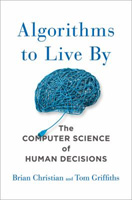
These are all types of challenges that computer scientists face when designing computer memory, systems, and networks.  In their new book, Algorithms to Live By: the Computer Science of Human Decisions,  authors Brian Christian and Tom Griffiths explore fascinating ways that discoveries in computer science can help improve our own decision making on a wide range of problems.  Some of the topics they explore include:

  • algorithmsOptimal stopping : when to stop looking
  • Explore/exploit : the latest vs. the greatest
  • Sorting : making order
  • Bayes’s Rule : predicting the future
  • Overfitting : when to think less
  • Randomness : when to leave it to chance
  • Networking : how we connect

Algorithms to Live By is “A fascinating exploration of how insights from computer algorithms can be applied to our everyday lives, helping to solve common decision making problems and illuminate the workings of the human mind.” (from the dust jacket)

Why Things Don’t Get Done

Have you ever noticed that somethings things don’t get done?  I know, this is a “Duh” insight.  The amount of things that don’t get done can seem larger than what actually gets done.  When you look closely, there is often a simple reason why some things that should get done don’t get done.  David Allen addresses this topic in a recent blog entry:

davidallen“I have noticed a tendency for people to spend a lot of time in high-energy meetings and discussions, and a high resistance at the end of those meetings and discussions to clarify—“Do I have the next action on this, or do you?” or “Whose is this now, to make happen?”

“This lack of declaring an owner for the action, outcome, or area of focus is why at home many couples and families have huge stacks of papers and “stuff” on the counter between the kitchen and the dining room, by the phone, and in the front hall, and why a lot of personal projects are “stuck.” No in-trays. No immediate physical, visible distinction as to who actually has the next action or decision about this bill, this brochure, this note from the teacher. Everybody sort of feels responsible for it, but no one really owns it. So it doesn’t happen.”

Read the rest of this blog entry at the Getting Things Done web site.

11% of Email

Email has an excitement around it because of its immediacy.  It comes in fast and can be responded to quickly.  Pop-up notifications, bells, and vibrating cell phones beckon one to view their incoming messages like a Pavlovian Dog, making it feel like every email must be answered as soon as it arrives.  But if you stop to think about it, how much of your email do you really need to see as soon as it shows up?

danarielyDan Ariely, a researcher in behavioral economics and author of books including The Upside of Irrationality and The Honest Truth About Dishonesty, wanted to find out how much email is really so important that it needs immediate attention.  The findings reported on his blog came to a strong conclusion.  Participants in his study indicated that out of all the email that arrived in their inbox, only 11% of it warranted immediate attention.  Basically, just 1 in 10 messages that arrived in participant’s inboxes were worthy of quick action.  The rest could wait for hours or days and 24% could be trashed immediately.

Take this finding as an excuse to relax around email.  If you haven’t done so already, turn off all notifications of new messages that only serve to break your concentration.  The takeaway here is not to worry if you haven’t checked email in a while.  The truth is most email can wait.

Inbox Zero

inbox-zeroEmail provides for many people their most difficult productivity challenge.  The sheer volume of messages can overwhelm an inefficient processing system very quickly.  While some people may be tempted to declare email bankruptcy and delete all their messages, there are better ways to process all that incoming electronic data.  One approach that is based in part on GTD methodology is Inbox Zero, developed by Michael Mann and found on his web site 43 Folders.  The site hasn’t been updated in a while, but the information is still useful.  From the web site:

“43 Folders is focused on an arc about how to improve the quality of your career and life by managing your attention in a way that allows you to work your ass off on the creative projects that matter most to you.”

His web site is most famous for the Inbox Zero posts.  The component of Inbox Zero that is most powerful for me is the idea to reduce the number of email reference folders down to one or a very few and then relying on your email app’s power searching tools to search for archived material.  This saves time on the front end while sorting email and on the back end when retrieving it. Take up the 43 Folders Inbox Zero challenge by reading all the posts on this topic, compiled on one page.  See if it makes a difference to your electronic world.

The Best Time for a Weekly Review

Moving into a 2017 is a good time to tidy up the old and prepare for the new.  One way to do this is through a commitment to the weekly review.  David Allen shares in a recent blog post the best time to do a weekly review:

davidallenThe strength of GTD awareness and ability is knowing that the best time to do a GTD Weekly Review is when you least feel like doing it. The strange force that seems to make these simple but powerful habits so challenging is that we think we need to have the result of the behavior, before we can engage in the behavior.

We feel we need to be in control before we can plan, we need to be organized before we can get organized, and we need to know what’s going on before we can sit down to figure out what’s going on. Strange, aren’t we?

So make one of your new year’s resolutions a commitment to the weekly review.  You will soon wonder how you ever lived without it.  Experience a guided weekly review from a GTD Coach at: http://gettingthingsdone.com/2015/07/podcast-07-guided-gtd-weekly-review/

Read more of David Allen’s GTD Times blog at: http://gettingthingsdone.com/gtd-times/

Purge Your Files

paper-filesAs we approach the end of the year regular work flow often slows down as colleagues take vacation for the holidays.  For me, I have found this to be an ideal time to tidy up by purging my paper files.

Filing is a beast that needs to be kept tame or it will slowly eat away at your productivity.  The surest way to let it run wild is to never purge old files, leaving your cabinets filled with stuff that is no longer needed.  Remember, if your file cabinets get over three quarters full the desire to file will diminish and piles will begin to appear all around you.

So make an appointment over the next few weeks to spend quality time with your files. You can even create space by digitizing files and then tossing the paper copy. I invite you to end your year by purging unneeded paper from your file cabinets and see how good it feels to have a clean start for 2017.

The Four “D”s of Action

It is a basic truth that in order to get things done, action of some kind is required.  Often times we fail to take action due to uncertainty about the exact nature of the action that is required.  However, it is not as complicated as it seems.  For anything that comes into your world, you have only four options on how to respond:

  • office-deskDelete It – Get rid of the item as quickly as possible.
  • Do It – Complete the action as soon as possible. The Two Minute Rule applies here.
  • Delegate It – Send the action along to another person for action.  Delegation can be in any organizational direction – up, down, sideways, etc.
  • Defer It – Store a reminder of the action on the appropriate list to do when time, space, and energy permit.

Run every actionable item through the GTD workflow diagram, found on page 37 of the new edition of Getting Things Done.  You will end up at one of the four “D”s when you do so.  Faithfulness to this process will help bring clarity to your work and increase productivity.  Have fun!