Productivity Guilt

I have come to realize that this is a pandemic is a strange time to evaluate productivity. Our society is in a weird space were many people are over worked due to the essential nature of their jobs. Conversely, many people are now under worked due to being laid off or furloughed. It is the very few whose work continues unaffected by the disaster.

No matter where your work lies on this continuum, the changes in the world around us have an impact on our mental state. With so much of the future unknown a new definition of productive is needed. With this in mind I came across an article by Scott Young titled, “What is Productivity Guilt? (And How Can You Prevent It?)” In the piece he provides advice on how to be easier on yourself to avoid productivity guilt. For example:

Accept that you’ll always be imperfect. That’s okay. Everyone is. Nobody, including me, does everything perfectly all the time. … I go through phases where my habits evolve. Old ideas I wrote about get replaced with new ones. Not always because the new is better than the old, but because I’m always changing (as will you). If you see, instead, that everything I’ve written about is a static and permanent part of who I am, when you sum it all up, you’ll get to something that’s probably unmanageable as a whole.

Photo by Andrea Piacquadio on Pexels.com

Young goes on to provide the following advice when facing the specter of productivity guilt:

The real source of the guilt, however, isn’t because the standards imposed are too unrealistic or even undesirable, but because there’s always a gap between how we see ourselves and how we would like to be. The right move to make is always one that pushes you a little, but takes where you are as a starting point. That also includes your psychological strengths and weaknesses.

The rest of the article is available here.

Where to Start with GTD

For people who are staying or working from home, this strange time presents an opportunity to start a new habit or finally read a productivity book like Getting Things Done. However, like any new project it can seem overwhelming at first. This can in turn lead to inertia and the old habits remaining in play.

Yet, it may not be as hard to change as it first seems. In a recent blog post, David Allen answered one of the most popular questions he receives about GTD: “Where do I start?”

I have a very strict and specific procedure that must be followed, without exception. If followed, it’s a guarantee of success. If not, well…good luck. Where, exactly, should you start? (Hang on, this is going to be tough…)

Anywhere.

Yes, anywhere. Any portion or component of the GTD approach, applied, will bring at least a bit more clarity, focus, and control for you—without exception. And very likely when any one thing is executed, it will create a reverberation effect and spread to other parts. It’s a holistic model—i.e., any piece can be worked, and it will add to the whole gestalt.

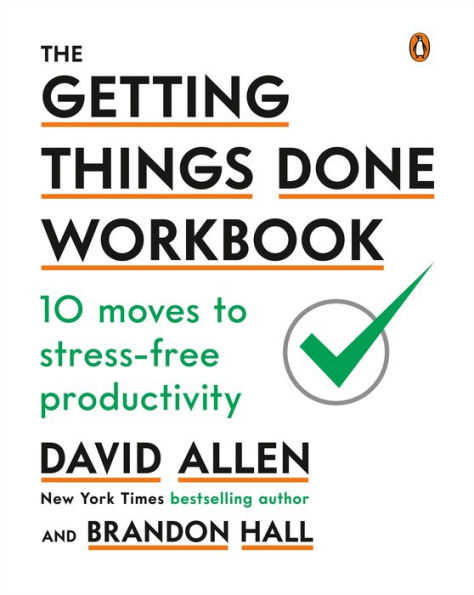
Read the rest of his advice on the Getting Things Done blog. As well, I recommend purchasing the new Getting Things Done workbook for a practical guide to implementing the GTD practice.

Is Your World Outrunning You?

Are your ready for the next surprise? Did you know there is a surprise coming? It is inevitable that something will occur in the next week or so that you were not expecting to happen. It could be a pleasant surprise, or a shocking and jarring one, but it will happen. So, how will you handle it?

David Allen built his GTD system with the understanding that life moves quickly and we can not possibly anticipate everything that is going to happen. In a recent blog post called “Is Your World Outrunning You?” he considers how we came to this point and why systems like GTD help us navigate these fast-changing times:

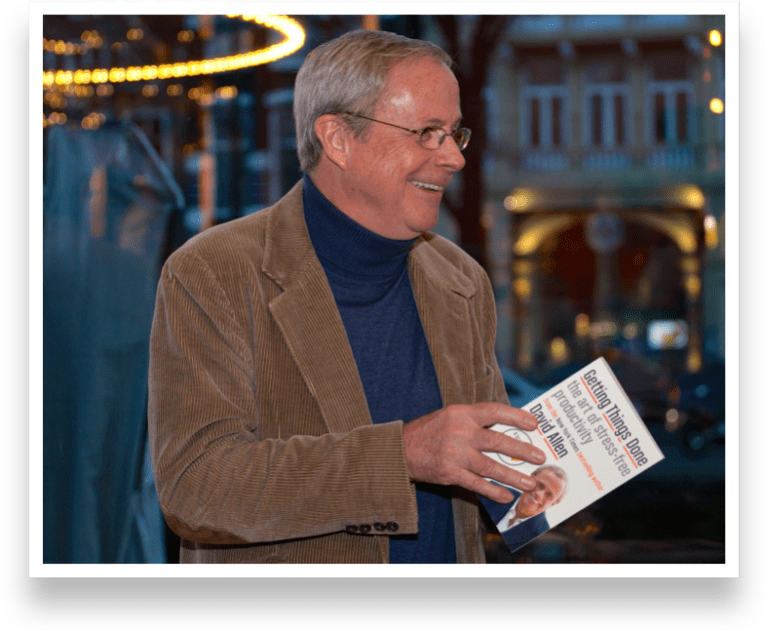
David Allen – Founder of GTD

There is nothing new in the world, except how frequently things are new, and the number of people having to accept and adapt consistently to that reality. The difference between your world and that of your parents is in how much less you can count on anything providing stability in your life and work, for any significant length of time. Perhaps your father and mother had to totally reconfigure their worlds two or three times in their adult life, if that. You might have to do that two or three times this year.

(Why is GTD successful?) Quite simply, the need people have to create more room in their heads, less stress in their lives, and more control over all the facets of life and work that now impinge on most all of us.

Read the rest of his article on the GTD web site.

Stoic Time Management

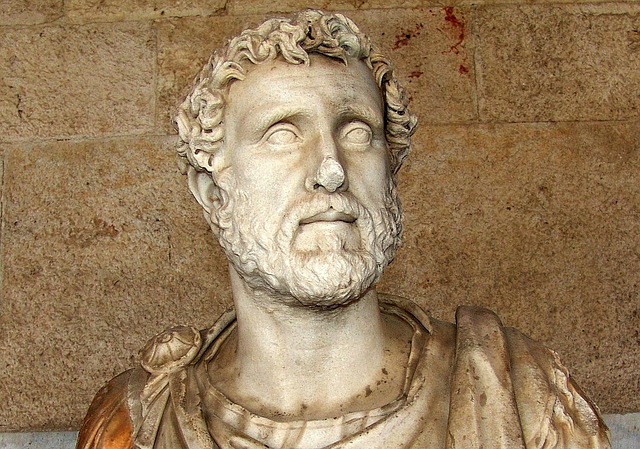
Given the high speed of modern life, it would seem that the need for daily time management skills is a recent development. However, a look through history shows that busy people in every age were concerned about making effective use of their time.

In Ancient Greece and Rome a simple but profound philosophy of life developed called Stoicism. An article on the Daily Stoic web site defines stoicism as this:

“The philosophy asserts that virtue (such as wisdom) is happiness and judgment should be based on behavior, rather than words. That we don’t control and cannot rely on external events, only ourselves and our responses.

Stoicism has just a few central teachings. It sets out to remind us of how unpredictable the world can be. How brief our moment of life is. How to be steadfast, and strong, and in control of yourself. And finally, that the source of our dissatisfaction lies in our impulsive dependency on our reflexive senses rather than logic.

While browsing the Daily Stoic, I came across an article on stoicism and time management. The five principles highlighted in this article show that the wisdom of the ancients still has value in our busy 21st Century society. For example:

Take Your Time On Things That Matter

Nothing great is created suddenly, any more than a bunch of grapes or a fig. If you tell me that you desire a fig, I answer you that there must be time. Let it first blossom, then bear fruit, then ripen” Epictetus, “Discourses”

Sometimes we’re forced to rush things. Maybe our boss is putting pressure on us to meet certain deadlines, or maybe it’s our own internal pressure; our own internal deadlines. We live in a fast-paced world where everything is an emergency. But if we truly wish to improve our time management skills, it’s more important that we slow down and be still.

Read more about this principle and four more on The Daily Stoic web site.

How to Get Workflow Under Control – From Inbox to Done

Just a quick note that a short article I wrote was published in the ALA’s Learning Exchange Newsletter – December 2019. It is titled How to Get Workflow Under Control – From Inbox to Done. The core of the article is a brief summary of the GTD Five Stages of Workflow.

Workflow is a concept that simply refers to how we move things from ideas to actions.  One of the simplest workflow systems available is known as GTD, short for Getting Things Done.  David Allen, a former management consultant, devised the system over twenty years ago and it has developed into one of the most heavily used approaches to handling knowledge work.  Implementing the system requires very little set up time and can be done in any office situation.   The system is immortalized in his famous book, Getting Things Done: The Art of Stress-Free Productivity

If you haven’t reviewed the five stages recently, or are new to the concept, take a few minutes to read the article. I posted it on my site for easy reading. It might inspire you to get some things done!

The Kernel of Creativity

We use the word a lot, but what exactly is creativity?  It seems like everyone wants more of it from ourselves and our colleagues, but it is not like a faucet that can be turned on at will.  David Allen used a recent blog post to ponder the subject:

“The time and energy required for creating something goes through a cycle, one that is seldom as easy or as immediately evident and as clear as I would like to imagine it is. … I still don’t know much intellectually about the nature of that creative process. What is the underlying principle at work here? Why do we seem to have to work so hard to get the kernel? And my interest in productivity causes me to ask how I can get to it faster, easier, more effectively, with less mess and the frustrations that often accompany it.”

blur business coffee commerce

While reading David Allen’s post, I was reminded of an article from David Perell.  He explored the topic in a post called, The Magic Moment.  In the article he brought up the idea of inspiration.

“The Magic Moment is a moment where you have the freedom to create without the demands of publishing. You can’t predict a Magic Moment. They’re spawned by long periods of incubation, but they strike when the mind is at rest. They’re likely to come when you’re showering, driving, or exercising because that’s when the mind is at rest and you can finally hear yourself think. Like a surfer in the ocean, when a special wave swells up, you have to catch it and ride it to shore.”

Creativity is a large and fascinating topic.   I challenge you to think about your relationship with creativity?  When is it easiest for you to be creative?  When it is hardest?  Finally, what do you do when the moment of inspiration strikes?


The Efficient Librarian on the Library Leadership Podcast

I am pleased to share that my interview about Efficient Librarianship is now available on the Library Leadership Podcast.

Hosted by Adriane Herrick Juarez, the Executive Director of the Park City Library in Utah, she invites notable library leaders on to her show to discuss a wide range of topics.  Some of her prior guests, Lance Warner, Felton Thomas, and Peter Bromberg,  are library leaders who participated in my recent article Go For It! Advice From Library Directors.  Adriane has also interviewed two ALA Presidents, Jim Neal and Loida Garcia-Febo.  Here is the teaser to the interview:

AdrianePodcast1-L-P-300x200

“As information professionals, we have a lot coming at us. Is it possible to keep up with the rapid-fire pace and stay stress free? According to today’s guest, it is. Doug Crane is the Director of the Palm Beach County Library System. He has a blog called the Efficient Librarian and teaches workshops and webinars on this topic.

“He explains how to organize our workflow systems, develop our personal knowledge management structures, take effective action-steps for success, and even have an email inbox that is empty at the end of each day. By tuning in, you will get simple steps to make all of this efficiency a reality.”

List to the whole interview at Library Leadership Podcast or download it to your favorite podcast app.  Please provide comment and feedback.  I’d love to hear your thoughts.

Rethinking Projects

How many projects are you working on right now?

When I ask this question in my seminars, most people answer in the range of 1-10.  The reason for this answer is that they believe projects are big and involved endeavors which take weeks or months to complete.   But I ask in this case are they thinking too big?

person holding turned on laptop

According to GTD, a project is anything that requires more than one action to complete.  By this definition, the number of projects we are working on balloons to fifty or more!  Of course, many of these projects are quickly dispatched in less than a day or even an hour.  The catch is that when we fail to recognize these small items as projects, they tend to pile up around us.  Each little incomplete project takes up mental space, leading to an ongoing background sense of anxiety.

The solution according to GTD is the complete project list.  It asks you to assess your total life work at the moment by listing every project in one place.  Remember, a project is something that can be completed, as opposed to an area of responsibility which is ongoing.  For example, an area of responsibility is personal health, and a project to support it could be to sign up for exercise classes.

This project list helps in at least three significant ways:

1/ The project list serves as a reminder of incomplete items.  This can alleviate worry about losing track of projects that may come back to haunt you later.

2/ A project list forces people to get specific about the next physical actions needed to move the item from an open loop to a completed project. It accelerates completion of work.

3/ By having a full inventory of current workload, it becomes easier to recognize limitations and enables people to safely reject new projects in order to keep their professional dignity and sanity intact.

As David Allen, creator of GTD says, “You can only feel good about what you are not doing when you know what you are not doing.”   Helpful project tips are listed on the Getting Things Done web site.

So draft a project list and keep it updated.  You may be surprised at how much you are really doing!

When to Use Your First Brain

Memory is fleeting or so we are told.  Everyone has had the experience of forgetting something important.  Both David Allen and Tiago Forte have written about the importance of not relying on your brain to remember information, but instead to put the data into a trusted system.  This process is at the core of most productivity advice.

gautama buddha

However, are their times when we should rely on our biological memory over a database or electronic “second brain”?  In a guest post on Tiago Forte’s Praxis blog, Tasshin Fogleman, a Buddhist monk, argues the value of memorization has great merit in this electronic age.  He writes:

Building A Second Brain (BASB) is an effective default for personal knowledge management (PKM) in the digital era. But outsourcing our creative thinking to a second brain has its pitfalls.

A robust memory can be a useful supplement to digital PKM systems. Contrary to Tiago’s assumptions, memory is not a useless, outmoded relic of our biological bodies. It is an astonishing skill, and we would be unwise to overlook it.”

Fogleman proceeds to share several methods to improve our memory, including Spaced Repetition, Mind Palaces, the Mindful Review, and more.  Read all about them in his guest post.