Is Your World Outrunning You?

Are your ready for the next surprise? Did you know there is a surprise coming? It is inevitable that something will occur in the next week or so that you were not expecting to happen. It could be a pleasant surprise, or a shocking and jarring one, but it will happen. So, how will you handle it?

David Allen built his GTD system with the understanding that life moves quickly and we can not possibly anticipate everything that is going to happen. In a recent blog post called “Is Your World Outrunning You?” he considers how we came to this point and why systems like GTD help us navigate these fast-changing times:

David Allen – Founder of GTD

There is nothing new in the world, except how frequently things are new, and the number of people having to accept and adapt consistently to that reality. The difference between your world and that of your parents is in how much less you can count on anything providing stability in your life and work, for any significant length of time. Perhaps your father and mother had to totally reconfigure their worlds two or three times in their adult life, if that. You might have to do that two or three times this year.

(Why is GTD successful?) Quite simply, the need people have to create more room in their heads, less stress in their lives, and more control over all the facets of life and work that now impinge on most all of us.

Read the rest of his article on the GTD web site.

The Zen of Bridgewater

“The traditional relationship between “leaders” and “followers” is the opposite of what I believe is needed to be most effective, and being maximally effective is the most important thing a “leader” must do.” – Ray Dalio

Although I have been a librarian for over twenty-two years, it still amazes me that certain books can have a deep impact on our view of the world and ourselves.  This is happening to me right now with a remarkable book called Principles by Ray Dalio.  

Ray Dalio founder, co-chairman and co-chief investment officer of Bridgewater Associates, has written a book that seeks to encapsulate the amazing culture that he built in his company.  Bridgewater is designed as an idea meritocracy, where seeking the truth is paramount to all else. It is believed that a culture which prizes openness and vigorous debate above authoritarian structures is the key to success.

Dalio’s views on leadership were so intriguing to me that I wrote an article to explore them deeper. The excerpt below discusses why Dalio believes that leaders should not be afraid to ask questions.

Dalio places a high premium on asking questions.  While some leaders may hesitate to ask questions out of concern that they may look ignorant or uninformed, Dalio believes that asking questions is, “necessary in order to become wise and it is a prerequisite for being strong and decisive.”  Taking it even a step further, he believes that leaders should not hesitate to seek out those who are smarter and wiser then themselves, and even let staff who are better equipped in an area take the lead.  Ego and self promotion have no place in a true meritocracy.  As Dalio states, “The objective is to have the best understanding to make the best possible leadership decisions.”

Read the entire article and let me know your thoughts on this challenging approach to leadership.

The Secrets of Strong Cultures Revealed!

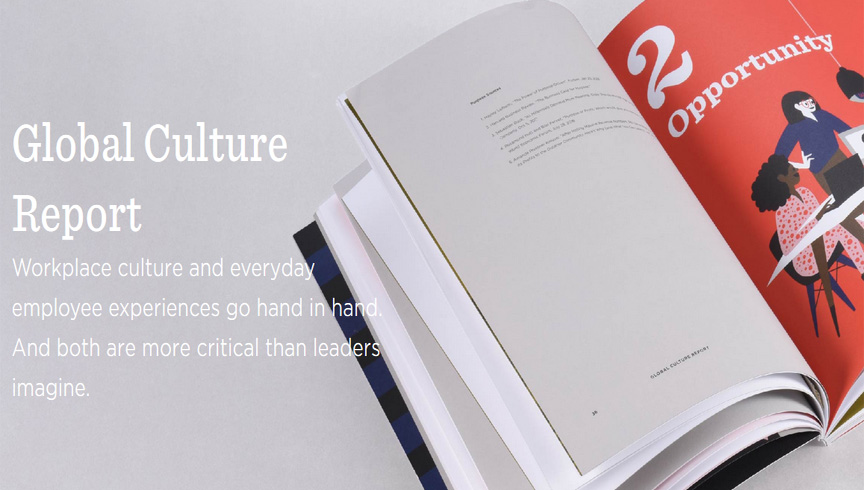
For the past month, I have been studying the O.C. Tanner Institute 2020 Global Culture Report.  It contains valuable insights for leaders everywhere:

Below is a summary of my top takeaways from the report.

  1. To create a better overall employee experience, organizations need to focus on high-impact, daily micro-experiences that define an employee’s life at work.
  2. Micro-experiences connect employees to purpose, opportunity, success, appreciation, well being, and leadership.
  3. If you want to build a thriving workplace culture, create great micro-experiences.
  4. Great workplace cultures generate energy that fuels people to innovate, to wow customers, to draw in the best people, and outperform competitors in virtually every aspect of business.
  5. Diagnose if burnout is a problem in the organization and then find the cultural issues causing it.
  6. The outdated leader-knows-best style and lopsided power structure are not working. Encourage a model of shared leadership with their teams.
  7. Build connections by utilizing regular one-to-one conversations between leaders and their team members.
  8. Successful teams feel a strong sense of autonomy and psychologically safe.
  9. Actively listen to understand your people—don’t ask for feedback just to “check the box.”
  10. My biggest takeaway: Extra time spent at work with employees improved company performance, while extra time at work spent with people outside the company didn’t make a difference.  While CEOs are expected to be the public face of their company, the reality is that interacting with and supporting employees is a more effective use of time.

Thanks to Peter Bromberg, Director of the Salt Lake City Public Library for bringing the report to my attention.  Read the full O.C. Tanner Institute 2020 Global Culture Report for free online or in a downloadable pdf version. It is not a long read, but well worth it.

Why People Cooperate

Think of the last time you cooperated with someone? It was probably a friend, family member, or work colleague. If we want to retain good relations with close individuals, cooperation is the natural thing to do. However, our lives lead us into situations where we interact with strangers. How do we decide if we should cooperate then?

In an article on his blog, David Perell explores why we cooperate with others. While pursuing the question, he came to this discovery:

“Cooperation is determined by the length and frequency of interactions. If two individuals are likely to meet again, they will likely cooperate. If not, they likely won’t. “

David Perell

Regardless of the situation, there is a research tested scientific strategy for cooperation. It is a classic conflict model known as Tit for Tat.

“Believe it or not, there’s an optimal way to behave in repeated interactions.  This simple strategy is called Tit for Tat. Reciprocity is the name of the game. Under the rules of Tit-for-Tat, players cooperate on the first move in a series of repeated interactions. Then, they mirror the other player in every subsequent move. After the first interaction, if the other person cooperates, they cooperate. If the other person defects, they defect. It’s simple.”

I was drawn to this article for a very personal reason. In my college days at the University of Toronto I studied Tit for Tat under one of its premier researchers, Anatol Rappaport. He was an amazing college professor and remains today one of my favorite teachers ever. Rappaport developed computer simulations that proved the power of Tit for Tat. Unfortunately, the Professor passed away many years ago.

Read the rest of David’s article on his blog.

Malcolm Gladwell – The Fascinatingly Flawed Intellectual

I’m interested in collecting interesting stories, and … collecting interesting research. What I’m looking for is cases where they overlap.

Malcolm_Gladwell_2014_(cropped)I love reading and listening to the works of Malcolm Gladwell.  Perhaps it is because he is an unabashed intellectual who makes his work accessible to all.  It could be that his flair for storytelling keeps me engaged to the very end.  It could even be that we both grew up in Canada!

For my recent Write of Passage assignment, I decided to provide a condensed look at Malcolm Gladwell’s books and share how his ideas may sometimes be wrong, but are always thought provoking.  For example, here is the start of the quick summary for his book Outliers.

“Why do some people skyrocket to success while most others barely get off the ground?  In this book, Gladwell explores an unseen side of success. While the American Dream narrative relates success to hard work and indomitable spirit, Gladwell spends time highlighting how uncontrollable factors such as the month of your birth, fortuitous family relations, and cultural heritage may be more significant.”

Read the rest of the article here.


Criticize with CRIBS

Have you ever been asked to edit someone’s written work?  For most of us, it is hard to provide constructive feedback to a writer beyond noting spelling errors or grammatical issues.  However, what every writer needs to be successful is honest criticism and sharp editting that can push their writing to the next level.

person holding orange click pen writing on notebook

I am taking an online course called Write of Passage, and in the last class the instructor David Perell, shared a simple approach that anyone can use to provide quick, helpful criticism.  It is titled with the acronym of CRIBS. As an editor moves through a written piece, they use the following five items to provide useful feedback:

  • Confusing – The section reviewed doesn’t make much sense
  • Repeated – The information was shared earlier and nothing much was added this time
  • Insightful – This section provided valuable, engaging information
  • Boring – This section doesn’t hold the reader’s attention
  • Surprising – The information was unexpected and thought provoking

I’m going to use CRIBS myself in the future whenever I am asked to edit someone’s work.  I invite you to try it yourself and let me know what you think.

Taming Unproductive Habits

Have you thought about your habits recently?

A habit is the name given to an action that we repeat on a regular basis.  Most habits are mundane, such as the steps done in the morning before heading out the door for work.  Others can be self defeating or destructive.  Charles Duhigg wrote the definitive book on the habits in in 2012, which included steps on how to start and change habits.

Recently Darius Foroux wrote an article for Pocket that examined unproductive habits.  This is because he says “The reason I study productivity is because I’m an unproductive person. I truly am.”  In the article he identifies 11 unproductive habits to quit.  Some of them are familiar to those who study GTD, such as:

“Relying On Your Memory
Not writing down your thoughts, ideas, tasks, etc, is insane. Why? Because you’re wasting a lot of brain power when you rely on your memory. When you write everything down, you can use your brainpower for other things. Like solving problems. That’s actually useful and advances your career.”

design desk display eyewear

Other unproductive habits include overworking, worrying and complainingExplore these and the rest and then see which ones you want to quit.

Get Ready to Unfocus?

officeyogaWe often associate success at work or in a creative endeavor to be the result of focus.  With so many distractions in the world, people search for ways to focus their mind in order to get things done.  While it is important to focus, does this mean that being unfocused is a waste of time?

Not necessarily according to Srini Pillay in a recent article in the Harvard Business Review.  Titled, Your Brain Can Only Take So Much Focus, Pillay explains why too much focus can be problematic.

“The problem is that excessive focus exhausts the focus circuits in your brain. It can drain your energy and make you lose self-control. This energy drain can also make you more impulsive and less helpful. As a result, decisions are poorly thought-out, and you become less collaborative.”

Deliberately unfocusing the mind shifts it in ways that are extremely beneficial.

“When you unfocus, you engage a brain circuit called the “default mode network.” … Under the brain’s conscious radar, it activates old memories, goes back and forth between the past, present, and future, and recombines different ideas. … you develop enhanced self-awareness and a sense of personal relevance. And you can imagine creative solutions or predict the future, thereby leading to better decision-making too.”

Learn more about the power of “unfocus” and techniques to do it by reading the rest of the article.

Choiceology

Hands up if you are a human?  Okay that is everyone except you Google bots!  Well if you are human, guess what, you are liable to fall for mental fallacies.

What is a fallacy?  A fallacy is invalid or faulty reasoning that can lead to a wrong decision.  Let’s look at a simple example.  It is easy to judge a decision based on its results. However, is it always true that a good outcome resulted from a good decision?  After all, a person might get home safely one night while driving drunk, but he would be a fool to think that being intoxicated made him a better driver.

To learn more about our fallacies and how to counteract them, I highly suggest listening to the podcast Choiceology.  As described on their site:

“Can we learn to make smarter choices? Listen in as host Katy Milkman shares stories of irrational decision making—from historical blunders to the kinds of everyday errors that could affect your future. Choiceology, an original podcast from Charles Schwab, explores the lessons of behavioral economics, exposing the psychological traps that lead to expensive mistakes.”

Final_Choiceology_Katy_WEB_200px

There are three seasons of Choicology episodes available, so why not give it a listen?  I think it would be a good decision.