Thriving in Uncertainty

With all the rapid changes happening around us, it seems like the only certainty is more uncertainty. While some enjoy the chaos, the everchanging landscape makes it hard to set worthwhile goals that can be realistically achieved. Rather than give up, is there a way to cope with uncertainty?

Tiago Forte explores this question in a recent post on this website titled How to Thrive in a World of Uncertainty. It is part of his exploration of the concept of 12 Favorite Problems. In this piece, he shares an important shift to our thinking that makes all the difference.

Goal-setting was once central to our conception of what it means to navigate the future successfully. But goals can no longer serve as guides to an unfolding future that we have so little control over.

But this doesn’t mean that we have to throw up our hands in defeat. It doesn’t mean there’s nothing we can do to influence our fate. It just requires us to make a shift from leading with goals to leading with questions

What does he mean by this? In essence, he proposes a way to embrace the uncertainty and use it as a force for creativity and accomplishment.

Questions ask you to start with what you don’t know but would like to discover. They draw in others to pitch in and make their own contributions. They serve as open invitations to collaborative projects, versus the solitary path of individualistic achievement envisioned by goals.

In a world of uncertainty, questions are more powerful than answers. Answers serve you for a season, but a question lasts forever.

Read the posting to learn more about this shift in perspective, including three values proposed by physicist Richard Feynman that can make the transition smoother and more enjoyable.

Being Thankful at Thanksgiving

Of all the holidays celebrated in the United States, Thanksgiving may be the most universal. After all, not everyone enjoys the gift giving bonanza at Christmas. If you are not in love Valentine’s Day is painful and many people sleep through New Year’s Eve. Thanksgiving offers everyone a chance to share a meal with friends and loved ones for one quiet day.

As you gather around the table this week, I suggest you take time to share something that you are thankful for from this past year. Think of it as a preventive measure. After all, it is too easily to fall into the negative, whether around politics or personal preferences, and no one enjoys arguments over mashed potatoes and stuffing. Keeping the discussion focused to the items we are thankful for may offer a great boost of joy at the table and beyond. This is because gratitude has many positive benefits.

According to an article on Healthline, written by Bethany Fulton, gratitude offers many scientifically proven benefits. One of them is improved relationships.

Gratitude not only improves your physical and mental well-being; it may also improve your relationships.

Gratitude plays a key role in forming relationships, as well as in strengthening existing ones.

When it comes to romantic relationships, gratitude can help partners feel more satisfied with each other. One 2010 study showed that partners who demonstrated gratitude toward one another reported increased relationship satisfaction and improved happiness the following day.

Photo by RODNAE Productions on Pexels.com

Additionally, being grateful also increases your optimism.

Being an optimistic person can have plenty of health benefits, including healthy aging, according to a 2019 studyTrusted Source. If you’re not naturally optimistic, gratitude practice can help you cultivate an optimistic outlook, as suggested by a 2018 study.

In an older 2003 study, it took just 10 weeks of regular gratitude practice for participants to feel more optimistic and positive about their present lives and the future.

Learn more benefits by reading the whole article. And to everyone celebrating this week, have a very happy Thanksgiving.

The Key to Mastery Is Not What You Expect

Many coaches instruct their clients that the best way to be good at something is to practice it over and over again. It is thought that narrow repetition of a specific move, skill, or technique will lead to mastery. However, it seems there is a better approach that will generate lasting benefit.

In an article on Scott H, Young’s web site, he points to recent research that supports the idea that variability is even more important than straight repetition. This is due to the idea of contextual interference. Young explains:

Contextual interference occurs when you practice the same skill, but vary the situations in which it is called for.

For instance, you could practice your tennis backhand by being served backhand shots repeatedly. Alternatively, your coach could mix things up: serve you backhand shots interspersed with balls that require a forehand shot.

Or imagine preparing for a calculus exam: you could study all the questions that require the chain rule, then all the questions that use the quotient rule. Instead, you might shuffle these questions together so you can’t be sure which technique is needed.

Young goes on to point out why contextual interference improves mastery. One of the reasons is:

Identifying problems correctly and ensuring the correct technique is associated with the problem. A major difficulty in learning isn’t getting knowledge into your head—but getting it out at the right time. Practice that repeats the same technique in narrow situations may result in skills that aren’t accessible when you need them.

Learn more about the advantages of variability in your training by reading the rest of the article.

The Fear That Should Scare You the Most

It is the day before Halloween (All Hallow’s Eve Eve?) and most people’s thoughts turn to frights! This is the season when we enjoy being scared. Of course, fears stay with us the entire year, but in the spirit of the spooky season, now is an ideal time to consider the fear that scares you the most.

Shola Richards has looked fear in the eye and blogged about it. In a post titled, Never Too Late, he shared the one thing that he fears the most. It is not snakes, vampires, the dark, or taxes, but something much simpler and profound.

I have always found it so strange when people say that they’re fearless. Let me tell you upfront that I’m not one of those people.

Just like most rationally thinking human beings, I have fears (quite a few, to be honest). And without question, this is the fear that scares me the most:

Looking back on my life and realizing that I haven’t lived fully.

How is that his greatest fear? Shola proceeds to tell us exactly why over the next few sentences.

If you are going to be afraid of something, don’t be afraid of what may happen if you decide to fully live your life and chase your dreams.

Instead, be afraid of what will happen if you decide not to fully live your life and allow the ghosts of “what might have been” to haunt you relentlessly for the rest of your days until you finally die with a pitiful whimper.

That’s freaking terrifying to me. It should be for you too.

Through this post, Shola is issuing a challenge. What plan or dream for your life is being left to gather dust on the shelf due to fear of failure or ridicule? Just as on Halloween we face illusionary frights then laugh about it afterwards, why not do the same with the fears around your goals?

Face the fear and see what happens next.

It may not be as scary as you fear.

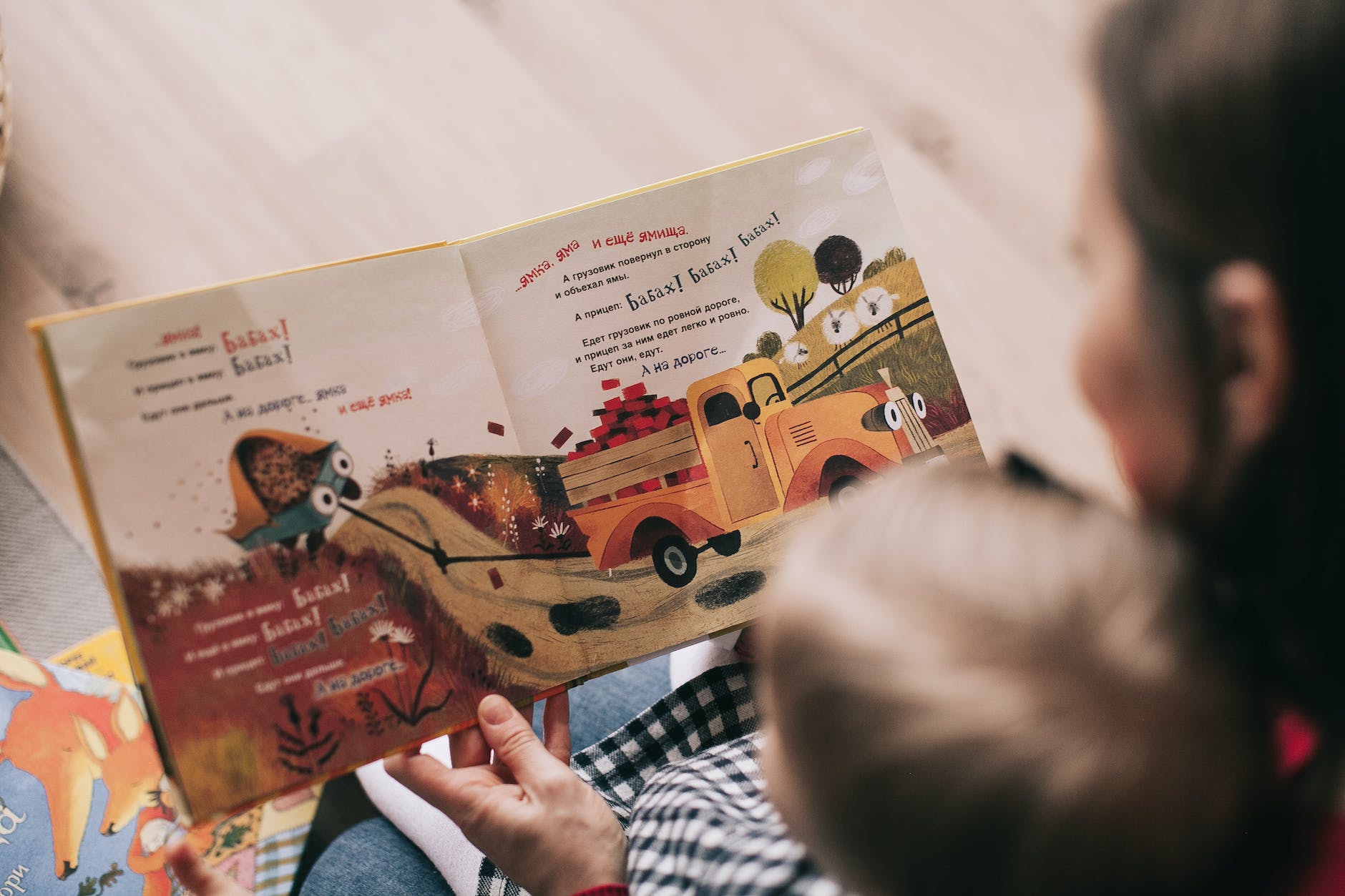
Public Libraries Fill Early Childhood Infrastructure

As a professional who started my career as a children’s librarian, I have often said that children’s services are the heart and soul of public libraries. The faces of joyful children picking books off the shelves then sitting on a cushion to read them is a beautiful thing. However, this is more than simply a feel-good image. Public libraries are essential for early childhood.

In a recent article on the Bloomberg web site, City Lab reporter Kendra Hurley shares the unique way public libraries serve this unnoticed demographic. In her article called The US Has No Early Childhood Infrastructure. Libraries Are Picking Up the Slack she shares the following:

In the United States — the only rich country without paid parental leave — babies, toddlers and their caretakers are routinely neglected by both policy and city planning. It’s rare to find even a step stool in a public restroom, said Kristy Spreng, a child-care program director and former librarian who co-created a baby play area with a workstation for Ohio’s Loudonville Public Library. “Those basic simple things just get overlooked,” said Spreng. “It’s crazy, because there are always babies. We reproduce. The need isn’t going away.”

Photo by Lina Kivaka on Pexels.com

To fill this gap, children’s librarians are developing new approaches to service.

For librarians, the big takeaway was that literacy starts at birth and the early years set the stage for future learning. “Children become readers on the laps of their grown-ups,” Payne recalled the philosophy of the time. Children’s librarians began regarding themselves as coaches for parents with small kids, and “laptime” story hours where librarians model how to read, sing and play with babies and toddlers cropped up at libraries everywhere.

Learn more about how public libraries are serving very young children by reading the rest of the article.

What are your Core Values?

Everything we do is driven by are core values. The type of job we take, the person we choose to be in relationship with, and the friends we make are products of our inner values. However, many people have never taken the time to contemplate exactly what their values are, much less write them down.

Recently I discovered a simple exercise to bringing core values to light. It comes from the website of Scott Jeffrey, “the founder of CEOsage, a transformational leadership agency and resource for self-actualizing individuals.” Why is Jeffrey so interested in helping people identify their values? On his web site he offers the following explanation:

As a business coach, I appreciate the power of values.

I’ve noticed that individuals experience greater fulfillment when they live by their values.

And when we don’t honor our values, our mental, emotional, and physical state suffers. I’ve seen this to be true in my life too.

Scott Jeffrey

Jeffrey presents a seven-step method to articulate any person’s values. An early part of the process is to list possible values. However, this is not done so that one can pick or choose favorites. As Jeffrey explains:

Values aren’t selected; we discover and reveal them. If you start with a list, your conscious mind will test which values appear “better” than others.

That said, if you’re not familiar with working with values, you can scan a list of values to get a sense of your range of options.

Learn the entire process by visiting Scott Jeffrey’s web site.

Recording of Tiago Forte Interview

Last week I had the honor of interviewing Tiago Forte about his new book, Building a Second Brain. In a sixty-minute Zoom interview with audience Q&A, we touched on a wide range of aspects around digital note taking and how it compliments a GTD practice. A link to the recording can be found on the Palm Beach County Library System web site.

Below is a selection of the questions I asked Tiago:

  • Briefly share how you became interested in the power of digital notes?
  • Explain the concept of CODE and how it applies to digital note taking.
  • What are the four principles of PARA and do they contribute to designing a Second Brain?
  • What are the best practices around processing digital notes for discoverability?
  • The book highlights how notes can be applied over many different projects. To that end, please explain what is meant by an intermediate packet.
  • What are the biggest mistakes people make when taking digital notes and how can they be avoided?
  • What prompted you to share your publishing journey through your blog?
  • Share a book recommendation (fiction or non-fiction) other than your own.

Stay tuned to the end of the interview where I subject Tiago to a fun game based on the podcast, Wait, Wait, Don’t Tell Me.

A Neuroscientist’s Advice on Productivity

There are many factors that affect our productivity. However, they all come back to the fact that knowledge works happens in our brains. Therefore, a healthy brain should enable us to get more things done. To that end, what does the field of neuroscience say about productivity?

In a recent article in Science Focus, neuroscientist Dean Burnett discusses the connection between the brain and knowledge work. Specifically, he lists five tips to be more productive. The first one highlights the beneficial effect of background music.

When we’re trying to focus on a task, our conscious attention is occupied, but can still be diverted by the unconscious system. And if we’re in complete silence, any creaks or sighs or murmurs or other random sounds stand out more, meaning our unconscious attention is more likely to be distracted, which hinders our productivity.

But, if we play music in the background, it masks obtrusive noises and occupies our unconscious attention, like giving a bored child a toy to play with while you’re trying to work. Obviously, the type of music will make a difference. Things with lyrics aren’t as good because our brains are more stimulated by linguistic information, and music that has a negative impact on mood can sap motivation.

Discover the other four tips by reading the full, and fairly short, article.

Building a Second Brain Now Released

After many years of anticipation, Tiago Forte has released his book, Building a Second Brain. It is the distillation of the ideas and exercises originating from his signature course of the same name. Here is how Tiago introduces the book on his web site:

What if you made use of the ideas, wisdom, and resources available to you online instead of stockpiling and hoarding information with no end in sight? 

What if you knew with total confidence that you could find the information you need when you need it instead of wasting time looking for notes you swore you’d saved? 

What if you could leverage technology to think better, clear your mind, and get more done instead of letting it disrupt you with constant notifications and demands? 

All this and more is possible with a Second Brain – a trusted place outside your head where you can collect and organize your most important ideas and insights and use them to do your best work.

As part of his promotional tour, the Palm Beach County Library System is honored to host Tiago for a virtual meet the author session on July 14, 2 pm EST. Preregister to receive the Zoom link.

Congratulations Tiago on this great achievement!