Give Yourself a Gift – Take Time Off!

With the holiday season fully upon us, no doubt you have made a gift list for the loved ones in your life. However, what do you plan to gift yourself? While new clothes and fancy toys are always fun, why not give yourself a gift that improves your health and leads to greater connection opportunities. It is the simple act of taking time off.

In an article for Psychology Today titled, The Importance of Taking a Break from Work, clinical psychologist Monica Vermani explores the reasons why taking time off of work is a health care prescription. She starts the article with the sad fact that most Americans fail to take their allotted vacation time.

According to a recent Pew Research survey, 46 percent of employees take less time off than their employer offers. In 2022, according to Qualtrics research, American workers left an average of 9.5 vacation days unused. Recent Canadian statistics paint an even bleaker picture, with just 29 percent of employees taking full advantage of paid time off.

That’s not all. In a 2023 ELVTR poll of 2,300 North American employees, most reported working while on vacation. Many also reported that weekends and nonworking hours are far from off-limits.

Image made with WordPress AI

This failure to disconnect from work can lead to burn-out and other health issues. Therefore, Vermani advocates for taking a true and complete break from work. She points out that doing this is vital to your mental health.

The value of taking that postponed vacation and setting reasonable boundaries around minimizing communication with work colleagues outside of working hours are many, including stress and burnout prevention, gaining new perspectives on workplace stressors, improving mental and physical health, and improved sleep. Furthermore, vacations can be especially effective at raising levels of happiness, making time to reconnect with family and friends, and exploring locations and activities that foster joy and inspiration. Vacation time is also known to reduce the risk of heart attack and stroke. Time away from the daily grind also expands our creative abilities.

She then shares why setting heathy boundaries is important to everyone.

Our time and energy are valuable—and finite—assets. At the end of the day, it is our responsibility to build healthy boundaries around our finite resources. Building healthy boundaries is all about prioritizing our mental and physical health, well-being, and needs, and building awareness of the causes and signs of workplace burnout, including trouble concentrating, exhaustion, irritability, a decrease in productivity, and physical symptoms, like headaches, muscle aches, gastrointestinal issues, and changes in sleep routines.

To learn more, including her six steps to creating a healthier work/life balance, please read the rest of the article. In the meantime, it is not too late to schedule that holiday vacation. Whether it is a trip out of town or staying home, either way make sure you enjoy some much-needed downtime.

The Important Thing That Kind People Do Differently

In case you missed it, November 13 was World Kindness Day. It is a special time to remind everyone that being kind does not cost you a penny. In fact, when people perform an act of kindness, they not only benefit the person who receives it, but they themselves and everyone who sees it happen all feel better as a result.

Of course, you can, and should, be kind every day. Yet, people often underestimate the power of kindness. They believe that in this cruel world only pure self-interest will make a person successful. Therefore, is kindness a form of weakness?

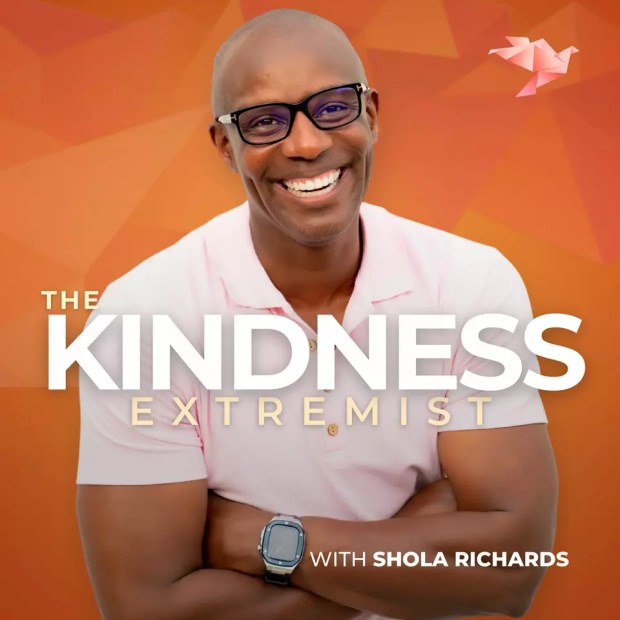
The Kindness Extremist Shola Richards would say firmly that kindness is a strength. In a recent blog post, Shola shared the main thing that kind people contribute to the world.

Here’s something that kind people do, that the rest of the world does not:

They give a damn about issues that don’t affect them personally.

In our increasingly polarized world, this kind of expansive empathy has become not just uncommon, it’s damn near revolutionary. he shared the main difference that kind people have over others.

Why is this important? Shola starts by pointing out why selfish people offer very little to the world.

When we only care about issues that directly affect us, we create a world where problems persist because the people with the power to solve them don’t experience the pain of those problems personally. (Please re-read that sentence).

He then shares why approaching the world through the lens of kindness makes a huge difference not only to others, but to yourself as well.

Here’s what I know for sure: kindness isn’t about creating a world that works just for me and people like me. It’s about creating a world that works for everyone.

And to be painfully clear, this isn’t about unnecessary guilt or performative activism.

This is about recognizing that our individual wellbeing is connected to the collective wellbeing of our communities and our world.

Read the full blog post on Shola’s Kindness Extremist website.

Can ChatGPT Write a Speech Better Than a Toastmaster?

Just say you need to give an important speech, but only have a few minutes notice. Can an AI chat service bail you out?

For my upcoming Toastmasters meeting, I was challenged to write a speech titled, “AI – Friend, Foe, or Tool?” As a fun experiment, I decided to see what ChatGPT would do with this topic. Would it be honest about its limits, share it deep dark secrets, or in the end just give me an okay speech.

Created with WordPress AI Image Tool

On the Efficient Librarian website, I wrote an article showing the prompts and output from this process. For reference I used a free ChatGPT account, which still provided enough access for delivery of a speech, but a few limitations on its output options. The whole process took less than five minutes from start to finish.

Overall, this quick dip into the AI waters showed that for all its versatility there are still some weaknesses. For example, I asked for a 5 to 7 minutes speech, but what was provided took only four minutes to speak. Also, it ran into some issues with suggestions that in the end I couldn’t do with the free service.

To see the entire process and read my other thoughts on this AI exercise, please read the article on the Efficient Librarian website.

Tips for Better Public Speaking from TED

Do you enjoy public speaking or does the thought of standing in front of an audience give you the chills?

Whenever you see a list of the top fears, public speaking is usually close to the top. There are many reasons for this trepidation, such as concerns about forgetting their speech or being seen as a fool. Yet the skill of public speaking is often required to succeed professionally at high levels. Therefore, how can someone overcome their fears and become a better speaker?

Photo by Mikhail Nilov on Pexels.com

On their website, the Bright Network has an interview with Chris Anderson – Head of TED – the non-profit devoted to spreading ideas. From his experience watching and assisting people perfect their talks on the TED stage, he has compiled five important tips for effective public speaking. They can be applied by anyone from novice speakers to the most experienced orator. For Chris, the starting point is the idea.

The most successful presentations focus on one, coherent idea – something that will change the way your audience thinks, acts and approaches the world.

Your idea should take centre stage, not you. As a speaker, your job is to successfully share your knowledge with those listening. Think of it this way – you’re offering your audience the gift of an idea and your presentation is the wrapping paper.

To learn the other four tips, please read the short interview on the Bright Network.

Success Tips for Virtual Meetings

It was five years ago that the world had to adjust quickly from in person meetings to computer bound conversations. During the COVID-19 pandemic, virtual meetings became a necessity. Replacing the old conference call systems with tools like Zoom or WebEx allowed for face-to-face interaction between participants across the globe. However, it also led to a lot of confusion on protocols and etiquette.

Now that we have more experience with online meetings, it is easier to identify the specific components required in order to be successful. Yet, even after all this forced experience, people still commit avoidable mistakes. Follow through on these tips and your meetings will get off to a good start.

Photo by Anna Shvets on Pexels.com
  • Platform – Ensure the virtual platform is accessible by all participants. Meetings stall quickly if someone does not have the right software loaded on their computer or phone.
  • Test the Technology – Hold a pre-meeting to test out features of the virtual platform. For example, do sound checks to ensure mics work and practice screen sharing before the session to avoid embarrassment later. Also, if special features are being used, such as polling or pushing documents, test those as well.
  • Check Camera Angles – Participants should frame themselves in the webcam before starting the meeting. Being too close to the camera, too far from it, sitting off center or having an odd angle on the camera view distracts the other participants. Be careful about back lighting to prevent shadowy conditions. Also, take heed of the background to avoid inappropriate personal items from showing up on screen. If you use a virtual background, make sure it doesn’t interfere with your own image. For example, having a green shirt on while in front of a green background.
  • Double-Check Start Times – Virtual meetings are ideal for bringing people together from across the globe. However, this means the organizers must pay closer attention to the participant’s time zones. An 8 am start time in Boston is a 5 am start time in Seattle. Do not ask participants to take part in meetings outside of their time zone’s normal business hours. Double check invitation start times to ensure they are not accidentally set up for a different time zone.
  • Camera On or Off? – For smaller meetings, having the camera on creates a sense of engagement amongst the participants. It allows for non-verbal communication, such as facial expressions or hand gestures that we normally rely on during in person meetings. For larger meetings, especially presentations, keeping audience cameras off helps participants focus on the speaker. Keeping cameras off may be needed when bandwidth is limited to prevent the system from slowing down or crashing. Participants turn their cameras on only when speaking.

Using these tips should help get a virtual meeting off to a strong start.

Don’t Send that Email … Unless You Have To!

Being careful when sending an email is something every knowledge worker must consider on a daily basis. Below is a section from my article, Effective Email Etiquette, to highlight when it is best to put something in an email and when it is not.

Don’t Send that Email … Unless You Have To!

One of the biggest challenges in effective communication is deciding the medium for the message. For many people, email is a common way to share information. In fact, it is often preferred, as implied by the saying, “this was another meeting that should have been an email.”  Yet it does have limits. Here are times when email is appropriate:

  1. Routine communication: Emails are suitable for routine updates, sharing information, and conveying non-urgent messages. If your message is not time-sensitive and allows for a delayed response, email is a suitable choice.
  2. Documentation: When you need a written record of communication, such as project updates, agreements, or decisions.
  3. Scheduling and coordination: For arranging meetings, confirming appointments, and coordinating schedules.
  4. Formal communication: In professional settings, emails are often appropriate for formal communication, such as job applications, official announcements, and business proposals.
Image generated with WordPress AI

However, there are situations when hitting send on that message would cause trouble:

  1. Urgent matters: In situations requiring immediate attention or response, consider using a more direct and real-time communication method, such as phone calls or instant messaging.
  2. Sensitive or confidential information: Avoid sending sensitive or confidential information via email, especially if it involves personal or financial details. Use secure methods or direct communication for such matters. If your message involves emotional or sensitive topics, consider having a face-to-face conversation or using a more personal communication method to avoid misunderstandings.
  3. Complex issues: For complex or nuanced discussions that may benefit from real-time interaction and clarification, opt for a meeting or a phone call.
  4. Negative feedback: When providing constructive criticism or negative feedback, it’s often better to deliver it in person or over the phone to ensure clarity and understanding.

What to know more about how to do better emails? Read the entire article on Effective Email Etiquette.

When to Check Your Tech & How to Stop

Have you ever checked your phone for a social media update in the middle of a meeting? Or started looking at news headlines in the middle of a group lunch? Or got distracted by unimportant texts while doing deep work on a project?

It is very easy to be drawn into looking at our phones. This can lead to unproductive behavior and sloppy work. A recent article by Liz Fosslien on the Pocket website wonders why we have allowed these habits to become socially accepted.

I used to do nothing in the face of indiscriminate gadget use. Now, I’ve come to believe that doing nothing is no longer O.K. Staying silent about bad technology habits is making things worse for all of us.

Photo by iam hogir on Pexels.com

How do we as a change these habits to make them less desirable? Perhaps we need to develop what investor Paul Graham calls “social antibodies.”

He uses the example of cigarette smoking: smoking in public became taboo over the span of just one generation after social conventions changed.

Like cigarettes, our personal technology use can become a bad habit. People enter a zone when they use their gadgets. Checking email or scrolling through Facebook can be intoxicating and disorienting. Tech makers design these products using the same psychology that makes slot machines addictive. The variable rewards built into apps make time pass quickly and can make people oblivious to what’s happening around them.

How can we build up social antibodies in the workplace? One way is to set up well articulated standards.

The best way to prevent this waste of time is for someone senior to mandate a “no-screen meeting.” In my experience conducting hundreds of workshops, the discussions declared device-free are by far more productive. Setting expectations up front is equivalent to administering a distraction vaccine.

Learn more about how to build social antibodies by reading the rest of the article.

Shola Richards Webinar – Mon. September 16!

Please review this wonderful opportunity to watch one of my favorite authors, Shola Richards, be interviewed about his latest book, Civil Unity. This event is hosted by the Florida Library Association.

Shola Richards – In Conversation with Kris McGuigan

Monday, September 16, 2024, 12 PM – 1 PM EDT
Free for FLA members; $25 for non-members

REGISTER HERE! 

Join us for a thought-provoking and inspiring webinar, featuring best-selling author Shola Richards as he discusses his latest book, Civil Unity: The Radical Path to Transform Our Discourse, Our Lives, and Our World. In a society where division and discord seem to be at an all-time high, Richards is leading the movement to reverse these destructive trends and bring more connectedness, respect and civility to our world. 

During this one-hour session, Richards will be interviewed by FLA 2024 Annual Conference keynote presenter, Kris McGuigan. The discussion will delve into the key themes of the book, exploring how we can unite behind a new kind of civility to create safer communities, reduce toxicity in our political discourse, and build supportive environments in our workplaces and schools. Moreover, Richards will share a behind-the-scenes look at his writing process, points of inspiration, and favorite chapters. 

The webinar will feature a live Q&A session, where attendees will have the opportunity to ask questions. This is a unique chance to engage directly with two authors who are passionate about transforming how we engage with one another and the world around us.   

Whether you are looking to deepen your understanding of civil discourse, seeking practical tactics to implement in your library, or simply want to be inspired by a conversation that matters, this webinar is not to be missed. 

Avoid Enormous Emails

Have you ever opened an email and found it to be the size of a short novel? Did it make you want to close it up and not read a word? Now have you ever sent one of those emails?

Sending enormous emails is not ideal. Email works best when it is brief and to the point. Earlier this year I wrote on an article on my website about email etiquette. In that piece, I shared several tips on how to craft your messages to avoid the enormous emails problem. Below is that section from the article.

Well, there is no hard and fast rule on the maximum length of an email, there are general guidelines based on purpose, content, and preferences of your audience.

Photo by Vlada Karpovich on Pexels.com
  1. Brevity is Key: Aim to be clear and concise in your communication. Most people appreciate emails that get to the point without unnecessary details. If you have multiple topics to discuss, consider breaking them into separate emails. This helps the recipient to absorb information more easily.
  2. Use Paragraphs and Bullets: Organize your content into short paragraphs and use bullet points to make the text easy to scan for recipients to grasp the key points quickly.
  3. Avoid Information Overload: Too much information in a single email can be overwhelming. Focus on the most important details and provide additional information or attachments if needed.
  4. Effective Use of Hyperlinks: Instead of including lengthy information within the email, use hyperlinks to direct recipients to additional resources or details.
  5. Closing and Call to Action: Clearly state your closing remarks and any necessary calls to action. Be specific about what you expect from the recipient if any action is required.
  6. Proofread and Edit: Before sending, review your email for unnecessary information or repetitive content. Edit for clarity and brevity.

One final point. If you need to share large amounts of information through email, consider sending it as an attachment. Whether as a Word of PDF document, it is easier for the recipient to open the information in a more readable application and print out cleanly if needed.

To learn more about effective email etiquette, please read the rest of the article on the Efficient Librarian website.