
I have come to realize that this is a pandemic is a strange time to evaluate productivity. Our society is in a weird space were many people are over worked due to the essential nature of their jobs. Conversely, many people are now under worked due to being laid off or furloughed. It is the very few whose work continues unaffected by the disaster.
No matter where your work lies on this continuum, the changes in the world around us have an impact on our mental state. With so much of the future unknown a new definition of productive is needed. With this in mind I came across an article by Scott Young titled, “What is Productivity Guilt? (And How Can You Prevent It?)” In the piece he provides advice on how to be easier on yourself to avoid productivity guilt. For example:
Accept that you’ll always be imperfect. That’s okay. Everyone is. Nobody, including me, does everything perfectly all the time. … I go through phases where my habits evolve. Old ideas I wrote about get replaced with new ones. Not always because the new is better than the old, but because I’m always changing (as will you). If you see, instead, that everything I’ve written about is a static and permanent part of who I am, when you sum it all up, you’ll get to something that’s probably unmanageable as a whole.

Young goes on to provide the following advice when facing the specter of productivity guilt:
The real source of the guilt, however, isn’t because the standards imposed are too unrealistic or even undesirable, but because there’s always a gap between how we see ourselves and how we would like to be. The right move to make is always one that pushes you a little, but takes where you are as a starting point. That also includes your psychological strengths and weaknesses.



 Don’t worry about your failures, as each one is a stepping stone on the path to success. As
  I’m a big fan of the British SF series,
  Did you make a New Year’s Resolution? While good intentions are plentiful on January 1, it is clear that many people have dropped their resolutions before the month is even a week old. So are New Year’s Resolutions just another pointless tradition or is there a way to make a resolution stick for the year?
 The pursuit of efficiency often requires a cleanup of our physical spaces. While clearing out clutter should be easy to do, in practice it is hard to throw away objects we own. For example, maybe you got a mug at a conference six years ago. The conference was unmemorable and the mug is an awful yellow color. As you are considering parting with it, a colleague asks if they can have it. You quickly decline and put it back on the shelf. This is a direct experience of the Endowment Effect.
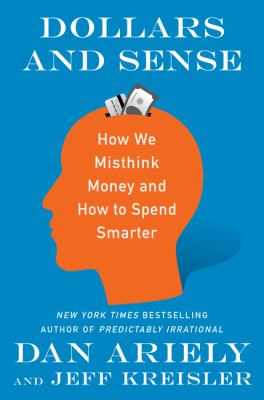 Remember, a sunk cost is not recoverable, which gives rise to the famous expression, “Chasing good money after bad.” The trick is to evaluate the current status of a project, investment, or commitment in light of where it stands now and ignore past contributions. This way, it is possible to stay nimble and take advantage of better opportunities when they arise.
 Efficient Librarian