
If you don’t get enough Efficient Librarian blog posts to stay inspired about productivity and efficiency, then hop on over to David Allen’s web site to sign up for his podcasts. There are simple 20-40 minute interviews and conversations that cover many different aspects of GTD practice.
 In fact, I highly recommend listing to one podcast in particular: David Allen at the Do Lectures. From the web site: “David gives a unique and inspiring presentation about the power of Getting Things Done to the participants of The Do Lectures in Wales, September 2010. If you’re new to GTD, you’ll love the fast-paced overview David gives of the entire systematic approach. If you’re a seasoned practitioner, you’ll appreciate the transparency and authenticity in which David shares a bit more of his behind-the-scenes story.”
Enjoy!
 To be clear, this curse has nothing to do with magic or ancient mystical tombs. The Curse of Knowledge is a cognitive bias that occurs when individuals are unable to ignore the knowledge they have which others do not, or when they are unable to disregard information already processed. This is the reason why an expert musician can make a lousy teacher of novices, because the expert forgets what it is like to know so little.
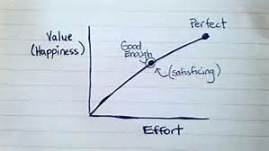 entails searching through the available alternatives until an acceptability threshold is met. (Satisficing = Satisfy + Suffice) Often this is a viable strategy since searching for the perfect product or solution would run into the law of diminishing returns where additional effort leads to fewer results. So a natural tendency is to find the first good choice and stop there. While satisficing can be a good short term option, it may result in long term inefficiencies. The quick purchase of running shoes now could produce regret over the colors and painful blisters a few days later.
 “Over the years many people have reported “transformational” experiences in working with the Getting Things Done® methodology. I have seen people lose pounds in just a few days, their faces brighten, their countenance and attitude swing way to the positive, and even make tremendous shifts in how they think and work for the rest of their lives.
 Now I understand that a clear desk leads to peace of mind, which in turn becomes an outlet for creativity and productivity. In one of his Ted Talks, David Allen uses an example of cooking. If a chef wants to make a beautiful and inventive dinner for her guests, it is very challenging to do it in a messy kitchen. Likewise, if you wish to have a creative and productive office space, a clear desk is vital. The clear surface of your desk allows you to spread out the project you are working on to find new ideas and solutions that were not evident before. Filing away anything that is not relevant to the task at hand allows your mind to focus distraction free.
 desktop email alert was a subtle yet significant distraction to my workflow. So I shut it off and found it made a world of difference to my efficiency. So go ahead, shut yours off too. Visit this Office support page to learn how:
  may have already discovered that your head is a crappy office space. David Allen often says that if you have something saved only in your head, you are going to give it far more attention then it deserves. Our mind can only effectively hold onto one item at a time in its conscious memory. Once something new comes to its attention, the odds are your mind will drop the previous item. This creates huge inefficiencies and potential ticking time bombs if the item that was lost has the potential to blow up later.
 Efficient Librarian