
San Francisco is a hot rental market. Most apartments are snatched up within a few days of being listed. Imagine you are moving to San Francisco and want to find the ideal apartment. You only have one opportunity to view each apartment and must decide on the spot if you want it. If you reject it the apartment will be taken by the next renter. How long should you spend on the apartment search in order to feel confident that you have found the ideal spot? This is an example of the optimal stopping problem.
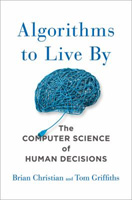 According to the book Algorithms to Live By, “the crucial dilemma is not which option to pick, but how many options to even consider.” The San Francisco situation is an example from the book which demonstrates that a person must gather enough information to become familiar with the market before selecting. Pick too early and you risk taking a lousy apartment when the next one would have been superior. Pick too late and you will regret all the great apartments you passed on. Is there an ideal solution to this dilemma?
Yes! According to the authors it is 37%! This means you should spend 37% of your allotted time or the first 37% of the potential selections just looking. This will calibrate you to the market. After that point, take the first option which exceeds everything else you have looked at so far. For example, if you have only one month to find an apartment, spend the first eleven days just looking. On day twelve be ready to commit to the next apartment that is better than all the other ones you viewed up to that point. This is claimed to be a mathematically provable optimum solution.
To learn more about optimal stopping, pick up a copy of Algorithms to Live By: The Computer Science of Human Decisions by Brian Christian and Tom Griffiths.
 “A tense muscle is a slow one. This is a physiological and demonstrable fact in the martial arts. Could this be true in other aspects of our lives?
 “What does it mean to be organized? It used to be the definition was clean and neat. You know the offices–you walk in the door and it looks likes no one works there. The desk has nothing on it, except for a cool object and a photo. Is this what being organized really means?
 Illusory Superiority is a cognitive bias whereby individuals overestimate their own qualities and abilities relative to others. It is sometimes called the Lake Wobegon Effect after
  “I have noticed a tendency for people to spend a lot of time in high-energy meetings and discussions, and a high resistance at the end of those meetings and discussions to clarify—“Do I have the next action on this, or do you?” or “Whose is this now, to make happen?”
 Dan Ariely
 Email provides for many people their most difficult productivity challenge. The sheer volume of messages can overwhelm an inefficient processing system very quickly. While some people may be tempted to declare email bankruptcy and delete all their messages, there are better ways to process all that incoming electronic data. One approach that is based in part on GTD methodology is Inbox Zero, developed by Michael Mann and found on his web site
  Efficient Librarian