
 Are you traveling to Philadelphia this month for the Public Library Association Conference? If so, why not schedule time to learn how to get your email under control. I am honored to have been selected twice to speak at the conference in two different events.
Thurs. March 22, 2:40-3:00 pm
How To Get Your E-mail Inbox Down to Zero
PLA Career Center Crash Courses Series
Pennsylvania Convention Center, 203 AB
http://www.placonference.org/career-center/
Thurs. March 22, 5:15 pm
Five Minutes to Inbox Zero – Overcoming the E-mail Avalanche
Spark Talks
Pennsylvania Convention Center, 201 ABC
http://www.placonference.org/spark-talks-thursday/
I invite you to take time out of your busy conference schedule to attend. They are fun events and free to all registered conference attendees.
Hope to see you in Philly!
 An Efficient Librarian creates clean edges to her work. It all starts with an organized desk and a clearly defined physical inbox to identify new input. One habit-changing practice is to empty the inbox regularly and use it only to place new items that have yet to be processed. An Efficient Librarian pays attention to how time is spent and looks for ways to declutter surroundings and simplify systems. For me, mastering workflow and creating systems that were tight, clean, and quick was a key to my transition. I believe that the application of these principles saves me weeks of time every year to focus on creative and exciting work that takes me along new innovative paths. This unleashing of energy is needed to revitalize our profession in the face of changing times.
 The pursuit of efficiency often requires a cleanup of our physical spaces. While clearing out clutter should be easy to do, in practice it is hard to throw away objects we own. For example, maybe you got a mug at a conference six years ago. The conference was unmemorable and the mug is an awful yellow color. As you are considering parting with it, a colleague asks if they can have it. You quickly decline and put it back on the shelf. This is a direct experience of the Endowment Effect.
 I realized that the two things I did that caused me to procrastinate were:
 Remember, a sunk cost is not recoverable, which gives rise to the famous expression, “Chasing good money after bad.” The trick is to evaluate the current status of a project, investment, or commitment in light of where it stands now and ignore past contributions. This way, it is possible to stay nimble and take advantage of better opportunities when they arise.
 In “
In “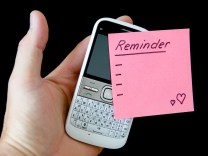 At the low tech end is the humble sticky note. Once something crosses your mind, immediately write it down on the note. This has to be done quickly, as the next shiny object that passes in front of your eyes can cause this thought to be forgotten. The catch with this system is in the management of the physical notes. Lose the sticky note and the thought it captured is gone. For this system to work, the note must go straight into your inbox at the first opportunity for later processing.
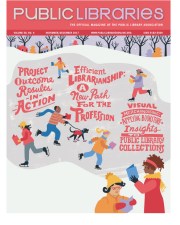
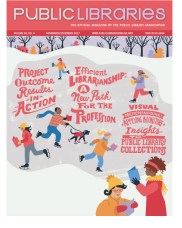 I am proud to announce that my second article for Public Libraries magazine was published in the Nov/Dec 2017 issue. Efficient Librarianship: A New Path for the Profession is an article that explores and expands on the ideas discussed in this blog. Below is a key except from the article:
 What is the value in setting a goal for yourself or your organization? Many cynics discount goals as artificial creations that don’t translate into actual results. They argue that we are going to do the work anyway, so why set up a fake expectation?
 Efficient Librarian