General Reference Filing – A Key to a Clean Desk

paper-filesDo you know someone who has piles of papers stacked on their desk?  Over time, these piles can spill out to neighboring chairs, tables, and even onto the floor.  In such cases, it is safe to assume that this person’s filing system has stopped functioning.

If not managed efficiently, paper filing systems can easily swallow up whole offices.  Therefore, it is important to tame them as soon as possible and keep them in check year-round. Thankfully, there are very easy steps to do just that.  For starters:

  • Use a single A-Z filing system for everything. Simplicity trumps complexity every time.
  • Keep a stack of file folders within reach to file anything quickly. If file folders are only available in a supply cabinet down the hall they may as well be on Mars for all the chance you will walk down to get one.
  • Purge your files annually. Reference material goes stale over time.  Toss things that no longer have any apparent value.
  • Keep your filing cabinets no more than three quarters full. Don’t let it get to the point where jamming in a document incurs a high risk of paper cuts.  Clean up or expand to another cabinet when space is low.

More great tips on general reference filing can be found in this simple handout from the Getting Things Done web site.

FLA Webinar – The Efficient Librarian: Workflow Management

Please join me as I present a flalogofree webinar this Tuesday afternoon, sponsored by the Florida Library Association.  (Please note that registration may be limited due to demand.  So sign up early.)

The Efficient Librarian: Workflow Management

The world of work seems to be moving faster and faster every day. Is it possible to keep up with the rapid pace and still be stress free? Yes, it is! To do so you must learn the path of the Efficient Librarian. An Efficient Librarian is an elite knowledge worker, navigating the complexity of the post Internet information world. In this workshop, Doug Crane will teach powerful methods for managing commitments and processing information which reduce stress and increase efficiency.  The workshop is based on the article, “Efficient Librarianship: A New Path for the Profession” published in the Nov/Dec 2017 issue of Public Libraries.

Speaker: Doug Crane
Tuesday, May 8, 2018
2:00 PM – 3:00 PM, Eastern
FREE webinar open to all Florida Library Staff
Click Here For Registration

Deciding Between Priorities

There is a common question I encounter in my Efficient Librarian presentations that can be best synthesized as this: How do I decided between different priorities?

kellyforrister

The default resolution that many people fall to is an attempt to decide which item is most important.  While this can be helpful, adjudicating importance can be too subjective and imprecise.  A better guide to resolving this question was recently presented on the Getting Things Done blog.  In the post, senior coach Kelly Forrister framed a few different factors to consider.

1/ Context is first since it will always be required to do what you want to do. For example, if your computer is required to write an email, but you don’t have it with you, then you can’t take that action. If being @Home is required to mow your lawn, but you’re not home, you can’t take that action.

2/ Time available is also a limitation in that if you don’t have the time to take an action, it won’t matter if it’s high priority or not. If you only have ten minutes, but you need an hour to take an action, that will eliminate some choices.

Read the rest of the factors listed in the post on the Getting Things Done blog.

A Formula for Success

Is there a formula for success?  If so, it would have to be a simple approach that can be used by anyone in any situation.  Tim and Brian Kight, the founders of Focus3, believe there is a formula that if used with discipline will lead to any desired result.  In fact, they recently highlighted it on their blog:

E+R=O (Event + Response = Outcome) is cause and effect. Desired outcomes require deserving responses. The cause must meet the requirement to create the effect. What does this mean for you?

It means use a moment each week to clarify the cause and effect of E+R=O in your life. Are you responding in a way deserving of the things you want? Decide on your objectives, lock your focus on their importance, and make every action reflect your real desires. When you do this, success is with you in every response, even before your true objective is a reached.

Read the rest of this entry on the Focus3 blog.

timandbriankight


Waiting For “Waiting Fors”

Here are two inescapable truths about the world for work.  First of all, our work is dependent and intertwined with that of our colleagues.  Whether you work in a large organization or as a freelancer we are constantly sending messages out to others that require a response in order to advance our projects.  The second inescapable truth is that a certain percentage of our colleagues will fail to respond to those messages.  Therefore, it is important to have a system in place to keep track of all the messages that are sent out so that they can be followed up on when needed.

The waitsimplest way to do this is through a “Waiting For” folder.  A “Waiting For” folder is a depository for copies of any message which requires a response.  Most of the time, our colleagues respond quickly.  However, the “Waiting For” folder pays dividends for those times when a response is lagging.  A best practice is to check the “Waiting For” folder at least once a week.  While browsing through the contents make an executive decision on each message: Do you follow up to encourage action or let it lie fallow for another week?
The “Waiting For” folder is essential to ensure that important delegated tasks do not fall through the cracks.  Make one for paper workflow and one in your email and then see it deliver peace of mind.

Fixed vs. Growth Mindsets

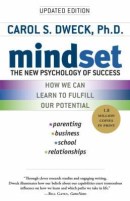
mindsetsImagine a room of students who are working on a very tough math problem.  Some of them give up quickly and say it can’t be solved while others preserve and work at it until they final succeed.  What is different about these students?   Believe it or not, IQ is not a factor.  According to research, it is mindset.

In her groundbreaking book, Mindset, author Carol S. Dweck, Ph.D. explored the reasons why some people have greater success than others.  She determined that it came down to whether a person had a fixed or growth mindset.  As explained on her website:

“In a fixed mindset, people believe their basic qualities, like their intelligence or talent, are simply fixed traits. They spend their time documenting their intelligence or talent instead of developing them. They also believe that talent alone creates success—without effort. They’re wrong.

“In a growth mindset, people believe that their most basic abilities can be developed through dedication and hard work—brains and talent are just the starting point. This view creates a love of learning and a resilience that is essential for great accomplishment. Virtually all great people have had these qualities.”

Read more about this fascinating idea at mindsetonline.com

Spark Talk on Email @ PLA

pla2018

Last Thursday in front of an energized crowd of over 300 conference attendees, I was honored to present my five minute Spark Talk called Five Minutes to Inbox Zero – Overcoming the E-mail Avalanche.  Here is how it started:

“Let’s go! I only have five minutes to tell you the five things you can do with an email. First of all in a show of hands, how many of you have completely emptied all your email inboxes at some point in the last 24 hours? I mean completely empty – everything – no read or unreads, absolutely zero messages inside. For those of you who have, go ahead and take a five minute nap. For the rest of you, pay close attention if you want to be an Efficient Librarian.”

Read the full text of the Spark Talk in the Articles section of this site.

Where to Keep Ideas?

DA-SmallDavid Allen is fond of saying that “Your mind is for having ideas, not holding them.”  As a knowledge worker, your ability to generate and implement ideas is crucial to your success.  The challenge is that we can never know for certain what will turn out to be a good idea and what will end up as a discarded thought.  However, it is guaranteed that a forgotten idea will never be implemented.  Therefore, it is important to have a method to capture ideas as they appear.

In a recent blog post, David Allen addresses this topic.

“How many thoughts and ideas do you have daily which represent useful things to do or potentially enhance or improve projects, situations, and life in general? How many have you had and forgotten, and forgotten that you’ve forgotten? …

“Most people have (or could have) many more of these kinds of thoughts than they realize, during the course of any 24-hour period. Most people don’t get value from many of them, because they lack both the habit and the tools to collect those thoughts when they occur. If they aren’t captured, they are useless, and even worse can add to the gnawing sense of anxiety most people feel about things “out there” they know they’ve told themselves they should or would like to do, but don’t remember consciously what they are.”

Read the rest of this post at www.gettingthingsdone.com.

Overcoming the Email Blues

cleandeskIn January 2018, I had a short article published in the American Library Association LearnRT Newsletter.  The article was called, Overcoming the Email Blues. While subscribers to the Newsletter received the article, it has yet to be archived on the ALA web site.  Therefore as a public service , I have added the article to my blog for your reading pleasure.

Many thanks to the editors of the newsletter for publishing the article.  The ALA Learning Roundtable has the following mission:

“The Mission of the Learning Round Table….

….promotes quality continuing education and staff development for all library personnel. We help you NETWORK with other staff development and continuing education providers for the exchange of ideas, concerns and solutions.

….serves as your SOURCE for staff development continuing education assistance, publications, materials, training and activities.

….is your ADVOCATE for quality library staff development and continuing education at both the local and national levels.”