Failure is Thankfully Unavoidable

All knowledge workers will fail!  Guaranteed!

Nobody likes to fail.  In fact, a harsh stigma is often attached to failure.  Yet ironically failure is a natural part of life.  It is both unavoidable and necessary especially in the realm of knowledge work.

Remember that knowledge work is composed of tasks and goals that must be defined by the knowledge worker themselves.  Alas, even with their best judgement and experience, knowledge workers are often faced with a deficit of information.  Based on an incomplete picture, they are forced to make their best guess and then see how it plays out.  A knowledge worker living in fear of failure becomes paralyzed into inaction, perpetually avoiding a decision.

To counteract this problem, I agree with blogger Venkatesh Rao in that our approach to solving problems should be similar to that of software engineers.  Successful software engineers are constantly tinkering with code, testing it over and over again looking for bugs and creating situations where it will crash.  It is only after many different trails and iterations that they reach a pragmatic success.  This approach, known as “agile” has its own mantra, “Fail Early, Fail Often.”

Therefore, I believe that agility is a key factor for a successful knowledge worker.  They must be willing to learn from mistakes, course correct, and experiment constantly until they reach the desired goal.  When viewed this way failure is not a problem, but instead a necessary component of the path.  Once this is understood, failure loses it sting.  The knowledge worker can become fearless!
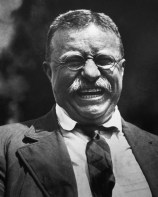
UC-TeddyDon’t worry about your failures, as each one is a stepping stone on the path to success.  As President Theodore Roosevelt said:

“Far better it is to dare mighty things, to win glorious triumphs even though checkered by failure, then to rank with those poor spirits who neither enjoy nor suffer much because they live in the gray twilight that knows neither victory nor defeat.”
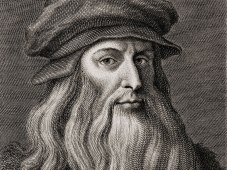
Leonardo DaVinci – Knowledge Worker

On a long ride across the state of Florida, I downloaded an audiobook from CloudLibrary to pass the time.  My selection was the biography of Leonardo DaVinci by Walter Issacson.  As I listened to the fascinating life story of the archetypal Renaissance Man, it struck me that Leonardo was in fact a knowledge worker well ahead of his time.  Knowledge work is characterized by the worker having to define their own goals and the steps needed to achieve success.  Back in the 1500’s, Leonardo DaVinci was doing many of the best practices of knowledge work naturally and to powerful affect.

leonardoFor example, not trusting his head to remember ideas, Leonardo was constantly taking notes.  It is estimated that he wrote 5000 pages in his lifetime.  These wide-ranging notebooks jump from scientific studies, to sketches of machines and animals, to subjects for artwork, to notes about his personal life.  Leonardo was constantly generating new ideas and the notebooks detail how he pieced different ideas together for larger impact.  This made him an early expert in the field of personal knowledge management.

Another advanced knowledge worker skill was his drive to ask challenging questions.  Leonardo was always seeking out experts in the courts of Florence and Milan to engage in deep discussions on a wide range of topics.  This incredible multi-disciplinary and collaborative approach was a secret to his success.  For example, his knowledge of anatomy allowed him to accurately draw the muscles of people in his paintings.  This small detail gave the images a sense of realistic movement that other paintings of the time lacked.

To read more about Da Vinci’s fascinating life, copies of the Issacson biography should be available at your local library.  You can also view pages from his notebooks at the website of the British Library.  Unfortunately, I don’t think you will find a secret DaVinci Code in any of his notebooks!

How Software is Eating the World

Look around your room.  How many devices do you see that run on software?  Our computers obviously, but we often forget that software runs our televisions and cable boxes.  Many people now own smart appliances or have Ring doorbells.  All recent cars have a software package that controls vital aspects of the car.  With the spread of software, we are more and more reliant on an invisible profession to manage our days: software engineers.  As Marc Andreessen wrote in his 2011 Wall Street Journal article, software is eating the world.

raoVenkatesh Rao has deeply explored how software design process altered our way of living.  In fact, he champions that idea that we need to think more like software engineers who embrace failure and use it to constantly improve their work.  In his online series, Breaking Smart, he argues that software has become a transformational technology on par with the development of language and money.  Yet being in the middle of this transformation, we still struggle to understand its full effects. Venkatesh writes:

“As a simple example, a 14-year-old teenager today (too young to show up in labor statistics) can learn programming, contribute significantly to open-source projects, and become a talented professional-grade programmer before age 18. This is breaking smart: an economic actor using early mastery of emerging technological leverage — in this case a young individual using software leverage — to wield disproportionate influence on the emerging future.”

This is clearly demonstrated in the impact of people like Mark Zuckerberg of Facebook and Larry Page and Sergey Brin of Google.  Venkatesh’s ideas are complex, but the Breaking Smart blog is worth tackling if you want to get a better sense of the often-unseen impact that software has on the world.

The Two Problems in Life

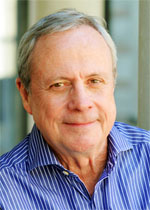
davidallenSome days it seems like our lives are full of problems.  They appear to come at us in all shapes and sizes, adding stress and tension to our days.  But perhaps all these problems are not really different from each other.  Maybe they all have something in common.

According to David Allen, we only have two types of problems.  In his recent blog post at Getting Things Done, he shares his theory.

“You only have two things you ever need to be concerned about. Not only are there only two problems—they are really quite simple. Ready?

Problem #1: You know what you want, and you don’t know how to get it.

Problem #2: You don’t know what you want.

“Anything you can define as a problem can be reduced to one or both of those statements.

“Now, since there are only two problems, it follows that there are only two solutions that you will ever need. You need to make it up, and make it happen. You must decide and clarify what outcome you’re after; and you must then determine how you get from here to there.”

Learn in more detail how you can solve either of these two problems by reading the rest of David’s blog post.

National Library Week

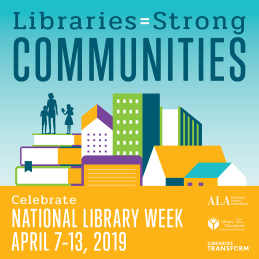
Please join me and the Palm Beach County Library System in celebrating National Library Week (April 7-13, 2019)!  According to the American Library Association (ALA), the week is a special time to celebrate libraries.

“National Library Week is an annual celebration highlighting the valuable role libraries, librarians, and library workers play in transforming lives and strengthening our communities.

“This year’s theme, Libraries = Strong Communities, illustrates how today’s libraries are at the heart of our cities, towns, schools and campuses, providing critical resources, programs and expertise. They also provide a public space where all community members, regardless of age, culture or income level, can come together to connect and learn.”

I am happy to see that many media outlets are promoting National Library Week.  This year, CNN has a special story on “9 facts about librarians you probably didn’t know.”  For example, did you know that 1.3 billion people visit public libraries every year, more than the 1.24 billion movie theater admissions in 2017.  So why not celebrate the week by stopping into your local library and picking up a DVD or book.  They are free to borrow with your card!

nlw19-social-media-5-instagram-share

Time or Attention? Which Works?

AdamGrant_2016-headshot_previewWhen I ask students why they decided to attend an Efficient Librarian seminar, a common response is that they wanted to learn more about “time management.”  While it seems logical to believe that you can get more work done through better management of the hours in your day, it may not be that straightforward.  In fact, focusing on time management may actually make you less productive.

In a recent article on the New York Times web site, Professor Adam Grant argues that managing our attention, not time, is a better approach to getting things done.  He writes:

“Being prolific is not about time management. There are a limited number of hours in the day, and focusing on time management just makes us more aware of how many of those hours we waste.

“A better option is attention management: Prioritize the people and projects that matter, and it won’t matter how long anything takes.”

This reminds me of a classic David Allen quote from Getting Things Done:

“If you don’t pay appropriate attention to what has your attention, it will take more of your attention than it deserves.”

Read the rest of Adam Grant’s article on the New York Times web site.

South Central Library System

A big thank you goes out to the South Central Library System in Wisconsin for hosting two Efficient Librarian webinars.  Jean Anderson and her team were great to work with.  We had excellent attendance and the participants asked very thoughtful questions.

SCLS has posted the presentations to their continuing education web site.  If you want to view a recording of the two webinars, both one hour in length, here are the links:

sclslogo
Thank you again to Jean the SCLS team.  I hope to work with you again in the future.

Organizing is a Journey

claire-tompkinsDavid Allen has often said there is a “strategic value” to “clear space.”  In a physical sense, this means ensuring that our work and home spaces are organized and clean.  However, for those starting out with the intention to get organized there is a trap to avoid.  It is very easy to see the whole process as one big heavy lift that needs to be accomplished in a short time.  With this daunting view of the project it is likely they will give up on organizing right from the start.

Claire Tompkins, aka the Clutter Coach, shares in her book, 52 Simple Ways to Get Organized, that organizing is a journey.  It is not meant to be completed in one weekend, but instead is a transformative approach occurring over many weeks or months.  On page 50 of her book, she shares a simple way to frame the task.

“Try on this thought: organizing is a journey, not a destination.  The difference between people who are organized and those who aren’t is that they do a little every day to maintain order.”

She then suggests the following tip:

“Identify one small area that tends to get cluttered regularly and spend five minutes putting things away and throwing things out.”

Sounds like good advice.  Now excuse me while I clean out this drawer …

The Power of Completion

DA-SmallDo you know how many projects lie unfinished in your world?  As we move through life there is a natural force in us that creates new things as they spark our interest.  Unfortunately, I have found this creation often results in lots of projects that quickly lose focus and instead become a source of stress.  It seems that the catch to managing all the stuff we create is finding a way to bring closure to them.

In his latest blog post, David Allen delves into the entwined powers of completing and creating and how their dance affects our lives.

“Seems that we’re here on the planet to learn about and do two things—complete and create. We are responsible for what we have put into motion on all levels, and we must manage the process of what we are putting into motion every moment. 

“Though both aspects are primary, I think a lot of people could use a good bit more emphasis on the complete part. Our cultural personality seems bent on limitless expansion and not necessarily cleaning up after itself.”

Read the rest of the post at the Getting Things Done web site.