An Interview With David Allen

Discovering Getting Things Done by David Allen ten years ago was a huge professional turning point for me. GTD provided a way to structure work that allowed me to achieve more than I had thought possible. In fact one of the best training tools I ever purchased was a ten CD recording of a GTD Live seminar which I listened to a dozen times. Over the years I have frequently returned to David Allen’s ideas and still find a clarity of thought this is always inspiring.

If it has been a while since you read Getting Things Done, or maybe have yet to open it, I highly recommend this interview with David Allen on Medium. He covers a lot of the basics of the GTD philosophy and how to apply it. For example:

These are the 2 elements of productivity:

  1. What am I trying to accomplish?
  2. How do I allocate resources, attention, and activity to make that happen?

They’re not automatic decisions. No email will tell you outcomes or actions. No thought you wake up with tells you that. You actually have to sit down and think and use your cognitive muscle. Put yourself through this thought process.
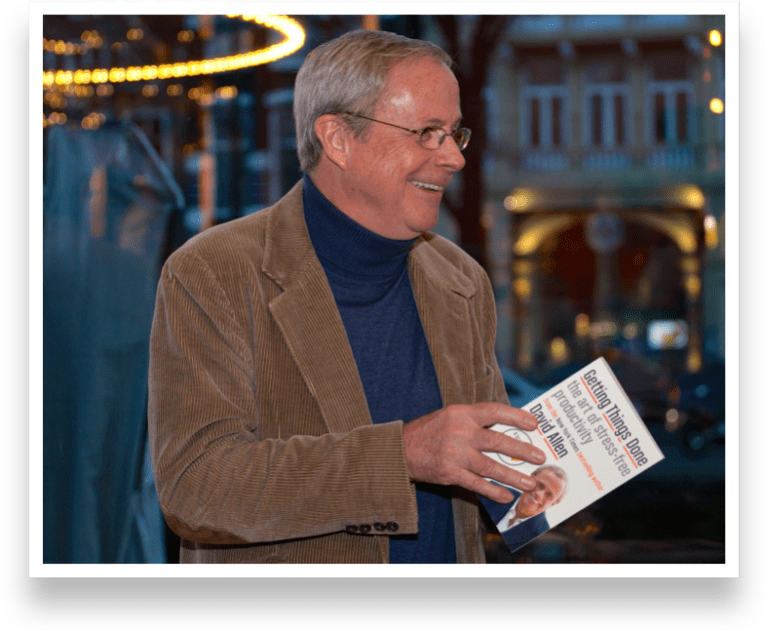
Later on in the interview he discusses priorities and clears up misconceptions around how they are set.

You’re making priority decisions every moment. Now you are talking to me, that is your priority. And that’s the best thing you can be doing right now. Otherwise, your head would be totally somewhere else.

If you’re always thinking about priorities … I’m not saying to not set priorities, but don’t try to oversimplify that and give yourself some formula that determines your purpose, your core values, your vision in where you’re going. The goals you need to accomplish, the things you need to manage and maintain to make sure you’re healthy.

Read the full interview to learn more.

Public Library COVID Restrictions

This week I provided an article for Public Libraries Online regarding the current status of library COVID-19 operating restrictions across the country. Here’s the opening of the piece:

Fourteen months ago the COVID-19 pandemic swept across the country. By the beginning of April the vast majority of public library buildings were closed to the public. Over the subsequent months, some libraries dipped their toes into offering curbside checkouts before opening their doors for limited services. Other systems remained stuck in a full closure aside from virtual services. Now that vaccines are available and virus transmission rates are dropping, public library service is largely being restored across the United States, but at vastly different timelines.

To read more about the current operating restrictions in New York, Florida, California, and Missouri, which following recent CDC guidance are fast changing, read the full post on Public Libraries Online.

Understanding the Role of Public Library Directors

Public library directors fill a unique role in their organizations as leaders in both policy and culture. Whether it is a single building rural library to a multi-location big city system, all library directors face a series of similar problems as they strive to keep operations going. Between budgets, politics, policies, and staffing, no two days are the same.

On Tuesday I will be moderating an online discussion with experienced directors who will share their stories about why they chose this career path, its challenges, and their thoughts on the future of the profession. If you are interested in becoming a director, already a director looking for some tips, or simply want to learn more about the role, this is the panel discussion for you. Even if you are not a librarian, the leadership lessons alone will be worth your time.

Joining me on the webinar will be Roberta R. Phillips of the Prince George’s County (MD) Memorial Library System, Mark Williams of the Milton (Ontario) Public Library, Mary Ellen Icaza of the Stark Library (Canton, OH), and Jessica Hudson of the Fairfax County Library (Fairfax, VA). It is hosted by the Public Library Association.

The webinar will take place on Tues. May 18, 2 pm EST. To sign up, please visit the webinar page. Registration is free but space is limited. This panel discussion is organized and hosted by PLA’s Leadership Development Committee.

Happy Mother’s Day – Now Clean Up Your Bedroom!

As we celebrate Mother’s Day, there are lots of ways to show appreciation for everything our mothers do. Flowers are nice. Chocolates are sweet. A prepared meal hits the spot. However, one thing your mother might really appreciate is if you take the time to tidy up your room! (BTW, May 10 is National Clean Up Your Room Day!)

Thankfully, the KonMari Method provides an easy solution to tackle that project. In an article on the Linen & Homes web site, Marie Kondo lists eight tips to keep your bedroom clean and organized. For example, Tip #5 states one should organize belongings by category.

When it comes to organizing, we have a tendency to store the same item in different places. So it’s more effective to start with categories than it is to start organizing by room. For the purpose of organizing in your bedroom, you can at least start with clothes then when the time comes, branch out to books, before going to the sentimental items like photos and letters. She even gets more granular with her process, suggesting to start with all your shirts before your pants, your pants before your socks, and so on.

To help you along the article links to a KonMari checklist that covers every possible thing you might own.

Cleaning your room will not only make your mother proud, but give you a peaceful place to rest your head after a busy day. Check out the other tips in the article.

Second Brain Myths

Forte Labs signature course, Building a Second Brain is one of the best ways to get your digital life under control. Through a combination of simple practices it is possible to create a great online resource for all your notes that will enhance your creativity and improve your productivity.

However, there are many misconceptions on what it means to Build a Second Brain. In a recent post on his web site, Tiago Forte explores nine of them. For example, one of the issues he lists is a concern that doing this work will require a major overhaul of a person’s digital life.

Tiago explains:

This couldn’t be farther from the truth. A Second Brain is adaptive, like a living organism – messy, organic, and highly adaptable. Just like your first brain, a Second Brain has natural “plasticity,” with many ways of accomplishing any given task. When one part of your system is missing, another part can adapt and evolve to make up for it.

In the 4 steps of my CODE framework – Capture, Organize, Distill, Express – any incremental improvement immediately makes a difference, whether or not the other parts of the system are already in place. You don’t have to wait for each of the pieces to work in perfect harmony to start producing value.

To learn more about the power of Building a Second Brain and to clear up other misconceptions, please read the rest of the article.

Shortcuts are the Long Way Round

Let’s face it, work can be hard. Faced with the burden of putting in long hours to perfect a skill many of us search for ways to shorten the time. Some of these approaches are useful. From my own experience learning GTD was a great shortcut to being more productive and it helped clear my head to make better decisions. However, not all shortcuts are created equal. In fact, some are a waste of time.

In an article on his web site titled Focus On Your Skills—Not On Finding Hacks, Darius Foroux shares from his experience how searching for shortcuts to success can never replace building skill in a discipline.

Look, one thing I can share from personal experience is that building a business or career is HARD. It takes a lot of time and energy to learn new skills so you can provide value

And trust me, I’ve tried to look for shortcuts and hacks over the past ten years. Maybe I’m missing something those geniuses are selling, but I can’t find it. To be sure, I’ve connected with many successful entrepreneurs over time.

I’ve been very lucky with my father, who’s a successful businessman himself. Through him, I met many people who’ve done well for themselves and their communities.

And every single one of them said the same thing. There’s no way around hard work.

He goes on to share what he claims is the least exciting advice in the world.

Keep yourself to a very high standard. Ask yourself: “Am I proud of the work I’m delivering?” 

Whether that’s in your creative or professional work, don’t settle for “meh” work. It doesn’t have to be the best in the world. It just has to be your best. That will do two things for you.

It will help you to improve. And it will help you to value your own work. 

Read the full article on Foroux’s web site.

Federal Support for Public Libraries – How You Can Help!

Do you know how your local public library is funded?

The vast majority of public library funding comes from local revenue, such as property tax. A smaller portion comes from each State government with large variations across the country. It is easy to forget that the Federal government also supports local libraries.  Most of the revenue comes through the Library Services and Technology Act (LSTA) that is distributed to the states through the Institute of Museum and Library Services (IMLS).

This past year IMLS received additional funding outside the usual appropriations process. This first happened with the CARES Act. For example, my library in Palm Beach County received a competitive grant for $24,316 from CARES Act dollars. With the passage of the American Rescue Plan, $200 million more was appropriated to IMLS to support libraries in their COVID relief efforts.  The American Library Association is also advocating for a regular budget appropriation of $206 million for LSTA grants in the next Federal budget year.

You can ask your Federal elected officials to support more funding for LSTA through the ALA engage platform.

Also moving through Congress is the Build America’s Libraries Act.  According to ALA, if passed:

“The Build America’s Libraries Act would fund upgrades to the nation’s library infrastructure to address challenges such as natural disasters, COVID-19, broadband capacity, environmental hazards, and accessibility barriers. This groundbreaking legislation would pave the way for new and improved library facilities in underserved communities across the country. Join us in the effort to support this bill and #BuildLibraries.”

You can contact your local member of Congress and Senators to ask them to support this Act through the ALA engage platform.

To keep track of all these Federal funding streams, please visit the ALA Advocacy and Public Policy pages.

Spring Clean Your Komono

Spring has traditionally been a time to clear out our closets and drawers of the things that no longer serve us. However, tidying up can be psychologically challenging not only due to the sheer amount of spaces where things are stored but also the psychological weight of our belongings. Many items we possess carry sentimental value that makes them hard to part with even when they no longer have any practical use.

Marie Kondo understood this problem which is why she created the KonMari Method. Through a simple process the Method helps people tackle their home cleaning through a five stage system. Recently on her web site she spent time providing tips on how to tackle the broadest category of items, komono.

We all have them: spaces and drawers where komono (miscellaneous things) live. These are the places where items sit idle because they haven’t found a true home. Designate a day to tackle your komono, give your objects final destinations and take back control. Remember, it is key to tidy by category – not location. 

Marie goes on to share what I consider the most important tip to cleaning any space which is to empty it out first. This aligns with Newton’s First Law of Motion. Objects at rest tend to stay at rest. Objects in motion tend to stay in motion. By getting the komono items moving it is just as easy to throw out or properly place an item as it is to put it back in it s initial spot. Marie advises:

Taking everything out of your komono hot spots and laying it out provides a fresh view of all the contents. You may find something that was once missing or something you forgot you owned. It is an opportunity for re-acquainting yourself with the objects that live with you and recognizing those that spark joy and those that don’t. Once those drawers or storage spaces are completely empty, take a moment to tend to them. Clean well with a soft cloth, replace drawer liners or add air fresheners if you’d like.

Read the rest of Marie Kondo’s tips on tackling komono on her web site.

Don’t Worry about FOMO! Live the JOMO lifestyle!

Have you ever had the experience of wondering if you are missing something important? Have you ever been concerned that other people are doing something that you need to know? Have you ever had a potential heart attack when you noticed that your phone is in another room and you may have missed a call or text? Welcome to FOMO – the fear of missing out. It drives people to constantly check their messages and social media feeds to see if important things are happening around them. Most often nothing is, but the fear drives people to compulsively worry about it!

The folks who developed Basecamp understand this concern. That is why they propose living your life in a state of JOMO – the joy of missing out. As they describe in their book, It Doesn’t Have to be Crazy to Work Here, authors Jason Fried and David Hansson share the philosophy of JOMO on pages 70-71.

People should be missing out! Most people should miss out on most things most of the time. That’s what we try to encourage at Basecamp. JOMO! The joy of missing out.

Later on they clarify why it is a part of their company’s culture:

Because there’s absolutely no reason everyone needs to attempt to know everything that’s going on at our company. And especially not in real time! If it’s important, you’ll find out. And most of it isn’t. Most of the day-to-day work inside a company’s walls is mundane. And that’s a beautiful thing. It’s work, it’s not news.

I invite you to give it try. Resolve to focus only on what is truly important in your job and life. Let the Twitter feeds and gossip slide by without a second glance. Give it a week then see if you feel more relaxed and focused. If so, then you are now living the JOMO lifestyle!