Time Hack: Choice

The old saying goes that everyone gets the same 24 hours a day. What we do within that time shapes our life. While large parts of our day are spent sleeping and working, there are hours where we get to pick our actions. In a recent article on MIT Press, author Michelle Drouin notes that the average amount of available leisure time has increased. However, there is one activity that dominates this free time.

The average American spends 22 minutes a day participating in sports, exercise, and recreation; 32 minutes per day socializing or communicating; and 26 minutes per day relaxing or thinking. In contrast, they spend 211 minutes per day watching TV. That’s 2.6 times more time watching TV than exercising, relaxing, and socializing combined.

Photo by Burak Kebapci on Pexels.com

This huge devotion to screen time limits our productivity and also makes us unhappy. In order to get out of this rut, we need a new tool.

But research also shows that by taking steps to make sure our social compromises are our own choices — not based on the way technology makes us feel — we can employ the best time hack of all. It’s called social economizing, and it means we make active decisions about how we spend our time, and we then save and invest our time where we want.

To learn more about how this hack works, I encourage you to read the rest of the article.

As well, check out Michelle Drouin’s book Out of Touch: How to Survive an Intimacy Famine.

We’re All Alone in this Together

Organizations that are able to form reliable teams tend to accomplish more goals and provide better internal and external customer service. However, there is an unspoken tension around teams. In order for them to work effectively, everyone has to know their assignment. The distribution of work needs to be clear otherwise important items fall through the cracks.

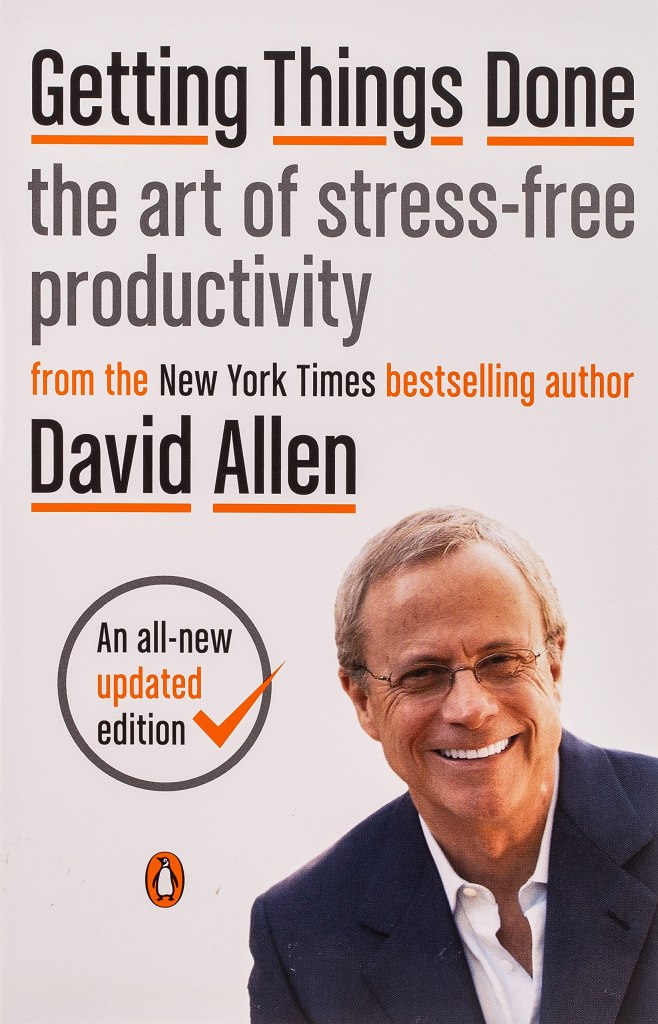
David Allen has explored the intersection of personal productivity and teamwork. In a recent blog post he notes the following:

Have you discovered yet that no matter how big the button is that says “TEAM” you’re wearing at the conference, nobody’s on yours?! That in order to get done what you have to get done, there aren’t a lot of people at your beck and call, making sure your specific actions and projects happen? Ever have the feeling that you’ve got to hold on for dear life to your own projects and outcomes, against the hurricane of events and other people trying to get their world defined and done?

Later in the post, David considers the reason why teams fail to clarify their work.

Problem is most of us never had training or experience in dealing with that syndrome efficiently and effectively. We grew up in a world where you just went to work, and the work to be done was visible and obvious.

What is the solution to this problem? It could be as simple as acknowledging our struggles.

The best teams and relationships, from my experience, are the ones in which the players all acknowledge they’re each alone in the endeavor together. That’s when we can really experience team, and function as one.

Read the entire post on the Getting Things Done web site.

Do the Easy Stuff First?

Everyone likes to get a quick win. It would seem that disposing of small items would generate momentum to tackle larger work. However, does this tactic lead to lower productivity?

In an article on getpocket called Why Doing the Easy Parts of Your To-Do List First Can Be a Bad Idea, Stephanie Vozza argues that studies show that tackling the low hanging fruit first may dissuade you from attempting more meaningful work.

“In the short-term, the person could actually feel satisfied and less anxious,” says Maryam Kouchaki, associate professor of management and organizations at Kellogg School of Management at Northwestern University. “But avoiding hard tasks indefinitely also cuts off opportunities to learn and improve one’s skills.

Photo by Andrea Piacquadio on Pexels.com

Part of the problem with working on easy tasks is that they are often low value and procedural, making little impact on a person or organization’s larger goals.

Finishing tasks provides a sense of progress and makes us feel good. “We all have limited time and attention,” says Kouchaki. “In any moment, if you have a choice of doing an easy or difficult task, most of us tend to pick the easy task. Easier tasks are often quicker to complete, and they are more likely to be chosen first when people are busier. We call this ‘task completion preference.’”

The problem is that when you create a habit of choosing easier tasks over hard, you can impact your long-term productivity.

Read the full article on the getpocket web site.

Declutter your Life

Did you get any presents over the holidays? Between gift exchanges, Secret Santa, and surprise items, no doubt your home is filled with lots of extra stuff. Now that the holidays are in the rear view mirror, it is the perfect time to consider to declutter. The challenge is where to start.

This topic was tackled by Ashley Abramson in a recent article on the getpocket web site. Titled How To Declutter Your Life in 15 Steps, she give suggestions to tidy up and clear out both for physical and electronic spaces. Her first step is to focus on the trash!

This is the fun part. Before you can organize the items you want to keep around, you literally need to trash the stuff that doesn’t belong. To begin the process of decluttering your home, walk through each room with a trash bag. Be ruthless with all the knick knacks, papers, and crusty cosmetics that are occupying valuable space. Of course, if there’s anything you can donate or recycle, keep that in a separate pile.

Photo by Andrea Piacquadio on Pexels.com

Abramson does not neglect our digital world either. In fact, she starts out by suggesting something that all too many of us forget to do: back everything up!

Backing up photos and important documents not only speeds up your device and frees up memory; it also ensures that if your phone or computer crashes, your information (and memories!) are safe. Enter cloud storage. Take some time to backup the files you want to save on iCloud, Google Photos, or a paid cloud service with more storage space. You can also set your device to automatically back your files up periodically.

Read the rest of her suggestions to declutter your life on the getpocket web site.

Leadership Perspectives – Vision

The difference between a good leader and a great leader often comes down to the ability to craft and communicate a vision for the organization to its employees and the public.

I recently concluded a series of three articles on leadership perspectives for the ALA Learning Exchange newsletter. The latest article focused on the importance of developing and articulating a vision. Below is the start of the article.

Photo by Anna Tarazevich on Pexels.com

“Where there is no vision, the people perish” Proverbs 29:18

Throughout history, humans have sought meaning both in the moment and in the larger scope of events. When times are tough and the world is confusing, people look to their leaders for clarity about the future. This makes casting a vision perhaps the most important skill a leader can master and also the most challenging. 

At its basic level casting a vision is the ability to paint a future from the many factors that make up today. In ancient times, it was commonplace for people to seek out oracles, shamans, and mystics to appeal for divine direction. In our complicated world, this need for guidance has not disappeared. If anything our leaders must be more dynamic with their visions to cut through the clutter of information noise.

Read the rest of the article on the Efficient Librarian web site.

Gazing into the Crystal Ball

2021 proved to be a very unpredictable year. Between the pandemic, political uncertainty, and economic challenges we never knew what would happen next. Still, everyone must plan for the future, including Library Directors and CEOs. So, what are these leaders focusing on with the new year?

In a recent survey I conducted of Urban Library Council members, I asked Directors to share their top concerns for 2022. The results were published in an article on the Public Libraries Online web site. The group reported focusing on a broad range of topics, but far and away the largest was COVID and its fallout.

The pandemic upended the library’s relationship with patrons. Between limited hours, uncertain access to buildings and safety concerns about virus spread, patterns of use changed dramatically. Libraries have seen a drop in visitors that has not reverted back to pre-pandemic levels. A Canadian library director listed a number of possible reasons including:

“The continued effects of the pandemic including changing customer behaviors, hesitancy to frequent public spaces, mental health issues, impact on loss of learning due to school closures, and the shift to online.”

Related to the pandemic were concerns about budgets due to a violate economy.

Several directors commented that their infrastructure is in need of repair and upgrading. However, funding for capital projects is running up against tight operating margins. For example, a California library director shared the following about their system.

“This may not be the case for every library system but over half of our branches are too small and well beyond their normal useful life. There is a high amount of deferred maintenance and insufficient funding resulting in increased deterioration of buildings.”

Explore more thoughts from public library leaders on their top concerns for 2022 at the Public Libraries Online web site.

Make a Simple New Year’s Resolution

With 2021 almost done, it is time to look ahead to 2022. Of course, the new year’s holiday is a traditional time to make a resolution to change something in your life. Whether it is losing weight, exercising more, kicking a bad habit or starting a good one, there are unlimited ways to make a resolution. Sadly, these self promises are often unsuccessful. The web site Discover Happy Habits offers some sobering data:

According to a 2016 study, of the 41% of Americans who make New Years resolutions, by the end of the year only 9% feel they are successful in keeping them.

It goes on to share that the top reasons for failure to keep a resolution include unrealistic goals, failure to track progress, forgetting about it, and setting too many goals.

Photo by Breakingpic on Pexels.com

To help you set a resolution you can stick to successfully, here is my own advice from personal practice.

1 – Set only one resolution: Too much change is stressful. Instead identify one thing that will make the most impact and focus your energy on that.

2 – Make the goal realistic: For example, promising to run ten miles every day gets old quick. Getting 10,000 steps a day is simpler to achieve and once you are on a roll the target number can be increased.

3 – Identify a simple change that is easy to implement: If you want to eat healthy, it can be jarring to jump from a regular diet to a low calorie one overnight. Instead, select one food item to eliminate, like processed sugar or salty chips. Sometimes a single change is enough to get the desired result.

4 – Track and celebrate: Make a note of your progress at the end of the day. Whether it is tracking your weight or recording exercise minutes, seeing continual progress is encouraging. Even more exciting is building a streak! Once the momentum starts it will see you through tough days.

5 – Set a time commitment– A resolution doesn’t have to be a lifetime change. One way to beat the inertia to get started on a new habit is to put a time limit on it. For example, commit to exercising one hour a day for 60 days. This makes the change reasonable and offers a way out if it doesn’t work for you. Of course, if the change sticks, keep going beyond the initial time commitment.

Good luck with your New Year’s Resolution and have a happy 2022!

Superhuman Email Management

Knowledge jobs of all types require quick communication. Despite the prevalence of chats, channels, and text, email remains the key way to share detailed information. This makes mastery of email an essential modern skill. The catch is that most people never received training on how to handle it effectively. Thankfully, there are easy to learn principles that make email processing effective and fun.

Tiago Forte first learned email management through GTD. From there he expanded on the practice to create a seamless system to completely process his inbox with ease and turn it into an enlightening high value experience. In a recent article on the Superhuman blog, Tiago spoke to Rahul Vohra at Superhuman for an article that highlights four steps to email mastery.

It starts with changing your perspective on email.

“The key to having a more positive outlook toward email is to nail the management,” says Tiago. “Anytime you don’t have a place for information to flow to, it will pile up, multiply, and become a problem.”

“The solution to having too many emails — and not knowing what to do with them — is not found in your inbox,” says Tiago. “You have to solve that problem elsewhere.”

Later on in the article, Tiago shares a key approach to reframing email, slowing down your reactivity.

“When someone sends you a message — especially a colleague, or someone senior to you — there’s a built-in feeling of urgency,” says Tiago. “But is that urgency real? What is the real expectation of this person?”

“Low reactivity is a spiritual discipline,” reveals Tiago. “Go slightly beyond your normal response time. If you normally respond within an hour, try to respond within a day.”

Discover the whole systematic approach to handling email at the Superhuman blog.

GTD Wisdom

David Allen’s insights into the nature of work and how we approach it can be career changing. That was certainly true for me. Below are a few classic David Allen quotes. I invite you to take time to ponder them. They may seem obvious at first, but on deeper reflection there is wisdom that may challenge the way your approach your daily tasks and long term goals. Enjoy!

“If you don’t pay appropriate attention to what has your attention, it will take more of your attention than it deserves.”

“Your mind is for having ideas, not holding them.”

“The big problem is that your mind keeps reminding you of things when you can’t do anything about them. It has no sense of past or future. That means that as soon as you tell yourself that you need to do something, and store it in your RAM, there’s a part of you that thinks you should be doing that something all the time.”

“Anything that causes you to overreact or under-react can control you, and often does.”

“You must use your mind to get things off your mind.”

“You don’t actually do a project; you can only do action steps related to it. When enough of the right action steps have been taken, some situation will have been created that matches your initial picture of the outcome closely enough that you can call it “done.” The list of projects is the compilation of finish lines we put before us, to keep our next actions moving on all tracks appropriately”

“Things rarely get stuck because of lack of time. They get stuck because the doing of them has not been defined.”

“There are no problems, only projects.”