A Neuroscientist’s Advice on Productivity

There are many factors that affect our productivity. However, they all come back to the fact that knowledge works happens in our brains. Therefore, a healthy brain should enable us to get more things done. To that end, what does the field of neuroscience say about productivity?

In a recent article in Science Focus, neuroscientist Dean Burnett discusses the connection between the brain and knowledge work. Specifically, he lists five tips to be more productive. The first one highlights the beneficial effect of background music.

When we’re trying to focus on a task, our conscious attention is occupied, but can still be diverted by the unconscious system. And if we’re in complete silence, any creaks or sighs or murmurs or other random sounds stand out more, meaning our unconscious attention is more likely to be distracted, which hinders our productivity.

But, if we play music in the background, it masks obtrusive noises and occupies our unconscious attention, like giving a bored child a toy to play with while you’re trying to work. Obviously, the type of music will make a difference. Things with lyrics aren’t as good because our brains are more stimulated by linguistic information, and music that has a negative impact on mood can sap motivation.

Discover the other four tips by reading the full, and fairly short, article.

Interview with Tiago Forte

In less than two weeks I will interview Tiago Forte, the leading expert in how to manage your digital notes and use them for greater recall and creativity. See the details below if you want to join the Zoom interview. Feel free to share with others:

Meet the Author: Tiago Forte
Thursday, Jul 14, 2:00 pm EST

Workplace productivity expert and author Tiago Forte discusses his newest book, “Building a Second Brain: A Proven Method to Organize Your Digital Life and Unlock Your Creative Potential,” in conversation with Library Director Doug Crane. (60 min.) Presented by Community Engagement.

Preregister through this link.

This event is hosted by the Palm Beach County Library System. Hope to see you there.

Building a Second Brain Now Released

After many years of anticipation, Tiago Forte has released his book, Building a Second Brain. It is the distillation of the ideas and exercises originating from his signature course of the same name. Here is how Tiago introduces the book on his web site:

What if you made use of the ideas, wisdom, and resources available to you online instead of stockpiling and hoarding information with no end in sight? 

What if you knew with total confidence that you could find the information you need when you need it instead of wasting time looking for notes you swore you’d saved? 

What if you could leverage technology to think better, clear your mind, and get more done instead of letting it disrupt you with constant notifications and demands? 

All this and more is possible with a Second Brain – a trusted place outside your head where you can collect and organize your most important ideas and insights and use them to do your best work.

As part of his promotional tour, the Palm Beach County Library System is honored to host Tiago for a virtual meet the author session on July 14, 2 pm EST. Preregister to receive the Zoom link.

Congratulations Tiago on this great achievement!

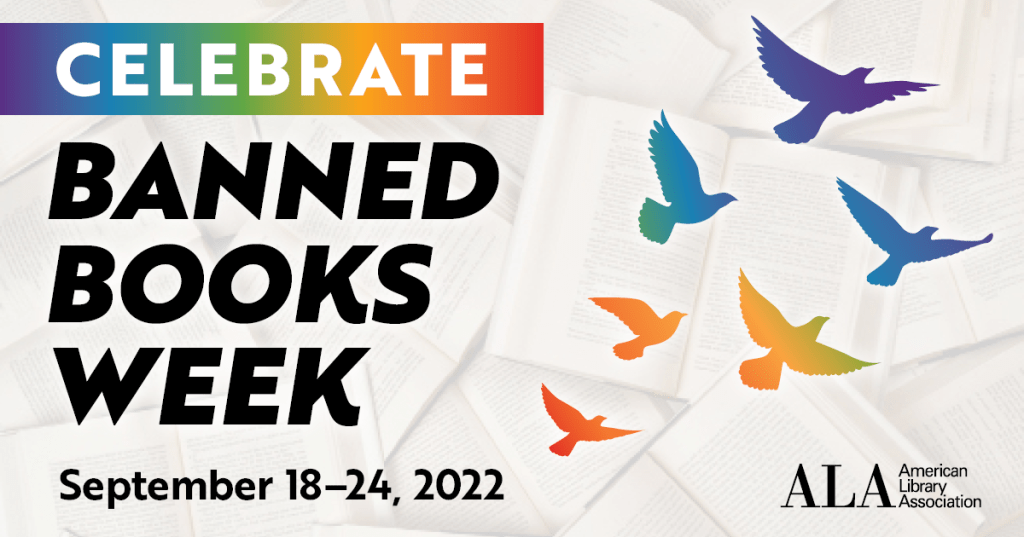
Unite Against Book Bans

Across the country attacks on the freedom to read have multiplied. While there have always been attempts to remove books from library shelves, this time the movement is more organized and widespread. Most of the targeted items are children’s material covering LQBTQIA+ information and race relations, such as Black Lives Matter.

The American Library Association stands at the forefront to protect the right to read. For years they have tracked book challenges and compiled the top ten list of targeted titles. With the threat rising, they recently started a campaign called Unite Against Book Bans. The site contains the results of a nationwide poll that clearly shows book banners are a minority.

On both sides of the aisle, large majorities of voters and parents oppose book bans. 71% of voters oppose efforts to remove books from public libraries. 67% of voters oppose efforts to remove books from school libraries. And yet, attempts to ban books from libraries are rising at an unprecedented level across the country. The American Library Association reported more than 729 attempted bans of 1,597 individual books in 2021 alone.

Join the campaign to preserve the right to read and fight book bans. It is as simple as signing up through the ALA’s campaign page. The web site also includes an action kit and ways your organization can partner with the movement.

Don’t let a small minority ban books from our library shelves. Join the cause and unite against book bans.

Interview with Lessa Kanani’opua Pelayo-Lozada

I had the honor of interviewing incoming ALA President Lessa Kanani’opua Pelayo-Lozada. The interview is available to read at Public Libraries Online.

Working out of her home base as the Adult Services Assistant Manager at the Palos Verdes Library District in Southern California, Lessa has been deeply involved with ALA for many years. Given the huge responsibilities and time commitment, I asked what inspired her to run for ALA President.

The idea of becoming President stuck in my mind because when I was in Emerging Leaders, my group said I was going to be ALA president someday although I’m not sure I agreed then. When I was on the Executive Board and started doing work for the Steering Committee on Organizational Effectiveness (SCOE) it was a labor of love, and a lot of work. I saw how much I cared about the Association, but it also showed me how much others cared about it too. I saw the difference that ALA made not only in personal lives, but in libraries and other Associations across the country. When I was finishing my executive board term, and SCOE was coming to an end, it was right when the pandemic hit. Calls for nominations for ALA president were being solicited. I wasn’t finished with this work and wanted to continue to completion to see those changes. I don’t want to just drop it into someone else’s lap. I want to take responsibility and help the management and cultural changes going on in ALA, and as a society as a whole. That’s how I got here today.

Later in our conversation, she shared her list of the most important issues facing libraries today.

I think our biggest issues include ensuring that ALA continues its mission to preserve and strengthen library services through technical assistance, professional development, and direct funding for libraries and library practitioners. What that looks like on a practical level is how we support library workers right now. We’ve gone through a lot of trauma, regardless of the type of library you’ve worked in. As library workers and as people, figuring out what that support and advocacy for library workers looks like is one of the biggest issues. ALA can utilize its 501c6 arm, the ALA-Allied Professional Association, to carry out this mission. As ALA, one of the biggest issues right now is also supporting those who are facing intellectual freedom challenges. We must work against those challenges with a concerted effort. ALA recently launched Unite Against Book Bans, and is rolling out tool kits. We’re seeing support from our Office for Intellectual Freedom helping those on the front lines. Finally, there’s lots of different ways that folks can use their skills, time, and dollars. I think it’s important to remind folks of the value of ALA membership and how it affects libraries across the nation.

Read the rest of the interview to learn about her Presidential plans, the value of an ALA membership, and what she believes are the biggest opportunities for libraries of all types.

Thank you to Public Libraries Online for posting the conversation.

12 Steps to Build a Second Brain

I have frequently written about Tiago Forte and his Building a Second Brain program. It is the definitive approach to unleashing the power of digital notetaking. In fact, his first major book is being published in June.

Recently Tiago wrote a concise summary of the practice by listing the 12 Steps to Build a Second Brain. This is a very fast crash course in how to create and utilize digital notes. For those wanting to get started, here are the first two steps:

1. Decide what you want to capture

Think about your Second Brain as an intimate commonplace book or journal. What do you most want to capture, learn, explore, or share? Identify two to three kinds of content you already value to get started with.

For an extended intro to capturing and taking digital notes, check out this workshop covering how to capture and save the best information you consume each week.

2. Choose your notes app

If you don’t use a digital notes app, get started with one now. But I know that choosing your notes app can feel overwhelming and paralyzing. 

My recommendation is to choose an app based on your notetaking style since notetaking is a highly personal process based on intuition and feeling.

In this video, I introduce you to 4 notetaking styles and the best apps for each.

Read the other ten steps on the Forte Labs web site.

Finding Your Leadership Pathway – Journey Reflections

Last week’s post discussed how to overcome roadblocks on the leadership journey by creating actionable plans. Through perseverance, effort, and a little bit of luck the desired leadership destination can be reached. Even if goals change, it is important to celebrate success every step along the way.

Too often we fail to celebrate our successes. This could be due to a feeling of modesty or simple exhaustion from the journey. However, failure to acknowledge the hard work can make the final victory feel hollow. Therefore, it is helpful to plan ways to celebrate success in advance of its arrival.

Consider that when we take a real-life trip, we make efforts to secure it in our memories. For example, photos are taken at important waypoints and with fellow travelers or locals. Souvenirs are acquired to frame memories around specific places. Memorabilia is obtained as a result of events and places visited. All these artifacts serve as ways to remember and reminisce on the journey well after it is over.

As you travel down your leadership pathway, what parts of it are worthy of remembrance? Will it be attending conferences? Will it be specific people? Will specific artifacts be created, like reports or giveaways? Consider in advance what items will help you capture the essence of the journey even before taking the first step.

Photo by Lina Kivaka on Pexels.com

For example, every time I attend an American Library Association conference or a Public Library Association conference, I bring back a small souvenir such as a shot glass with the name of the city hosting the conference. It is a small memento that unlocks larger memories. Another way I remember milestones comes in recognition plaques. My two Golden Palm Awards, Leadership Palm Beach County graduation document, and master’s degree from the University of Toronto all have a place on the walls of my office. In addition, framed copies of the first page of every feature article I have written for Public Libraries magazine are displayed. All these items help me remember successes and offer inspiration for the future.

What will you acquire on your leadership journey? It is helpful to consider this in advance to ensure you capture them on your travels. Of course, most journeys have unplanned detours, so allow yourself some spontaneous acquisitions when the mood strikes. Anything that may help you celebrate success is worthy of consideration.

I wish you good fortune on your leadership journey. If you missed the other postings in this series, please find links to them below.

Finding Your Leadership Pathway – Plan of Action

In most journeys, complications arise that force us to take alternative paths. Two weeks ago, I discussed how to anticipate roadblocks. Once these obstacles are apparent, the next step is to formulate plans to detour or bypass them. There are several ways to develop these strategies. Two are highlighted below.

A solitary method to address potential roadblocks is by brainstorming options. I suggest using map maps to avoid the trap of linear thinking. Take a sheet of blank paper and write the name of the roadblock in the center. Around that center point start listing potential solutions. Avoid early self-censorship by writing down everything that comes to mind. Don’t worry if ideas seem unworkable. The point is to get them out of your head for full review. In fact, sometimes ideas that seem silly at first might have merit upon closer examination.

Challenge yourself to come up with a least five options. For example, let’s say the roadblock to succeeding with your project is lack of funding. Here are several ideas to solve it:

  • Ask the owner/director for additional funds
  • Seek out grant opportunities
  • Arrange for a loan from a bank or colleague
  • Identify options to reduce the project’s overall costs
  • Recruit investors to the cause
  • Close out other projects to divert funds
Photo by Pixabay on Pexels.com

A collaborative way to overcome roadblocks is through a support network. There are many people out there with experience and resources that could be amenable to assist. Too often we fail to seek help due to embarrassment or ego. However, being willing to reach out to colleagues can be the difference maker.

One way to do this is through existing professional networks. For example, I am a member of the Urban Libraries Council Library Director/CEO listserv. Through that network I have access to hundreds of years of professional executive experience. Whenever a question or request is posted to the listserv a dozen or more people may respond. Quite often, solutions and options arise very fast in the candid conversation.

To that end, seek out professional networks, even ones that are not within your occupation. Oftentimes the way to overcome a roadblock is by applying ideas from another profession. Lawyers, doctors, accountants, construction workers, and librarians all have different mindsets. Join the local Chamber of Commerce or attend a Toastmasters club. Both are examples of cross professional organizations. Tapping into alternative viewpoints is a helpful way to find novel solutions.

With the end in sight, next time I’ll discuss how to reflect on the journey.

When is it Best to be First or Last in a List?

Every day we make choices. Usually, we believe that our decisions are made rationally and fully under our control. However, studies have clearly shown that our minds are influenced by factors beyond our recognition. In fact, it is possible to design systems that guide people to make specific decisions without them even knowing it.

One way this happens is through choice architecture. This is the science of building the system through which the choices are presented. Whether this is a survey, restaurant menu, or car building web site, the order and types of choices can bias the decision maker. It need not be nefarious; it is simply an aspect of the limitations built into all choice architecture designs.

In his book, The Elements of Choice, Eric J. Johnson discusses the field of choice architecture in great detail. One specific example he explores is how placement on a list affects choice.

Photo by cottonbro on Pexels.com

Lists are a common choice architecture design. No matter if it is a list of three items or three hundred, the placement of items on the list impacts decisions. However, the format in which the list is presented also has an impact. It changes the location on the list where someone would want their preferred choice to be located.

For example, if the list is text only and the reader is in control of where to place their eyes, then the first spot is almost always the most selected. Examples of this type of list presentation are restaurant menus or short option lists, such as election ballots. However, when the decision maker is listening to a list or has no ability to move backward or forward by choice, then the final slot is the most selected. Examples of this are judging competitions that involve artistic merit, or simply having a friend recite a list of potential movies to watch on a weekend night.

This is a key difference. In the first case, people are judging their choices based on the first item presented. It anchors the decision. In the second case, the decision maker is working off memory, which tends to be strained as the list grows longer. This causes the most attention to fall on the later items.

Read more about how choice architecture affects our decisions in The Elements of Choice.