Scintillating Subject Lines

In January 2024, I presented a new webinar called Effective Email Etiquette. It was designed to highlight best practices for all aspects of email communications. In this post I’ll look back at the tips on how to make effective subject lines.

Photo by Mikhail Nilov on Pexels.com

A well-crafted subject line is crucial for getting your email noticed and read. To that end, there are simple rules to follow regarding subject lines.

  1. Be Clear and Specific: Clearly convey the purpose or main topic of your email. Avoid ambiguity to ensure the recipient understands the content. Aim for brevity to make it easy for the recipient to quickly grasp the essence of the email. Most people receive numerous emails, so concise subject lines are more likely to be read.
  2. Use Action Words: Incorporate action verbs that prompt the recipient to take a specific action or convey a sense of urgency. If there’s a time-sensitive element to your email, mention it in the subject line. However, be honest and avoid overusing urgency, as it can lead to fatigue.
  3. Personalize When Possible: Include the recipient’s name or reference specific details related to your relationship or previous interactions. Personalization makes email stand out and feel more relevant to the recipient.
  4. Highlight Benefits or Value: If your email offers value or benefits to the recipient, mention this in the subject line. Conveying the value of the email can increase the likelihood of it being opened.
  5. Be Mindful of Tone: Match the tone of your subject line to the nature of the email and your relationship with the recipient. Avoid overly formal or informal language unless it aligns with the context. Writing in all caps or using excessive punctuation can make your email appear unprofessional or overly urgent. Use proper capitalization and punctuation for a polished look.
  6. Consider Mobile Users: Many people check emails on mobile devices, so ensure your subject line is mobile-friendly and not too long.

Remember that an effective subject line can significantly impact the success of your email communication by having it more likely to be opened. Therefore, it is well worth the effort to put in an eye-catching subject line.

To see all of the effective email tips, please read the article accompanying the webinar.

David Allen’s New Book – Team

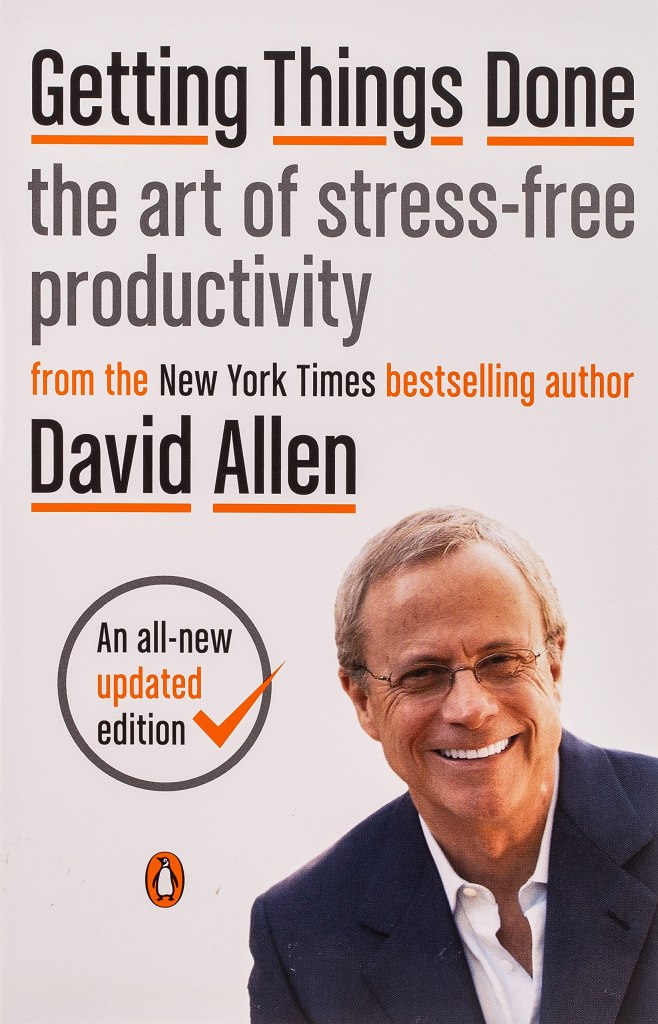
The GTD methodology has been out in the world for over 25 years. Millions of people have used it to better organize their work and get more done. However, one challenge people often face is being the only person in their office applying GTD. It can be hard to keep up a successful system when everyone else is doing their work less productively. Aside from trying to get everyone to commit to it personally, can it be scaled to teams?

David Allen and co-writer Edward Lamont believe that it can, with their new book, Team: Getting Things Done with Others. As shared on the book jacket:

By building on the effectiveness of what GTD does for individuals, Team will offer a better way of working in an organization, while simultaneously nourishing a culture that allows individuals’ skills to flourish. Using case studies from some of the world’s largest and most successful companies, Team shows how leaders have employed the principles of team productivity to improve communication, enable effective execution, and reduce stress on team members. These principles are increasingly important in the post-pandemic workplace, where the very nature of how people work together has changed so dramatically.

Over the next few months, I will share teachings from Team. Today I’ll start with a tease of their discussion of moving from one person to a group, which involves a different approach to work.

At a team level, we see the equivalent of “mind like water” to be something we’ve come to describe as “healthy high performance.” This is a way of working together that is not just able to keep pace with, or outrun, the competition, but to do it in a way that is sustainable – fun, even – over the longer term.

With this approach they are aiming to share ways for teams to be successful both in terms of their work goals and also to be healthy in mind, body, and spirit. Stay tuned over the next few months to learn the specific techniques to achieve it.

If you don’t want to wait, get your copy of Team: Getting Things Done with Others and read ahead.

How to Organize a Shared Workspace

As a fan of GTD, I have been able to organize my personal workspace to match my work style. Having a private office helps me keep control. However, many office workers are stuck in shared workspace situations. While they can control their own immediate spot, the common areas seem to be an unruly land. Is it possible to organize a shared workspace?

Francesca Stracuzzi recently mapped out a way to do so in five steps on the KonMari website. The first step is to take stock of your office’s current state.

“Many desks are overloaded, and both paper and digital archives are not functional, making it difficult to find documents and files,” she says. “A messy and disorganized desk generates stress, anxiety and demotivation, and, in the midst of that chaos, it also reduces our ability to make decisions. I am convinced that space affects our emotions and conditions our performance, so freeing the desk means lightening the mind and working with more serenity and clarity.”

Photo by Marc Mueller on Pexels.com

The next step is to get support from leadership.

“In my work experience, I have seen that the management of space, particularly offices and desks, is left to individual workers,” says Francesca. This may seem logical, but it often leads to a snowball effect, wherein one messy desk turns into many. 

Instead, Francesca recommends encouraging a different perspective within the team, including management, that focuses on how getting organized can benefit the whole team.

By framing the idea of a team organization project to leadership this way, you’ll have an easier time getting them to sign off on the project.  

To learn more about the steps to organizing a shared workspace, including the final three steps, please visit the KonMari website.

Thoughts on my Term as President of the Florida Library Association

This past week was the annual conference of the Florida Library Association. At the end of the conference, my term as President of the association concluded. It was a bittersweet moment as I enjoyed leading the organization but was also ready to pass along the responsibilities.

Looking back over the past year, I am proud of the work that our members accomplished to advance Florida libraries. Given the political pressure targeting the association, and local issues impacting many of our members, we still had robust participation across our committees. Each one had a highlight for the year:

  • The Advocacy Committee completed another successful legislative day at that Florida Capital in January, seeing funding for new library construction grants for the second year in a row.
  • The Communications Committee launched our first online shop, selling t-shirts, magnets, and more!
  • The Professional Development committee held events including a get ready for conference webinar.
  • The DEIA Committee put on successful and highly attended webinars and issued an informative monthly newsletter.
  • The Membership Develpment Committee did the important work reaching out to lapsed members to encourage them to renew and identified ways to recruit new members.
  • The Intellectual Freedom Committee tracked the many book challenges across the state and the county to keep our members informed.
  • The Awards and Honors Committee ranked and recommended the winners for our many awards and three MLIS scholarships.
  • The Conference Planning Committee completed a huge amount of work behind the scenes to make our annual conference a great success, from scheduling breakout sessions to recruiting vendors.

The opening session featured two great speakers. Jaena Rae Cabrera – APALA President, joined us all the way from San Francisco to talk about the Asian/Pacific American Librarians Association. Our keynote speaker was Kris McGuigan, who shared her inspirational story and the importance of courage in the face of fear.

Thank you to all of conference sponsors and exhibitors. We could not have done it without your support.

My deepest appreciation goes to the outgoing FLA Board of Directors. Their dedication to the association was very much appreciated throughout our many discussions.

FLA could not operate without the tireless work of its staff. My sincere admiration goes out to our Executive Director Jenny Abdelnour and office assistant Niall Williams for keeping FLA running day-to-day.

Finally, I wish all the best to our new President, Jorge Perez. I look forward to serving with him on the Board as the Immediate Past President.

If you want to support Florida libraries, please consider joining FLA. Membership is reasonable and goes a long way to ensure the success of our profession in Florida.

Avoiding Burnout

Do you find yourself constantly thinking about problems at work? Do you answer emails late into the evening? On vacations can you unplug yourself even for a day or two?

If you answered yes to any of these questions, you are a candidate for burnout. In his most recent newsletter author and speaker Shola Richards addressed what burnout is and how it happens.

Burnout, by definition, is the state of emotional, physical and mental exhaustion caused by excessive and prolonged stress.

In fact, in 2019, the World Health Organization recognized burnout as an official medical diagnosis.

My hope is that this distinction will continue to help remove some of the stigma around burnout. 

Constant working is a sure recipe for burnout. Beyond taking meaningful breaks throughout the day, are there other ways to avoid burnout? In his newsletter, Shola suggests three specific ways. First is consistent self-care.

I cannot say enough about the importance of having a consistent self-care routine. It could be daily meditation, taking a walk outside, journaling, curling up with your favorite novel, going to therapy, listening to a podcast and/or TED Talk, getting eight hours of sleep, hanging out with loved ones, or taking a much-needed break from watching cable news and/or from social media. As long as it’s bringing you joy and it doesn’t hurt you or anyone else, please keep doing it consistently.

Second is to set boundaries. If everyone is pushing to have your attention, that prevents you from giving attention to the things that lift you up. Some people live this way because they are afraid of how others will view them. One profound sentence from Shola demonstrates the error in this way of thinking.

And remember, the only people who will be upset with you for enforcing your boundaries are the people who benefited from you not having any boundaries in the first place.

Third, he suggests paying close attention to the company you keep. The truth is that some people lift you up while others drain you. The simple equation is to be more around the former far more often than the latter.

The best gift that you can give yourself is to separate yourself from the drama-addicted people in your life, as much as possible. Is it always easy to do this? No, but when it comes to living a positive life, it’s not always about doing what’s easy–it’s about doing what’s necessary. And avoiding burnout is possibly one of the most necessary pursuits on earth for your overall health and sanity (especially now). 

To tap into Shola’s weekly insights, please sign up for his newsletter and visit his website.

Things Great Leaders Do Differently

Developing leadership skills is a lifetime commitment. While anyone can be placed in a leadership position, it takes practice and a bit of talent to excel at it. Therefore, it can be helpful to study the habits and techniques of great leaders to see how they operate.

Author Kevin Kruse was able to do that and published his findings in an article on the Forbes website entitled 10 Surprising Things Successful Leaders Do Differently. The first discovery on the list seems to flip a popular piece of advice on its head: Close the Open Door Policy.

Open door policies are passive ways to facilitate communication and do more harm than good. They make deep work and strategic thinking virtually impossible for the manager. Worse, research shows that half of all employees won’t go through the open door with problems or ideas because they fear repercussions. It’s time to close your door and open your calendar. Recurring, weekly one-on-one meetings are a far better way to proactively facilitate communication, and pre-scheduled “office hours.”

Photo by fauxels on Pexels.com

Another common perception that Kruse challenges is the idea of treating everyone the same. Instead, he believes that great leaders have favorites and treat them differently.

In a misguided attempt to be impartial and fair, too many managers treat all their team members the same. But it turns out that’s the most unfair thing we can do to people. And it’s the fastest way for you to lose top talent. Instead of treating everyone alike, you need to learn to individualize your leadership approach. You need to take the time to understand each of our team members when it comes to their: talent, experience, attitudes, strengths and goals. Then you play favorites, not based on who you like better, but based on who’s earned it.

To learn the other eight surprising things that successful leaders do differently, read the article on the Forbes website.

The Second-Worst Task List App

How do you keep track of your tasks?

There are many different ways to remember all the items you need to do, whether it be in an electronic format, paper-based, or a hybrid of both. According to John Forrister, associate of David Allen, there is one method that is the worst way of all – your mind! As he wrote in a recent blog post called The Second-Worst Task List App:

If there is a second-worst task list app, there must be a first-worst, right? Yes — it’s your mind. It’s really good at many things, but managing your task list is not one of them. You know that already. You wouldn’t be reading this without already having a calendar and some version of a task list. 

John then postulates on what would be the second worst way to keep track of your tasks. With this question he not referencing a specific app or piece of software. Instead, he is looking at the systematic process that many people use accidentally.

For several reasons, my nomination for the second-worst task list app is an inbox with stuff that’s been there more than 48 hours. I use the email inbox as an example here, but you can probably apply this reasoning to other places where your inputs show up and need to be clarified.

He then proceeds to list reasons why an email inbox is unproductive as a task reminder. Two reasons include:

1. You need to keep rereading at least the subject lines of the first screen of emails, which uses your valuable time inefficiently. If there’s more than one screen, you are likely scrolling into the past fairly often, to scan those older emails.

2. You may be opening, rereading, then closing the emails to remind yourself what they’re about.

How do we keep our inbox from becoming a default bad task manager? Read the rest of the blog post to find out!

Celebrate National Library Week

Do you love libraries? Do you believe they are vital institutions in our communities? Do you value their role in our educational system? If so, please join me in celebrating National Library Week!

Every year in April is the annual celebration of the impact that libraries have on our nation. The American Library Association leads the way by setting the theme for the week. According to the ALA web site:

The theme for National Library Week 2024 (April 7-13) is Ready, Set, Library! National Ambassador for Young People’s Literature and Newbery and Pura Belpré-award winning author Meg Medina will serve as 2024 Honorary Chair.

What are some of the ways to celebrate National Library Week? For starters, the easiest first step is to visit a library. According to the ALA:

National Library Week is the perfect time to visit your library. Many libraries have special events planned for the week. Bring the kids or invite your friends. Meet the librarians. Check out books or other great items in your library’s collection or attend a program. Take time to learn all your library has to offer!

Learn more about National Library Week, including special Celebration Days such as The Right to Read Day, by visiting the ALA’s site.

Quick Home Cleaning Steps

Has your home ever been messy?

For some it is a rare occasion and for others it is a constant state. However, we all have times when our living spaces need to get in order very quickly. The challenge is knowing where to start. Is there a simple way to do it?

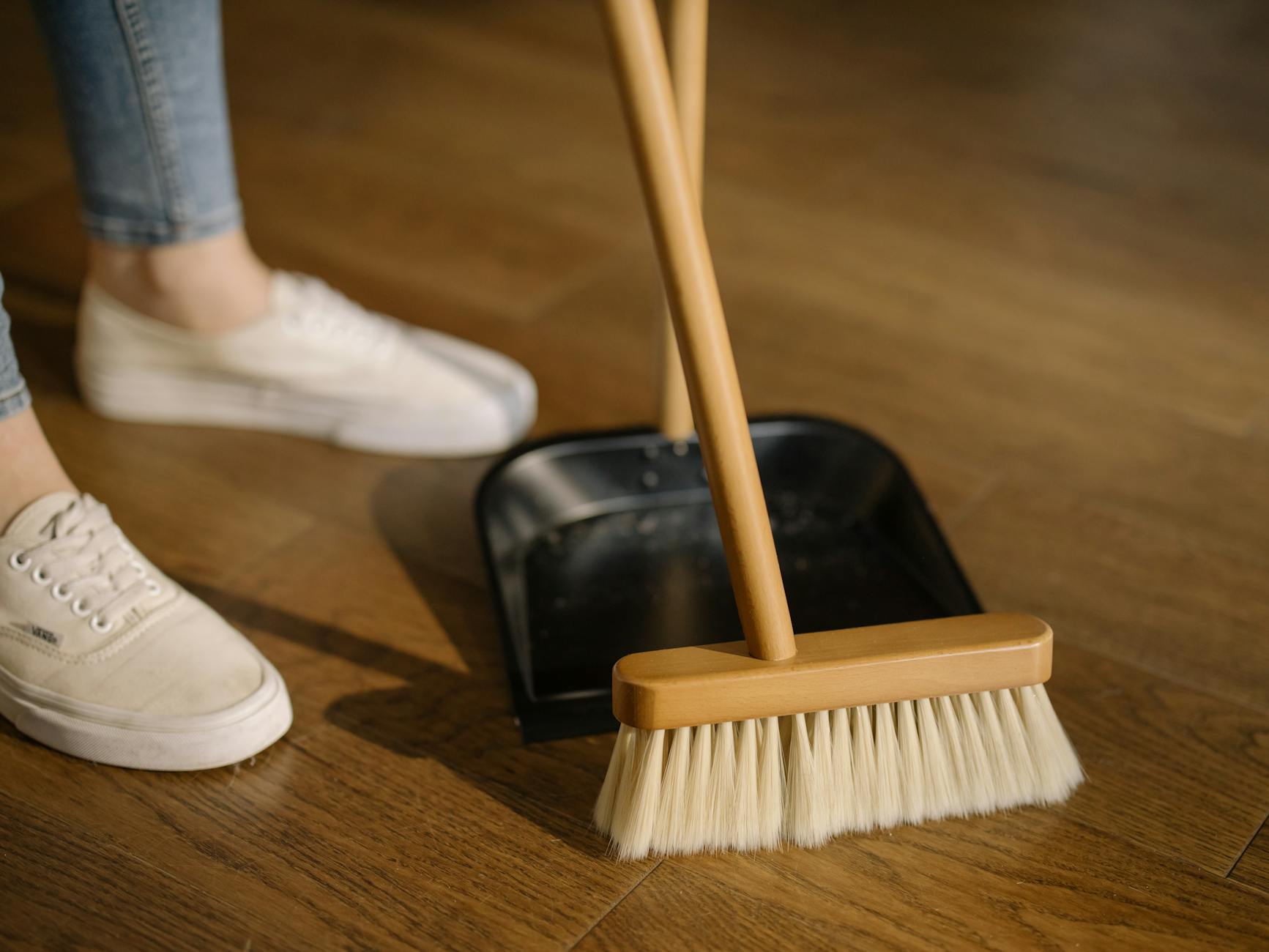
In a recent NPR article, author KC Davis shared tips on how to pull together a living space in five easy steps. According to KC, the first thing to do is take out the trash.

Get a trash bag or a trash can. Move around the room, collecting the garbage.

But don’t take out the trash yet. “The more times you leave that room, the more likely you are to get distracted on some different project,” Davis says. The point of this method is to get the space back to livable and functional.

“I can function with a trash bag sitting by the back door. I can’t function with too much trash all around the house,” Davis says. “I will have all the motivation in the world to do something and I’ll do it for like 30 minutes and then all of a sudden the motivation will fly out of my body …. And so knowing that, I want to get as much done to make the space livable as I can.”

Photo by cottonbro studio on Pexels.com

Once all the garbage is cleared, KC suggests tackling the dirty dishes.

Gather up all the dirty dishes. You can put them in the sink if it’s nearby. Or you can pile them up. Davis likes to use laundry baskets that don’t have holes in the bottom. You could also get a small rolling hamper, put a basket on top of it, “and roll that sucker around and collect all those dishes,” she says.

To learn the final three steps, please read the rest of the article on NPR.