The One List People Trust

Do you trust your lists?

The simplest organizational tool is the humble list. Anytime a person gets an item out of their head and onto the written page or electronic notebook automatically relieves the tension around remembering it. In fact, David Allen has often summarized GTD as getting stuff out of your head.

However, it seems that many people are allergic to doing this simple task. Whether it is due to an assumption that they will never forget, or fear of knowing the full extent of everything on their mind, lists can fall to the wayside. But is there one list that we always trust?

In a recent blog post, David Allen shared what he believes is the one list almost everyone creates and trusts. It is their calendar.

If you ever feel like you need to defend your lists, ask your skeptical friend if they are sitting around trying to remember what appointments they have on their calendar for next month. They’re probably not biting their nails about where they need to be a week from next Thursday at 4pm. They’re probably not even thinking about it. Why? Because they have their appointments tracked in a system they trust—a calendar they trust they’ll review at the appropriate time and place.
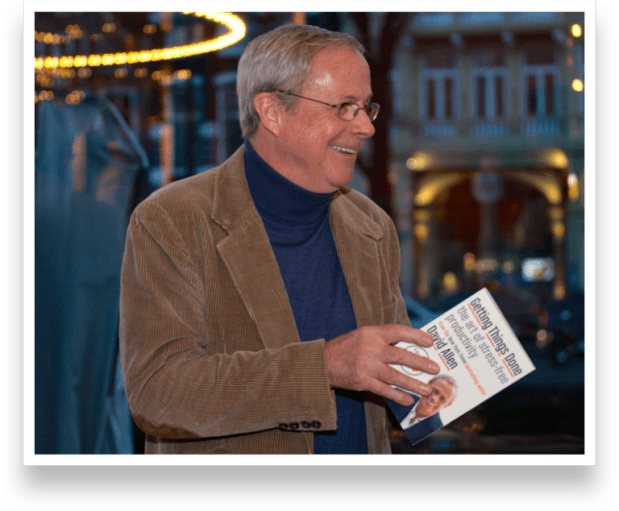
So why do people trust their calendar and not the other lists they make? David has pointed thoughts on that as well.

The problem with most people’s system is that the calendar is the only list they trust, and more than 95% of what they really need to keep track of is not a set of appointments but all the things to be done in between them. Thinking that your head is a better place to keep track of stuff, and yet finding it critical to maintain a calendar, seems to me a kind of intellectual dishonesty.

Read David’s full post on the Getting Things Done website.

Upcoming Events

Do you plan to be at the ALA conference in Philadelphia next week?

If so, there are opportunities to hear me speak at two different events.

June 27, 12:45 pm
Library Insights Summit 2025 – Philadelphia
Library Challenges and How Publishers Can Help – Panel Discussion
In Person Event

June 29, 1:00 pm
Interview Prep Made Easy
ALA JobLIST Placement & Career Development Center
American Library Association Annual Conference
In Person Workshop

Not going to the conference? Then plan to join me in August for two online trainings sponsored by ALA.

August 6, 2:30 pm.
A Plan for Personal Productivity for Library Staff: From Inbox to Completion
ALA Webinars

August 7, 2:30 pm
Managing Employee Performance Using the SBI Method
ALA Webinars

Hope to see you at one of these events.

The Curse of the Eternally Urgent

Have you ever fallen into the urgency trap?

This is the mode of thinking where we believe the most important thing to attend to is the latest and loudest item. Whether it comes from people demanding your time or a frantic email from your boss, it is all too easy to default focus to the item that everyone is worried about. However, does tending constantly to the most recent item lead to problems down the road?

In a classic David Allen article called The Curse of the Eternally Urgent, he starts out by clearly stating why ignoring seemingly unimportant items can backfire down the road.

Ignoring secondarily important actions and projects because you are too busy and concerned with urgent things fosters continual crisis management. It never self-corrects; it self-perpetuates. Where do fires and crises come from? Usually from not-so-urgent things that people ignore because they are distracted by the crises of the moment. Then, ignored, they cause the next fires and crises.

One of the paths forward is to use the famous two-minute rule. It is the idea that if something can be done in under two minutes then do it right away. Storing it for later is a counterproductive strategy that costs more time in the long run. Surprising, Allen has heard criticism of this simple rule, for which he has a straightforward response.

Someone heard second hand about my “two-minute rule” (if the action on something takes less than two minutes, do it as soon as you look at or think of it) and thought it was ineffective. “I’d waste my whole day doing two-minute things, many of which are not that important.” My retort was: if they’re not important enough to do, they’re not important enough to do at all! You’re either going to do something or you’re not. If you’re going to do it at all, and it takes less than two minutes, 95% of the time you’ll save time and be much more proactive if you do it immediately.

To learn more about avoiding “The Curse of the Eternally Urgent”, please read the rest of the article.

The Numbness of Blended Stacks

Take a moment to look at your desk. Can you quickly identify all the items that require attention?

Too often we let things pile up in our workspace. This causes us to lose track of our progress and creates unnecessary stress. Yet this way of working is all too common amongst knowledge workers. Is there a better method?

Recently David Allen wrote an article on the Getting Things Done website to discuss this issue. He begins by defining the problem.

The most obvious case is where there are stacks of things that include items that have actions associated with them and things that just need to be filed or tossed. Often this is true of piles of reading material—magazines, junk mail, email printouts, copies of articles, etc. Most people do not make a clean distinction, visibly or psychologically, between what they still tell themselves they should read, and what should be stored, routed, or just thrown away.

Naturally for Allen, the GTD methodology is the best way to resolve this situation.

With a proper segmentation of the nature of our “stuff”, it is amazing to notice the immediate change for the better in clarity and energy. This is the beauty of the GTD Workflow Diagram in helping you walk through that distinction. With a little effective categorizing, you can stop having to keep thinking about having to be doing so much work!

Read the whole article on the Getting Things Done website.

The Doing Dance

Do you ever have days where it seems impossible to get things done?

Most knowledge workers become frustrated at various points with an inability to focus on their work. Sometimes it is due to a heavy workload, other times from too many unexpected interruptions, or on occasion emergency situations. However, it can often come down to a matter of getting out of one’s head and bringing the work under control.

In a recent article on his website, David Allen reminded his readers of the three-fold nature of work. This is a concept that he outlined in his original book. David views it as a way to think about this nebulous thing known as knowledge work. The first aspect to focus on is doing pre-defined work.

This is what you would be doing all day if you got no input or interruptions of any sort. You would probably be working off the inventory of actions and projects that you came in with—work that you have already determined needs doing. The phone calls you need to make, the documents you need to draft, the ideas you need to outline on the project, etc.

The second aspect is dealing with work as it appears, much like a conveyor belt bringing more items down the line.

The phone rings, you take the call, and spend twenty minutes talking to a customer or a business colleague. Your boss calls a half-hour meeting to update you on a new development and get your input on it. You are doing the work as it shows up to be done. You are actually defining your work rapidly in this case, and choosing to do the new stuff instead of any of the pre-determined activity.

The third aspect is defining the work that needs to be done. In a way it involves taking control of the immediate environment.

This is processing your in-tray, your email, your meeting notes, etc.—taking in input and making decisions about what needs to be done about it. You may do some quick actions as you define them, and you will probably be adding some more to your inventory of defined work.

Want to learn more about how to best deal with each of the three types of work? Click through to read the entire posting to discover David’s advice.

Thoughts on my Term as President of the Florida Library Association

This past week was the annual conference of the Florida Library Association. At the end of the conference, my term as President of the association concluded. It was a bittersweet moment as I enjoyed leading the organization but was also ready to pass along the responsibilities.

Looking back over the past year, I am proud of the work that our members accomplished to advance Florida libraries. Given the political pressure targeting the association, and local issues impacting many of our members, we still had robust participation across our committees. Each one had a highlight for the year:

  • The Advocacy Committee completed another successful legislative day at that Florida Capital in January, seeing funding for new library construction grants for the second year in a row.
  • The Communications Committee launched our first online shop, selling t-shirts, magnets, and more!
  • The Professional Development committee held events including a get ready for conference webinar.
  • The DEIA Committee put on successful and highly attended webinars and issued an informative monthly newsletter.
  • The Membership Develpment Committee did the important work reaching out to lapsed members to encourage them to renew and identified ways to recruit new members.
  • The Intellectual Freedom Committee tracked the many book challenges across the state and the county to keep our members informed.
  • The Awards and Honors Committee ranked and recommended the winners for our many awards and three MLIS scholarships.
  • The Conference Planning Committee completed a huge amount of work behind the scenes to make our annual conference a great success, from scheduling breakout sessions to recruiting vendors.

The opening session featured two great speakers. Jaena Rae Cabrera – APALA President, joined us all the way from San Francisco to talk about the Asian/Pacific American Librarians Association. Our keynote speaker was Kris McGuigan, who shared her inspirational story and the importance of courage in the face of fear.

Thank you to all of conference sponsors and exhibitors. We could not have done it without your support.

My deepest appreciation goes to the outgoing FLA Board of Directors. Their dedication to the association was very much appreciated throughout our many discussions.

FLA could not operate without the tireless work of its staff. My sincere admiration goes out to our Executive Director Jenny Abdelnour and office assistant Niall Williams for keeping FLA running day-to-day.

Finally, I wish all the best to our new President, Jorge Perez. I look forward to serving with him on the Board as the Immediate Past President.

If you want to support Florida libraries, please consider joining FLA. Membership is reasonable and goes a long way to ensure the success of our profession in Florida.

Leadership Perspectives – Vision

The difference between a good leader and a great leader often comes down to the ability to craft and communicate a vision for the organization to its employees and the public.

I recently concluded a series of three articles on leadership perspectives for the ALA Learning Exchange newsletter. The latest article focused on the importance of developing and articulating a vision. Below is the start of the article.

Photo by Anna Tarazevich on Pexels.com

“Where there is no vision, the people perish” Proverbs 29:18

Throughout history, humans have sought meaning both in the moment and in the larger scope of events. When times are tough and the world is confusing, people look to their leaders for clarity about the future. This makes casting a vision perhaps the most important skill a leader can master and also the most challenging. 

At its basic level casting a vision is the ability to paint a future from the many factors that make up today. In ancient times, it was commonplace for people to seek out oracles, shamans, and mystics to appeal for divine direction. In our complicated world, this need for guidance has not disappeared. If anything our leaders must be more dynamic with their visions to cut through the clutter of information noise.

Read the rest of the article on the Efficient Librarian web site.

Is that a Decoy?

Imagine walking up to movie theater concession stand. On display are three bags to show popcorn sizes. The first is a small bag that costs $4.99. The second bag is a little bit larger at $6.99. The third bag is huge and costs $7.99. Which one do you pick? When people are exposed to this set of options they often pick the largest on the perception that it is the best value. However, have they been tricked into spending more than they normally would? In other words, have they fallen for a decoy?

In an article by Gary Mortimer, the Decoy Effect is demonstrated to be a classic sales trick. What is a decoy?

The decoy effect is defined as the phenomenon whereby consumers change their preference between two options when presented with a third option – the “decoy” – that is “asymmetrically dominated”. It is also referred to as the “attraction effect” or “asymmetric dominance effect”.

What asymmetric domination means is the decoy is priced to make one of the other options much more attractive. It is “dominated” in terms of perceived value (quantity, quality, extra features and so on). The decoy is not intended to sell, just to nudge consumers away from the “competitor” and towards the “target” – usually the more expensive or profitable option.

Photo by Pavel Danilyuk on Pexels.com

Later in the piece, Mortimer shares a very illuminating example of how the Decoy Effect can change people’s choices, even when the decoy is obviously worthless. This comes from the work of Dan Ariely.

In one scenario the students had a choice of a web-only subscription or a print-only subscription for twice the price; 68 percent chose the cheaper web-only option.

They were given a third option – a web-and-print subscription for the same price as the print-only option. Now just 16 percent chose the cheaper option, with 84 percent opting for the obviously better combined option.

In this second scenario the print-only option had become the decoy and the combined option the target. Even The Economist was intrigued by Ariely’s finding, publishing a story about it entitled “ The importance of irrelevant alternatives”.

So next time you shopping in the mall or online, keep your eyes open for the Decoy Effect. It might be a fun game to play and save you money at the same time.

Tidy the Home Office

Are you working from home all the time or a few days a week?

The pandemic radically altered the way we approach work. Many people no longer commute and instead work from a home office. This can be a great arrangement since it cuts out commutes and coworker distractions. However, setting up a home office to make it a welcoming productive space can be tricky. Is there a way to do it well?

Marie Kondo, creator of the KonMari Method, recently offered advice on her blog about how to tidy the home office space. She first explains that you should set an intention for how you want the home office to look and feel. Next is her signature move, discarding!

Go through your desk drawers and toss out old receipts, corral loose change, and recycle catalogs or other paper items that are no longer needed. When it comes to more sentimental items, such as photos or notes from friends and relatives, express gratitude for these belongings and their significance and then let go—Marie sends off such items using salt

Read the rest of her advice for your home office on the KonMari web site.