Decluttering Made Easy

Is your home or workplace cluttered? For most people the answer is an affirmative yes!

For those getting an early jump on spring cleaning, I recently came across advice on the NPR web site about how to get it done effectively. Reporter Andree Tagle interviewed organizing expert Star Hansen who shared ways to organize without the stress. However, before you start clearing away belongings, she believes it is important to understand your clutter.

Hansen says everyone’s clutter tells a personal story. “What becomes clutter and where your clutter accumulates can say a lot about what’s going on with you.”

If you have unwanted piles of stuff accumulating around your house, ask yourself: “What’s making this hard to get rid of?” she says. “A lot of times, the trip-up is from holding on to the past or wanting a different reality than the one we’re living in.”

That blazer that hasn’t fit for years? Maybe it reveals a yearning for your former profession. Those 20 pairs of chopsticks in your kitchen drawer? Maybe they’re speaking to your guilt around waste and sustainability.

When you understand the reasons behind your clutter, says Hansen, it’s a lot easier to know what to keep and what to get rid of.

Hansen also cautions against being too eager to clear it all out in one day. The process takes time.

When it comes to organizing, don’t bite off more than you can chew, says Hansen. If you start off with too big a goal, you might get discouraged if the job takes too long.

So don’t try to revamp your entire garage in one afternoon. Instead, start with something less challenging, like your purse or one single bathroom drawer. Save more complicated items, like tax paperwork, or sentimental items, like family photos and memorabilia, for last. These kinds of organizational projects often take the most time and emotional energy, says Hansen, so you’ll want to build up your decluttering muscle first.

Read three more tips for expert decluttering on the NPR website.

How Managers Can Help Their Team Focus

Have you ever been on a team that lost its focus? You and your teammates may have wasted time wandering down dead ends, getting caught up arguing over trivial items, or had assumed next actions lie incomplete due to a lack of delegation? While there are many contributing factors to such failures, a good manager can make or break a team.

In an increasingly distracted world, one skill that can elevate managers is the ability to focus their team on the priorities. In a recent article in the Harvard Business Review, GTD founder David Allen and Justin Hale break down seven ways that managers can help their teams focus on work. Not surprisingly, the ideas are born out the GTD principles. This first suggestion is to inventory tasks and projects.

This is a discipline where common sense is not common practice. If your people don’t have a complete list of their commitments and projects, they can’t realistically prioritize. As a leader, hold people accountable for keeping current to-do lists and give them time each week to do a full weekly review of these commitments so they can stay in control.

Another way managers can help their employees focus is to make meetings meaningful.

Most people’s workdays are monopolized by meetings. Help employees stay focused by allowing them to decline meaningless meetings. To improve meeting efficacy, one manager we coached set a bold precedent. He said, “If someone invites you to a meeting without a clear agenda and reasons why you’re vital to the success of the meeting, you have my permission to decline it.” This manager put the onus back on the meeting creator (which was often himself) to show greater respect for others’ time. It also put employees in control of their days so they could focus on high-priority work.

Read the other five suggestions at the Harvard Business Review website.

Productivity Propaganda?

At first glance it would seem that productivity is a good thing. After all, who doesn’t want to get more done in less time? However, what happens if the push for increased productivity comes at the expense of enjoyment of life? Does it matter if you get more done if that which is being done is of little value?

Digital anthropologist and author Rahaf Harfoush recently explored this topic in a book called Hustle & Float: Reclaim Your Creativity and Thrive in a World Obsessed With Work. In her book she explored workplace burnout and how to avoid it. Bloomberg Businessweek interviewed her during the COVID pandemic to learn more about how to balance work and life in the era or work-from-home.

This isn’t a normal time, so it shouldn’t be treated as normal work-from-home time. The lines between home and work, personal and professional, are blurred with an additional pressure to be productive since the thinking is that we all suddenly have more available time. This isn’t the case, and furthermore, working nonstop simply doesn’t work. We have turned busyness into a coping mechanism. Now, people are applying that to their personal time while sheltering at home, filling it with back-to-back Zoom calls, baking, workouts, and more activity. It’s important to use some of this time to process our emotions and reflect on the discomfort from all this productivity propaganda. Operating as usual will not only negatively affect your work but could compromise your health.

The interview ended with a warning for those who work around the clock.

If you’re a high performer and recovery isn’t an intentional and strategic part of your time and workflow, you’re only damaging your output in the long run.

Read the whole interview online.

Are You Overthinking?

Have you ever slept on decision? Spent weeks debating both sides of a problem? Kept looking for that extra bit of information to sway you one way or the other? If so, you may have been overthinking!

While thoughtful deliberation can be very helpful to make a decision, it is also easy to waste too much time before making a choice. Sometimes this is driven by a lack of confidence, other times it is fear of making a mistake, and simply worrying about how other people may react.

Harvard Business Review writer Melody Wilding looking into the issue and wrote a short article to outline ways to prevent overthinking. The first tip is to avoid seeking perfection.

Perfectionism is one of the biggest blockers to swift, effective decision-making because it operates on faulty all-or-nothing thinking. For example, perfectionism can lead you to believe that if you don’t make the “correct” choice (as if there is only one right option), then you are a failure. Or that you must know everything, anticipate every eventuality, and have a thorough plan in place before making a move. Trying to weigh every possible outcome and consideration is paralyzing.

Photo by KoolShooters on Pexels.com

What are the ways to avoid this trap? Wilding suggests you ask yourself these questions:

  • Which decision will have the biggest positive impact on my top priorities?
  • Of all the possible people I could please or displease, which one or two people do I least want to disappoint?
  • What is one thing I could do today that would bring me closer to my goal?
  • Based on what I know and the information I have at this moment, what’s the best next step?

Learn four more ways to avoid overthinking by reading the entire article.

After you finish reading, consider this question: What decision are you overthinking?

Once you identify one, pick one of the five tips to help reach a resolution. Then enjoy the clarity that comes from making a final decision.

Organizing as Self Care

Did you make a New Year’s resolution last week? If so, I hope you are still living it! One of the most popular resolutions is to get better organized. Whether it is at the home or office, a clear and clean environment helps to focus the mind and ease the spirit.

Maria Kondo’s work focuses on helping people find the peace that comes from an organized space. This week on her website she shared a post titled, Organization is Self-Care. In it, she starts by sharing her insight that getting organized is about more than simply getting things in order.

The words “tidying” and “organizing” often summon images of a well-kept home with a spotless kitchen and neatly curated bookshelves. But committing to getting more organized isn’t just about tidying physical spaces — it can bring you a sense of wellbeing in every aspect of your life. Organization not only supports self-care, it is self-care. 

Later, Kondo shares the benefits that increase your personal energy when living in an organized space.

Each of us has an inner energy source that supports us as we work toward living our ideal lifestyle. It also helps us handle the unexpected with grace and ease. Like all energy, though, we need to keep it charged. Some self-care, such as a restful weekend after a busy social week, helps us recover from difficult periods. Organization as self-care, however, is both proactive and preventative. It keeps us grounded through all of life’s surprises, and it empowers us to live that life fully.

Read the rest of the post on her the KonMari web site.

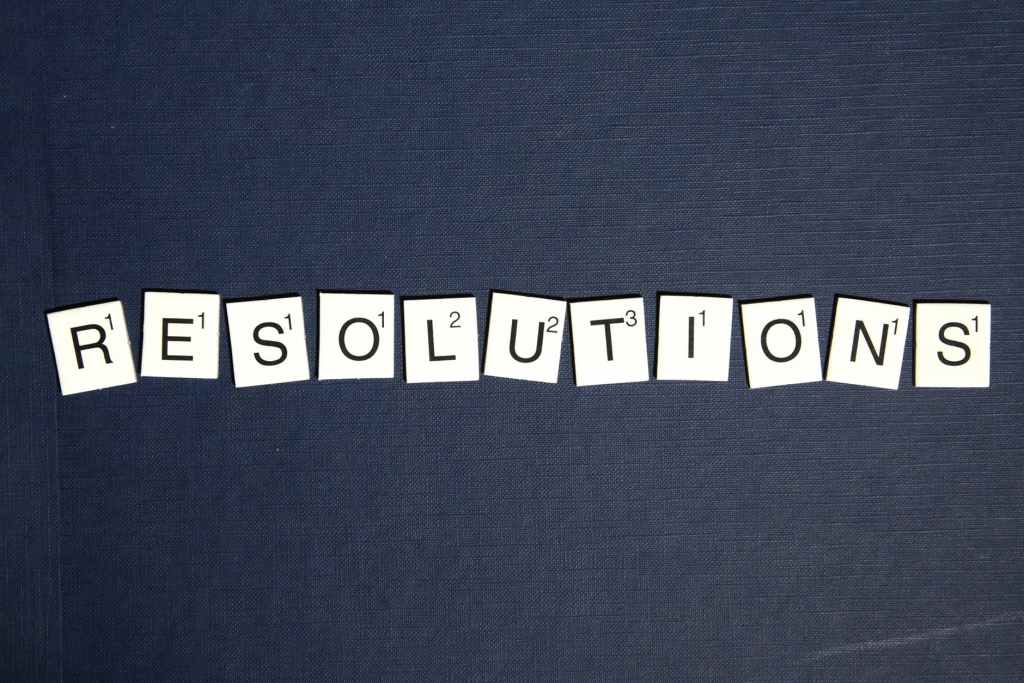
Steps to Successful Resolutions

It’s that time of year again, the end of the year that is, when people consider making New Year’s Resolutions. The changing of the calendar is often seen as a time to install new habits and behaviors, but the rub is that it rarely works. The web site, Discover Happy Habits breaks down the rather depressing numbers:

According to a 2016 study, of the 41% of Americans who make New Year’s resolutions, by the end of the year only 9% feel they are successful in keeping them.

Part of the problem is that the initial enthusiasm for the resolution fades over time. However, the article also shares many other reasons they fail:

  • In one 2014 study, 35% of participants who failed their New Year’s Resolutions said they had unrealistic goals.
  • 33% of participants who failed didn’t keep track of their progress.
  • 23% forgot about their resolutions.
  • About one in 10 people who failed said they made too many resolutions.
Photo by Breakingpic on Pexels.com

Should we simply abandon the practice of making resolutions? Probably not. After all, if there is something in your life you want to change, it is important to start at a specific point. However, one cannot rely on willpower or excitement alone to make it work. To help make a change stick, the article shares four success tips.

The first tip is to develop the necessary skills and mindset ahead of time:

Multiple studies have shown that self‐efficacy and readiness to change predicted positive outcomes for those who made New Year’s resolutions.

Having the skills necessary to change was another important factor.

Conversely, social support and behavioral skills were not predictors of a successful outcome.

In another study, men achieved their goal 22% more often when they engaged in goal setting and set their New Year’s resolutions in terms of small and measurable goals such as “lose 1 pound a week” instead of “lose weight”.

Read the other tips and then put them into practice to help you succeed.

Happy 2023!

Avoiding Procrastination Regret

Have you ever put off doing something? Of course, you have!

However, have you ever put off doing something for a long time, years even? Perhaps it is taking that dream vacation, or switching careers, making a commitment to exercise, or telling that special someone you love them? If we wait too long to try new things or take risks, this procrastination can lead to regret. How do we avoid it?

On his blog, Darious Foroux recently shared his thoughts on procrastination.

We all know that putting off our dreams for one week turns into a month, then into a year, and then into decades, and finally, we die with regret.

If that sounds harsh, it’s because it is harsh. When you keep procrastinating you become one of those people who never do what they say. 

How do we change our behavior to avoid regret? Foroux offers ten behaviors that challenge us to keep moving forward. The first one is stay curious.

Never stop getting excited about doing new things. If you let your curiosity drive you, you will never run out of motivation and inspiration.

Along with curiosity, he advises us to never stop learning.

Your curiosity will lead you to new topics, challenges, goals, and desires. To achieve those things, we need to learn more. When you do that every day, you keep making progress.

Review the other eight on his blog, then see if they can help you avoid the regret of prolonged procrastination.

When Was Your Last Weekly Review?

Life comes at us quickly. As we deal with all the input and projects throughout the week, it is important to dedicate time to regaining a lay of the land. The best way to do so is the Weekly Review.

The Weekly Review is a GTD staple. In fact, David Allen has repeatedly stressed that the review is one of the most important things a knowledge worker can do to stay current and focused. To help practitioners, he had created a guided Weekly Review on his website. The video comes with the following note:

Experience what David Allen calls the “critical success factor” with GTD, by going through a complete GTD Weekly Review. You’ll get a taste of all 11 steps of the process, with helpful advice along the way. Please note that this recording has not been edited to remove the several minutes of silence for you to do each of the 11 parts of the review.

David has repeatedly stressed that the Weekly Review is a “critical success factor” to engrain a GTD practice. What does it involve? The first step is to Get Current:

GET CLEAR
COLLECT LOOSE PAPERS AND MATERIALS
Gather all accumulated business cards, receipts, and miscellaneous paper-based materials into your in-tray.
GET “IN” TO ZERO
Process completely all outstanding paper materials, journal and meeting notes, voicemails, dictation, and emails.
EMPTY YOUR HEAD
Put in writing and process any uncaptured new projects, action items, waiting fors, someday/maybes, etc.

Read the rest of the article to learn about the other two steps.

If you haven’t done a Weekly Review recently, I encourage you to do so at your earliest opportunity. The clarity that comes from a thorough examination of all your open loops and commitments is time well spent. The result will be more items accomplished with less stress. Now who wouldn’t want that?

Thriving in Uncertainty

With all the rapid changes happening around us, it seems like the only certainty is more uncertainty. While some enjoy the chaos, the everchanging landscape makes it hard to set worthwhile goals that can be realistically achieved. Rather than give up, is there a way to cope with uncertainty?

Tiago Forte explores this question in a recent post on this website titled How to Thrive in a World of Uncertainty. It is part of his exploration of the concept of 12 Favorite Problems. In this piece, he shares an important shift to our thinking that makes all the difference.

Goal-setting was once central to our conception of what it means to navigate the future successfully. But goals can no longer serve as guides to an unfolding future that we have so little control over.

But this doesn’t mean that we have to throw up our hands in defeat. It doesn’t mean there’s nothing we can do to influence our fate. It just requires us to make a shift from leading with goals to leading with questions

What does he mean by this? In essence, he proposes a way to embrace the uncertainty and use it as a force for creativity and accomplishment.

Questions ask you to start with what you don’t know but would like to discover. They draw in others to pitch in and make their own contributions. They serve as open invitations to collaborative projects, versus the solitary path of individualistic achievement envisioned by goals.

In a world of uncertainty, questions are more powerful than answers. Answers serve you for a season, but a question lasts forever.

Read the posting to learn more about this shift in perspective, including three values proposed by physicist Richard Feynman that can make the transition smoother and more enjoyable.