Censorship Battles in Public Libraries

Across the country libraries have seen an increase in book challenges, especially around race relations and LGBTQ-themed books. While these sorts of challenges have always been part of the landscape, during the past year they have intensified. The ALA Office of Intellectual Freedom recently reported that challenges quadrupled in 2021. The office also keeps a list of the top ten most recently challenged books on its web site.

An example of how this struggle is happening is encapsulated in a recent story about the Citrus County Library System and a battle by activists to get a seat on its Advisory Board. The Tampa Bay Times reported on the story of the battle that started over a small Pride Month display.

The yearly LGBTQ Pride Month display in the Citrus County library went largely unnoticed until 2021.

But last year, the small array of LGBTQ-themed books surrounded by rainbow hearts and signs saying “love is love” became a point of contention that has expanded into a larger partisan battle, pushed by the fringes of the conservative movement, over censorship and children’s education.

Last month, the library’s advisory board was inundated with candidates trying to replace five of the nine sitting board members. It was the first time the board, which does not control the content on the library shelves, had seen such interest.

Read the full story on the Tampa Bay Times web site.

Leading Your Team to Productivity

Back at this year’s Florida Library Association annual conference, the FLA Professional Development Committee released a video highlighting productivity practices, tips and tricks from three leaders in the library field. I was included along with Dr. Leo Lo, Dean and Professor of the College of University Libraries and Learning Services and Dr. Vanessa Reyes, Assistant Professor for the School of Information at the University of South Florida.

I was interviewed by Amy Harris, Instruction & Assessment Librarian at Saint Leo University. During my portion of the presentation, I discussed the basic principle of GTD and how to apply them in the workplace.

The full video can be found on YouTube.

Director’s Dialogue – A Public Libraries Podcast

The PLA Leadership Development Committee is always looking for ways to bring value to library workers across the profession. Earlier this year, the committee developed an idea to do a podcast series where current Public Library Directors would have a casual conversation about their work and offer insights into the profession. This led to the creation of a new Public Libraries podcast special edition episode called Director’s Dialogue.

The inaugural episode featured me and Kent Oliver, who recently retired as chief executive of the Nashville Public Library. Future episodes will aim to provide a diverse cross section of library leaders from both large and small systems.

The description for the twenty-minute episode was as follows:

From leadership and management matters to current public library hot topics to strategic planning, capital projects, collection development, program planning, and so much more, the Directors Dialogue episodes aim to share ideas, best practices, and lessons learned.

Both are also members of the PLA Leadership Development Committee and the idea for the Library Directors Conversation series came out of their committee discussions.

Listen online or through your favorite podcast app and watch for more episodes later this year.

Unite Against Book Bans

Across the country attacks on the freedom to read have multiplied. While there have always been attempts to remove books from library shelves, this time the movement is more organized and widespread. Most of the targeted items are children’s material covering LQBTQIA+ information and race relations, such as Black Lives Matter.

The American Library Association stands at the forefront to protect the right to read. For years they have tracked book challenges and compiled the top ten list of targeted titles. With the threat rising, they recently started a campaign called Unite Against Book Bans. The site contains the results of a nationwide poll that clearly shows book banners are a minority.

On both sides of the aisle, large majorities of voters and parents oppose book bans. 71% of voters oppose efforts to remove books from public libraries. 67% of voters oppose efforts to remove books from school libraries. And yet, attempts to ban books from libraries are rising at an unprecedented level across the country. The American Library Association reported more than 729 attempted bans of 1,597 individual books in 2021 alone.

Join the campaign to preserve the right to read and fight book bans. It is as simple as signing up through the ALA’s campaign page. The web site also includes an action kit and ways your organization can partner with the movement.

Don’t let a small minority ban books from our library shelves. Join the cause and unite against book bans.

Interview with Lessa Kanani’opua Pelayo-Lozada

I had the honor of interviewing incoming ALA President Lessa Kanani’opua Pelayo-Lozada. The interview is available to read at Public Libraries Online.

Working out of her home base as the Adult Services Assistant Manager at the Palos Verdes Library District in Southern California, Lessa has been deeply involved with ALA for many years. Given the huge responsibilities and time commitment, I asked what inspired her to run for ALA President.

The idea of becoming President stuck in my mind because when I was in Emerging Leaders, my group said I was going to be ALA president someday although I’m not sure I agreed then. When I was on the Executive Board and started doing work for the Steering Committee on Organizational Effectiveness (SCOE) it was a labor of love, and a lot of work. I saw how much I cared about the Association, but it also showed me how much others cared about it too. I saw the difference that ALA made not only in personal lives, but in libraries and other Associations across the country. When I was finishing my executive board term, and SCOE was coming to an end, it was right when the pandemic hit. Calls for nominations for ALA president were being solicited. I wasn’t finished with this work and wanted to continue to completion to see those changes. I don’t want to just drop it into someone else’s lap. I want to take responsibility and help the management and cultural changes going on in ALA, and as a society as a whole. That’s how I got here today.

Later in our conversation, she shared her list of the most important issues facing libraries today.

I think our biggest issues include ensuring that ALA continues its mission to preserve and strengthen library services through technical assistance, professional development, and direct funding for libraries and library practitioners. What that looks like on a practical level is how we support library workers right now. We’ve gone through a lot of trauma, regardless of the type of library you’ve worked in. As library workers and as people, figuring out what that support and advocacy for library workers looks like is one of the biggest issues. ALA can utilize its 501c6 arm, the ALA-Allied Professional Association, to carry out this mission. As ALA, one of the biggest issues right now is also supporting those who are facing intellectual freedom challenges. We must work against those challenges with a concerted effort. ALA recently launched Unite Against Book Bans, and is rolling out tool kits. We’re seeing support from our Office for Intellectual Freedom helping those on the front lines. Finally, there’s lots of different ways that folks can use their skills, time, and dollars. I think it’s important to remind folks of the value of ALA membership and how it affects libraries across the nation.

Read the rest of the interview to learn about her Presidential plans, the value of an ALA membership, and what she believes are the biggest opportunities for libraries of all types.

Thank you to Public Libraries Online for posting the conversation.

Libraries Can Really Change the Future – Interview with Susan Benton

In February I had the honor of sitting down with Susan Benton, President/CEO of the Urban Libraries Council (ULC). Susan is retiring this summer after thirteen years of service at ULC. Before she left, I wanted to learn more about her tenure at ULC and her thoughts on the challenges facing, and future of, public libraries. The full conversation is posted at Public Libraries Online. Here is an excerpt from that interview.

DC: How has ULC changed under your leadership both internally and also in terms of its relationship with members?

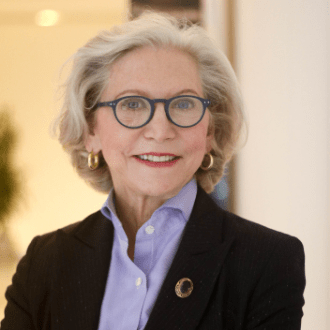
Susan Benton

SB: When I first joined ULC, we had a very small staff and were located in Chicago. We made the move in 2014 to Washington D.C. which was important for us. While some thought ULC moved to Washington to lobby on Capitol Hill, we moved to D.C. so that we could be closer to allied organizations that are important to libraries. The work that ULC is doing to transform the lives of people in our cities and counties requires us to work with organizations here in Washington D.C., such as the National League of Cities, National Association of Counties, the Council of the Great City Schools, the Council of Large Public Housing Authorities and others. They are truly sister organizations with very similar missions to ULC. We now connect with them to extend our work. The move helped us take a stronger position for urban libraries. We are constantly in conversations with colleagues in the public sector and private sector so that we can educate others about the essential contributions of libraries to all aspects of life. 

Read the rest of the article on the Public Libraries Online web site.

Finding Your Leadership Pathway – a PLA PreConference

Are you planning to attend the Public Library Association Conference in Portland OR or live in the vicinity? If so, why not brush up on your leadership skills by joining me and a team of great leaders for a full day pre-conference session, Finding Your Leadership Pathway.

Our presenters include:

  • Lynn Hoffman, Director of Operations, Somerset County Library System of New Jersey
  • Isaiah West, Teen Services Specialist, Prince George’s County Memorial Library System
  • Derek Wolfgram, Library Director, Redwood City Public Library
  • Douglas Crane, Director, Palm Beach County Library System

This full day event is happening on Tues. March 22, 9 am to 5 pm, at the convention center.

What to know what is in store? Read on!

Public libraries offer multiple pathways to leadership. From team supervision to directorship, and from small municipal and rural libraries to large multi-site systems, the array of options create a rich leadership landscape for public library careers. Join current and prospective leaders at all levels to share in a day of exploration, self-reflection, and networking, all focused on helping you map out your own career development journey. In addition to having ample opportunities for interaction with other participants, you’ll also hear from over a dozen diverse leaders as they talk about their own varied experiences throughout the day.

Outcome OneState their leadership value and identify the strengths they can put to the most effective use now and in the future;
Outcome TwoCommunicate with stakeholders and powerfully advocate for change within their organizations, employing strategies to make their voice heard at all levels of leadership; and
Outcome ThreeCreate a plan for sustained action that exemplifies their commitment to maintaining and building on their leadership practice

Register for the PLA Conference and add on this event for an additional charge. Lunch is included.

I hope to see you there!

Book Bans on the Rise

In the past year, book challenges have been on the rise. It is not unusual for school and public libraries to have people contest items in the collection. In fact every year the American Library Association shares a list of the top ten most challenged books. Librarians have established procedures in place to address complaints along with collection policies to support them.

However, the recent wave of book challenges in schools and public libraries is a new breed of challenge. In a recent article by Valerie Strauss in the Washington Post titled This wave of book bans is different from earlier ones, she points out there is a particular subject matter in contention.

Now we are seeing a new wave of book bans, marked by an unprecedented number of challenges and intense polarization. Its focus: narrowing the universe of information in schools and public libraries that might challenge young people on race and gender — the same issues at the center of the political and cultural wars ripping through the country.

Photo by Pixabay on Pexels.com

What makes this round also different is that there appears to be a greater national coordination on messaging and the books being challenged.

Advocacy groups are working to nationalize book challenges, this time with the help of conservative TV and talk shows, that for the past few decades have been mostly local events. Some state legislators are threatening punitive action against anyone in schools or libraries who spreads material deemed obscene or harmful to minors. And now students, parents, librarians and school boards are fighting back, calling the push censorship.

Read the full article on the Washington Post web site.

Gazing into the Crystal Ball

2021 proved to be a very unpredictable year. Between the pandemic, political uncertainty, and economic challenges we never knew what would happen next. Still, everyone must plan for the future, including Library Directors and CEOs. So, what are these leaders focusing on with the new year?

In a recent survey I conducted of Urban Library Council members, I asked Directors to share their top concerns for 2022. The results were published in an article on the Public Libraries Online web site. The group reported focusing on a broad range of topics, but far and away the largest was COVID and its fallout.

The pandemic upended the library’s relationship with patrons. Between limited hours, uncertain access to buildings and safety concerns about virus spread, patterns of use changed dramatically. Libraries have seen a drop in visitors that has not reverted back to pre-pandemic levels. A Canadian library director listed a number of possible reasons including:

“The continued effects of the pandemic including changing customer behaviors, hesitancy to frequent public spaces, mental health issues, impact on loss of learning due to school closures, and the shift to online.”

Related to the pandemic were concerns about budgets due to a violate economy.

Several directors commented that their infrastructure is in need of repair and upgrading. However, funding for capital projects is running up against tight operating margins. For example, a California library director shared the following about their system.

“This may not be the case for every library system but over half of our branches are too small and well beyond their normal useful life. There is a high amount of deferred maintenance and insufficient funding resulting in increased deterioration of buildings.”

Explore more thoughts from public library leaders on their top concerns for 2022 at the Public Libraries Online web site.