6 Ways to Be More Productive

What do experts in efficiency say are the best ways to be productive?

Journalist Emily Laurence reached out to productivity coaches to learn what they recommend to their clients. She summed up her findings in a recent article in GQ magazine titled 6 Ways to Be More Productive and Actually Get Stuff Done. The first piece of advice was to prioritize what needs to be done.

Productivity coach Juli Shulem says that there’s one word she repeatedly hears from all her clients: overwhelmed. When it comes to being more productive, she says that the biggest roadblock is that most people have no idea where to start. So instead of doing anything, they’re paralyzed and do nothing. Can you relate?

Photo by Pixabay on Pexels.com

So how does one decide where to start? The coach offered this advice.

Shulem says the first step to being productive is getting on paper everything you need to do. This includes both tasks that are immediate and need to be done that day as well as what eventually needs to be done. For big “to-dos” that are farther out, Shulem recommends breaking it down into smaller micro tasks. For example, if you have a big work presentation in three weeks, the micro-tasks could be research, building your deck, and doing a run-through of exactly what you’re going to say.

To learn the other five ways to be more productive, please read the rest of the article.

Three Reasons to Call a Meeting

You may have heard the not so old saying: “That was another meeting that could have been an email.”

People detest meetings when they feel unproductive. This is especially true when the reason for calling the meeting is unclear. Based on my experience, there are three major reasons to call a meeting that will keep participants engaged and come to productive conclusions.

1/ Sharing Important Information

Sharing information is a base-line function of all meetings. However, face-to-face is very useful for these types of situations:

  • Sharing Important/Timely News – Sometimes breaking news must be shared with everyone together at the same time. For example, when an organization is set to issue a controversial press release a quick all hands-on deck meeting may be the fastest way to inform the team in advance and at the same time.
  • Immediate Q&A – Instead of letting confusion linger, questions about an important or complicated topic can be quickly addressed in a face-to-face meeting. Answers are heard by the entire team at the same time, avoiding repetition.
  • The “Look Them in the Eyes” Factor – Whenever there is bad or sad news to share or an apology
    to be issued, doing so in person conveys respect for the team.

2/ Making a Presentation

While presentation can be sent by email, something might be lost without a presenter to emphasize or clarify items. Presenting in person can improve comprehension and increase engagement in the material. Types of presentations best suited for face-to-face meetings include:

  • Complicated Items – Presentations can break down complex subjects for easier understanding. In a live situation, the presenter can adjust on the fly to match audience’s perceived understanding and level of engagement.
  • Clear up Misunderstandings – Presenters can address questions as they come up, allowing the whole group to benefit while the topic is fresh in their minds.
  • Swaying Opinion – If people need to be convinced on a course of action, face-to-face “sales” type
    presentations are preferred. In this format, a presenter is able to access a wide range of public speaking tools to make their case for a course of action.

3/ Facilitating Discussion

Bringing people together creates an opportunity to dive deeply into a topic that non-
synchronized formats cannot duplicate. Talking together in the same room can be very stimulating and help build up a team. Examples of meetings designed for discussion include:

  • Problem Solving – Coming together in person is often the fastest way to solve a problem. Teammates share different viewpoints and build on each other’s ideas. This can develop innovative ways to resolve issues that could not be thought of individually.
  • Strategic Visioning – Bringing together people from different parts of the organization for long-
    range planning meeting is a beneficial exercise. Small-scale, in-person discussions can surface facts or concerns from across the organization.
  • Finding Consensus – When a critical decision must be made, face-to-face discussions can be
    the fastest way to get the team into agreement. An open discussion allows all parties to share
    their concerns and increase the potential to come to a meaningful decision.

If you are considering calling a meeting think about whether it falls into one of these three reasons. Otherwise, start drafting that email.

What Does “Organized” Mean?

Have you ever said to yourself that you need to get organized?

It is common for people after looking at the mess covering their desks to want better organization in their spaces. However, very few stop to ask an important question: what does it mean to be organized?

Does it require fancy software? Do you need high priced planners and office supplies? Does it mean throwing everything out and keeping almost nothing? Or none of the above?

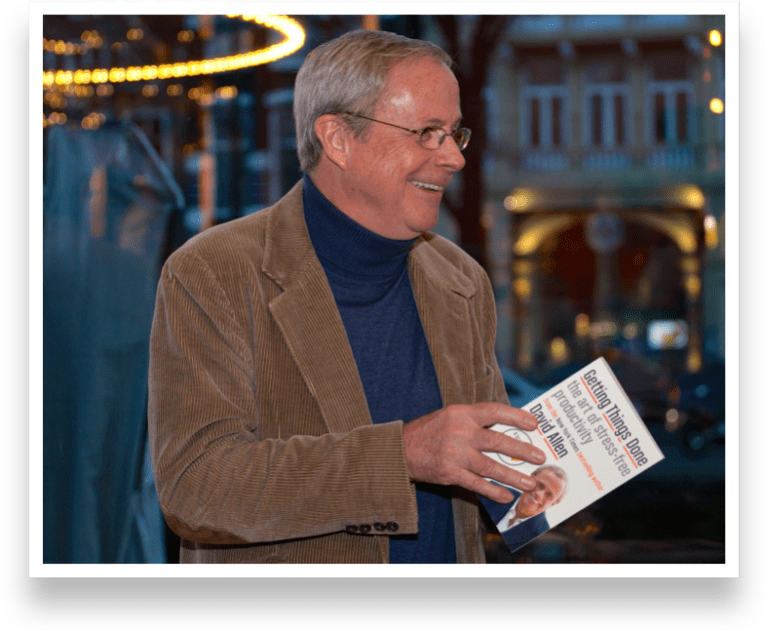
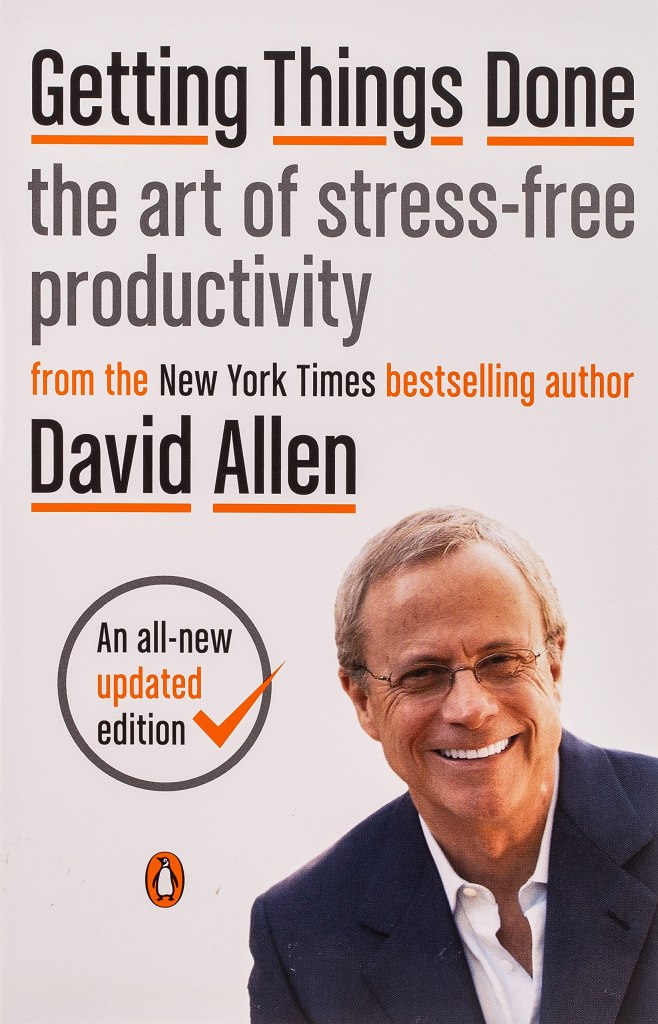
Not surprisingly, David Allen of Getting Things Done fame has thought deeply about what it means to be organized. He even has a simple definition which he shared in a recent article on the GTD website.

You are disorganized if you need something somewhere that you don’t have or have something somewhere that you don’t need. 

David then shares a fun challenge that he does with audiences.

An exercise I’ve done in my seminars is to have everyone reach into their purses or wallets and get something that doesn’t belong there permanently, and which has been there longer than a few hours (besides money). Almost all have at least one thing in that category—a receipt, a business card, a scrap of paper with scribbled notes, an old parking ticket. These are things whose location does not map to their meaning to the person who has them. If the item has no further usefulness, it is trash, but it’s not in the trash. Often it is something they need to store somewhere else—it is reference, but it’s not appropriately accessible as such. Sometimes it’s something that they need to do something about, but it is not in a place to remind them to do it. There is lack of coherence between what the thing is and where it is.

So how does one decide what items should go where? David created a cheat list to decide what to do with any item. Here are a few examples.

  • I don’t need or want it = trash
  • I still need to decide what this means to me = in-tray item
  • I might need to know this information = reference
  • I use it = equipment and supplies

To see the rest of the list, please read the entire article on the Getting Things Done website.

Avoid Enormous Emails

Have you ever opened an email and found it to be the size of a short novel? Did it make you want to close it up and not read a word? Now have you ever sent one of those emails?

Sending enormous emails is not ideal. Email works best when it is brief and to the point. Earlier this year I wrote on an article on my website about email etiquette. In that piece, I shared several tips on how to craft your messages to avoid the enormous emails problem. Below is that section from the article.

Well, there is no hard and fast rule on the maximum length of an email, there are general guidelines based on purpose, content, and preferences of your audience.

Photo by Vlada Karpovich on Pexels.com
  1. Brevity is Key: Aim to be clear and concise in your communication. Most people appreciate emails that get to the point without unnecessary details. If you have multiple topics to discuss, consider breaking them into separate emails. This helps the recipient to absorb information more easily.
  2. Use Paragraphs and Bullets: Organize your content into short paragraphs and use bullet points to make the text easy to scan for recipients to grasp the key points quickly.
  3. Avoid Information Overload: Too much information in a single email can be overwhelming. Focus on the most important details and provide additional information or attachments if needed.
  4. Effective Use of Hyperlinks: Instead of including lengthy information within the email, use hyperlinks to direct recipients to additional resources or details.
  5. Closing and Call to Action: Clearly state your closing remarks and any necessary calls to action. Be specific about what you expect from the recipient if any action is required.
  6. Proofread and Edit: Before sending, review your email for unnecessary information or repetitive content. Edit for clarity and brevity.

One final point. If you need to share large amounts of information through email, consider sending it as an attachment. Whether as a Word of PDF document, it is easier for the recipient to open the information in a more readable application and print out cleanly if needed.

To learn more about effective email etiquette, please read the rest of the article on the Efficient Librarian website.

Overcoming the Forgetting Curve

Take a moment to remember the last time you attended a seminar or training class. Whether it was last week or a month ago, I am guessing that unless you took extensive notes most of the information from the class is now forgotten. Does that mean you are a bad student or have a faulty memory? No, it just means you are on the downward slope of the Forgetting Curve.

Lindsey Ellefson, editor for the website Lifehacker, wrote an article that shared ways to overcome the Forgetting Curve. First, she described what is meant by this phenomenon.

It seems like common sense that the longer you go without retrieving a memory, the harder it is to retrieve—but it wasn’t always one of those things we simply knew to be true. In the 1880s, German psychologist Hermann Ebbinghaus studied the phenomenon and published his findings, giving the world the Ebbinghaus Forgetting Curve. The curve is a simple graphic demonstrating how information is lost over time, but it proved that time-related forgetting is real (and has been reaffirmed by further study since).

Photo by Craig Adderley on Pexels.com

Is it inevitable to forget? Not entirely. There are specific practices that can be done to overcome the Forgetting Curve. The first is a simple approach called Spaced Repetition.

Basically, you need to study the material multiple times, giving yourself space between each review. The amount of time you go without studying the material depends largely on how well you’re already remembering it, which means the longer you review, the longer the periods between each review should be. Reviewing your class notes for a difficult class should be done more frequently than reviewing the notes for a class where you really get the concepts, for instance.

To learn more about ways to overcome the Forgetting Curve, please read the rest of the article on the Lifehacker website.

David Allen – Principles that Make Teams Work

How do highly productive teams come about? Are there underlying ideas that make them successful?

In their new book, Team, David Allen and cowriter Edward Lamont explore how GTD can be used to improve teamwork. They start with looking at the underlying principles, which they consider akin to fundamental laws, that allow for productive work amongst team members. (pg. 66) David and Edward identify five specific principles (pg. 67):

  • Clarity
  • Sufficient Trust
  • Open Communication
  • Learning
  • Diversity

To understand these principles, it is helpful to explore one in more detail. Starting with clarity, David and Edward break down why it this principle is important.

A team needs clarity on purpose and direction. A team is defined by its purpose and most effectively operates using well-defined standards and processes. … without it, there is confusion about who’s responsible for what and who needs to be informed about it, as well as the risk of double work and eating up the attention of people who don’t need to know. Implicit here is clarity of ownership. There always needs to be one person to go to, inside or outside the organization, when clarity is needed on a problem or situation that involves the team. (pg. 68)

David and Edward also believe that clarity is important for the psychological health of the team. For them, clarity provides clear knowledge of the team’s current situation.

One of the big wins in terms of clarity is knowing – and accepting – how much the team is already trying to do, and having some view on whether it is humanly possible to achieve it. (pg. 69)

Pick up a copy of Team to learn more about clarity and the other four principles of teamwork.

The Super Productivity Stack

What are the optimum conditions for worthwhile productivity?

Studies of how people build success in reaching their goals and getting things done have found that a state of “Flow” is often involved. In an article on his website, Darius Foroux shares a brief discussion of the concept.

In my experience, you do your best work when you’re in a good mood and you’re focused. You can also look at it as being a state of “Flow,” which is a term the psychologist Mihaly Csikszentmihalyi coined in a book with the same title. It’s one of the best tools for productivity.

It’s that state of mind where you’re completely immersed in the task at hand and you lose track of time. You simply feel a deep sense of focus and satisfaction at being productive. 

Many people experience “Flow” accidentally when they happen upon a project they enjoy doing. However, it is possible to create conditions to enhance the probability of “Flow” appearing. Foroux mentions several factors that help, the first two are:

  1. Start your day with purpose: Begin each morning by setting a clear intention for what you want to achieve. This clarity will drive your actions and keep you focused.
  2. Simplify your workspace: A clutter-free environment leads to a clutter-free mind. Organize your workspace to foster creativity and productivity.

Foroux recommends partnering a state of “Flow” with a specific strategy known as Pomodoro. It is a way of structuring time by spending 25 minutes on a specific work and then taking a 5 minute break and then repeating throughout the day. He believes this is the key to success.

What makes both Pomodoro and Flowtime work well is the fact that they make you work with full concentration so you can finish your tasks quickly.

The goal is to divide your tasks into periods where you can fully concentrate. So you can do your work faster.

Read the entire article on Foroux’s website and see if this approach works for you.

Scintillating Subject Lines

In January 2024, I presented a new webinar called Effective Email Etiquette. It was designed to highlight best practices for all aspects of email communications. In this post I’ll look back at the tips on how to make effective subject lines.

Photo by Mikhail Nilov on Pexels.com

A well-crafted subject line is crucial for getting your email noticed and read. To that end, there are simple rules to follow regarding subject lines.

  1. Be Clear and Specific: Clearly convey the purpose or main topic of your email. Avoid ambiguity to ensure the recipient understands the content. Aim for brevity to make it easy for the recipient to quickly grasp the essence of the email. Most people receive numerous emails, so concise subject lines are more likely to be read.
  2. Use Action Words: Incorporate action verbs that prompt the recipient to take a specific action or convey a sense of urgency. If there’s a time-sensitive element to your email, mention it in the subject line. However, be honest and avoid overusing urgency, as it can lead to fatigue.
  3. Personalize When Possible: Include the recipient’s name or reference specific details related to your relationship or previous interactions. Personalization makes email stand out and feel more relevant to the recipient.
  4. Highlight Benefits or Value: If your email offers value or benefits to the recipient, mention this in the subject line. Conveying the value of the email can increase the likelihood of it being opened.
  5. Be Mindful of Tone: Match the tone of your subject line to the nature of the email and your relationship with the recipient. Avoid overly formal or informal language unless it aligns with the context. Writing in all caps or using excessive punctuation can make your email appear unprofessional or overly urgent. Use proper capitalization and punctuation for a polished look.
  6. Consider Mobile Users: Many people check emails on mobile devices, so ensure your subject line is mobile-friendly and not too long.

Remember that an effective subject line can significantly impact the success of your email communication by having it more likely to be opened. Therefore, it is well worth the effort to put in an eye-catching subject line.

To see all of the effective email tips, please read the article accompanying the webinar.

David Allen’s New Book – Team

The GTD methodology has been out in the world for over 25 years. Millions of people have used it to better organize their work and get more done. However, one challenge people often face is being the only person in their office applying GTD. It can be hard to keep up a successful system when everyone else is doing their work less productively. Aside from trying to get everyone to commit to it personally, can it be scaled to teams?

David Allen and co-writer Edward Lamont believe that it can, with their new book, Team: Getting Things Done with Others. As shared on the book jacket:

By building on the effectiveness of what GTD does for individuals, Team will offer a better way of working in an organization, while simultaneously nourishing a culture that allows individuals’ skills to flourish. Using case studies from some of the world’s largest and most successful companies, Team shows how leaders have employed the principles of team productivity to improve communication, enable effective execution, and reduce stress on team members. These principles are increasingly important in the post-pandemic workplace, where the very nature of how people work together has changed so dramatically.

Over the next few months, I will share teachings from Team. Today I’ll start with a tease of their discussion of moving from one person to a group, which involves a different approach to work.

At a team level, we see the equivalent of “mind like water” to be something we’ve come to describe as “healthy high performance.” This is a way of working together that is not just able to keep pace with, or outrun, the competition, but to do it in a way that is sustainable – fun, even – over the longer term.

With this approach they are aiming to share ways for teams to be successful both in terms of their work goals and also to be healthy in mind, body, and spirit. Stay tuned over the next few months to learn the specific techniques to achieve it.

If you don’t want to wait, get your copy of Team: Getting Things Done with Others and read ahead.