We’re All Alone in this Together

Organizations that are able to form reliable teams tend to accomplish more goals and provide better internal and external customer service. However, there is an unspoken tension around teams. In order for them to work effectively, everyone has to know their assignment. The distribution of work needs to be clear otherwise important items fall through the cracks.

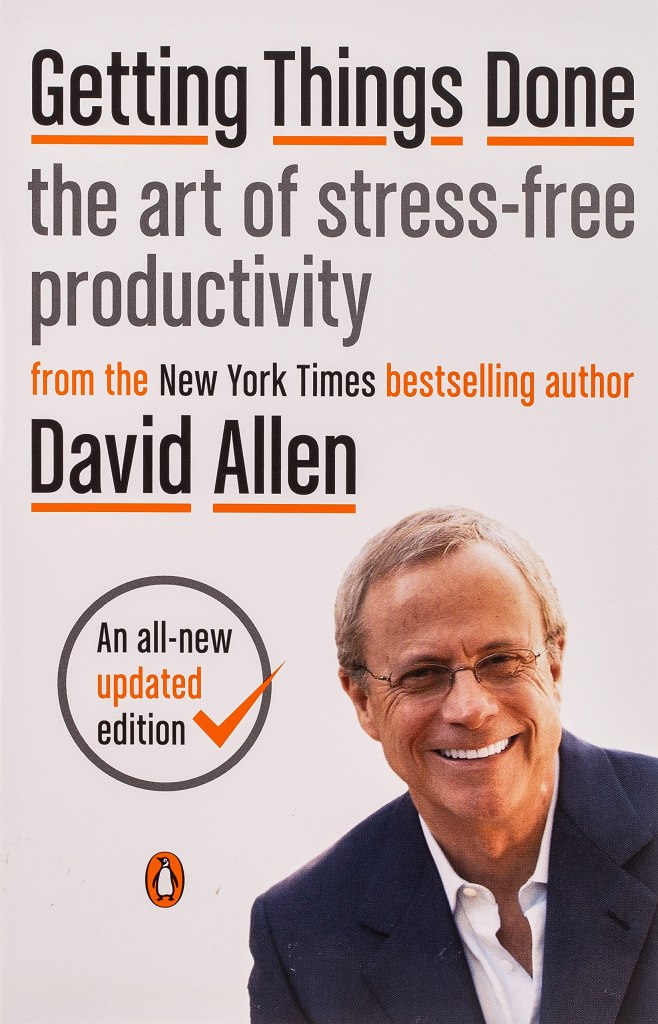
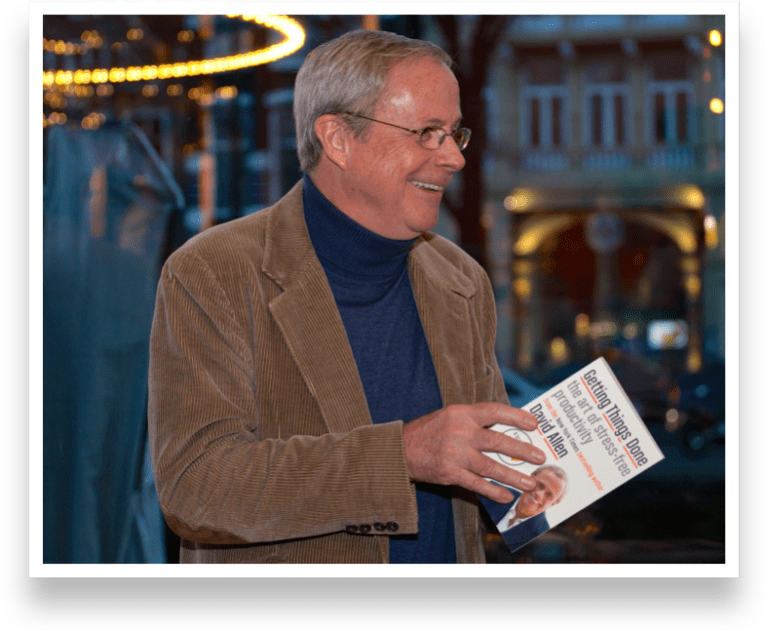
David Allen has explored the intersection of personal productivity and teamwork. In a recent blog post he notes the following:

Have you discovered yet that no matter how big the button is that says “TEAM” you’re wearing at the conference, nobody’s on yours?! That in order to get done what you have to get done, there aren’t a lot of people at your beck and call, making sure your specific actions and projects happen? Ever have the feeling that you’ve got to hold on for dear life to your own projects and outcomes, against the hurricane of events and other people trying to get their world defined and done?

Later in the post, David considers the reason why teams fail to clarify their work.

Problem is most of us never had training or experience in dealing with that syndrome efficiently and effectively. We grew up in a world where you just went to work, and the work to be done was visible and obvious.

What is the solution to this problem? It could be as simple as acknowledging our struggles.

The best teams and relationships, from my experience, are the ones in which the players all acknowledge they’re each alone in the endeavor together. That’s when we can really experience team, and function as one.

Read the entire post on the Getting Things Done web site.

Do the Easy Stuff First?

Everyone likes to get a quick win. It would seem that disposing of small items would generate momentum to tackle larger work. However, does this tactic lead to lower productivity?

In an article on getpocket called Why Doing the Easy Parts of Your To-Do List First Can Be a Bad Idea, Stephanie Vozza argues that studies show that tackling the low hanging fruit first may dissuade you from attempting more meaningful work.

“In the short-term, the person could actually feel satisfied and less anxious,” says Maryam Kouchaki, associate professor of management and organizations at Kellogg School of Management at Northwestern University. “But avoiding hard tasks indefinitely also cuts off opportunities to learn and improve one’s skills.

Photo by Andrea Piacquadio on Pexels.com

Part of the problem with working on easy tasks is that they are often low value and procedural, making little impact on a person or organization’s larger goals.

Finishing tasks provides a sense of progress and makes us feel good. “We all have limited time and attention,” says Kouchaki. “In any moment, if you have a choice of doing an easy or difficult task, most of us tend to pick the easy task. Easier tasks are often quicker to complete, and they are more likely to be chosen first when people are busier. We call this ‘task completion preference.’”

The problem is that when you create a habit of choosing easier tasks over hard, you can impact your long-term productivity.

Read the full article on the getpocket web site.

Superhuman Email Management

Knowledge jobs of all types require quick communication. Despite the prevalence of chats, channels, and text, email remains the key way to share detailed information. This makes mastery of email an essential modern skill. The catch is that most people never received training on how to handle it effectively. Thankfully, there are easy to learn principles that make email processing effective and fun.

Tiago Forte first learned email management through GTD. From there he expanded on the practice to create a seamless system to completely process his inbox with ease and turn it into an enlightening high value experience. In a recent article on the Superhuman blog, Tiago spoke to Rahul Vohra at Superhuman for an article that highlights four steps to email mastery.

It starts with changing your perspective on email.

“The key to having a more positive outlook toward email is to nail the management,” says Tiago. “Anytime you don’t have a place for information to flow to, it will pile up, multiply, and become a problem.”

“The solution to having too many emails — and not knowing what to do with them — is not found in your inbox,” says Tiago. “You have to solve that problem elsewhere.”

Later on in the article, Tiago shares a key approach to reframing email, slowing down your reactivity.

“When someone sends you a message — especially a colleague, or someone senior to you — there’s a built-in feeling of urgency,” says Tiago. “But is that urgency real? What is the real expectation of this person?”

“Low reactivity is a spiritual discipline,” reveals Tiago. “Go slightly beyond your normal response time. If you normally respond within an hour, try to respond within a day.”

Discover the whole systematic approach to handling email at the Superhuman blog.

GTD Wisdom

David Allen’s insights into the nature of work and how we approach it can be career changing. That was certainly true for me. Below are a few classic David Allen quotes. I invite you to take time to ponder them. They may seem obvious at first, but on deeper reflection there is wisdom that may challenge the way your approach your daily tasks and long term goals. Enjoy!

“If you don’t pay appropriate attention to what has your attention, it will take more of your attention than it deserves.”

“Your mind is for having ideas, not holding them.”

“The big problem is that your mind keeps reminding you of things when you can’t do anything about them. It has no sense of past or future. That means that as soon as you tell yourself that you need to do something, and store it in your RAM, there’s a part of you that thinks you should be doing that something all the time.”

“Anything that causes you to overreact or under-react can control you, and often does.”

“You must use your mind to get things off your mind.”

“You don’t actually do a project; you can only do action steps related to it. When enough of the right action steps have been taken, some situation will have been created that matches your initial picture of the outcome closely enough that you can call it “done.” The list of projects is the compilation of finish lines we put before us, to keep our next actions moving on all tracks appropriately”

“Things rarely get stuck because of lack of time. They get stuck because the doing of them has not been defined.”

“There are no problems, only projects.”

Are You Scared of Lists?

Do you like your lists?

Making lists is a standard time management tool designed to put everything that needs to be done front and center. However, many people have trouble using their lists effectively. Often the reason is that the items on the lists are too vague and thus difficult to act on. Other times lists may seem overwhelming because they are long and contain everything that needs to be done. Can we just trash lists and do something else instead to manage our affairs? Perhaps not.

David Allen is a huge proponent of using lists. He has a way to demystify them for maximum effectiveness. In a recent article on the Getting Things Done web site, David discusses why lists are often considered a dirty word.

You are either attracted or repelled by your lists and everything on them. There is no neutral territory. When you look at any one item you will either be thinking to yourself, “Hey, when can I mark THAT off?” or “Yuck! Back away!” My educated guess is that 98 per cent of people’s responses are some version of the latter.

Why? Because 1) they’re hard work and/or 2) they’re scary and/or 3) they’re disappointing.

After dissecting the reasons why lists frustrate people, he proceeds to provide ways to make better use of them. For example:

1) Make them complete, so your brain gets to graduate from the job of remembering; and organize your action reminders by context (phone, computer, errands, at home, etc.) so you only need to review what you actually can do at the time.

Read the other two ways to make lists more useful on the Getting Things Done web site.

Pay Yourself First and Do It With Time

If you have ever tried to save money for retirement, you might be familiar with the “pay yourself first” strategy. This approach recommends that people take the first portion of their pay check and set it aside for savings. The rationale behind this strategy is that we have so many opportunities to spend money that relying on leftovers at the end of a month will lead to little savings or none at all. While this approach works for money, does it work for time?

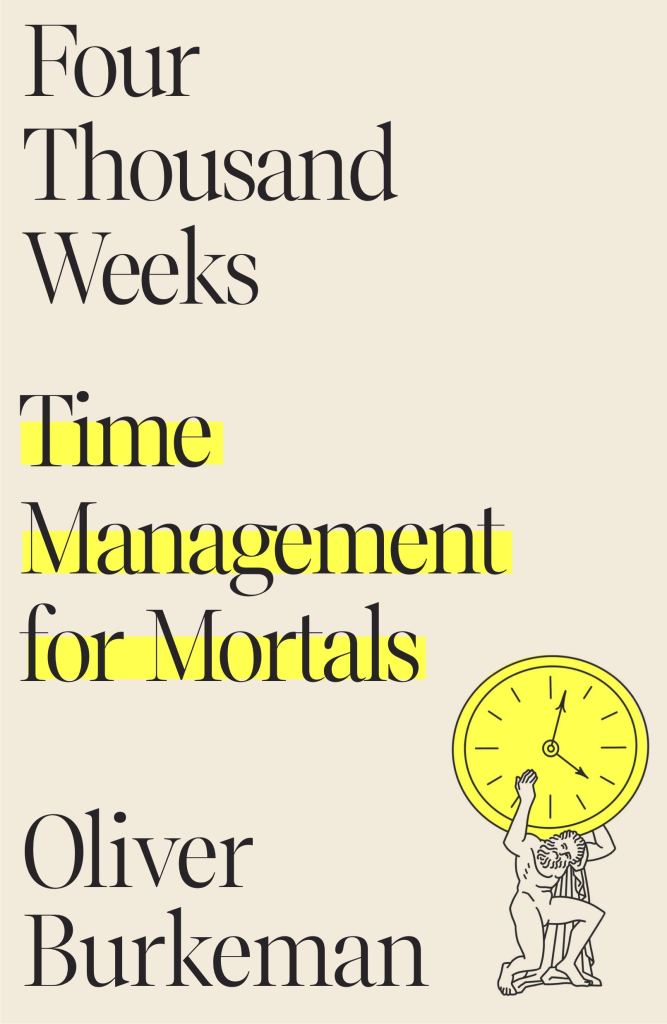
In his book Four Thousand Weeks: Time Management for Mortals, author Oliver Burkeman argues that many people spend their limited time on this earth doing things the feel they need to do, not what they want to do. As David Allen has long pointed out there is always more to do than we can ever do. If a person want to accomplish the things that matter most to them, their time must be preserved for those things. As he writes:

If you try to find time for your most valued activities by first dealing with all the other important demands on your time, in the hope that there’ll be some left over at the end, you’ll be disappointed. So if a certain activity really maters to you – a creative project, say, through it could just as easily be nurturing a relationship, or activism in the service of some cause – the only way to be sure it will happen is to do some if it today, no matter how little, no matter how many other genuinely big rocks may be begging for your attention. (pg 74)

Four Thousand Weeks

Now reflect on this question: what project or cause in your life do you want to give more attention to on a daily basis?

Once you know what it is dedicate a sacred time period each day to do it. Whether it is an hour in the morning to write that novel, or your lunch hour to attend a Toastmasters meeting to work on your public speaking, or even two nights a week to make phone calls to raise money for your favorite charity, these priorities only happen when you block off the time to do it.

So, how much time to do you want to pay yourself first?

Latest and Loudest

Do you ever fell like you are on a treadmill at work where things are coming in faster than they can be processed? It can be a frustrating experience to always feel like you stuck trying to catch up. This usually forces people into a situation where their focus falls to the latest and loudest item. Stuff might get done, but it feels unfulfilling.

In an email to GTD Connect members earlier this year, David Allen focused a whole column on what happens when people fall into this mode.

Driven by latest and loudest is a sub-optimal way to engage. You will likely be over- or under-reacting to the situation, subliminally knowing that there are many other things that should probably need to be considered in allocating your most precious resources (time and attention). You will complain about being the victim of unexpected interruptions created by an environment, situation, or people you can’t control.

When someone is caught in this situation the best way out is to find perspective. Taking time to step back to see the bigger picture is a great way to regain control. In GTD the primary way to do this is through the Weekly Review. Spending a couple of hours at the end of a work week to examine the current situation provides a breath of fresh air.

The basic principles of the review are to get clear, current, and creative. They are mapped out in a David Allen podcast, available for free on the GTD web site. It is a great way to learn how to do this simple yet powerful process. You can also download a free handout from GTD web site listing the steps.

Finally, while the latest and loudest may not always be the best thing to do, there are exceptions. As David wrote on his blog:

That said, whenever you did choose to handle whatever was latest and loudest, it may have been exactly the best thing to be doing, given the whole picture of your world. You may not have seen it that way.

Are We Too Busy?

How busy are you?

Often in America being seen as busy is a badge of honor. There is an assumption that we need to fill our days with as much work as possible. This formula can lead to extra stress and exhaustion.

The pandemic has given many people a chance to pause and reconsider their work day. In a recent article by Shayla Love on Vice, she notes how this unusual year has allowed many workers a chance for reflection.

The pandemic offered a rare window of opportunity for some people to become literally less busy, and perhaps more importantly, to get perspective on their cultural beliefs about busyness. Instead of being caught up in the inertia of always projecting a busy life, they had time to reflect on how they used busyness to define themselves—and how it led to stress and the conflation of productivity and self-worth.

Photo by energepic.com on Pexels.com

Later in the article, she explores the how people view business and happiness. It actually interferes with how they use their downtime. Looking at a recent study on the topic, Love notes:

But the paradox and masochism of busyness is also laid bare: the study found that while people aspire to be more like a busy person, they also consider the busy person to be less happy. An obsession with busyness also taints how people spend what little leisure time they have, … by wanting leisure to accomplish as much as possible in as little time as possible—called “productivity orientation.”

Read the rest of the article online at Vice.

Three Random Words

How many passwords do you have for all of your online accounts? 10, 100, 1000?

I calculated my own situation and found over 200 passwords on my list. Nowadays it seems that every web site you visit or service you use requires setting up an account with a password. On top of it, many sites have complex protocols, such as requiring numbers, capital letters, or special characters, which make those passwords hard to remember. Is it possible to find a simpler way to create passwords that are easy to remember, but hard to hack?

According to a recent article in The Guardian, science editor Robin McKie pointed to a recent study that claimed the best passwords are phrases composed of three random words. Her article begins:

It is much better to concoct passwords for online accounts that are made up of three random words as opposed to creating complex variations of letters, numbers and symbols, government experts have said.

In a blogpost, the National Cyber Security Centre (NCSC) – which is part of Government Communications Headquarters – said a three-word system creates passwords that are easy to remember. In addition, it creates unusual combinations of letters, which means the system is strong enough to keep online accounts secure from cyber criminals. By contrast, more complex passwords can be ineffective as their makeup can often be guessed by criminals using specialist software.

Photo by Pixabay on Pexels.com

Of course, many sites still have strict character requirements, but if this idea is true, we can all move away from odd rambling passwords composed of letters or numbers that are impossible to remember. Instead you can go with such combinations as: Tree-Car-Garlic; Rose-Titanic-Algae; River-Doughnut-Tornado; or Sewer-Stop-Gloat. (A random number could be added at the end if needed.)

To learn more, read the rest of the article on the Guardian’s web site.