The Second-Worst Task List App

How do you keep track of your tasks?

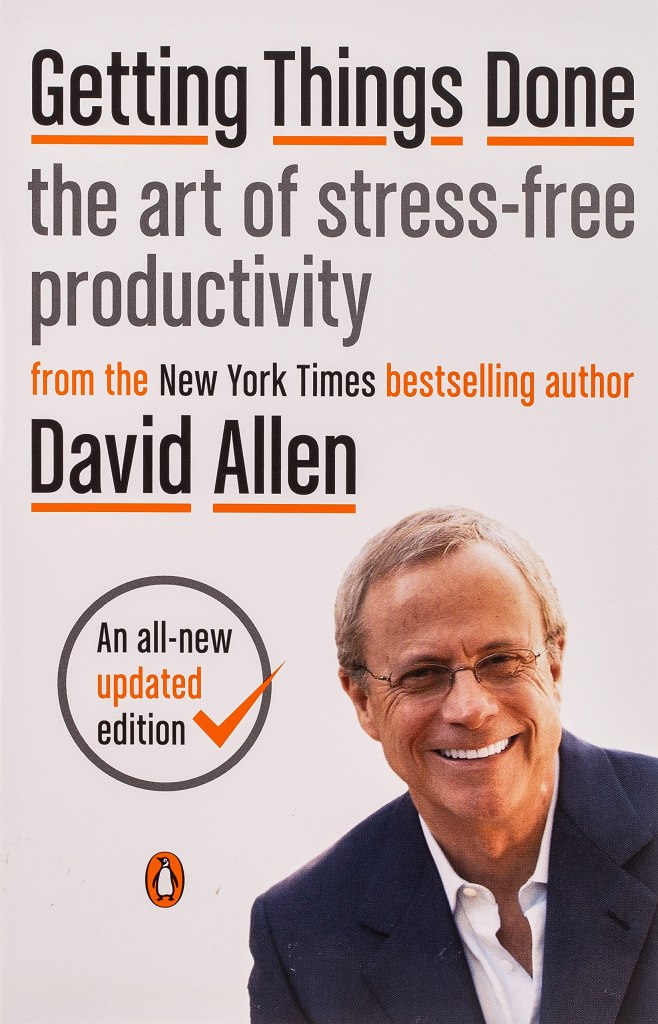
There are many different ways to remember all the items you need to do, whether it be in an electronic format, paper-based, or a hybrid of both. According to John Forrister, associate of David Allen, there is one method that is the worst way of all – your mind! As he wrote in a recent blog post called The Second-Worst Task List App:

If there is a second-worst task list app, there must be a first-worst, right? Yes — it’s your mind. It’s really good at many things, but managing your task list is not one of them. You know that already. You wouldn’t be reading this without already having a calendar and some version of a task list. 

John then postulates on what would be the second worst way to keep track of your tasks. With this question he not referencing a specific app or piece of software. Instead, he is looking at the systematic process that many people use accidentally.

For several reasons, my nomination for the second-worst task list app is an inbox with stuff that’s been there more than 48 hours. I use the email inbox as an example here, but you can probably apply this reasoning to other places where your inputs show up and need to be clarified.

He then proceeds to list reasons why an email inbox is unproductive as a task reminder. Two reasons include:

1. You need to keep rereading at least the subject lines of the first screen of emails, which uses your valuable time inefficiently. If there’s more than one screen, you are likely scrolling into the past fairly often, to scan those older emails.

2. You may be opening, rereading, then closing the emails to remind yourself what they’re about.

How do we keep our inbox from becoming a default bad task manager? Read the rest of the blog post to find out!

Kris McGuigan on Courage

In these trying times, we all need to build more courage in our lives. The question is how to do it!

As the current Florida Library Association President, I am very excited about our upcoming conference in Orlando May 15-17. At the top of my list for the event is listening to our Keynote Speaker, Kris McGuigan. She is the author of The Requisite Courage, a book designed to help build confidence and clarity in your life in order to overcome any obstacle. As Kris describes of the book on her website.

Life is full of disruption: whether suffering a loss, altering your environment, or gaining a new leader. The Requisite Courage offers the precise know-how for navigating change, taking control of your destiny, and creating long-lasting results.

If you want to align your corporate strengths to personal values or just need to stop clinging to the status quo, The Requisite Courage is the direct and fearless approach to problem-solving you’ve been missing.

I am excited to share that Kris will be doing an exclusive Q&A with FLA members on Tues. March 5, 2 pm EST. This will be a great opportunity to meet Kris for a discussion about courage and other topics.

Also, see highlights of Kris as a speaker by checking out her Speaker Demo Reel on YouTube.

Registration is now open for the FLA Conference. I hope to see you in Orlando.

Choosing What to Do: The Steps for Engagement

Did you know the secret to getting things done is to do actions that get things done?

I know that sounds like a big “duh”, but in honesty people frequently get hung up on their next move. Even if they have defined their work, decided on next actions, and have their lists available, picking the precise thing to do in any given moment can still trip up overthinkers. Thankfully, David Allen has thought through the process of engagement, which is the fifth stage of the GTD workflow process. On his website he shared tips to help decide which action to do next.

When it’s time to Engage, people often ask how to choose from what may be long lists of tasks to do. That’s when it’s helpful to use the criteria for choosing:

Context – What place, tool, or person will the action require? This is the first limitation for choosing–it has to be. If you’re not in the right place, don’t have the right tool, or access to the required person, you can’t take the action.

Time available – How much time do you have to take the action? If you have 20 minutes, only consider actions that you think will take less than 20 minutes.

Resources – What is your energy like to take the action? Have you been in back-to-back meetings all day and you’re tired? Or are you just finishing your morning coffee and feeling alert and enthusiastic? You’re probably already considering this more than you realize when you choose what to do.

Priorities – What’s the most important one to choose based on your roles, goals, long-term strategy, and purpose?

David then goes to share how to use the Horizons of Focus to narrow down your priorities along with a description of the three-fold nature of work. What to learn more? Click over to the Getting Things Done website to find out!

Einstein’s 7 Rules for a Better Life

E=MC2

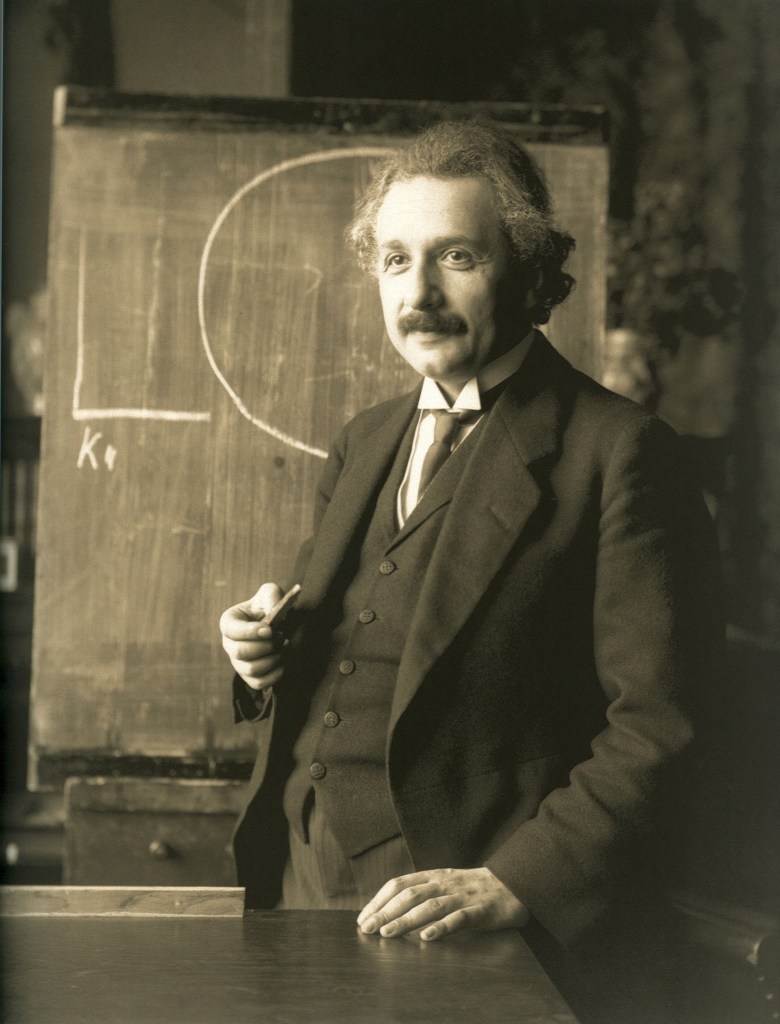
The most famous equation in all of physics was developed by arguably the best-known scientist ever, Albert Einstein. While that equation had to do with calculating energy, Einstein was not just a student of theoretical physics, but also a great study of how to live a good life.

In a recent article on The Big Think, Ethan Siegel explores Einstein’s 7 Rules for a Better Life. Taken from a recent biography on the great scientist, Siegel shares life lessons which served Einstein well. For example, take Rule #3, Have a Puzzle Mindset.

Einstein was pretty much the prototype individual for someone who viewed every difficulty he faced as a puzzle to be solved: in physics and beyond.

Consider his oft-misunderstood but most famous quote, “Imagination is more important than knowledge.” While many people had looked at the puzzle of objects moving near the speed of light before — including other geniuses like FitzGerald, Maxwell, Lorentz, and Poincaré — it was Einstein’s unique perspective that allowed him to approach that problem in a way that led him to the revolution of special relativity. With a flexible, non-rigid worldview, Einstein would easily challenge assumptions that others couldn’t move past, allowing him to conceive of ideas that others would unceremoniously reject out-of-hand.

Rule #4 carried on this thought by sharing the advice to: Think deeply, both long and hard, about things that truly fascinate you.

Over the course of his long life, Einstein received many letters: from those who knew him well to perfect strangers. When one such letter arrived on Einstein’s desk in 1946, asking the genius what they should do with their life, the response was as astute as it was compassionate. “The main thing is this. If you have come across a question that interests you deeply, stick to it for years and do never try to content yourself with the solution of superficial problems promising relatively easy success.”

Learn about the remaining five rules by clicking over the The Big Think website.

Parrells Between Money and Productivity

Have you heard the admonishment that “Time is Money?”

It is an old saying that exhorts us to make best use of our daily actions in order to reap financial rewards. Taken to heart, it would also imply that being productive will increase the amount of money we acquire. Is there truth to this conclusion?

Tiago Forte believes that there are similarities between productivity practices and budgeting. In an article on his website, Tiago shares thirteen parallels that define successful application of both skills. The first one has to do with aligning with a deeper purpose.

“What do I want my money to do for me?” Everything else depends on the answer: if you value freedom and autonomy, your decisions will look very different from someone who values security and stability.

It’s likewise very valuable to ask yourself, “What do I want my work to do for me?” Besides the obvious answer of “provide a paycheck,” the conclusion you come to has profound implications for where, when, and how you work.

If you value creativity and self-expression, but an ever greater proportion of your to do list is filled with administrative tasks, you will eventually experience dissatisfaction and burnout, regardless of how many hours you work or how much it pays.

Another parallel he shares has to do with shifting our thinking. Tiago believes we should let go of what “should be” and honestly accept what is actually happening.

There is a deeply seated human tendency, when things aren’t going how we believe they “should go,” to simply deny reality. We can make up justifications, rationalizations, and excuses effortlessly, and maintain them even when the impact on our health, happiness, and relationships becomes unbearable.

Simply knowing what is happening is half the battle when it comes to money or productivity. Getting a hold on the “current state” requires letting go of the lenses and stories we use to buffer reality and protect our ego. This is why making a comprehensive Project List is so powerful – it lays out the current state of affairs in objective detail, allowing us to make fully informed decisions.

Learn about the other eleven parallels by reading the rest of the article.

The Tyranny of Small Choices

Have you ever stopped to consider how many choices you make during the day?

Often when we think about decision making our minds consider the big operational decisions we make at work or in our lives. Yet the vast number of decisions we make every day are small. These choices range from what shirt to wear in the morning, to choosing a restaurant for lunch, down to what TV show to watch at night. Most of us pay little heed to these types of decisions, as they seem inconsequential beyond the moment they are made. However, sometimes these small decisions have outsized impact due to the fact that thousands or millions of people are making similar choices. This leads to the tyranny of small decisions.

In a recent article on the Big Think website, author Jonny Thomson explores how small choices can have oversized impacts. Early in the article, he explains the concept of the tyranny of small decisions.

In 1966, the economist Alfred E. Kahn first coined the term ‘tyranny of small decisions’ in an article of the same name. Kahn used this concept to describe how a series of small, individual choices could lead to an end point no one really wanted. It’s when various discrete and minor actions string together into something not desired by the decision-makers as a whole.

Kahn used as an example a train service that has lots of passengers in the winter, but little ridership in the summer. The choice the passengers make about when to take the train, seemingly inconsequential to each individual person, add up to impact the train service to the point where it could shut down.

Later on in the article, Thomson offers some examples of ways that the tyranny of small decisions can immediately impact your life and business. This first example is about skimping on training days, especially around cybersecurity.

Sixty percent of small businesses go out of business within six months of a cyberattack. Cyber-vigilance matters, and small decisions to skimp can have huge ramifications. Buying only basic internet security might save some money. Missing or having irregular cyber-awareness training might make you popular with your team. But few businesses can survive an $80 million hack.

Learn more about the tyranny of small decisions and ways to avoid them by reading the rest of the article.

Leadership & the Spirit of Excellence

Many organizations strive for excellence, yet it is very hard to capture the spirit necessary to make that a reality. What is it that separates those organizations that achieve it from those that don’t? It may all come down to leadership.

The website Big Think recently featured an article called 5 ways for leaders to cultivate a “spirit of excellence” in teams. Written by John Roussot, it starts out by defining what is meant by excellence.

Excellence is not just a destination but a journey — the gradual result of always striving to be better. In the world of team dynamics, this pursuit of excellence becomes a shared mission, elevating each member’s personal and professional performance. Excellence, then, is not merely an aspiration but a continuous process, grounded in the humility to constantly learn, adapt, and grow. This journey is marked by a willingness to test new ideas, learn from every outcome, embrace failures as stepping stones, fail forward and collectively evolve through rich experiences.

What are the five ways that leadership can cultivate a spirit of excellence? It starts with curiosity.

Encourage curiosity: Foster an environment where asking questions is encouraged. Stimulate thought and inspire learning by posing thought-provoking questions and promoting open discussions.

Learn the other four ways by reading the entire article.

Beginner vs Advanced

Have you ever got advice? Of course, you have. The real question is how often has that advice been useful?

The problem with advice is that it may be good for some people, but not for all. Also, some advice is helpful at the start of an endeavor but could be restricting as experience is gained. Tiago Forte recently thought about this problem and wrote his conclusions on his blog at Forte Labs. His primary insight concerns the crucial difference between beginner and advanced advice.

In any given pursuit – tennis, chess, jiu-jitsu, painting – there is a hierarchy of skills that you have to acquire one by one to progress. More fundamental skills lie at the bottom, like the base of a pyramid, and serve as a foundation for more advanced skills to be gained later on.

I’ve noticed that people often want to skip the beginner stages and go directly to the advanced ones. That’s an understandable desire – why spend more time as a novice than you have to? But if you don’t have a strong foundation and try to build too high, your efforts will inevitably crumble.

How do we determine the difference between beginner and advanced advice? Tiago suggests the following:

Beginner advice tends to take the form of an extremely simple, impossible to misunderstand, black-and-white rule.

The more advanced you become, the more options and pathways become available to you, each one tailored to a specific scenario. In other words, you have to choose which advanced strategy is right for you.

How what does this mean for productivity skills? Read the full article on the Forte Labs blog to find out.

The Three C’s of Courage

In order to accomplish great things, one must be able to withstand adversity. While some problems are overcome through ingenuity or knowledge or training, oftentimes what will get someone to the goal is a strong dose of courage. The question is, how does one develop courage?

Speaker and author Kris McGuigan believes that courage is created through a combination of three “C’s”, Clarity, Conviction, and Consistency. In her book, The Requisite Courage, she describes each of the three “C’s” in depth.

The path to courage starts with clarity. As Kris shares in Chapter 3 of her book:

The source of courage comes from within. This is well known. But the lesser-known detail is that it literally comes from who you are. Inner strength comes from having clarity around who you are and what you want. Encourage a new path to your why to crystalize and focus your energy on that which feeds your mission. You have to gain clarity in order to gain momentum towards your next objective – even when that goal is to simply identify what the next goal post should be.

McGuigan goes on to describe conviction and consistency and how when they are combined together leads to fearless execution. Learn more about Kris and her book by visiting her website.