Time for a Yearly Review

With 2025 coming to a close, have you taken the time to review the entirety of the past year?

A core component of the GTD methodology is the weekly review. This is an ongoing opportunity at the end of your workweek to review what was accomplished, identify unfinished work, and to look ahead to the following week. In fact, David Allen, GTD’s Creator, has always stressed the importance of this habit.

“The Weekly Review is the time to: Gather and process all your stuff. Review your system. Update your lists. Get clean, clear, current, and complete. You have to use your mind to get things off your mind.”

A yearly review is the logical extension of the weekly review, but on a higher level of focus. This is an opportunity to consider the status of your larger goals and update your long-term vision. It is a chance to bring clarity to the big dreams and ambitions that provide forward momentum. Keep in mind that it doesn’t have to focus solely on your job. The yearly review can cover all aspects of your life, including personal goals, health concerns, financial plans, and relationships.

Where does the yearly review start? It can begin with the following questions:

  • What were your wins?
  • What are you grateful for?
  • What risks did you take?
  • What is your unfinished business?
  • What was your biggest surprise?

After evaluating the past, the yearly review shifts to exploring the future. Again, focusing questions help with this task.

  • What would you like to be your biggest win?
  • How are you planning to improve your financial situation?
  • What are you looking most forward to learning?
  • What will be your biggest risk?

Are you ready to take on this challenge? If so, then dive right in. The steps to do a yearly review can be found on the GTD website.

Happy 2026! I wish you all a great new year!

How to be a Great Gift Giver

It’s the holiday season once again!

While it is time to enjoy seasonal delicious food and the sparkling lights, there is one thing that many people dread: picking out the perfect gift. With a wide range of options, it is easy to get overwhelmed and default to boring gift cards. If you have experienced this problem, have you ever tried to figure out of there a way to become a great gift giver?

An article in Vox may resolve this yuletide tension. In a piece titled How to become a truly excellent gift giver, journalist Eliza Brooke shares insights from several gift giving experts. The first piece of advice is simple. Not every gift has to be life-changing, and a meaningful gift doesn’t have to cost a lot of money.

“We often give ourselves this challenge of being like, ‘What is the gift that only I could give them? What is the gift that proves I know them so well?’ And that’s kind of impossible,” says Erica Cerulo, who runs the recommendation-filled A Thing or Two podcast and newsletter with her business partner, Claire Mazur. (Cerulo and Mazur previously co-founded the retail destination Of A Kind, which shut down in 2019.) A great gift doesn’t have to change someone’s life, Cerulo says: It can just be something that’s fun and nice and comforting.

Photo by Karola G on Pexels.com

The experts Brooke speaks with also provide a simple three-point strategy on gift selection that helps narrow down options quickly.

Because creativity thrives with constraints, Cerulo offered the following three-point framework for thinking about gift-giving: “Can I introduce someone to something they might not otherwise know about? Can I get them a nicer version of something than they would buy for themselves? Or can I make them feel seen?” If you can check one of those three boxes, you’ve probably got a good present on your hands.

Also, Brooke points out that gift giving doesn’t have to be an end of year cram. Identifying potential gifts across the entire year rather than just in December is a useful stress reliever.

Almost universally, great gift-givers are doing legwork throughout the year, not just in the weeks leading up to a birthday or major holiday. Many keep lists of potential gifts for their friends and loved ones, which they update every time someone mentions an item they’d love or when their internet travels turn up a particularly great present idea. You can do this in any way that suits you: Cerulo has a single note in her phone dedicated to gift ideas, Mazur keeps individual notes for individual people, and Rosner uses friends’ contacts as a place to log food preferences, birthdays, and present ideas.

Learn more useful tips on how to be a great gift giver by reading the rest of the article on the Vox website.

The Winner’s Curse

Can you win and yet still lose?

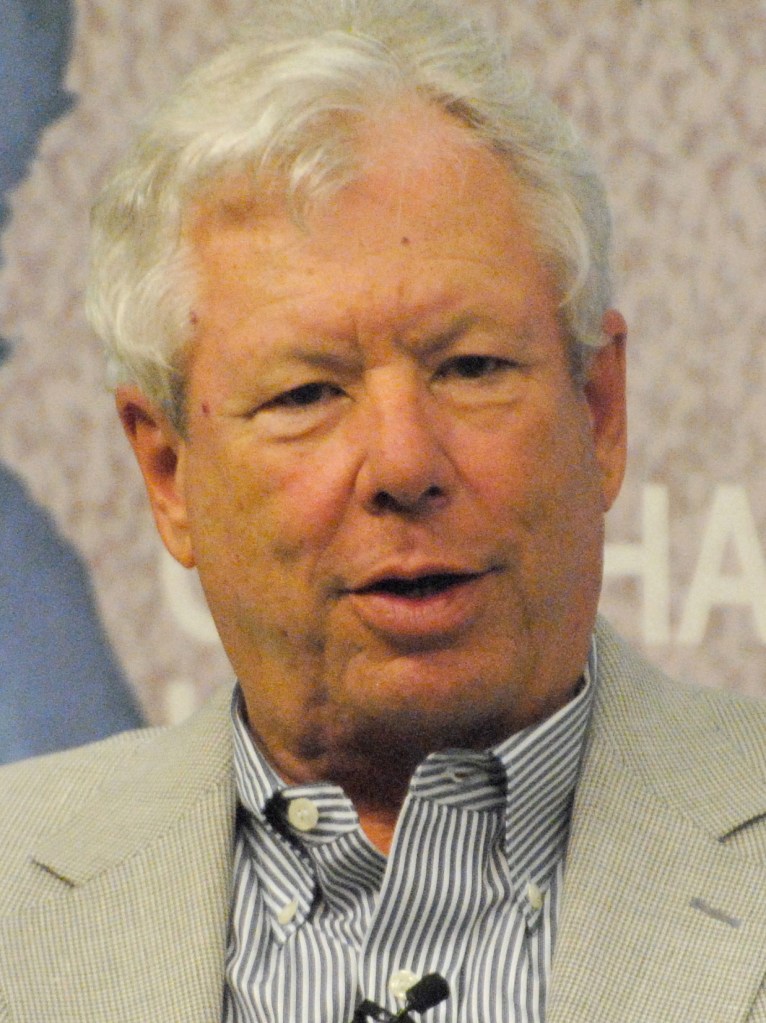
It is a common assumption that winning is a positive thing and most of the time that is true. However, are their situations when being the winner is actually a net negative experience? According to Nobel Prize winning Behavioral Economist Richard Thaler, this happens more often than you think.

In a recent Planet Money episode, host Greg Rosalsky, explores Thaler’s concept of “The Winner’s Curse.” This idea arose from Thaler’s pushback against traditional economics.

In column after column, Thaler shined a spotlight on anomalies that didn’t fit with the tidy, mathematical portrayal of humans in popular economic models (“Anomalies” was actually the title of the column.)

One anomaly Thaler highlighted was what he called “The Winner’s Curse.” The winner’s curse refers to the winners of auctions. That includes the classic auction with auctioneers speaking really fast, selling antiques or paintings or whatever. But it also applies to markets where people competitively bid against each other to buy something, which includes things like bidding wars over buying a house, companies competing to acquire other companies, and sports teams fighting to sign star rookies in a draft.

Richard Thaler

What Thaler challenged was the idea that winning is everything. In his view, sometimes it was better not to win because the economic benefit of the item in question is outweighed by the cost of acquiring it in the auction.

In the standard economic way of seeing auctions, the winner is someone who values it the most after a careful cost-benefit analysis of what they’re bidding on, using the best available information. Presumably, the winner is, well, the winner. But what if the winner is, more often than not, actually the loser? What if winners, systematically, are the ones who pay too much for what they’re buying?

In one of his columns, Thaler suggested exactly that. That, actually, in competitive auctions, the winner is often the one who makes a mistake and overpays. That is, the winner is someone who — perhaps irrationally — buys something for more than it’s worth. Hence the curse.

The Winner’s Curse is not limited to auctions. Think about the number of times you have rushed to buy the last item on sale and later discovered it wasn’t worth the money. Or consider the game show contest who wins a prize yet is now required to pay high taxes afterwards in order to claim it. We see it in professional sports teams who trade away too many players and draft picks in order to claim on supposed superstar who then flops.

So how does one avoid The Winner’s Curse? Thaler has a simple answer.

Thaler told us: “The way you have to think about bidding in an auction is: if I win the auction, will I be happy?”

To read more about The Winner’s Curse and how to avoid it, please read the rest of the Planet Money article.

Boundary Intelligence: The New Smart

Have you ever misplaced an important document and felt less smart because of it?

Whether it is a computer file or a piece of paper, items that we have to invest time searching for limit our ability to make effective use of that information. Contrast this to files that are readily available at our fingertips or through an easy computer search. That information can be retrieved at a moment’s notice and is therefore much more useful. This distinction forms the basis of a new approach to understanding how we process information, known as boundary intelligence.

In a recent article on his website called Boundary Intelligence: Why What You Can Access Matters More Than What You Know, Tiago explores why boundary intelligence is a vital concept to understand, especially in the age of AI. He starts by referencing another writer, Venkatesh Rao.

Rao proposes a new definition of intelligence in the age of AI: intelligence is defined by what information can be accessed under constraints of cost, availability, and time.

The reality is that storage is now cheap. Computation is even cheaper. What’s expensive is short-term memory access – the ability to keep the relevant details “in mind” for a given problem.

You might think that the amazing computational power of AI would render this a meaningless problem. However, Tiago believes even the fastest computers run into trouble with deciding what information is important to keep close at hand.

Thus, a computer’s “intelligence” is now constrained not by the power of its processor, but by its ability to keep the right fragments of the past (and the imagined future) close enough to inform the present. In other words, the bottleneck of a system’s intelligence is how cheaply it can remember.

If you look at how modern computers perform, you can see this principle at work. A CPU can perform billions of operations per second, but is often stuck waiting for the right information to arrive from memory. Storage is cheap and computing is abundant, but what remains tremendously expensive is getting the right data to the right place at the right time.

It’s not the price of knowing that limits intelligence now, but the price of remembering.

This brings Tiago to the definition of boundary intelligence.

Rao calls this “boundary intelligence” – the ability to make good decisions at the boundary about what information becomes “knowable” at any given time.

How does this end up working practice, whether it is a person or AI model? In the end, it often comes down to practicality.

They are not retrieving the ideal memory; they’re retrieving the affordable one. Intelligence in this view isn’t about optimizing across all known information, but optimizing for accessible information under constraints.

A deeper study of boundary intelligence leads Tiago to an interesting understanding. He believes intelligence is no longer about what one single person or computers knows or has in storage. Instead, it is about knowing where to get the information at in the right time, no matter if you are a person or an AI model.

This means that boundary intelligence is fundamentally social. It isn’t just about what to retrieve, but from where and from whom. You have to know who to trust, what information or resources they possess, on what terms you can acquire it, and what is expected of you in return.

How can one use the power of social intelligence to improve their boundary intelligence? Read the full article at the Forte Labs website to learn more.

How People are Really Using ChatGPT

Are you concerned that AI is coming for your job?

Since it exploded onto the scene in 2022, ChatGPT and its AI cousins have created a sensation. Aspects of knowledge work that were always assumed to be the province of humans can now be done in mere moments with the proper prompt. This has led many prognosticators to assume that AI will take over all white-collar work. After three years of these AI tools, what is the actual truth?

A recent post from Daniel Pfeiffer on the website Choice360 sheds light on what people are actually doing with ChatGPT. In a review of a study of 1 million conversations, Pfeiffer discovered that the assumed absorption of knowledge work by AI tools is not what it seems. For starters, more people are using ChatGPT outside of work than at the office.

One of the key takeaways from this report is that, though work-related usages of ChatGPT continue to grow, they are wildly outpaced by nonwork-related usages, which have grown from 53 to 73 percent of all ChatGPT messages. This finding raises two important questions: Given its ostensible economic promises, why isn’t work-related usage growing faster, and why is nonwork usage growing so much? 

Pfeiffer speculates that the clean AI interface has become preferable for regular searching than the messier Google page. The results are also easier for the average person to interpret, saving them time previously used to click through to other websites.

Another assumption is that most people are using ChatGPT to write the original copy of documents. However, actual use appears to be different.

Given the prized role of writing in educational environments, many academics might assume that when people use ChatGPT “for writing,” they’re using it specifically to generate new text from scratch—hence, the return of blue books. What this report finds, however, is that about two-thirds of all writing tasks have ChatGPT modify existing text, e.g., editing it for errors, adjusting the tone, or offering critiques, rather than generating new text. 

On closer inspection, Pfeifer wonders if this finding holds for all types of users.

As we await more data, I think it behooves us to keep in mind that “writing” encompasses a range of activities. While we might imagine that students are asking ChatGPT to “write a seven-page essay on the Civil War,” for instance, they might well be using it to “make this email sound more professional.” 

Image generated with WordPress AI

A third issue considered in the study is the economic impact of generative AI on workers. The media discussion often assumes that AI will take away jobs, especially lower-level knowledge work. Again, that may not be the case yet.

To get a more granular picture, researchers ran all the work-related messages through a different taxonomy based on common work activities, e.g., communicating with supervisors, scheduling events, and training others. They found that 57.9 percent of work-related messages fell into two broad categories “1) obtaining, documenting, and interpreting information; and 2) making decisions, giving advice, solving problems, and thinking creatively”. In other words, people are using ChatGPT less as a replacement worker and more as an advisor and research assistant. 

Reflecting on this finding, Pfieffer comes to this conclusion.

“ChatGPT likely improves worker output by providing decision support, which is especially important in knowledge-intensive jobs where productivity is increasing in the quality of decision-making.”  

Finally, Pfieffer speculates on the impact of hallucinations. As librarians have long complained, it is easy for people to believe what AI says rather than confirm that it is true. The study does not measure the effect of wrong information on people’s productivity and decisions.

The full blog post is worth a read. You can find it on the Choice360 website.

Do You Do Low-Value Work?

Do you have more to do than you have time to do it in?

It is a common problem for knowledge workers to feel overwhelmed by the sheer number of possible tasks and projects on the table. The challenge is determining which one of the many items are priorities, which would be nice to do, and which are really not worth the time. Is there a way to make this assessment?

A few years ago, Priscilla Claman tackled this problem in the Harvard Business Review with an article called Stop Doing Low-Value Work. She believes part of the problem is that knowledge workers tend to inherit tasks from other workers, especially when those people leave the organization.

Although the jobs went away, much of the work didn’t. Teachers ended up with more children in a classroom; customer service representatives ended up with more phone calls; and managers ended up with more people to manage as teams were consolidated. No matter the job, everyone ended up with a lot more work.

Image generated with WordPress AI Image Generator

Therefore, how can a knowledge worker identify and eliminate low-value work? One way is through automation. This is especially true with the new AI tools, although the article was written before the Chat GPT revolution.

Whether you are talking about scheduling, acknowledging, or making standard arrangements, there are probably existing applications that you could use. Just figure out what you want to do and find someone to help you do it.

She also suggests simply asking around to see if there are tasks that are now unnecessary. Then with that permission drop the items from your list.

Another approach is to ask your clients if you can not do something, just the way retail store clerks now ask people if they really want their receipts. The idea is simply to stop doing something that isn’t important, but to check first so that it doesn’t get you into trouble.

To learn more about how to eliminate low-value tasks from your lists, please read the rest of the article.

Don’t Get Fooled or Conned Again

Have you ever been fooled?

For example, being tricked into a purchase you didn’t need, or falling for an online scam. It seems like we are exposed to more and more cons every day. Therefore, how can we better defend ourselves from in person and online tricksters?

A few years ago, Daryl Chen posted an article on the TED Ideas website titled, Don’t Get Fooled or Conned Again: Here are the 5 Tactics to Look Out For. Chen began by examining the problem. The challenge he finds is that being fooled happens internally.

What’s fascinating about examples like these is that while they’re perpetrated by other people or entities, the real work of persuasion largely takes place in our heads, according to UK-based presenter and broadcaster Alexis Conran. “Magic and sales and scams and political beliefs all happen in the mind of the spectator,” Conran points out in a TEDxBerlin talk.

Photo by Markus Winkler on Pexels.com

Chen proceeds to discuss the first way that we are often fooled. It is through the simple use of misdirection.

Misdirection is an age-old tactic used by thieves of all kinds. It’s why pickpockets snatch wallets when they know we’re occupied by an outdoors concert or fireworks display or by reading our phones or books while we commute.

Misdirection can occur on a more subtle level, too. It’s why companies and governments often release bad news on Fridays or before major holidays — they’re obliged to announce a weak earnings report or the so-so unemployment rate but they’re hoping that the weekend or holiday distracts us from fixating on it.

To learn the other four ways we get fooled, please read the rest of the article.

Upcoming Efficient Librarian Webinars

I’m delighted to share that five Efficient Librarian webinars are scheduled through August and September. Over the course of the different webinars, I’ll be sharing tips and techniques on topics such as clearing your inbox, managing employees, and the rewards and challenges of leadership.

Photo by Diva Plavalaguna on Pexels.com

To learn more about each webinar, please click through to the sponsoring organization. The great news is that the PLAN webinars are free to all Florida library staff.

August 21, 3 pm (EST)
Overcoming the Email Avalanche: Three Steps to an Empty Inbox
PLAN Webinar

September 3, 2:30 pm (EST)
Managing Employee Performance Using the SBI Method
ALA Webinars

September 4, 3 pm (EST)
Leadership: Challenges and Rewards
PLAN Webinar

September 17, 3 pm (EST)
Developing Motivated Cultures: Six Simple Factors that Shape Your Organization
PLAN Webinar

September 21, 3 pm (EST)
Managing Employee Performance: A Simple Formula for Talking with Staff
PLAN Webinar

A big thank you to PLAN and ALA for inviting me to present. I look forward to seeing you at the webinars.

What is Your Clutter Personality?

Take a moment to look around your room.

Are there items in your surroundings that are out of place? Are there scattered belongings that need to be tidied up? If so, how long have all these possessions been sitting there waiting to be cleared up?

No matter how diligent we are clutter seems to inevitably fill our lives. How we react to it and eventually address can be challenging. Nonetheless, are there ways to more successfully clear clutter by understanding how we interact with it?

Kat Brancato at the website Real Simple believes that each of us has a clutter personality. Understanding how each type acclimates to that clutter is a key to clearing it out. In her recent article, Kat explains six different clutter personalities, and how each one needs its own approach their mess to resolve.

Organizing methods are like diets—what works for one person may not work for you. Diane N. Quintana, certified professional organizer and founder of DNQ Solutions, LLC, says that organizing anything is a very personal journey.

“Each one of us is unique, so while there are organizing tendencies, you may find that parts of one or more of the organizing personalities resonate with you,” she informs.

Photo by Andrea Piacquadio on Pexels.com

Kat then explores the clutter personalities, starting with the “Out of Sight, Out of Mind” type.

Do you tend to keep your counters riddled with items so you know where they are? Quintana says that the “out of sight, out of mind” personality likes to see what they have. “If something is stored away, it may as well not exist,” she says. “These individuals leave things out to remember them, which often leads to cluttered countertops, desks, or floors. It also results in things being misplaced or lost amongst the clutter.”

Since this personality type needs visual reminders, Quintana suggests using clear containers, labeled baskets, or open shelving to keep important items visible and tidy. “A photo inventory of contents attached to the outside of the clear containers can also be helpful,” she adds.

To read about the remaining five types, please read the rest of her article.