Give Yourself a Gift – Take Time Off!

With the holiday season fully upon us, no doubt you have made a gift list for the loved ones in your life. However, what do you plan to gift yourself? While new clothes and fancy toys are always fun, why not give yourself a gift that improves your health and leads to greater connection opportunities. It is the simple act of taking time off.

In an article for Psychology Today titled, The Importance of Taking a Break from Work, clinical psychologist Monica Vermani explores the reasons why taking time off of work is a health care prescription. She starts the article with the sad fact that most Americans fail to take their allotted vacation time.

According to a recent Pew Research survey, 46 percent of employees take less time off than their employer offers. In 2022, according to Qualtrics research, American workers left an average of 9.5 vacation days unused. Recent Canadian statistics paint an even bleaker picture, with just 29 percent of employees taking full advantage of paid time off.

That’s not all. In a 2023 ELVTR poll of 2,300 North American employees, most reported working while on vacation. Many also reported that weekends and nonworking hours are far from off-limits.

Image made with WordPress AI

This failure to disconnect from work can lead to burn-out and other health issues. Therefore, Vermani advocates for taking a true and complete break from work. She points out that doing this is vital to your mental health.

The value of taking that postponed vacation and setting reasonable boundaries around minimizing communication with work colleagues outside of working hours are many, including stress and burnout prevention, gaining new perspectives on workplace stressors, improving mental and physical health, and improved sleep. Furthermore, vacations can be especially effective at raising levels of happiness, making time to reconnect with family and friends, and exploring locations and activities that foster joy and inspiration. Vacation time is also known to reduce the risk of heart attack and stroke. Time away from the daily grind also expands our creative abilities.

She then shares why setting heathy boundaries is important to everyone.

Our time and energy are valuable—and finite—assets. At the end of the day, it is our responsibility to build healthy boundaries around our finite resources. Building healthy boundaries is all about prioritizing our mental and physical health, well-being, and needs, and building awareness of the causes and signs of workplace burnout, including trouble concentrating, exhaustion, irritability, a decrease in productivity, and physical symptoms, like headaches, muscle aches, gastrointestinal issues, and changes in sleep routines.

To learn more, including her six steps to creating a healthier work/life balance, please read the rest of the article. In the meantime, it is not too late to schedule that holiday vacation. Whether it is a trip out of town or staying home, either way make sure you enjoy some much-needed downtime.

How to be a Great Gift Giver

It’s the holiday season once again!

While it is time to enjoy seasonal delicious food and the sparkling lights, there is one thing that many people dread: picking out the perfect gift. With a wide range of options, it is easy to get overwhelmed and default to boring gift cards. If you have experienced this problem, have you ever tried to figure out of there a way to become a great gift giver?

An article in Vox may resolve this yuletide tension. In a piece titled How to become a truly excellent gift giver, journalist Eliza Brooke shares insights from several gift giving experts. The first piece of advice is simple. Not every gift has to be life-changing, and a meaningful gift doesn’t have to cost a lot of money.

“We often give ourselves this challenge of being like, ‘What is the gift that only I could give them? What is the gift that proves I know them so well?’ And that’s kind of impossible,” says Erica Cerulo, who runs the recommendation-filled A Thing or Two podcast and newsletter with her business partner, Claire Mazur. (Cerulo and Mazur previously co-founded the retail destination Of A Kind, which shut down in 2019.) A great gift doesn’t have to change someone’s life, Cerulo says: It can just be something that’s fun and nice and comforting.

Photo by Karola G on Pexels.com

The experts Brooke speaks with also provide a simple three-point strategy on gift selection that helps narrow down options quickly.

Because creativity thrives with constraints, Cerulo offered the following three-point framework for thinking about gift-giving: “Can I introduce someone to something they might not otherwise know about? Can I get them a nicer version of something than they would buy for themselves? Or can I make them feel seen?” If you can check one of those three boxes, you’ve probably got a good present on your hands.

Also, Brooke points out that gift giving doesn’t have to be an end of year cram. Identifying potential gifts across the entire year rather than just in December is a useful stress reliever.

Almost universally, great gift-givers are doing legwork throughout the year, not just in the weeks leading up to a birthday or major holiday. Many keep lists of potential gifts for their friends and loved ones, which they update every time someone mentions an item they’d love or when their internet travels turn up a particularly great present idea. You can do this in any way that suits you: Cerulo has a single note in her phone dedicated to gift ideas, Mazur keeps individual notes for individual people, and Rosner uses friends’ contacts as a place to log food preferences, birthdays, and present ideas.

Learn more useful tips on how to be a great gift giver by reading the rest of the article on the Vox website.

The Winner’s Curse

Can you win and yet still lose?

It is a common assumption that winning is a positive thing and most of the time that is true. However, are their situations when being the winner is actually a net negative experience? According to Nobel Prize winning Behavioral Economist Richard Thaler, this happens more often than you think.

In a recent Planet Money episode, host Greg Rosalsky, explores Thaler’s concept of “The Winner’s Curse.” This idea arose from Thaler’s pushback against traditional economics.

In column after column, Thaler shined a spotlight on anomalies that didn’t fit with the tidy, mathematical portrayal of humans in popular economic models (“Anomalies” was actually the title of the column.)

One anomaly Thaler highlighted was what he called “The Winner’s Curse.” The winner’s curse refers to the winners of auctions. That includes the classic auction with auctioneers speaking really fast, selling antiques or paintings or whatever. But it also applies to markets where people competitively bid against each other to buy something, which includes things like bidding wars over buying a house, companies competing to acquire other companies, and sports teams fighting to sign star rookies in a draft.

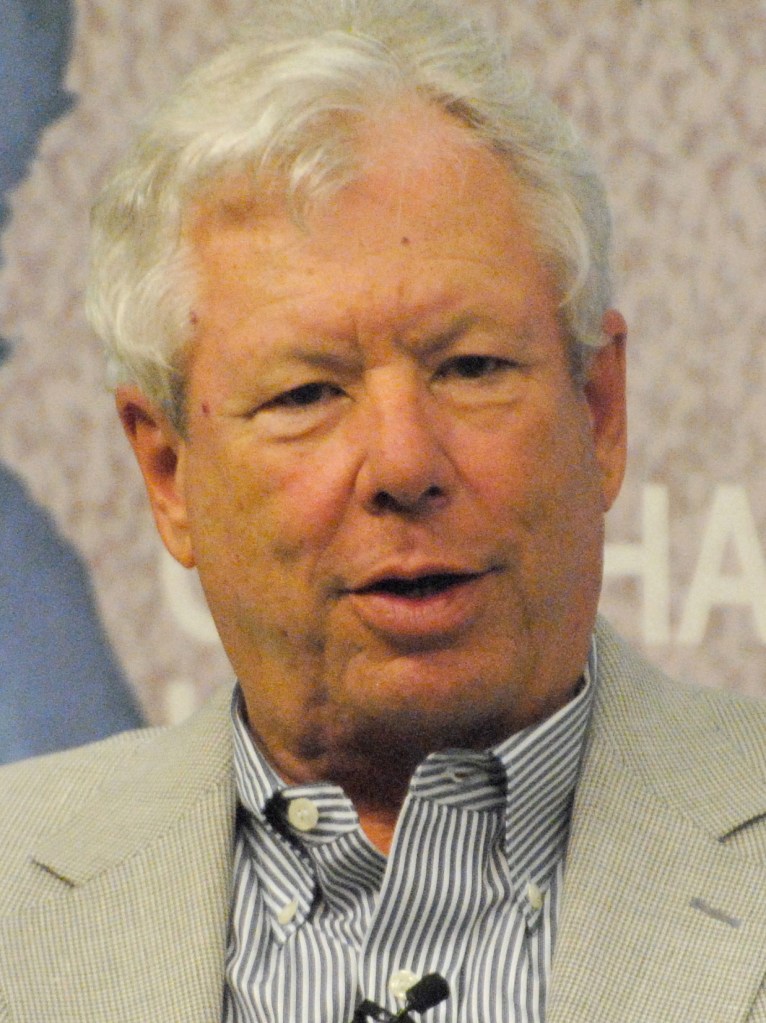
Richard Thaler

What Thaler challenged was the idea that winning is everything. In his view, sometimes it was better not to win because the economic benefit of the item in question is outweighed by the cost of acquiring it in the auction.

In the standard economic way of seeing auctions, the winner is someone who values it the most after a careful cost-benefit analysis of what they’re bidding on, using the best available information. Presumably, the winner is, well, the winner. But what if the winner is, more often than not, actually the loser? What if winners, systematically, are the ones who pay too much for what they’re buying?

In one of his columns, Thaler suggested exactly that. That, actually, in competitive auctions, the winner is often the one who makes a mistake and overpays. That is, the winner is someone who — perhaps irrationally — buys something for more than it’s worth. Hence the curse.

The Winner’s Curse is not limited to auctions. Think about the number of times you have rushed to buy the last item on sale and later discovered it wasn’t worth the money. Or consider the game show contest who wins a prize yet is now required to pay high taxes afterwards in order to claim it. We see it in professional sports teams who trade away too many players and draft picks in order to claim on supposed superstar who then flops.

So how does one avoid The Winner’s Curse? Thaler has a simple answer.

Thaler told us: “The way you have to think about bidding in an auction is: if I win the auction, will I be happy?”

To read more about The Winner’s Curse and how to avoid it, please read the rest of the Planet Money article.

Boundary Intelligence: The New Smart

Have you ever misplaced an important document and felt less smart because of it?

Whether it is a computer file or a piece of paper, items that we have to invest time searching for limit our ability to make effective use of that information. Contrast this to files that are readily available at our fingertips or through an easy computer search. That information can be retrieved at a moment’s notice and is therefore much more useful. This distinction forms the basis of a new approach to understanding how we process information, known as boundary intelligence.

In a recent article on his website called Boundary Intelligence: Why What You Can Access Matters More Than What You Know, Tiago explores why boundary intelligence is a vital concept to understand, especially in the age of AI. He starts by referencing another writer, Venkatesh Rao.

Rao proposes a new definition of intelligence in the age of AI: intelligence is defined by what information can be accessed under constraints of cost, availability, and time.

The reality is that storage is now cheap. Computation is even cheaper. What’s expensive is short-term memory access – the ability to keep the relevant details “in mind” for a given problem.

You might think that the amazing computational power of AI would render this a meaningless problem. However, Tiago believes even the fastest computers run into trouble with deciding what information is important to keep close at hand.

Thus, a computer’s “intelligence” is now constrained not by the power of its processor, but by its ability to keep the right fragments of the past (and the imagined future) close enough to inform the present. In other words, the bottleneck of a system’s intelligence is how cheaply it can remember.

If you look at how modern computers perform, you can see this principle at work. A CPU can perform billions of operations per second, but is often stuck waiting for the right information to arrive from memory. Storage is cheap and computing is abundant, but what remains tremendously expensive is getting the right data to the right place at the right time.

It’s not the price of knowing that limits intelligence now, but the price of remembering.

This brings Tiago to the definition of boundary intelligence.

Rao calls this “boundary intelligence” – the ability to make good decisions at the boundary about what information becomes “knowable” at any given time.

How does this end up working practice, whether it is a person or AI model? In the end, it often comes down to practicality.

They are not retrieving the ideal memory; they’re retrieving the affordable one. Intelligence in this view isn’t about optimizing across all known information, but optimizing for accessible information under constraints.

A deeper study of boundary intelligence leads Tiago to an interesting understanding. He believes intelligence is no longer about what one single person or computers knows or has in storage. Instead, it is about knowing where to get the information at in the right time, no matter if you are a person or an AI model.

This means that boundary intelligence is fundamentally social. It isn’t just about what to retrieve, but from where and from whom. You have to know who to trust, what information or resources they possess, on what terms you can acquire it, and what is expected of you in return.

How can one use the power of social intelligence to improve their boundary intelligence? Read the full article at the Forte Labs website to learn more.

Don’t Get Fooled or Conned Again

Have you ever been fooled?

For example, being tricked into a purchase you didn’t need, or falling for an online scam. It seems like we are exposed to more and more cons every day. Therefore, how can we better defend ourselves from in person and online tricksters?

A few years ago, Daryl Chen posted an article on the TED Ideas website titled, Don’t Get Fooled or Conned Again: Here are the 5 Tactics to Look Out For. Chen began by examining the problem. The challenge he finds is that being fooled happens internally.

What’s fascinating about examples like these is that while they’re perpetrated by other people or entities, the real work of persuasion largely takes place in our heads, according to UK-based presenter and broadcaster Alexis Conran. “Magic and sales and scams and political beliefs all happen in the mind of the spectator,” Conran points out in a TEDxBerlin talk.

Photo by Markus Winkler on Pexels.com

Chen proceeds to discuss the first way that we are often fooled. It is through the simple use of misdirection.

Misdirection is an age-old tactic used by thieves of all kinds. It’s why pickpockets snatch wallets when they know we’re occupied by an outdoors concert or fireworks display or by reading our phones or books while we commute.

Misdirection can occur on a more subtle level, too. It’s why companies and governments often release bad news on Fridays or before major holidays — they’re obliged to announce a weak earnings report or the so-so unemployment rate but they’re hoping that the weekend or holiday distracts us from fixating on it.

To learn the other four ways we get fooled, please read the rest of the article.

How to Leave Work at Work

How easily do you leave your work at work?

For many people, their job is an important part of their lives. In fact, they love it so much they donate a lot of unpaid hours to their employer every year. (For the record, that’s not a charitable approach I would ever suggest doing willingly.)

However, for employees who want to enjoy their downtime, but have trouble separating their work and personal lives, are their ways to disengage in the evenings and weekends?

Going through my files today I came across an article from 2019 that addresses this topic. Titled, 15 Tips for Leaving Work at Work, writer Marina Khidekel shared ideas from a slew of experts on how to successfully leave the office and enjoy life outside of it. One example is a classic approach to conclude a workday – tidy up!

“Something I began doing, almost unknowingly during my years as a teacher was straightening up my desk each day just before I left work for the day. Fifteen years later, now as a counselor I do the same thing. When my last client leaves, I come back into my office and straighten up my desk. It takes me no more than one minute and brings about closure to my day. When I return the next morning, I walk into an organized work space and that helps me think clearly and begin the new day. The habit is set and hardwired and I don’t take work home with me.”  

Created with WordPress AI Image Generator

Another idea is to set boundaries outside of the office. While this can be a challenge with our digital connectivity, it is possible to be clear with others about when you are checking email.

“I never check my work emails or phone over the weekend — my out of office response is turned on until 9 a.m. Monday morning. That way people know not to expect a response from me, and I don’t feel guilty about not getting back to them.”

Another option to create separation is to craft a ritual to empower the switch from work to home.

“To help transition my mindset from work-mode to relax-mode, I have a few rituals that allow me to leave work at work. For example, on my walk home, I will listen to a podcast about my interests outside of work like fitness, health, and well-being. With these rituals, I get to celebrate my hard work of the day and immerse myself in the other activities I enjoy to reground.”

To learn the other twelve suggestions to keep work at work, please read the rest of the article.

Can’t Focus – Try This!

Let’s be honest, some days I find it hard to focus. In fact, I was almost too distracted to write these words!

However, in order to get things done we need to focus on the task at hand. Yet that ability can seem fleeting. What can be done to regain focus when it is lost?

Darius Foroux has struggled with a lack of focus and learned some lessons on how to restore it. He shares them in a post on his website called, “What I Do When I Can’t Focus.” He starts by identifying a prime impediment to focus, the dreaded distraction.

Focusing on a single thing is one of the hardest things at work.

There’s always something that interrupts you, right? …

Sure, you can blame those things — but that’s weak. You and I both know that those things can’t interrupt you without your permission.

That means every time you’re not focused; you’re giving someone or something permission to enter your mind.

Foroux goes on to provide his first strategy for getting focused. It involves elimination.

What did I do when I lacked focus? I asked myself this question:

“What thing(s) should I eliminate to make my life so simple that it’s easy to focus?”

In this case, I stopped focusing on YouTube. Elimination is a key strategy that I use for many aspects of my life.

We accumulate so much unnecessary baggage throughout the years that we consistently need to eliminate ideas, projects, work, objects, and so forth.

Read more about this strategy and Foroux’s second strategy on his website. Then it try it yourself and see if focus returns.

Ways to Overcome Summer Stagnation

Are you suffering from summer stagnation?

For many of us, summer is seen as a time for leisure. Our colleagues are off on family vacations or extended weekends hitting the beach, travelling to other countries, or finding a cottage in the woods. This can lead to a slowdown at work as key individuals are out of the office and offline. Projects pause and many of the usual meetings are cancelled.

Under these conditions, workers may feel less engaged and unmotivated as they wait for the office to return to normal. A recent article on Korn Ferry.com points out that 46% of office workers believe the quality of their work slumps in the summer. This can have many effects.

Indeed, being unmotivated during the summer can affect your ability to meet goals later in the year, says Mark Royal, a senior client partner for Korn Ferry Advisory. “It can negatively impact your image and personal brand within the organization,” he says.

Don’t let summer stagnation overcome you.
Photo by Nataliya Vaitkevich on Pexels.com

However, this time need not be wasted. Employees can take advantage of the summertime shift at work to explore news ways of doing and thinking. To counter stagnation, the article explores five ways to stay energized at work during the summer. One of the suggestions in the Korn Ferry article is to switch things up by busting out of the usual routine.

Simple changes—like working outdoors instead of indoors, or at a coffee shop instead of at home—support engagement and renew excitement, says Val Olson, a career and leadership coach at Korn Ferry Advance. “Slumps can happen due to a lack of variety. Variety is the spice of life,” she says.

If you can’t get out of the office, try rearranging the furniture or adding new decor to revive a tiresome space. Varying your surroundings can be energizing and aid focus.

Another way to take advantage of quieter summer workspaces is to reflect on what actually excites you about your work and career.

More people on vacation often means fewer meetings and emails. Experts say you can use this lull to reflect on, and pursue, the aspects of the job that most engage you. Being able to find meaning and value will help motivate you during any downtime, as well as when the workload heats back up.

Read the full article to learn three more ways to turn summer stagnation into engaging and worthwhile experiences.

The Death of Goals

Have you recently created a set of clear, written goals?

Most career advice emphasizes the idea of writing down measurable goals that one then pursues with laser focus. This is said to be the key to success in work and life. However, is this advice sound?

In a post on his website, Tiago Forte pondered the idea that we have reached the Death of Goals. He starts by lamenting the continued assumption that SMART goals are the be all and end all of achievement.

Every time I bring up “SMART goals,” I can see the light go out in my students’ eyes. An unmistakable feeling of dread and aversion fills the room, and the decline in energy and enthusiasm is palpable. They know they should set goals that way, but they don’t want to.

The SMART framework was developed 44 years ago by a director of corporate planning at an electric and natural gas utility – not exactly a paragon of modern business in the information age.

I knew traditional goals were an outdated relic of a bygone era, but I hadn’t figured out what to replace them with. After all, they seem like such a load-bearing pillar of modern society: you set an objective, you make a plan, and then you follow the steps to get there. 

To Tiago, a possible solution lies in the book, Why Greatness Cannot Be Planned, by Kenneth O. O. Stanley and Joel Lehman. For the authors, goals are fine when the project is about incremental improvement or completing rote tasks. However, the value of goals collapses when the scope of possibilities grows larger.

The problem arises when we try to scale up this modest strategy to greater achievements – those that involve true ambition, novel invention, innovative breakthroughs, or pushing the frontier.

These are the kinds of pursuits in which goals lose their power, and can actually become counterproductive and lead you in the opposite direction of progress.

To understand why, it’s helpful to think of achievement not as creating something completely new from scratch, but as searching a space of possibilities.

Tiago believes that goals work best when the environment is well defined. The problem comes when we encounter undefined and unknown conditions. As technology and society advances in unexpected directions, a reliance on goals can be a dead end.

For the most interesting, exciting, impactful achievements, goals are a false compass, distracting you from the highest potential directions. They induce a narrow tunnel vision, eliminating the serendipitous discovery, unorthodox creativity, and breakthrough innovation that are most valuable.

In other words, the best path through the vast hall of possibilities is not a straight one; it’s a twisty turny wild ride of daring leaps and hairpin pivots that would seem positively crazy to any outside observer.

The article ends with Tiago’s six steps to think outside of goals. These steps allow people to appreciate the value of interesting problems and expand their realm of thinking to a broader range of possibilities for success.

Read the full article to learn more about the limitation of goals and a possible alternative for progress.

So, what is your non-goal?