Declutter Your Digital Life

Are you digitally cluttered?

It is very easy to see when our physical items are getting too messy. Whether it is paperwork piling up on a desk, or a storeroom full of overflowing boxes, this clutter we can see with our eyes. However, the most insidious form of mess is the type made up of bits and bytes. If we are not mindful, digital clutter can get out of control very fast.

Over at the Strange & Charmed website, Alexis, also known as @MissTrenchcoat, is very much aware of the negative impact of digital clutter. In her article called, 7 Ways to Declutter Your Digital Life, Alexis starts out by addressing an important question: In an age when we have almost unlimited storage, is cleaning up our virtual mess even necessary?

You’re right, we do have nearly unlimited storage space for all our digital information, however, when was the last time you truly went back and reviewed older files? I know for me, I occasionally scroll through files looking for something I know I saved and because of all the other digital clutter, it’s hard for me to find that one single thing I’m looking for. Even when I use the search function in an app like my email to find something I know I saved, I find it hard to locate that specific email. I’ve frequently lost digital files on my devices, and so, perhaps we give that seemingly unlimited storage capacity and search functionality too much credit. 

Alexis then brings her reader’s attention to easy areas to declutter, such as our subscriptions.

I know you’ll find emails from subscription lists you no longer enjoy. So, to cut down on future email clutter, let’s just take a minute, before deleting those old emails, to locate and use the unsubscribe function to prevent future email clutter.

She moves on to electronic data we don’t normally consider being cluttered, such as apps.

As I am completely integrated into the Apple ecosystem, whenever I get a new device, like a new iPhone for instance, it automatically downloads all the apps from every other device I own. Ugh! This is such a pain because I use certain apps on my iPad and not on my iPhone, and I end up with pages of apps I need to organize or remove. Let’s save ourselves the hassle and just purge all the old apps we no longer use. So check your phone, tablet and even your computer for old apps or software you can remove to save space and processing power for other things.

To learn the other five areas to declutter, please read the full article on the Strange & Charmed website.

Can’t Focus – Try This!

Let’s be honest, some days I find it hard to focus. In fact, I was almost too distracted to write these words!

However, in order to get things done we need to focus on the task at hand. Yet that ability can seem fleeting. What can be done to regain focus when it is lost?

Darius Foroux has struggled with a lack of focus and learned some lessons on how to restore it. He shares them in a post on his website called, “What I Do When I Can’t Focus.” He starts by identifying a prime impediment to focus, the dreaded distraction.

Focusing on a single thing is one of the hardest things at work.

There’s always something that interrupts you, right? …

Sure, you can blame those things — but that’s weak. You and I both know that those things can’t interrupt you without your permission.

That means every time you’re not focused; you’re giving someone or something permission to enter your mind.

Foroux goes on to provide his first strategy for getting focused. It involves elimination.

What did I do when I lacked focus? I asked myself this question:

“What thing(s) should I eliminate to make my life so simple that it’s easy to focus?”

In this case, I stopped focusing on YouTube. Elimination is a key strategy that I use for many aspects of my life.

We accumulate so much unnecessary baggage throughout the years that we consistently need to eliminate ideas, projects, work, objects, and so forth.

Read more about this strategy and Foroux’s second strategy on his website. Then it try it yourself and see if focus returns.

The Dreaded Junk Drawer

Admit it, you have one. Everyone has one!

I’m talking about the dreaded junk drawer. It’s that catch-all place where people drop items they want to keep, but don’t know a better spot to place them. Over time, the junk drawer becomes a messy area full of miscellaneous stuff that no one wants to organize.

Marie Kondo has thought deeply about how to make our homes more organized. This includes bravely tackling junk drawers! On her website she has advice on how to start clearing up this clutter-filled space which contains what she refers to as komono. The process starts with the core KonMari principle of emptying the space.

This process isn’t simply about organizing a single junk drawer. It can reunite mismatched socks, lost rolls of washi tape, leftover coins or scattered booklets of stamps, so tackling all your komono at once — rather than location by location — is key. That means emptying out every junk drawer in the house, so you can see them all at once. Putting all of your komono items in one place before starting the tidying process will reveal what (and how much) you have.

Since komono can be taxing to sort through, there is a tendency to abandon the work with a promise to return later. Kondo recommends sticking to the task and completing it in one session.

Even if you grow weary, don’t lose momentum! Conquer komono in one go, so you don’t leave it half-finished. Once everything is reviewed, either bid farewell or retain and re-home. Close the drawers, take a breath and then open them again. Congratulate yourself on your hard work and take pleasure in the space you have given new life and meaning.

Learn the rest of the tips to clear out the junk drawer by reading the rest of the article on the KonMari website. Then if you dare, go ahead and tackle that komono and see how you feel afterwards.

What is Your Clutter Personality?

Take a moment to look around your room.

Are there items in your surroundings that are out of place? Are there scattered belongings that need to be tidied up? If so, how long have all these possessions been sitting there waiting to be cleared up?

No matter how diligent we are clutter seems to inevitably fill our lives. How we react to it and eventually address can be challenging. Nonetheless, are there ways to more successfully clear clutter by understanding how we interact with it?

Kat Brancato at the website Real Simple believes that each of us has a clutter personality. Understanding how each type acclimates to that clutter is a key to clearing it out. In her recent article, Kat explains six different clutter personalities, and how each one needs its own approach their mess to resolve.

Organizing methods are like diets—what works for one person may not work for you. Diane N. Quintana, certified professional organizer and founder of DNQ Solutions, LLC, says that organizing anything is a very personal journey.

“Each one of us is unique, so while there are organizing tendencies, you may find that parts of one or more of the organizing personalities resonate with you,” she informs.

Photo by Andrea Piacquadio on Pexels.com

Kat then explores the clutter personalities, starting with the “Out of Sight, Out of Mind” type.

Do you tend to keep your counters riddled with items so you know where they are? Quintana says that the “out of sight, out of mind” personality likes to see what they have. “If something is stored away, it may as well not exist,” she says. “These individuals leave things out to remember them, which often leads to cluttered countertops, desks, or floors. It also results in things being misplaced or lost amongst the clutter.”

Since this personality type needs visual reminders, Quintana suggests using clear containers, labeled baskets, or open shelving to keep important items visible and tidy. “A photo inventory of contents attached to the outside of the clear containers can also be helpful,” she adds.

To read about the remaining five types, please read the rest of her article.

Organizing is Not Decluttering

What’s the best way to declutter a space?

The first solution most people jump to is organization. They find storage boxes into which to stash their horde of items. The boxes are then placed out of the way in a closet, attic, or basement for months or years to come. Problem solved right?

According to the Minimalists, this approach is the worst way to approach decluttering. Why?

Because all you are doing is moving items from one place to another. The clutter is put out of sight but not removed entirely. In a recent video on their Instagram channel, the Minimalists argue that storage boxes are actually “clutter coffins where all your stuff goes to die.”

Worst still, many people use up valuable space in their homes or even rent space in a storage locker to keep these completely unneeded belongings in their lives.

What is the best way handle clutter?

The Minimalists believe that completely letting go of our unnecessary items is the path to declutter. Reducing our belongings clears up space, both physically and psychologically. That way we can use our physical spaces to store only the things we currently value. As well, we keep our minds clear by removing items that no longer match who we are and what we aspire to do.

Therefore, resist the urge to buy that shiny new container. Instead, as Marie Kondo would tell you, discard anything that doesn’t spark joy. Once done, enjoy the results.

What Does “Organized” Mean?

Have you ever said to yourself that you need to get organized?

It is common for people after looking at the mess covering their desks to want better organization in their spaces. However, very few stop to ask an important question: what does it mean to be organized?

Does it require fancy software? Do you need high priced planners and office supplies? Does it mean throwing everything out and keeping almost nothing? Or none of the above?

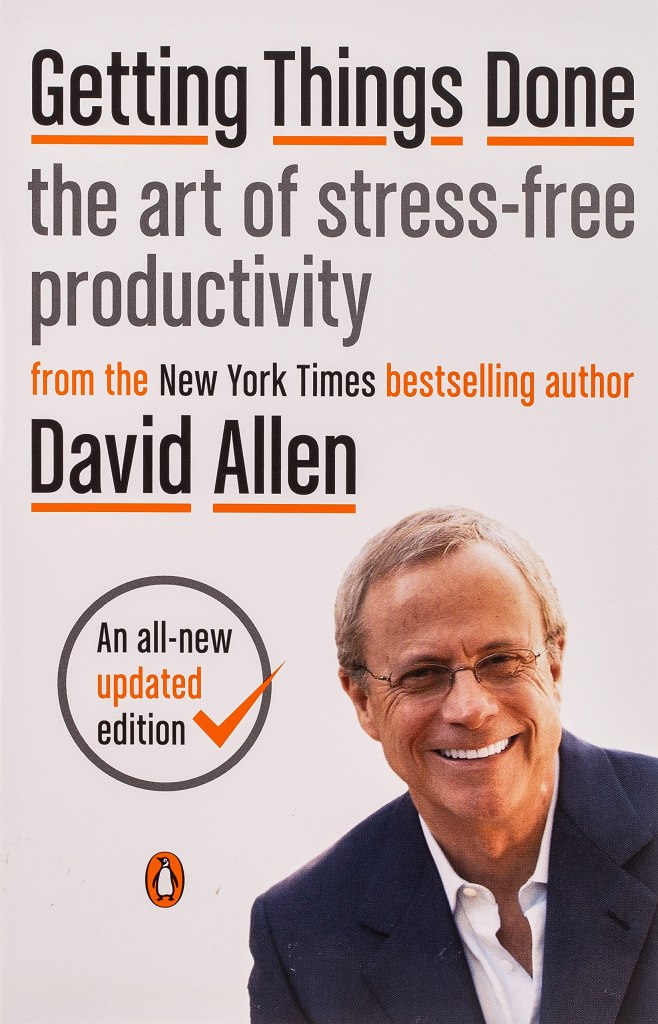
Not surprisingly, David Allen of Getting Things Done fame has thought deeply about what it means to be organized. He even has a simple definition which he shared in a recent article on the GTD website.

You are disorganized if you need something somewhere that you don’t have or have something somewhere that you don’t need. 

David then shares a fun challenge that he does with audiences.

An exercise I’ve done in my seminars is to have everyone reach into their purses or wallets and get something that doesn’t belong there permanently, and which has been there longer than a few hours (besides money). Almost all have at least one thing in that category—a receipt, a business card, a scrap of paper with scribbled notes, an old parking ticket. These are things whose location does not map to their meaning to the person who has them. If the item has no further usefulness, it is trash, but it’s not in the trash. Often it is something they need to store somewhere else—it is reference, but it’s not appropriately accessible as such. Sometimes it’s something that they need to do something about, but it is not in a place to remind them to do it. There is lack of coherence between what the thing is and where it is.

So how does one decide what items should go where? David created a cheat list to decide what to do with any item. Here are a few examples.

  • I don’t need or want it = trash
  • I still need to decide what this means to me = in-tray item
  • I might need to know this information = reference
  • I use it = equipment and supplies

To see the rest of the list, please read the entire article on the Getting Things Done website.

The “Didn’t Know” Rule

Have you ever opened up a drawer and marveled at the discovery of something you didn’t even know you owned?

Given how much stuff we accumulate it is easy to pick up items without consciously remembering it! For me this happens at a conference when vendors hand out bookmarks, pens, and other items like candy at Halloween. While it is easy to acquire stuff, for most of us the challenge is getting rid of things we don’t want anymore.

The Minimalists have a simple approach to clearing out unneeded belongings. It’s called the “Didn’t Know” rule. Basically, it means that if you find something you didn’t know you owned, you can permit yourself to let it go. 

Barbara Bellesi Zito writing for the website Apartment Therapy, experimented with this approach. She tried it out on three boxes and soon discovered a surprise.

Taking up an entire box was a pile of TilePix I had purchased around three years ago when I snagged a sale. These photos from my phone didn’t render well at all, so I had no desire to hang them in our home. They went right into the garbage pile; I have the originals on my phone anyway, and I had completely forgotten I even had these in storage.

After completing the task of organizing the boxes, she wrote down three insights.

  • If you don’t know you have something, you can’t truly be missing it.
  • If it’s sentimental or something you need to hold on to, by all means, keep it.
  • Unless the storage in question holds seasonal clothing or items, check on it every few months or so to make sure you still want what’s in it.

I challenge you to take 10 minutes in the next 24 hours to practice this simple decluttering technique. For me, I’m eyeing that middle desk draw. I know it has long forgotten stuff waiting to be rediscovered …

How to Organize a Shared Workspace

As a fan of GTD, I have been able to organize my personal workspace to match my work style. Having a private office helps me keep control. However, many office workers are stuck in shared workspace situations. While they can control their own immediate spot, the common areas seem to be an unruly land. Is it possible to organize a shared workspace?

Francesca Stracuzzi recently mapped out a way to do so in five steps on the KonMari website. The first step is to take stock of your office’s current state.

“Many desks are overloaded, and both paper and digital archives are not functional, making it difficult to find documents and files,” she says. “A messy and disorganized desk generates stress, anxiety and demotivation, and, in the midst of that chaos, it also reduces our ability to make decisions. I am convinced that space affects our emotions and conditions our performance, so freeing the desk means lightening the mind and working with more serenity and clarity.”

Photo by Marc Mueller on Pexels.com

The next step is to get support from leadership.

“In my work experience, I have seen that the management of space, particularly offices and desks, is left to individual workers,” says Francesca. This may seem logical, but it often leads to a snowball effect, wherein one messy desk turns into many. 

Instead, Francesca recommends encouraging a different perspective within the team, including management, that focuses on how getting organized can benefit the whole team.

By framing the idea of a team organization project to leadership this way, you’ll have an easier time getting them to sign off on the project.  

To learn more about the steps to organizing a shared workspace, including the final three steps, please visit the KonMari website.

Quick Home Cleaning Steps

Has your home ever been messy?

For some it is a rare occasion and for others it is a constant state. However, we all have times when our living spaces need to get in order very quickly. The challenge is knowing where to start. Is there a simple way to do it?

In a recent NPR article, author KC Davis shared tips on how to pull together a living space in five easy steps. According to KC, the first thing to do is take out the trash.

Get a trash bag or a trash can. Move around the room, collecting the garbage.

But don’t take out the trash yet. “The more times you leave that room, the more likely you are to get distracted on some different project,” Davis says. The point of this method is to get the space back to livable and functional.

“I can function with a trash bag sitting by the back door. I can’t function with too much trash all around the house,” Davis says. “I will have all the motivation in the world to do something and I’ll do it for like 30 minutes and then all of a sudden the motivation will fly out of my body …. And so knowing that, I want to get as much done to make the space livable as I can.”

Photo by cottonbro studio on Pexels.com

Once all the garbage is cleared, KC suggests tackling the dirty dishes.

Gather up all the dirty dishes. You can put them in the sink if it’s nearby. Or you can pile them up. Davis likes to use laundry baskets that don’t have holes in the bottom. You could also get a small rolling hamper, put a basket on top of it, “and roll that sucker around and collect all those dishes,” she says.

To learn the final three steps, please read the rest of the article on NPR.