
In the pursuit of efficiency, librarians have room for improvement. Last year I came across a book that changed my perspective on how a large library system could be made more productive. The book is Lean Library Management by John Huber.
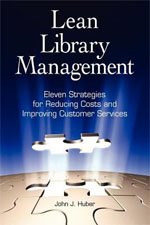 Lean Management, which began as the Toyota Production System, is a set of techniques that aims to improve any system into a quicker and more accurate one with less waste. Simply put, lean means creating more value for customers with fewer resources. It does so by empowering those who work at the front lines with decision making power while coordinating improvement opportunities across a department. While reading the book, I made many connections between this technique and GTD.
The ideas were so powerful that we contracted with John Huber to work on one of our own internal processes. In future blogs, I will share how the Library System is benefiting from going Lean.
To get a primer on Lean, please visit Lean.org.
 between David Allen and Tiago Forte. While I am deeply familiar with the former, the latter was a new voice whose ideas on productivity caught my attention.
  traits are common to effective and efficient teams. He found that Google was asking this same question and had a research team study their employees to find the answer. Based on their research, the Google team identified these five key aspects of an effective team.
 David Allen: It’s not one thing, but five, all wrapped together: People keep stuff in their head. They don’t decide what they need to do about stuff they know they need to do something about. They don’t organize action reminders and support materials in functional categories. They don’t maintain and review a complete and objective inventory of their commitments. Then they waste energy and burn out, allowing their busy-ness to be driven by what’s latest and loudest, hoping it’s the right thing to do but never feeling the relief that it is.
 Efficient Librarian