Digital Decluttering

How many files do you have cluttering up your computer’s desktop?  What about that app on your phone that was opened once two years ago and soon forgotten?  And just how many photos have you saved to the cloud?

It appears there is a tendency to ignore the clutter in our electronic spaces.  While a slew of books talk about the stress relief that comes from tidying up our physical belongings, should we also pay attention to our digital world too?  Some believe that with computer memory so cheap there is no downside to storing all our files and apps forever. What could possibly be wrong with this approach?

Writer Kelly Oakes argues in an article from earlier this year on the BBC’s web site that decluttering our digital world is just as important as cleaning up physical spaces.  Kelly writes:

“Emerging research on digital hoarding – a reluctance to get rid of the digital clutter we accumulate through our work and personal lives – suggests that it can make us feel just as stressed and overwhelmed as physical clutter. Not to mention the cybersecurity problems it can cause for individuals and businesses and the way it makes finding that one email you need sometimes seem impossible.”

design desk display eyewear

Learn more by reading the rest of the article on the BCC – Future web site.
Is there an App for GTD?

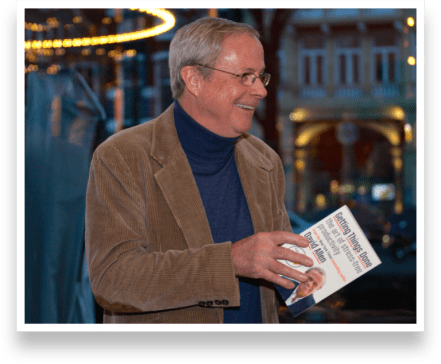
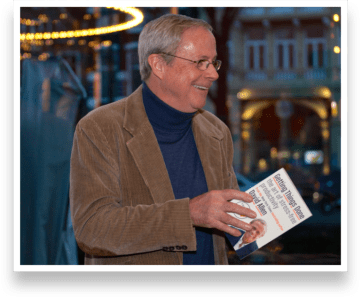
How hard could it be to build a single app to answer all of our productivity needs?  Right now it seems that we use one app for reminders, another for the calendar, another for our project list, and so on.  It just seems obvious that one app should do the trick, and how come David Allen hasn’t made it yet!

Well it turns out he tried.  At the GTD Summit this summer, David told the group about this project.  It was again shared on his blog.

“At the Summit I briefly shared a vision of the “ultimate GTD app” which consists of 19 pages of hand-drawn drafts of the screens I would want to use. I just said to myself, “Can I click F1 on my computer and get to a clear head?” I spent two days creating those screens. This was in 1994. “Since I drew these, we’ve invested in two serious attempts at producing a software product that would do it (or at least come close). Both ended in a “not yet” conclusion, after tremendous research in the tech and analysis of the market (one in the mid-1990s and the last in the mid-2010s.) “

David has now shared the drafts with the world in the hope that someone will crack the code and make the ultimate GTD app.  Read the entire post on his blog to learn more.

David-Allen-GTD

Library Leadership Podcast

I am an avid podcast listener.  My iPhone has over a half dozen different shows in cue for listening throughout the week during the commute.  However, it had been a long time since I had been interviewed for one.  That changed last week when I was contacted to be a guest on a podcast that is now on my playlist.  It is the Library Leadership Podcast.  If you work in libraries I advise that you add it to your list as well.

Hosted by Adriane Herrick Juarez, the Executive Director of the Park City Library in Utah, she invites notable library leaders on to her show to discuss a wide range of topics.  Some of her guests, Lance Warner, Felton Thomas, Peter Bromberg,  participated in my recent article Go For It! Advice From Library Directors.  She has also interviewed two ALA Presidents, Jim Neal and Loida Garcia-Febo.

Adriane is interviewing me at the end of the month, so I’ll keep you posted on when that episode becomes available.  In the meantime, go ahead and catch up on past episodes of Library Leadership Podcast.

AdrianePodcast1-L-P-300x200


2nd Brain Paradigm Shifts

Have you shifted a paradigm recently?

Paradigms are philosophical and theoretical frameworks that we all employ in our minds to help us navigate the world.  Whenever someone experiences a radical change in perspective, we tend to say that they underwent a paradigm shift.

Tiago Forte believes that to succeed in our information abundant world, we need to undergo a set a paradigm shifts regarding how we understand and work with knowledge.  In a recent post on his blog, he explores a new way to think about the purpose of his course, Building a Second Brain:

“This may sound strange, but I increasingly believe that the purpose of this course is not to give students new ideas. It’s not even to give them useful techniques. Endless ideas and techniques are already out there for the taking. No, the purpose of this course is to take people through a series of personal paradigm shifts in their relationship to technology, knowledge, and the new world that is evolving ever faster.”

basb

Tiago believe the course allows for at least twenty paradigm shifts!  Have you gone through any of them yet?

Procrastination Isn’t About Laziness

Hands up if you have procrastinated?  Everyone has put off doing something in their lives, whether it is cleaning a closet, finishing a project, or just doing the laundry.  The default view of procrastination has equated it to laziness, basically an assumption that putting things off is a kind of character weakness.  However, is it true?

unknown person sitting indoors

A powerful article in the New York Times recently gave me a new perspective on this topic.  Author in her piece Why You Procrastinate (It Has Nothing to Do With Self-Control), argues based on the scientific evidence that people procrastinate due to the powerful effect of negative emotions.

“Procrastination isn’t a unique character flaw or a mysterious curse on your ability to manage time, but a way of coping with challenging emotions and negative moods induced by certain tasks — boredom, anxiety, insecurity, frustration, resentment, self-doubt and beyond. …

“In a 2013 study, Dr. Pychyl and Dr. Sirois found that procrastination can be understood as ‘the primacy of short-term mood repair … over the longer-term pursuit of intended actions.’ Put simply, procrastination is about being more focused on ‘the immediate urgency of managing negative moods’ than getting on with the task, Dr. Sirois said.”

Read the rest of this fascinating article now – don’t put it off a moment longer!


Konmari for Kids

mariekondoBeing organized is a challenge for all ages.  As a father, I see how children tend to be caught up in the moment.  It is always fun to see their eager faces when they pull toys out to play.  However, once the toy has lost its enjoyment for that session it is often left where it was last touched.  Is there a way to encourage children to tidy up and see the fun in it?

In a recent blog post, Marie Kondo shares her top four tips for tidying up with kids, starting with tip one – Narrate as You Tidy:

“As you tidy, explain to your children what you’re doing so they can learn from you. Try to convey that tidying is part of maintaining a comfortable home. If they see their parents tidying regularly with a smile, children will think of tidying as a positive everyday activity.”

To learn the other three tips, please visit her blog on the KonMari web site.


What Does the Science Say?

There are many methods and techniques to become organized at home and work.  The list is long and includes GTD, Building a Second Brain, KonMari, and many others.  However, have you ever thought that the gains made by these approaches are only illusionary?   Perhaps they are all simply feel-good methods that work for a short time and then fade away?  In short, is there any science to back up the claims of these systems?

In a blog post on the revamped Getting Things Done web site, David Allen provides a brief overview to explain why methods like GTD have an impact that relates directly to cognitive science.

“Recent cognitive science research shows that the number of things you can mentally prioritize, manage, retain, and recall is . . . (hold on) . . . four! If you park any more than that in your head, you will sub-optimize your cognitive functioning. You will be driven by whatever is latest and loudest—rather than by strategy, intuition, or objective assessment.”

Read the rest of David’s thoughts along with his book suggestions on the Getting Things Done blog.David-Allen-GTD

Ready, Set, Bank

I just returned from the ALA Annual Conference in Washington DC.  If you are not familiar with it, the conference is the largest gathering of librarians, library workers and supporters in the world.  It is a great opportunity to uncover new trends, meet up with colleagues, and discover new technology.

person holding pink piggy coin bank

This year, I came across a wonderful free online course that can be done individually or through library facilitators.  It is called, Ready, Set, Bank.  The course is designed to educate people who are unfamiliar with online banking.  Two target populations for the course are seniors and immigrants.  As the course states:

“Ready, Set, Bank℠ gives people everywhere the tools and confidence to start banking online. Our videos guide learners through every step of the process, with overviews and step-by-step tutorials to help them manage their finances electronically.”

The course is a series of short online videos set into five chapters that are meant to orient individuals to the basics of online banking.  I am excited to explore the possibility of bringing the course to the Palm Beach County Library System.

Learn more by visiting the Ready, Set, Bank web site.

Choiceology

Hands up if you are a human?  Okay that is everyone except you Google bots!  Well if you are human, guess what, you are liable to fall for mental fallacies.

What is a fallacy?  A fallacy is invalid or faulty reasoning that can lead to a wrong decision.  Let’s look at a simple example.  It is easy to judge a decision based on its results. However, is it always true that a good outcome resulted from a good decision?  After all, a person might get home safely one night while driving drunk, but he would be a fool to think that being intoxicated made him a better driver.

To learn more about our fallacies and how to counteract them, I highly suggest listening to the podcast Choiceology.  As described on their site:

“Can we learn to make smarter choices? Listen in as host Katy Milkman shares stories of irrational decision making—from historical blunders to the kinds of everyday errors that could affect your future. Choiceology, an original podcast from Charles Schwab, explores the lessons of behavioral economics, exposing the psychological traps that lead to expensive mistakes.”

Final_Choiceology_Katy_WEB_200px

There are three seasons of Choicology episodes available, so why not give it a listen?  I think it would be a good decision.