How many times have you looked back on a recent decision and wished you had done something different?
Regret happens far too often. It would be helpful if there was a way to consider the wisdom of your future self before making a decision today without the need for a time machine. However, maybe we can bend time and space after all. Not with a time machine, but instead with the assistance of a little imagination.
Before you make a decision, simply ask yourself one question:
Will I be delighted with this decision next Wednesday?
It’s that simple.
They claim this approach can be used for any type of decision. By imagining how your future self will look back on this choice is surprisingly easy to do. The answer you receive will be revealing.
If the answer is yes, then it’s probably a good decision.
However, if the answer is No, I will not be delighted by this decision, then the decision is already made for you:
When in doubt, opt out.
What decision are you facing right now? Consider the options and then think ahead to the future having selected each one in turn. The correct choice may reveal itself immediately.
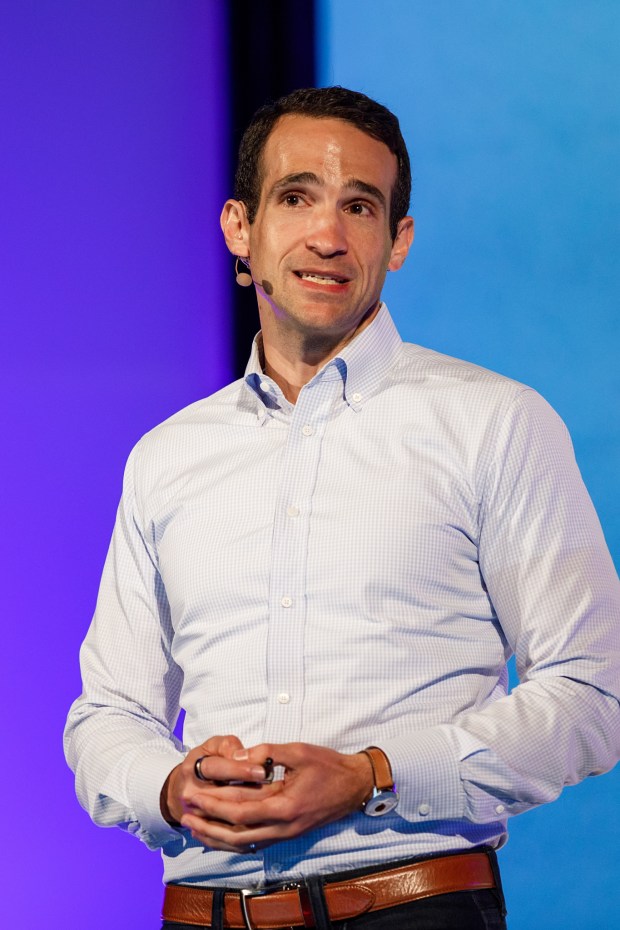
The fear of public speaking is exceedingly common. The thought of standing in front of a crowd can cause people’s knees to weaken and the stomach butterflies to launch. Yet public speaking is considered an essential professional skill, especially for those moving into leadership positions. Therefore, how can one overcome public speaking fears?
Before you dive into your speech, figure out your core message, says Dominguez Chan.
“If my audience could walk out of this room with one thing, what would that one thing be?” she asks. It can be an idea, a feeling “like wanting your audience to walk away feeling appreciated” or a call to action — like inspiring someone to vote.
Generated with WordPress AI
Next, they tackle the challenge of figuring out what to include in the speech.
Now that you have your core message, make sure all the ideas in your speech point back to it, says Dominguez Chan.
It makes it easier to decide what to say and it “helps you make every other decision, from the structure to the specific stories and concrete images that you include,” she adds.
A third topic they explore is how to engage with, and not simply talk to, an audience.
Dominguez Chan likes using what she calls “sticky stories” in her speeches — honest, vivid anecdotes with details that engage the senses of sight, sound, smell, taste and touch.
They “are going to make your presentation memorable. People remember stories and images,” she says.
What does that mean? Nowadays, most people only read short sentences or paragraphs from social media or news stories. While this can keep people abreast of surface level information, it fails to provide a deeper understanding of the world. How bad is the problem? Worse than you think!
The average American checks their phone over 140 times a day, clocking an average of 4.5 hours of daily use, with 57% of people admitting they’re “addicted” to their phone. Tech companies, influencers and other content creators compete for all that attention, which has incentivized the rise of misinformation.
Considering this challenging information landscape, strong critical reading skills are as relevant and necessary as they’ve ever been.
The authors go on to explain why they believe that deep reading is a vital skill to master.
As a cognitive scientist and a literacy expert, we research the ways people process information through reading. Based on our work, we believe that deep reading can be an effective way to counter misinformation as well as reduce stress and loneliness. It can be tough to go deeper than a speedy skim, but there are strategies you can use to strengthen important reading skills.
So how does one become a deep reader? The authors suggest a few strategies. One simple approach is to slow down.
Reading deeply means being able to intentionally choose when to read at different speeds, slowing down as needed to wrestle with difficult passages, savor striking prose, critically evaluate information, and reflect on the meaning of a text. It involves entering into a dialogue with the text rather than gleaning information.
Some people think that leaders are born that way. Others think that leaders are diligently grown. Either way, are their signs and skills which make someone a good leader?
The Center for Creative Leadership is an organization devoted to understanding the science of leadership. A recent article on their website titled 12 Essential Qualities of Effective Leadership identifies an comprehensive list of qualities found in good leaders. Based on research by Micela Leis, PhD, and Stephanie Wormington, PhD, the article opens with a general summary of their findings.
A good leader should have integrity, self-awareness, courage, respect, compassion, and resilience. They should be learning agile and flex their influence while communicating the vision, showing gratitude, and collaborating effectively. See how these key leadership qualities can be learned and improved at all levels of your organization.
The article goes on to provide a list of specific qualities that good leaders bring to the table. The first one is Self-Awareness.
Self-awareness is the understanding of yourself, including personality traits, behaviors, anxieties, and emotions. While this is a more inwardly focused trait, self-awareness and humility are paramount qualities of leadership. The better you understand yourself and recognize your own strengths and weaknesses, the more effective you can be as a leader. Do you know how other people view you, and do you understand how you show up at work and at home? Take the time to learn about the 4 aspects of self-awareness and how to strengthen each component.
Rediscover Reading helps locals realize the benefits of books
When was the last time you read a book for sheer enjoyment?
If you are like most people, it has been a while since you cracked open a novel. You may think that reading for pleasure is simply one entertainment option out of many. However, reading for pleasure is more than a possible pastime. It’s a story driven public-health prescription. That’s the rationale behind the Palm Beach County Library System’s 2026 yearlong initiative, Rediscover Reading.
As our communities wrestle with loneliness and frayed social ties, returning to pleasure reading, and the libraries that sustain it, offers an affordable, evidence-based path to improve lives. The scale of the challenge is striking. A 2025 study of more than 230,000 Americans found the reading for pleasure dropped from 28% in 2003 to just 16% in 2023. That decline isn’t just a worry for the publishing industry. It has public-wellness concerns. When a large part of the population stops reading for pleasure, we lose a simple, low-barrier route to better mental health.
A growing body of research finds that reading for pleasure delivers measurable benefits such as reduced stress, better sleep, enhanced empathy and improved cognitive well-being. At the same time, shared reading like book clubs and read-aloud sessions activate regions in our brains tied to social cognition and emotional connection. This helps counter feelings of isolation and distrust.
That’s where Rediscover Reading comes in. The Library is inviting Palm Beach County residents to pick up a favorite book, sample a new novel, and set a reading goal for the year. What would happen if we all committed to reading one book a month? How much more restful would we feel by exchanging 15 minutes of mindless scrolling before bed with the narrative delight of a story? The sense of wonder, escape or solace found in the written word can bring peace of mind, greater life satisfaction, and a more empathetic understanding of the world.
Reading for pleasure combines the best of both worlds: the private delight of losing yourself in a narrative and the social lift from shared reflection. Libraries, with our welcoming spaces and community activities, transform solitary reading into a communal experience. As research suggests, the path to improved well-being doesn’t require expensive interventions. Instead all we need is a book in hand and a comfy spot to read it.
The invitation is extended. Dust off that old beloved title or pick up a new bestseller, be it a physical book, e-book or audiobook. Rediscover Reading isn’t just about books. It’s about opening your mind to a world of unlimited possibilities through the simple, but powerful ritual of reading for pleasure.
Grab your library card and visit your local branch of the Palm Beach County Library System or a municipal library to access free materials. Check out free e-books and e-audiobooks online through our website: www.pbclibrary.org.
This year, reclaim the joy of literature as a daily act of self-care and community building. Join us as we invite you to Rediscover Reading.
The start of a new year is a traditional time to think about desired goals. However, to be successful in achieving those goals it is important to have one’s personal priorities in order. The right mental approach is vital to success. So, how do we get organized enough to create the conditions to make it happen?
One of the tenets of the KonMari Method™ is to always tidy first. We can only fully organize when we’ve let go of what’s weighing us down and holding us back.
Before layering on new goals or routines, take a moment to tidy the items and techniques that support your daily routine, weekly schedule and year-round priorities.
Kondo recommends focusing on getting the calendar in order, emptying the inbox, and then organizing the digital desktop. These non-physical items can easily be forgotten or seem unimportant. Yet, maintaining them is an important first step for getting priorities in order.
Next, she suggests creating on a set of clearly written goals.
Your goals are the guideposts that bring clarity to your path. Take some time to identify what you’d like to accomplish in the coming month, six months, and year.
Short-term goals anchor your weeks, like completing a project or trying a new organizational tool.
Mid-term goals sustain your momentum, like improving a skill or cultivating a new habit.
Long-term goals inspire you, pulling you forward toward a vision of your ideal life.
Write these goals down, either in a journal or planner, to bring them to life. Studies show that putting pen to paper significantly increases your likelihood of achieving your aspirations. For more, read our guide to setting joy-sparking goals.
With 2025 coming to a close, have you taken the time to review the entirety of the past year?
A core component of the GTD methodology is the weekly review. This is an ongoing opportunity at the end of your workweek to review what was accomplished, identify unfinished work, and to look ahead to the following week. In fact, David Allen, GTD’s Creator, has always stressed the importance of this habit.
“The Weekly Review is the time to: Gather and process all your stuff. Review your system. Update your lists. Get clean, clear, current, and complete. You have to use your mind to get things off your mind.”
A yearly review is the logical extension of the weekly review, but on a higher level of focus. This is an opportunity to consider the status of your larger goals and update your long-term vision. It is a chance to bring clarity to the big dreams and ambitions that provide forward momentum. Keep in mind that it doesn’t have to focus solely on your job. The yearly review can cover all aspects of your life, including personal goals, health concerns, financial plans, and relationships.
Where does the yearly review start? It can begin with the following questions:
What were your wins?
What are you grateful for?
What risks did you take?
What is your unfinished business?
What was your biggest surprise?
After evaluating the past, the yearly review shifts to exploring the future. Again, focusing questions help with this task.
What would you like to be your biggest win?
How are you planning to improve your financial situation?
With the holiday season fully upon us, no doubt you have made a gift list for the loved ones in your life. However, what do you plan to gift yourself? While new clothes and fancy toys are always fun, why not give yourself a gift that improves your health and leads to greater connection opportunities. It is the simple act of taking time off.
In an article for Psychology Today titled, The Importance of Taking a Break from Work, clinical psychologist Monica Vermani explores the reasons why taking time off of work is a health care prescription. She starts the article with the sad fact that most Americans fail to take their allotted vacation time.
According to a recent Pew Research survey, 46 percent of employees take less time off than their employer offers. In 2022, according to Qualtrics research, American workers left an average of 9.5 vacation days unused. Recent Canadian statistics paint an even bleaker picture, with just 29 percent of employees taking full advantage of paid time off.
That’s not all. In a 2023 ELVTR poll of 2,300 North American employees, most reported working while on vacation. Many also reported that weekends and nonworking hours are far from off-limits.
Image made with WordPress AI
This failure to disconnect from work can lead to burn-out and other health issues. Therefore, Vermani advocates for taking a true and complete break from work. She points out that doing this is vital to your mental health.
The value of taking that postponed vacation and setting reasonable boundaries around minimizing communication with work colleagues outside of working hours are many, including stress and burnout prevention, gaining new perspectives on workplace stressors, improving mental and physical health, and improved sleep. Furthermore, vacations can be especially effective at raising levels of happiness, making time to reconnect with family and friends, and exploring locations and activities that foster joy and inspiration. Vacation time is also known to reduce the risk of heart attack and stroke. Time away from the daily grind also expands our creative abilities.
She then shares why setting heathy boundaries is important to everyone.
Our time and energy are valuable—and finite—assets. At the end of the day, it is our responsibility to build healthy boundariesaround our finite resources. Building healthy boundaries is all about prioritizing our mental and physical health, well-being, and needs, and building awareness of the causes and signs of workplace burnout, including trouble concentrating, exhaustion, irritability, a decrease in productivity, and physical symptoms, like headaches, muscle aches, gastrointestinal issues, and changes in sleep routines.
To learn more, including her six steps to creating a healthier work/life balance, please read the rest of the article. In the meantime, it is not too late to schedule that holiday vacation. Whether it is a trip out of town or staying home, either way make sure you enjoy some much-needed downtime.
While it is time to enjoy seasonal delicious food and the sparkling lights, there is one thing that many people dread: picking out the perfect gift. With a wide range of options, it is easy to get overwhelmed and default to boring gift cards. If you have experienced this problem, have you ever tried to figure out of there a way to become a great gift giver?
An article in Vox may resolve this yuletide tension. In a piece titled How to become a truly excellent gift giver, journalist Eliza Brooke shares insights from several gift giving experts. The first piece of advice is simple. Not every gift has to be life-changing, and a meaningful gift doesn’t have to cost a lot of money.
“We often give ourselves this challenge of being like, ‘What is the gift that only I could give them? What is the gift that proves I know them so well?’ And that’s kind of impossible,” says Erica Cerulo, who runs the recommendation-filled A Thing or Two podcast and newsletter with her business partner, Claire Mazur. (Cerulo and Mazur previously co-founded the retail destination Of A Kind, which shut down in 2019.) A great gift doesn’t have to change someone’s life, Cerulo says: It can just be something that’s fun and nice and comforting.
The experts Brooke speaks with also provide a simple three-point strategy on gift selection that helps narrow down options quickly.
Because creativity thrives with constraints, Cerulo offered the following three-point framework for thinking about gift-giving: “Can I introduce someone to something they might not otherwise know about? Can I get them a nicer version of something than they would buy for themselves? Or can I make them feel seen?” If you can check one of those three boxes, you’ve probably got a good present on your hands.
Also, Brooke points out that gift giving doesn’t have to be an end of year cram. Identifying potential gifts across the entire year rather than just in December is a useful stress reliever.
Almost universally, great gift-givers are doing legwork throughout the year, not just in the weeks leading up to a birthday or major holiday. Many keep lists of potential gifts for their friends and loved ones, which they update every time someone mentions an item they’d love or when their internet travels turn up a particularly great present idea. You can do this in any way that suits you: Cerulo has a single note in her phone dedicated to gift ideas, Mazur keeps individual notes for individual people, and Rosner uses friends’ contacts as a place to log food preferences, birthdays, and present ideas.